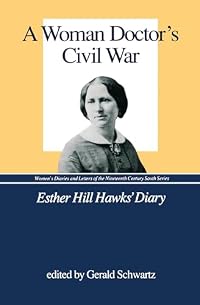
A Woman Doctor's Civil War: Esther Hill Hawks' Diary (Women's Diaries and Letters of the Nineteenth-Century South)
by Gerald Schwartz (Editor)
On This Page
Description
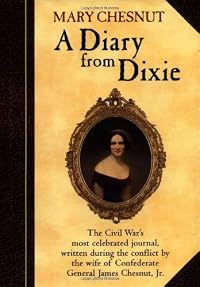
A physician, a Northerner, a teacher, a school administrator, a suffragist, and an abolitionist, Esther Hill Hawks was the antithesis of Southern womanhood. And those very differences destined her to chronicle the era in which she played such a strange part. While most women of the 1860s stayed at home, tending husband and house, Esther Hill Hawks went south to minister to black Union troops and newly freed slaves as both a teacher and a doctor. She kept a diary and described the South she show more saw-conquered but still proud. Her pen, honed to a fine point by her abolitionist views, missed mothing as she traveled through a hungary and ailing land. In the well-known Diary from Dixie, Mary Boykin Chestnut depiced her native Southland as one of cavaliers with their ladies, statesmen and politicians, honor and glory. But Hawks painted a much different picture. And unlike Chestnut's characters, hers were liberated slaves and their hungary children, swaggering carpetbaggers, occupation troops far from home, and zealous missionaries. Revealed in the pages of this diary is a woman of vast energy, intelligence, and fortitude, who transformed her idealism into action. show lessTags
Recommendations












Member Reviews
The title is truthful. Dr Hawks was a fully qualified doctor who practiced before and after the Civil War. But, during the war itself, neither the War Department nor Dorothea Dix's nursing corps accepted her application. So the predominant focus of this book is her time as a teacher of newly freed former slaves and black soldiers.
She and her husband were ardent abolitionists prior to the war. Her husband, also a doctor, became the first surgeon attached to a black regiment. Dr Esther Hawks taught basic literacy to the troops, their families and other blacks in the area--sometimes referred to as contrabands because they were not technically free citizens at that time.
Parts of it are very interesting. And yet, some of the most show more interesting details are told not in her diary, but in the footnotes. For example, she organized the first fully integrated school in the South. But it's only in the footnotes that the full story is told--that after a very short time the school was boycotted almost completely by whites objecting to be in the same classroom as former slaves and that after its very early days, the school had only one white student.
Throughout the diary,she bore a lot of discrimination that she glosses over quickly. Her sewing circle was boycotted by those refusing to be in the same room with 'nigger teachers'. In the first year of Reconstruction, which is the last year of her diary, this anti-black sentiment was even more pronounced.
I honor her for acting on her convictions. I understand her motive in not dwelling on problems in her diary. And yet, the very fact that she skates rather quickly over the problems and often gives more room to recording pleasant times that broke up the monotany of her days--riding expeditions and small parties-- lessen the impact of what she did and the trials she went through.
Perhaps this is a problem with the editing, and the book and the story of the impact of her life would have been better served to have less of the actual diary entries and more narrative. show less
She and her husband were ardent abolitionists prior to the war. Her husband, also a doctor, became the first surgeon attached to a black regiment. Dr Esther Hawks taught basic literacy to the troops, their families and other blacks in the area--sometimes referred to as contrabands because they were not technically free citizens at that time.
Parts of it are very interesting. And yet, some of the most show more interesting details are told not in her diary, but in the footnotes. For example, she organized the first fully integrated school in the South. But it's only in the footnotes that the full story is told--that after a very short time the school was boycotted almost completely by whites objecting to be in the same classroom as former slaves and that after its very early days, the school had only one white student.
Throughout the diary,she bore a lot of discrimination that she glosses over quickly. Her sewing circle was boycotted by those refusing to be in the same room with 'nigger teachers'. In the first year of Reconstruction, which is the last year of her diary, this anti-black sentiment was even more pronounced.
I honor her for acting on her convictions. I understand her motive in not dwelling on problems in her diary. And yet, the very fact that she skates rather quickly over the problems and often gives more room to recording pleasant times that broke up the monotany of her days--riding expeditions and small parties-- lessen the impact of what she did and the trials she went through.
Perhaps this is a problem with the editing, and the book and the story of the impact of her life would have been better served to have less of the actual diary entries and more narrative. show less
Ratings
Members
- Recently Added By
Author Information
Series
Belongs to Publisher Series
Common Knowledge
- People/Characters
- Esther Hill Hawks
- Important places
- South Carolina, USA; Charleston, South Carolina, USA; Florida, USA; Sea Islands, USA
- Important events
- American Civil War (1861 | 1865)
- Dedication
- To the memory of my Father and Mother
Classifications
Statistics
- Members
- 66
- Popularity
- 470,129
- Reviews
- 1
- Rating
- (3.38)
- Languages
- English
- Media
- Paper, Ebook
- ISBNs
- 3
- ASINs
- 1