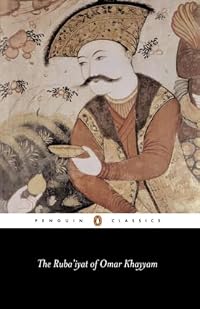
The Rubáiyát of Omar Khayyám
by Omar Khayyám, Farrid ud_Din Attar, Haji Abdu El-Yezdi, Omar Khayyám (Author)
On This Page
Description
"A repository of subversive, melancholic and existentialist themes and ideas, the rubaiyat (quatrains) that make up the collected poems attributed to the 12th century Persian astronomer Omar Khayyam have enchanted readers for centuries. In this modern translation, complete with critical introduction and epilogue, Juan Cole elegantly renders the verse for contemporary readers. Exploring such universal questions as the meaning of life, fate and how to live a good life in the face of human show more mortality, this translation reveals anew why this singular collection of poems has struck a chord with such a temporally and culturally diverse audience, from the wine houses of medieval Iran to the poets of Western twentieth century modernism."-- show lessTags
Recommendations






















Member Recommendations
Member Reviews
I have more editions of the Rubáiyát of Omar Khayyám than any other book. I mainly buy new (to me, that is, as most of them are second-hand volumes) editions based upon either the quality of a book as an artefact, or due to the illustrations. The former is a relatively common bibliophilic phenomenon, of which I imagine many reading this review will recognise in themselves. The latter is, I think, due to an unfortunate tendency towards orientalism, a by-product of the cultural context of my youthful upbringing. I try to offset this tendency by somewhat extending my knowledge and (hopefully) understanding of other cultures, by which I justify my indulgence. So much for the mea culpas (culpi?).
What attracts me to FitzGerald's rendition show more is the beauty of his language, particularly in the first edition, and his ordering of the verses to develop themes (perhaps beyond what Khayyám intended? I'm not scholar enough to know for sure). FitzGerald/Khayyám building effects by re-presentation of the concepts of the impermanence of life; the fleeting nature of human existence; the sadness inherent in mortality; the essentially unknowable fate of us all, despite what the "two-and-seventy jarring sects" might say; the logic (that seems the right word, Khayyám being a mathematician, and FitzGerald a student of Greek philosophy) of living in the moment; the consolations of a right good piss-up (this last I might have blasphemously expressed if some interpretations of Khayyám are accepted).
I've no doubt myself that Khayyám was an atheist, notwithstanding claims that there is an underlying Sufi spiritual message in his poetry, though my belief is, admittedly, based upon a rendition of his works by a Westerner stepped in a Christian tradition, even if that tradition was one he ultimately rejected (not to avoid mentioning that I am an atheist myself, so possibly inclined to such a reading of the verses). I find something deeply human about this, looking to ourselves for meaning, or even an acceptance of being in a meaningless universe from which we are required to carve our own temporary meaning if we are to live as persons, even for so brief a time as we have to experience it. I feel in this a connection with Khayyám, though aware that it is mediated through FitzGerald. I've read a literal translation of Khayyám, which did not touch me so deeply. Perhaps it was the more direct phrasing and lack of a distinct thematic thread that I found lacking, or that I was distracted by trying to figure out which quatrains were the basis got FitzGerald's versions. I should read the direct translation again, I think, without the rose-tinted spectacles. show less
What attracts me to FitzGerald's rendition show more is the beauty of his language, particularly in the first edition, and his ordering of the verses to develop themes (perhaps beyond what Khayyám intended? I'm not scholar enough to know for sure). FitzGerald/Khayyám building effects by re-presentation of the concepts of the impermanence of life; the fleeting nature of human existence; the sadness inherent in mortality; the essentially unknowable fate of us all, despite what the "two-and-seventy jarring sects" might say; the logic (that seems the right word, Khayyám being a mathematician, and FitzGerald a student of Greek philosophy) of living in the moment; the consolations of a right good piss-up (this last I might have blasphemously expressed if some interpretations of Khayyám are accepted).
I've no doubt myself that Khayyám was an atheist, notwithstanding claims that there is an underlying Sufi spiritual message in his poetry, though my belief is, admittedly, based upon a rendition of his works by a Westerner stepped in a Christian tradition, even if that tradition was one he ultimately rejected (not to avoid mentioning that I am an atheist myself, so possibly inclined to such a reading of the verses). I find something deeply human about this, looking to ourselves for meaning, or even an acceptance of being in a meaningless universe from which we are required to carve our own temporary meaning if we are to live as persons, even for so brief a time as we have to experience it. I feel in this a connection with Khayyám, though aware that it is mediated through FitzGerald. I've read a literal translation of Khayyám, which did not touch me so deeply. Perhaps it was the more direct phrasing and lack of a distinct thematic thread that I found lacking, or that I was distracted by trying to figure out which quatrains were the basis got FitzGerald's versions. I should read the direct translation again, I think, without the rose-tinted spectacles. show less
Having loved Edward FitzGerald's free translation of these verses for many years, I wanted to read a more literal translation, which I got with this edition.
Initially, I wasn't taken: the verses were stark and plain for the most part, and there was no real connection between one quatrain and the next. But I persevered and as the memory of FitzGerald receded somewhat, I was able to enjoy the poems on their own terms. The humour and beauty of the "originals" (as close as a non-Persian speaker can get to the originals, anyway) shone through and won me over.
It was fun, too, to recognise some old friends in new clothes.
The translators' fascinating introduction and appendices were worth the price of the book by themselves, enhancing enjoyment show more of the verses by giving some context.
I guess I still prefer FitzGerald's translation because it's the one I've grown up with, but I will definitely revisit this edition, too. show less
Initially, I wasn't taken: the verses were stark and plain for the most part, and there was no real connection between one quatrain and the next. But I persevered and as the memory of FitzGerald receded somewhat, I was able to enjoy the poems on their own terms. The humour and beauty of the "originals" (as close as a non-Persian speaker can get to the originals, anyway) shone through and won me over.
It was fun, too, to recognise some old friends in new clothes.
The translators' fascinating introduction and appendices were worth the price of the book by themselves, enhancing enjoyment show more of the verses by giving some context.
I guess I still prefer FitzGerald's translation because it's the one I've grown up with, but I will definitely revisit this edition, too. show less
Voz da antiga Pérsia, rimar com o cheiro do vinho... Poeta que conta estrelas, Omar da cor do rubi. Khayyam, ó Khayyam... Sabias que a tua fala de barro ainda ronda o meu coração? Chocam-se os copos, os risos se ouvem e o vinho, teu adorado vinho se derrama nos cálices... E a copeira! Ai, os olhos dessa donzela! Cai a noite, a lua vai aparecendo e do cofre do Nada voltou a surgir o jogo, o caminhar que nunca termina... Será o crescer da relva, o canto do rouxinol... Ou o eco de um rubaiyat? Oleiro dos Céus, torno que nunca paras... O Livro folheias novamente... E eu apenas desejo esses lábios que me esperam e poder me enredar nos cabelos da minha doce bem-amada. Dá-me o vinho dos teus versos! Canta em minha alma... Omar Khayyam!
Omar Khayyam wrote the poems that make up “The Ruba’iyat” over the course of his life about a thousand years ago in what is now Iran (1048-1131). He was an astronomer and mathematician in addition to being a poet; his religious views are subject to debate but it’s clear they were not orthodox. Some see him as a Sufi mystic, others as a humanist skeptic, regardless, his poetry is enjoyable and speaks to me across the centuries. The predominant theme is a recognition of the transience of life; Khayyam tells us to be happy and enjoy ourselves before we pass on, as those who came before us have. This is also a very beautiful edition which includes a large number of Persian paintings in color.
Quotes:
On happiness in the now:
“Go for show more pleasure, life only gives a moment,
Its every atom from a Kaikobad’s or a Jamshid’s dust;
The world’s phenomena and life’s essence
Are all a dream, a fancy, and a moment’s deception.”
“These few odd days of life have passed
Like water down the brook, wind across the desert;
There are two days I have never been plagued with regret for,
Yesterday that has gone, tomorrow that will come.”
“It is we who are the source of our own happiness, the mine of our own sorrow,
The repository of justice and foundation of iniquity;
We who are cast down and exalted, perfect and defective,
At once the rusted mirror and Jamshid’s all-seeing cup.”
On sleep:
“I was asleep, a wise man said to me
‘The rose of joy does not bloom for slumberers;
Why are you asleep? Sleep is the image of death,
Drink wine, below the ground you must sleep of necessity.’”
On death:
“Though you may have lain with a mistress all your life,
Tasted the sweets of the world all your life;
Still the end of the affair will be your departure –
It was a dream that you dreamed all your life.”
On the passing of youth:
“When we were children we went to the Master for a time,
For a time we were beguiled with our own mastery;
Hear the end of the matter, what befell us;
We came like water and we went like wind.”
On drinking wine:
“Oh heart you will not arrive at the solving of the riddle,
You will not reach the goal the wise in their subtlety seek;
Make do here with wine and the cup of bliss,
For you may and you may not arrive at bliss hereafter.”
“Drinking wine and consorting with good fellows
Is better than practicing the ascetic’s hypocrisy;
If the lover and drunkard are to be among the damned
Then no one will see the face of heaven.”
“I drink no wine, but not because I’m poor,
Nor get drunk, though not through fear of scandal;
I drank to lighten my heart
But now that you have settled in my heart, I drink no more.”
On meaninglessness:
“What have you to do with Being, friend,
And empty opinions about the notion of mind and spirit?
Joyfully live and let the world pass happily,
The beginning of the matter was not arranged with you in mind.”
On the transience of life, wow I love this one:
“Every particle of dust on a patch of earth
Was a sun-cheek or brow of the morning star;
Shake the dust off your sleeve carefully –
That too was a delicate, fair face.”
As well as this one:
“The globe is the image of a ball compacted of our bones,
The Oxus, a trickle of our distilled tears;
Hell is a spark from our consuming torrents,
Paradise, a moment from our space of reprieve.” show less
Quotes:
On happiness in the now:
“Go for show more pleasure, life only gives a moment,
Its every atom from a Kaikobad’s or a Jamshid’s dust;
The world’s phenomena and life’s essence
Are all a dream, a fancy, and a moment’s deception.”
“These few odd days of life have passed
Like water down the brook, wind across the desert;
There are two days I have never been plagued with regret for,
Yesterday that has gone, tomorrow that will come.”
“It is we who are the source of our own happiness, the mine of our own sorrow,
The repository of justice and foundation of iniquity;
We who are cast down and exalted, perfect and defective,
At once the rusted mirror and Jamshid’s all-seeing cup.”
On sleep:
“I was asleep, a wise man said to me
‘The rose of joy does not bloom for slumberers;
Why are you asleep? Sleep is the image of death,
Drink wine, below the ground you must sleep of necessity.’”
On death:
“Though you may have lain with a mistress all your life,
Tasted the sweets of the world all your life;
Still the end of the affair will be your departure –
It was a dream that you dreamed all your life.”
On the passing of youth:
“When we were children we went to the Master for a time,
For a time we were beguiled with our own mastery;
Hear the end of the matter, what befell us;
We came like water and we went like wind.”
On drinking wine:
“Oh heart you will not arrive at the solving of the riddle,
You will not reach the goal the wise in their subtlety seek;
Make do here with wine and the cup of bliss,
For you may and you may not arrive at bliss hereafter.”
“Drinking wine and consorting with good fellows
Is better than practicing the ascetic’s hypocrisy;
If the lover and drunkard are to be among the damned
Then no one will see the face of heaven.”
“I drink no wine, but not because I’m poor,
Nor get drunk, though not through fear of scandal;
I drank to lighten my heart
But now that you have settled in my heart, I drink no more.”
On meaninglessness:
“What have you to do with Being, friend,
And empty opinions about the notion of mind and spirit?
Joyfully live and let the world pass happily,
The beginning of the matter was not arranged with you in mind.”
On the transience of life, wow I love this one:
“Every particle of dust on a patch of earth
Was a sun-cheek or brow of the morning star;
Shake the dust off your sleeve carefully –
That too was a delicate, fair face.”
As well as this one:
“The globe is the image of a ball compacted of our bones,
The Oxus, a trickle of our distilled tears;
Hell is a spark from our consuming torrents,
Paradise, a moment from our space of reprieve.” show less
Komente mbi librin "Rubairat janë një nga veprat poetike më të bukura të botës. Janë aq të kjarta sa mund të merren vesh lehtë prej cilitdo këndonjësi të zakontë, aqë të thella nga kuptimi sa një Rubai vlen disa togje vëllimesh, aqë moderne nga mejtimet dhe ndjenjat, sa na duket që auktori i tyre ka rrojtur në kohët tona dhe në zemër të Evropës. Natyrisht, hapim gojën kur mësojmë që ka rrojtur në zemër të Azisë dhe që ka vdekur tetëqint vjet më parë. Me gjithë këto, është një lajthim të besohet që Rubairat kanë mbirë në tokën persiane si për çudi. Përkundër, janë produkti natyral i kohës dhe i vendit të tyre, të cilat ishin mjaftë pëllore për të lindur të këtilla lule të show more rralla." Fan Noli "Lexoni Rubairat, me shpirt të kulluet, siç i ka shkrue Poeti, dhe do të lartësoheni shpirtnisht. Pse Vena e Dashunija, dy motivet qendrore të veprës së tij, pas vështrimit të tyne të zakonshëm, kanë marrë gati kuptime metafizike. E mu kjo fuqi idealizmi e ban tonin Omar Khajamin, dhe na ep përshtypjen sikur aj të ketë jetue jo në Lindje, por mu në zemër t'Evropës." Pashko Gjeçi show less
Ömer Hayyam'ın Rubailer'ini okudum. Hayyam'ın şiirlerinin iyi olduğunu biliyordum ama bu kadar iyi olmasını beklemiyordum. Neredeyse beğenmediğim rubai yoktu. 30-40 tanesini ezberleyesim geldi.
Kitabı bitirdikten sonra çevirmenin yazdığı önsözleri okuyunca tüm rubaileri Hayyam'ın yazmadığı görüşünün hakim olduğunu öğrendim. Hangi rubaileri Hayyam yazmış bunu belirlemek zor, ama kesin olan bir şey var ki Hayyam'ın belirgin bir tarzı var ve bu tarz çok güzel.
Kitabı bitirdikten sonra çevirmenin yazdığı önsözleri okuyunca tüm rubaileri Hayyam'ın yazmadığı görüşünün hakim olduğunu öğrendim. Hangi rubaileri Hayyam yazmış bunu belirlemek zor, ama kesin olan bir şey var ki Hayyam'ın belirgin bir tarzı var ve bu tarz çok güzel.
Alike for folks who for TO-DAY prepare,
And those that after a TO-MORROW stare,
A Muezzin from the Tower of Darkness cries
"Fools! Your Reward is neither Here nor There."
I only read the first edition and couldn’t even get past the first page of the fifth edition. I compared three quatrains I liked between the two editions just to make sure I wasn’t re-reading them. Anyway, here are two other quatrains I liked:
Oh, include vintage Khayyam, and depart the Wise
To talk; one element is certain, that Life flies;
One thing is positive, and the Rest is Lies;
The Flower that once has blown for ever dies.
..
With them the Seed of Wisdom did I sow,
And with my own hand labour'd it to grow:
And this became all the Harvest that I achieve'd—
"I came like show more Water, and like Wind I pass." show less
And those that after a TO-MORROW stare,
A Muezzin from the Tower of Darkness cries
"Fools! Your Reward is neither Here nor There."
I only read the first edition and couldn’t even get past the first page of the fifth edition. I compared three quatrains I liked between the two editions just to make sure I wasn’t re-reading them. Anyway, here are two other quatrains I liked:
Oh, include vintage Khayyam, and depart the Wise
To talk; one element is certain, that Life flies;
One thing is positive, and the Rest is Lies;
The Flower that once has blown for ever dies.
..
With them the Seed of Wisdom did I sow,
And with my own hand labour'd it to grow:
And this became all the Harvest that I achieve'd—
"I came like show more Water, and like Wind I pass." show less
Members
- Recently Added By
Lists

Classics you know you should have read but probably haven't
421 works; 407 members

Folio Society
831 works; 49 members

Unread books
1,063 works; 82 members

Tonikat reading completed on Librarything journals
329 works; 2 members

1001 Books You Must Read Before You Die
1,448 works; 1,132 members

Truly old classics
63 works; 6 members

The Road to Freedom (Will Durant's 100 Best Books for an Education)
100 works; 8 members

Top Five Books of 2020
982 works; 348 members

Books Read in 2021
5,361 works; 113 members

Will Durant's 100 Books: An Update
46 works; 4 members

Publisher's Weekly Bestsellers Prior to 1895 in Chronological Order
95 works; 6 members

New Lifetime Reading Plan by Fadiman and Major
225 works; 5 members

1970s
657 works; 23 members

Arab and Arab Diaspora Literature We Recommend
112 works; 53 members
School Made Us Read It
380 works; 196 members

Stories about Gardens
10 works; 1 member
Talk Discussions
Past Discussions
Petrarch Press - Rubaiyat of Omar Khayyam announcement in Fine Press Forum (February 2023)
Rubáiyát of Omar Khayyám: Khorasan Edition in Tattered but still lovely (September 2012)
Author Information

132+ Works 10,228 Members
Known in Iran as a leading mathematician, Omar gained literary importance through certain quatrains that were translated by Edward FitzGerald. The Ruba'iyat is justly famous in English translation. Others besides FitzGerald have tried their hand at translating it, not all with admired results. Bowens's is a good example of competent and pleasing show more work. (Bowker Author Biography) show less
1 Work 3,541 Members
1 Work 3,541 Members
Some Editions
Awards and Honors
Series
Belongs to Publisher Series
Envelope Books (no. 1)
Wereldbibliotheek-vereniging (1948)
Universale [Einaudi] (25)
Gregynog Press (1928)
De Uilenreeks (51)
Heibonsha Library (679)
Insel-Bücherei (Nr. 407 & 1433)
Work Relationships
Is contained in
Has the adaptation
Is replied to in
Common Knowledge
- Canonical title
- The Rubáiyát of Omar Khayyám
- Original title
- رباعیات; Rubáiyát
- Alternate titles*
- Robâiyât : Les quatrains du sage Omar Khayyâm de Nichâpour et de ses épigones
- Original publication date
- 1120 (ca.) (ca.); 1048-1123 CE; 1859 (transl. to Eng.) (transl. to Eng.); 1872-10 (William Morris calligraphic version) (William Morris calligraphic version)
- Important places
- Persia; Iran; Khorassan, Iran; Nishapur, Iran
- First words
- Awake! For Morning in the Bowl of Night
Awake!
Wake! For the Sun, who scatter'd into flight
The Stars before him from the Field of Night,
Drives Night along with them from Heav'n,
and strikes,
The Sultan's turret with a Shaft of Light. - Quotations
- The Moving Finger writes; and, having writ, Moves on;
- Last words
- (Click to show. Warning: May contain spoilers.)Where I made one--turn down an empty glass!
(Click to show. Warning: May contain spoilers.)And when like her, oh Saki, you shall pass
Among the Guests Star-scatter'd on the Grass,
And in your joyous errand reach the spot
Where I made One - turn down an empty Glass!
Tamam - Original language
- Persian
- Disambiguation notice
- This is a listing of versions of the Rubaiyat other than those of English poet Edward FitzGerald. FitzGerald's free rendering of the rubaiyat is famous as English poetry in its own right; it is more "inspired by" than ... (show all)"translated from" Khayyám's work. Please do not combine any of the numerous FitzGerald editions with this work, unless the book in question also contains more literal translations by other authors.
Note: This is a collection of Omar Khayyam's quatrains as well as his Rubaiyat. Please do not combine with the Rubaiyat
*Some information comes from Common Knowledge in other languages. Click "Edit" for more information.
Classifications
- Genres
- Poetry, Fiction and Literature
- DDC/MDS
- 891.5511 — Literature & rhetoric Literatures of other languages East Indo-European and Celtic literatures Iranian literatures Modern Persian / Farsi literature (8th century CE to present) Persian poetry ca. 1000–1389
- LCC
- PK6513 .A1 — Language and Literature Indo-Iranian languages and literatures Indo-Iranian philology and literature Iranian philology and literature New Persian Literature Individual authors or works Omar Khayyam
- BISAC
Statistics
- Members
- 3,543
- Popularity
- 4,600
- Reviews
- 40
- Rating
- (4.02)
- Languages
- 29 — Albanian, Arabic, Armenian, Catalan, Cornish, Danish, Dutch, English, Finnish, French, German, Hebrew, Icelandic, Indonesian, Italian, Japanese, Kurdish, Lithuanian, Multiple languages, Norwegian, Farsi/Persian, Russian, Serbian, Scots, Spanish, Swedish, Turkish, Welsh, Portuguese (Portugal)
- Media
- Paper, Audiobook, Ebook
- ISBNs
- 168
- UPCs
- 1
- ASINs
- 183
