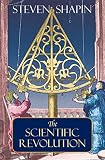
The Scientific Revolution
by Steven Shapin
On This Page
Description
Rejecting the notion that there is anything like an "essence" of early modern science, Shapin emphasizes the social practices by which scientific knowledge was produced and the social purposes for which it was intended. He shows how the conduct of science emerged from a wide array of early modern philosophical agendas, political commitments, and religious beliefs. And he treats science not as a set of disembodied ideas, but as historically situated ways of knowing and. Doing. Shapin argues show more against traditional views that represent the Scientific Revolution as a coherent, cataclysmic, and once-and-for-all event. Every tendency that has customarily been identified as its modernizing essence was contested by sixteenth- and seventeenth-century practitioners with equal claims to modernity. Experimentalism was both advocated and rejected; mathematical methods were both celebrated and treated with skepticism; mechanical conceptions of nature. Were seen both as defining proper science and as limited in their intelligibility and application; and the role of experience in making scientific knowledge was treated in radically different ways. Yet Shapin points to the many ways that contested legacy is nevertheless rightly understood as the origin of modern science, its problems as well as its acknowledged achievements. show lessTags
Recommendations

































Member Reviews
This book is a masterpiece of historical scholarship. Shapin synthesizes two decades of sophisticated historical research by himself and many other scholars that has challenged the canonical account of the scientific revolution rooted in a naive scientific realism. In Shapin's account, the scientific revolution was much less about great scientific discoveries than about significant changes in how we think about the natural world -- what would count as valid evidence, and what practices were developed to gather such evidence. Shapin shows that these changes were driven by more than a simple desire to better understand the natural world. Rather, these new ideas and practices answered powerful social and political needs for those who show more championed them.
Shapin presents these arguments, which have vexed the academic world, in a reasonable, even-handed manner that avoids the sociological reductionism that has sometimes marred this scholarship. Moreover, although the book is not captive to present day concerns, it does suggest that this history matters to us today if we are to understand our own attitudes toward science.
What is perhaps most remarkable, Shapin has achieved all this in a concise, highly readable and compelling narrative. If you read one only one book about the scientific revolution in your life, this should be the one. show less
Shapin presents these arguments, which have vexed the academic world, in a reasonable, even-handed manner that avoids the sociological reductionism that has sometimes marred this scholarship. Moreover, although the book is not captive to present day concerns, it does suggest that this history matters to us today if we are to understand our own attitudes toward science.
What is perhaps most remarkable, Shapin has achieved all this in a concise, highly readable and compelling narrative. If you read one only one book about the scientific revolution in your life, this should be the one. show less
In The Scientific Revolution, Steven Shapin argues, “Although many seventeenth-century practitioners expressed their intention of brining about radical intellectual change, the people who are said to have made the revolution used no such term to refer to what they were doing” (pg. 2). Summarizing the historiography, he writes, “Historians have in recent years become dissatisfied with the traditional manner of treating ideas as if they floated freely in conceptual space” (pg. 4). Shapin works to demonstrate how science reflects the society in which it is created. In his organization, “the three chapters deal sequentially with what was known about the natural world, how that knowledge was secured, and what purposes the knowledge show more served. What, how, and why” (pg. 12). These questions guide Shapin’s synthetic approach.
Shapin writes, “Pre-Copernican cosmology was literally anthropocentric,” with humans and their teleological ideas of their movement at its center (pg. 24). Challenges to this influenced what Shapin terms a major idea underpinning science in the early modern period. He writes, “So central was the machine metaphor to important strands of new science that many exponents liked to refer to their practices as the mechanical philosophy” (pg. 30). Shapin argues, “If we want ultimately to understand the appeal of mechanical metaphors in the new scientific practices – and the consequent rejection of the opposition between nature and art – we shall ultimately have to understand the power relations of an early modern European society whose patterns of living, producing, and political ordering were undergoing massive changes as feudalism gave way to early capitalism” (pg. 33). Shapin concludes, “This confidence [in mathematical and mechanistic harmony] reached its highest early modern development in the 1687 Philosophiae naturalis principia mathematica of Isaac Newton (1642-1727), the English title of which was The Mathematical Principles of Natural Philosophy. The world-machine followed laws that were mathematical in form and that could be expressed in the language of mathematics. Mathematics and mechanism were to be merged in a new definition of proper natural philosophy” (pg. 61).
Shapin argues in his second section that, despite seventeenth century scientists’ claims, the new science was not new and intricately linked to ideas that preceded it. Shapin writes, “The Scientific Revolution was significantly, but only partially, a New Thing. Nevertheless, the rhetoric of wholesale rejection and replacement draws our attention to how practitioners tended to position themselves with respect to existing philosophical traditions and institutions” (pg. 68). Even new methodologies were tied to cultural values. Shapin writes, “Formal methodology is important, therefore, in the same way that the justification of a practice is important to its recognized identity and worth” (pg. 95).
In his final section, Shapin writes, “Seventeenth-century mechanical philosophers attempted to discipline, if not in all cases to eliminate, teleological accounts of the natural world. Yet as ordinary actors they accepted the propriety of a teleological framework for interpreting human cultural action, and with some exceptions so do modern historians and social scientists: the very identity of human action – as action rather than behavior – embodies some notion of its point, purpose, or intention” (pg. 119). He continues, “Recent historical work on Galileo, for example, has stressed significance of court patronage relationships not only for his livelihood but also for the thematics and presentation of his scientific work” (pg. 126). Shapin argues, “In speaking about the purposes of changing natural knowledge in the seventeenth century, it is obligatory to treat its uses in supporting and extending broadly religious aims” (pg. 136). Further, “Galileo arguably wanted more than cultural equality for the natural philosopher: he intermittently contrasted the ambiguity of scriptural texts with the interpretive clarity of the Book of Nature. This was a sense in which the expert natural philosopher might be understood as doing a better job of interpreting God’s word than the theologian” (pg. 137).
Shapin concludes, “This is the paradox: the more a body of knowledge is understood to be objective and disinterested, the more valuable it is as a tool in moral and political action. Conversely, the capacity of a body of knowledge to make valuable contributions to moral and political problems flows from an understanding that it was not produced and evaluated to further particular human interests” (pg. 164). He cautions, “One consequence of the presentation of science developed in the seventeenth century – to be sure, one of the least important – is that many of the categories we have available for talking about science are just those whose history and sociology we wish to understand” (pg. 164). show less
Shapin writes, “Pre-Copernican cosmology was literally anthropocentric,” with humans and their teleological ideas of their movement at its center (pg. 24). Challenges to this influenced what Shapin terms a major idea underpinning science in the early modern period. He writes, “So central was the machine metaphor to important strands of new science that many exponents liked to refer to their practices as the mechanical philosophy” (pg. 30). Shapin argues, “If we want ultimately to understand the appeal of mechanical metaphors in the new scientific practices – and the consequent rejection of the opposition between nature and art – we shall ultimately have to understand the power relations of an early modern European society whose patterns of living, producing, and political ordering were undergoing massive changes as feudalism gave way to early capitalism” (pg. 33). Shapin concludes, “This confidence [in mathematical and mechanistic harmony] reached its highest early modern development in the 1687 Philosophiae naturalis principia mathematica of Isaac Newton (1642-1727), the English title of which was The Mathematical Principles of Natural Philosophy. The world-machine followed laws that were mathematical in form and that could be expressed in the language of mathematics. Mathematics and mechanism were to be merged in a new definition of proper natural philosophy” (pg. 61).
Shapin argues in his second section that, despite seventeenth century scientists’ claims, the new science was not new and intricately linked to ideas that preceded it. Shapin writes, “The Scientific Revolution was significantly, but only partially, a New Thing. Nevertheless, the rhetoric of wholesale rejection and replacement draws our attention to how practitioners tended to position themselves with respect to existing philosophical traditions and institutions” (pg. 68). Even new methodologies were tied to cultural values. Shapin writes, “Formal methodology is important, therefore, in the same way that the justification of a practice is important to its recognized identity and worth” (pg. 95).
In his final section, Shapin writes, “Seventeenth-century mechanical philosophers attempted to discipline, if not in all cases to eliminate, teleological accounts of the natural world. Yet as ordinary actors they accepted the propriety of a teleological framework for interpreting human cultural action, and with some exceptions so do modern historians and social scientists: the very identity of human action – as action rather than behavior – embodies some notion of its point, purpose, or intention” (pg. 119). He continues, “Recent historical work on Galileo, for example, has stressed significance of court patronage relationships not only for his livelihood but also for the thematics and presentation of his scientific work” (pg. 126). Shapin argues, “In speaking about the purposes of changing natural knowledge in the seventeenth century, it is obligatory to treat its uses in supporting and extending broadly religious aims” (pg. 136). Further, “Galileo arguably wanted more than cultural equality for the natural philosopher: he intermittently contrasted the ambiguity of scriptural texts with the interpretive clarity of the Book of Nature. This was a sense in which the expert natural philosopher might be understood as doing a better job of interpreting God’s word than the theologian” (pg. 137).
Shapin concludes, “This is the paradox: the more a body of knowledge is understood to be objective and disinterested, the more valuable it is as a tool in moral and political action. Conversely, the capacity of a body of knowledge to make valuable contributions to moral and political problems flows from an understanding that it was not produced and evaluated to further particular human interests” (pg. 164). He cautions, “One consequence of the presentation of science developed in the seventeenth century – to be sure, one of the least important – is that many of the categories we have available for talking about science are just those whose history and sociology we wish to understand” (pg. 164). show less
A recommended book for my University of Glasgow course, Science, History and Culture
Ratings
Members
- Recently Added By
Author Information

12+ Works 1,465 Members
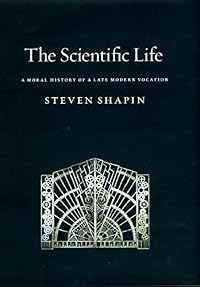
Steven Shapin is the Franklin L. Ford Research Professor of the History of Science at Harvard University. His books include Leviathan and the Air-Pump (with Simon Schaffer), A Social History of Truth: Civility and Science in Seventeenth-Century England, and The Scientific Life: A Moral History of a Late Modern Vocation.
Awards and Honors
Awards
Series
Belongs to Publisher Series
Common Knowledge
- Canonical title
- The Scientific Revolution
- First words
- There is no such thing as the Scientific Revolution, and this is a book about it.
Classifications
Statistics
- Members
- 527
- Popularity
- 56,368
- Reviews
- 3
- Rating
- (3.58)
- Languages
- 11 — Dutch, English, French, German, Italian, Norwegian (Bokmål), Polish, Portuguese, Spanish, Swedish, Turkish
- Media
- Paper, Ebook
- ISBNs
- 16
- ASINs
- 5