
On This Page
Description
Paris, 1878: Eccentric antiquarian Lord Littleby and his ten servants are found murdered in Littleby's mansion on the rue de Grenelle, and a priceless Indian shawl is missing. Police commissioner "Papa" Gauche recovers only one piece of evidence from the crime scene: a golden key shaped like a whale. Gauche soon deduces that the key is in fact a ticket of passage for the Leviathan, a gigantic steamship soon to depart Southampton on its maiden voyage to Calcutta. The murderer must be among show more its passengers. In Cairo, the ship is boarded by a young Russian diplomat with a shock of white hair--none other than Erast Fandorin, the celebrated detective of Boris Akunin's The Winter Queen. The sleuth joins forces with Gauche to determine which of ten unticketed passengers on the Leviathan is the rue de Grenelle killer. Tipping his hat to Agatha Christie, Akunin assembles a colorful cast of suspects--including a secretive Japanese doctor, a professor who specializes in rare Indian artifacts, a pregnant Swiss woman, and an English aristocrat with an appetite for collecting Asian treasures--all of whom are con'ned together until the crime is solved. As the Leviathan steams toward Calcutta, will Fandorin be able to out-investigate Gauche and discover who the killer is, even as the ship's passengers are murdered, one by one? Already an international sensation, Boris Akunin's latest page-turner transports the reader back to the glamorous, dangerous past in a richly atmospheric tale of suspense on the high seas. From the Hardcover edition. show lessTags
Recommendations
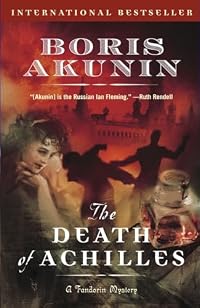

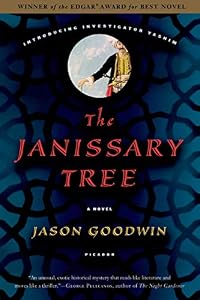
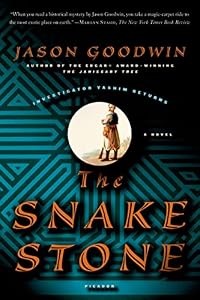
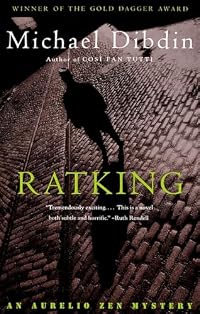




























Member Recommendations

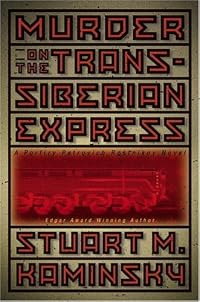
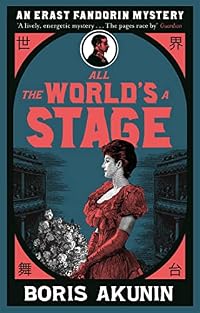
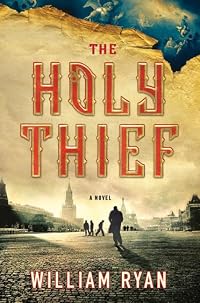
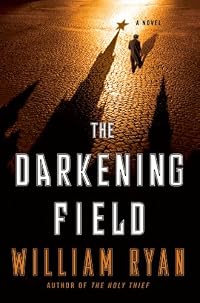
mks27 Both books are historical mysteries with great period features, however a female librarian solves the mysteries here.
11
Member Reviews
Diverting entry in an ongoing series. Erast Fandorin is a charming, nineteenth-century Russian James Bond-if-he-was-fathered-by-Nero-Wolfe sleuth trapped on board a huge new luxury liner with a greedy, murderous genius who is after the world's greatest hoard of gemstones.
People die right and left as the sleuth, ineptly assisted by seemingly every passenger assigned to eat in his dining room, closes in on the inevitable identification of the killer/fortune hunter. Much entertaining diversion available, though the novice to the series can pick this volume up and start right here with no fear of missing a step. Akunin is a master of the enriching aside, the grace note that adds a little something to the series' fans' pleasure, but isn't show more required for the newcomer to understand to get the full impact of the story or the characters.
Genially recommended. show less
People die right and left as the sleuth, ineptly assisted by seemingly every passenger assigned to eat in his dining room, closes in on the inevitable identification of the killer/fortune hunter. Much entertaining diversion available, though the novice to the series can pick this volume up and start right here with no fear of missing a step. Akunin is a master of the enriching aside, the grace note that adds a little something to the series' fans' pleasure, but isn't show more required for the newcomer to understand to get the full impact of the story or the characters.
Genially recommended. show less
A wonderful little mystery in the Fandorin series from Boris Akunin. In this one, Fandorin is not the main detective in the beginning of the book, it’s French police commissioner Gustave Gauche who is on the trail of the murderer of ten Parisians. Gauche and a handful of suspects are aboard the steamship Leviathan which is making its way through the Suez Canal, and Fandorin just “happens” to also be there. This is one of the ways that Akunin is masterful in telling the story. The other is in having chapters which center on the various characters/suspects, alternating through them to weave in different perspectives as events unfold – but never Fandorin’s. The result is indirection and restraint, with Fandorin operating almost show more behind the scenes for most of the book. The characters are great, and the humor, flirtation, classic mystery elements, and plot twists kept it entertaining throughout.
Quotes:
On love:
“He is not entirely without vanity, thought Clarissa, but to her eyes this characteristic appeared quite charming and only seemed to make the young man even more attractive. As usual, it was poetry that provided the resolution of the paradox:
For even the beloved’s limitation
Is worthy, in love’s eyes, of adoration.”
On men, this as Renate Kleber tries unsuccessfully to attract and snare our hero Fandorin three ways:
“In fact, of course, men were actually more like members of the canine family. Everybody knew they were primitive creatures who could be divided into three main types: jackals, sheepdogs, and gay dogs. There was a different approach for each type.
The jackal fed on carrion – that is, he preferred easy prey. Men of that kind went for the readily available. ….
[The sheepdog] loved weak, helpless women. All they really wanted was to be allowed to rescue and protect you. A fine subspecies, very useful to have around. The main thing here was not to overdo the physical weakness – men were afraid of sick women. …
[The gay dog] was the least complicated, and entirely devoid of imagination. Only a coarsely sensual stimulus, such as a chance glimpse of an ankle, had any effect on them. On the other hand, many great men and even cultural luminaries belonged to precisely this category, so it was certainly worth a try.
…
Fandorin stepped inside and froze in the doorway. Without turning round, Renate wiggled her rear at him and displayed her naked back to its best advantage. The wise beauties of the eighteenth century had discovered that it was not a dress open down to the navel that produced the strongest effect on men, but an open neck and a bare back. Obviously the sight of a defenseless spine roused the predatory instinct in the human male.”
On women:
“Wasn’t it John Donne who said the secret of female happiness was knowing when to make the transition from one age to the next, and there were three ages of woman: daughter, wife, and mother?” show less
Quotes:
On love:
“He is not entirely without vanity, thought Clarissa, but to her eyes this characteristic appeared quite charming and only seemed to make the young man even more attractive. As usual, it was poetry that provided the resolution of the paradox:
For even the beloved’s limitation
Is worthy, in love’s eyes, of adoration.”
On men, this as Renate Kleber tries unsuccessfully to attract and snare our hero Fandorin three ways:
“In fact, of course, men were actually more like members of the canine family. Everybody knew they were primitive creatures who could be divided into three main types: jackals, sheepdogs, and gay dogs. There was a different approach for each type.
The jackal fed on carrion – that is, he preferred easy prey. Men of that kind went for the readily available. ….
[The sheepdog] loved weak, helpless women. All they really wanted was to be allowed to rescue and protect you. A fine subspecies, very useful to have around. The main thing here was not to overdo the physical weakness – men were afraid of sick women. …
[The gay dog] was the least complicated, and entirely devoid of imagination. Only a coarsely sensual stimulus, such as a chance glimpse of an ankle, had any effect on them. On the other hand, many great men and even cultural luminaries belonged to precisely this category, so it was certainly worth a try.
…
Fandorin stepped inside and froze in the doorway. Without turning round, Renate wiggled her rear at him and displayed her naked back to its best advantage. The wise beauties of the eighteenth century had discovered that it was not a dress open down to the navel that produced the strongest effect on men, but an open neck and a bare back. Obviously the sight of a defenseless spine roused the predatory instinct in the human male.”
On women:
“Wasn’t it John Donne who said the secret of female happiness was knowing when to make the transition from one age to the next, and there were three ages of woman: daughter, wife, and mother?” show less
Before we read about the murder *on* the Leviathan, there are eleven murders *off* the Leviathan: a wealthy British collector and ten members of his household are all found dead in the collector's house in Paris, and a gold statue of Shiva is missing. The only clue is an emblem given to holders of first-class tickets for the maiden voyage of the Leviathan. Police Commissioner Gauche wangles his way aboard and puts together a likely group of suspects. Will he solve the case before the ship reaches its final destination, or will Erast Fandorin have it figured out first?
This was an enjoyable read. I am a sucker for mysteries set on ships in the golden age of ocean liners, and the atmosphere of this posh passenger cruise was rendered very show more well. The use of multiple narrators brought interest to the proceedings as well, showing the reader how each of the passengers was perceived by the others. I was not quite convinced by Mr. Aono's entries, mainly in terms of self-description and some of the style, and of course the conceit of accurately reproducing dialogue in diary forms always requires some suspension of disbelief. Overall, this was pretty good. I would certainly try another in the series, even if it didn't involve a ship. show less
This was an enjoyable read. I am a sucker for mysteries set on ships in the golden age of ocean liners, and the atmosphere of this posh passenger cruise was rendered very show more well. The use of multiple narrators brought interest to the proceedings as well, showing the reader how each of the passengers was perceived by the others. I was not quite convinced by Mr. Aono's entries, mainly in terms of self-description and some of the style, and of course the conceit of accurately reproducing dialogue in diary forms always requires some suspension of disbelief. Overall, this was pretty good. I would certainly try another in the series, even if it didn't involve a ship. show less
I knew when I read The Winter Queen that Boris Akunin was an author of rare talent. I raved about his ability to transport the reader to the Russia of the Czars in a wonderfully florid style. The Winter Queen was the first of the Erast Fandorin series of mysteries.
Akunin has decided that there are 16 different genres of mysteries, and 16 different personality types according to an interview he gave the San Diego Reader.
The Winter Queen was the international conspiracy novel. The second book in the series, but for some reason the third published in the US, was the Turkish Gambit, a spy novel. The third book was Murder on the Leviathan, a good old-fashioned cozy mystery. Not only is the structure of Murder on the Leviathan different show more from the Winter Queen, but the prose is as well.
The 1878 Paris murder of English Lord Littleby was particularly heinous, resulting in not only his death, but also the strange deaths of seven members of his household staff, and two children related to them. There was no sign of violence on the bodies of the staff members, and most of them were found sitting around a table in the kitchen, but Lord Littleby had been beaten around the head with a blunt instrument.
Although he possessed a large collection of valuable antiquities, only a single statue of Shiva was stolen, along with a silk scarf perhaps used to conceal it. But the statue was fished out of the Seine almost immediately, leaving Gustave Gauche, the Investigator for Especially Important Cases with few clues to follow.
Gauche is well named, and reminded me of Agatha Christie's description of her own character, Hercule Poirot as a "bombastic, tiresome, ego-centric little creep." Having found a whale shaped golden pin in Littleby's clenched fist, presumably ripped from the murderer's clothing, Gauche determined that is was used to identify the first class passengers and officers of the Leviathan's maiden voyage from Southampton to Bombay. Detecting the single passenger or senior officer lacking this golden bauble seemed an easy task to Gauche and so he boarded the ship at Southampton, sure he would have his criminal by the the time the ship reached LeHarve.
And so we begin our cruise on the largest ship of the day, offering first class accommodations so lavish and comfort so great that passengers would have no need to bring their own valets and/or maids. Nor would they be expected to take meals in a large dining hall, but in small salons of about ten people. It was in the Windsor salon that Gauche, with the assistance of the ship's Captain, was able to assemble his most likely suspects.
They included the Englishman, Sir Reginald Midford-Stokes, an erratic baronet, scion of a wealthy family, travelling to some "god forsaken Oceania," Mme. Renate Kleber, a young, pregnant wife of a Swiss banker traveling to join her husband in Calcutta, M. Gintaro Aono, a Japanese nobleman who claimed to be an officer in the Imperial Army of Japan, a Mlle. Clarissa Stamp, a "typical Englishwoman, no longer young, with dull colorless hair and rather sedate manners," a specialist in Indian archeology, Anthony F. Sweetchild and the ship's chief physician, the Italian M. Truffo and his English wife of two weeks. Also at the table was the first officer of the Leviathan, M. Charles Renier.
When the Leviathan reached Port Said, a Russian diplomat, with a shock of white hair and a slight stammer joined the party, eventually informing Gauche in response to his unsubtle questioning about the absence of his whale emblem, "I do not wear it because I do not wish to resemble a janitor with a name tag, not even a golden one."
Soon items turn up missing, and then passengers turn up dead. It is clear that the murderer is among our party in the Windsor salon. But who? And how many will die before the murderer is uncovered?
The story is told in the alternating voices of the passengers, through their diaries, letters and private thoughts as each chapter is written from a different point of view. None of them from the perspective of our intrepid Russian diplomat, Erast Fandorin; we only see him through the lenses of the other travelers. But he is essential to the solution of the mystery.
Clearly written in the style of Agatha Christie and Arthur Conan Doyle, Murder on the Leviathan is a cozy mystery reminiscent of Death on the Nile or Murder on the Orient Express. But it is ingeniously updated, as Akunin exposes the national and racial bigotry of that era and those writers and handily refutes it. It is the kind of book I had to occasionally put down, just to marvel at how well he was handling this genre and how much he was improving it all while poking gentle fun at its conventions.
The characters are beautifully drawn, the plotting is almost perfect and although it seems to slow a little in the middle, the mystery is resolved just when one can no longer stand the suspense. For we all know that there is another shoe to drop somewhere, we just aren't sure whose shoe it will be and how far it will fall.
If you enjoy an intelligently written, complex, cozy mystery, Murder on the Leviathan is one you should not miss. Whether you consider it a parody of the genre or a simple cozy, it is a pleasurable read. show less
Akunin has decided that there are 16 different genres of mysteries, and 16 different personality types according to an interview he gave the San Diego Reader.
The Winter Queen was the international conspiracy novel. The second book in the series, but for some reason the third published in the US, was the Turkish Gambit, a spy novel. The third book was Murder on the Leviathan, a good old-fashioned cozy mystery. Not only is the structure of Murder on the Leviathan different show more from the Winter Queen, but the prose is as well.
The 1878 Paris murder of English Lord Littleby was particularly heinous, resulting in not only his death, but also the strange deaths of seven members of his household staff, and two children related to them. There was no sign of violence on the bodies of the staff members, and most of them were found sitting around a table in the kitchen, but Lord Littleby had been beaten around the head with a blunt instrument.
Although he possessed a large collection of valuable antiquities, only a single statue of Shiva was stolen, along with a silk scarf perhaps used to conceal it. But the statue was fished out of the Seine almost immediately, leaving Gustave Gauche, the Investigator for Especially Important Cases with few clues to follow.
Gauche is well named, and reminded me of Agatha Christie's description of her own character, Hercule Poirot as a "bombastic, tiresome, ego-centric little creep." Having found a whale shaped golden pin in Littleby's clenched fist, presumably ripped from the murderer's clothing, Gauche determined that is was used to identify the first class passengers and officers of the Leviathan's maiden voyage from Southampton to Bombay. Detecting the single passenger or senior officer lacking this golden bauble seemed an easy task to Gauche and so he boarded the ship at Southampton, sure he would have his criminal by the the time the ship reached LeHarve.
And so we begin our cruise on the largest ship of the day, offering first class accommodations so lavish and comfort so great that passengers would have no need to bring their own valets and/or maids. Nor would they be expected to take meals in a large dining hall, but in small salons of about ten people. It was in the Windsor salon that Gauche, with the assistance of the ship's Captain, was able to assemble his most likely suspects.
They included the Englishman, Sir Reginald Midford-Stokes, an erratic baronet, scion of a wealthy family, travelling to some "god forsaken Oceania," Mme. Renate Kleber, a young, pregnant wife of a Swiss banker traveling to join her husband in Calcutta, M. Gintaro Aono, a Japanese nobleman who claimed to be an officer in the Imperial Army of Japan, a Mlle. Clarissa Stamp, a "typical Englishwoman, no longer young, with dull colorless hair and rather sedate manners," a specialist in Indian archeology, Anthony F. Sweetchild and the ship's chief physician, the Italian M. Truffo and his English wife of two weeks. Also at the table was the first officer of the Leviathan, M. Charles Renier.
When the Leviathan reached Port Said, a Russian diplomat, with a shock of white hair and a slight stammer joined the party, eventually informing Gauche in response to his unsubtle questioning about the absence of his whale emblem, "I do not wear it because I do not wish to resemble a janitor with a name tag, not even a golden one."
Soon items turn up missing, and then passengers turn up dead. It is clear that the murderer is among our party in the Windsor salon. But who? And how many will die before the murderer is uncovered?
The story is told in the alternating voices of the passengers, through their diaries, letters and private thoughts as each chapter is written from a different point of view. None of them from the perspective of our intrepid Russian diplomat, Erast Fandorin; we only see him through the lenses of the other travelers. But he is essential to the solution of the mystery.
Clearly written in the style of Agatha Christie and Arthur Conan Doyle, Murder on the Leviathan is a cozy mystery reminiscent of Death on the Nile or Murder on the Orient Express. But it is ingeniously updated, as Akunin exposes the national and racial bigotry of that era and those writers and handily refutes it. It is the kind of book I had to occasionally put down, just to marvel at how well he was handling this genre and how much he was improving it all while poking gentle fun at its conventions.
The characters are beautifully drawn, the plotting is almost perfect and although it seems to slow a little in the middle, the mystery is resolved just when one can no longer stand the suspense. For we all know that there is another shoe to drop somewhere, we just aren't sure whose shoe it will be and how far it will fall.
If you enjoy an intelligently written, complex, cozy mystery, Murder on the Leviathan is one you should not miss. Whether you consider it a parody of the genre or a simple cozy, it is a pleasurable read. show less
This is the second book in the Erast Fandorin series that starts with The Winter Queen which I reviewed last month. This is the story of a mass murder and theft of Indian antiquities in France and the murderer's attempted escape on an England-to-India steamliner, the Leviathan. Fandorin is a passenger on the boat en route to his new diplomatic post in Japan -- after the tragedy that ended the last book. A French police commissioner by the name of Gauche takes passage on the boat and has all of his suspects assigned to one meal salon, including Fandorin. Fandorin is quickly discounted but the others are all under various states of suspicion as the reason for their presence in the salon is revealed and multiple murders follow.
This book is show more something of an homage to other mystery writers including Agatha Christie, Wilkie Collins and Arthur Conan Doyle. Wilkie Collins was the first author to write a single novel in multiple voices. This book also tells the story from multiple viewpoints, although oddly never Fandorin's view. Akunin also writes a scene where Fandorin uses his powers of deduction to identify other passengers on the ship in a very Sherlock Holmes-esque way.
Murder on the Leviathan is a fantastic book and is highly different from the first book in the series. Akunin is very good at writing in different styles and different voices. If you want to read one book in the series, this is a probably the best and a good stand-alone story.
http://webereading.com/2008/09/at-port-said-another-passenger-boarded.html show less
This book is show more something of an homage to other mystery writers including Agatha Christie, Wilkie Collins and Arthur Conan Doyle. Wilkie Collins was the first author to write a single novel in multiple voices. This book also tells the story from multiple viewpoints, although oddly never Fandorin's view. Akunin also writes a scene where Fandorin uses his powers of deduction to identify other passengers on the ship in a very Sherlock Holmes-esque way.
Murder on the Leviathan is a fantastic book and is highly different from the first book in the series. Akunin is very good at writing in different styles and different voices. If you want to read one book in the series, this is a probably the best and a good stand-alone story.
http://webereading.com/2008/09/at-port-said-another-passenger-boarded.html show less
3rd in the Erast Fandorin series.
This is a lightweight series that I hope Akunin is having as much fun writing as he appears to be doing. This installment, according to the cover blurbs, is a takeoff on Conan Doyle and Agatha Christie. Certainly, it’s very different in style from the first two. Told from the points of view of different passengers of the mammoth luxury liner Leviathan, on her maiden cruise in 1878, the plot involves a horrendous murder of 12 people in Paris before the sailing and the puzzling theft of Indian artifacts from the collection of an eccentric (is there any ohter kind) English lord. 10 people, including a gruff old Inspector of Police from Paris and Fandorin himself, are in more or less enforced company as show more members of a particular dining group. One of them is the murderer.
What is so wonderful about the story is that each of the passengers is a stock figure out of 19th century fiction of this type--an insane member of the English nobility (Akunin seems to really get off on portraying the English aristocracy in this fashion), a Japanese samurai, an English spinster, a young pregnant Swiss, the Inspector whose name is Gauche (can you believe it?), and others. Akunin does a brilliant job of both spoof and characterization, and handles the multiple points of view masterfully. Faithfully keeping to the Christie style (as I understand it), no one is who he or she seems to be, and the plot twists and turns according to revelations about each of the passengers. Fandorin is a great Holmes takeoff.
More than anything else, I was reminded of The Pink Panther and the bumbling inspector whose name I can not now remember. It’s that order of comedy/crime. And it’s that much fun.
Highly recommended. show less
This is a lightweight series that I hope Akunin is having as much fun writing as he appears to be doing. This installment, according to the cover blurbs, is a takeoff on Conan Doyle and Agatha Christie. Certainly, it’s very different in style from the first two. Told from the points of view of different passengers of the mammoth luxury liner Leviathan, on her maiden cruise in 1878, the plot involves a horrendous murder of 12 people in Paris before the sailing and the puzzling theft of Indian artifacts from the collection of an eccentric (is there any ohter kind) English lord. 10 people, including a gruff old Inspector of Police from Paris and Fandorin himself, are in more or less enforced company as show more members of a particular dining group. One of them is the murderer.
What is so wonderful about the story is that each of the passengers is a stock figure out of 19th century fiction of this type--an insane member of the English nobility (Akunin seems to really get off on portraying the English aristocracy in this fashion), a Japanese samurai, an English spinster, a young pregnant Swiss, the Inspector whose name is Gauche (can you believe it?), and others. Akunin does a brilliant job of both spoof and characterization, and handles the multiple points of view masterfully. Faithfully keeping to the Christie style (as I understand it), no one is who he or she seems to be, and the plot twists and turns according to revelations about each of the passengers. Fandorin is a great Holmes takeoff.
More than anything else, I was reminded of The Pink Panther and the bumbling inspector whose name I can not now remember. It’s that order of comedy/crime. And it’s that much fun.
Highly recommended. show less
The second Erast Fandorin mystery. Told as an Agatha Christie-style whodunit - think 'Murder on the Orient Express' - the wonderfully enigmatic Fandorin takes a secondary role in this story.
Following on from the shocking epilogue in 'The Winter Queen', the Russian detective is much changed, from the grey in his hair to the stammer in his speech. Suspicion falls on him as he is corralled into a murder investigation that has taken to the seas. French inspector Gauche (wonderful names abound) has narrowed down his list of suspects to a group of passengers travelling aboard the maiden voyage of the proto-Titantic liner 'Leviathan' to India, and means to find out exactly who killed a rich Englishman and his staff in Paris. The mystery was show more thoroughly twisted and almost impossible, though the real joy of these stories is not solving the puzzle, but watching Fandorin at work (the true mark of a good detective series). The cast of suspects includes a French femme fatale, a Japanese doctor, an English old maid (who throws herself at Fandorin!), and a batty baronet. All were sketched well, but none really came to life - including Fandorin, who is viewed by the other characters throughout.
The comedy and skill of the writing more than sustained this short mystery, however - the era evinced is more roaring twenties than late nineteenth century, but bar a couple of anachronisms ('claustrophobia' and 'psychopath'), the dialogue worked with the historical setting of the series. (And Fandorin precedes the baronet's name with his title when introducing him, when he should have used 'Sir', but that could be in the translation or just a nitpick!)
A fun read, and I can't wait to read more of the series! show less
Following on from the shocking epilogue in 'The Winter Queen', the Russian detective is much changed, from the grey in his hair to the stammer in his speech. Suspicion falls on him as he is corralled into a murder investigation that has taken to the seas. French inspector Gauche (wonderful names abound) has narrowed down his list of suspects to a group of passengers travelling aboard the maiden voyage of the proto-Titantic liner 'Leviathan' to India, and means to find out exactly who killed a rich Englishman and his staff in Paris. The mystery was show more thoroughly twisted and almost impossible, though the real joy of these stories is not solving the puzzle, but watching Fandorin at work (the true mark of a good detective series). The cast of suspects includes a French femme fatale, a Japanese doctor, an English old maid (who throws herself at Fandorin!), and a batty baronet. All were sketched well, but none really came to life - including Fandorin, who is viewed by the other characters throughout.
The comedy and skill of the writing more than sustained this short mystery, however - the era evinced is more roaring twenties than late nineteenth century, but bar a couple of anachronisms ('claustrophobia' and 'psychopath'), the dialogue worked with the historical setting of the series. (And Fandorin precedes the baronet's name with his title when introducing him, when he should have used 'Sir', but that could be in the translation or just a nitpick!)
A fun read, and I can't wait to read more of the series! show less
Members
- Recently Added By
Published Reviews
ThingScore 100
...Akunin's delicious pastiche (which plucks its characters from Conan Doyle, Vidocq and Sax Rohmer) is also an elegant comedy of manners. Snappishly witty in Andrew Bromfield's crisp translation, Akunin's dry observations on the moral poverty of the upper classes are drolly set off by his lush descriptions of the material luxuries by which they measure the value of life itself.
added by y2pk
Lists

Books Read in 2021
5,361 works; 114 members

Best Mysteries With a Historical Setting
292 works; 160 members
Author Information

133+ Works 10,670 Members
Some Editions
Awards and Honors
Awards
Distinctions
Series

Belongs to Publisher Series
Aufbau Taschenbuch (1762)
Work Relationships
Common Knowledge
- Canonical title
- Murder on the Leviathan
- Original title
- Левиафан
- Alternate titles
- Leviathan
- Original publication date
- 1998
- People/Characters
- Erast Fandorin; Commissioner Gauche; Reginald Milford-Stokes; Renate Kleber; Clarissa Stamp; Gintaro Aono (show all 8); Anthony F. Sweetchild; Charles Renier
- Important places
- Paris, France; Bombay, India
- First words
- Por alguna causa que desconocemos, todo el personal de servicio se encontraba en el comedor, situado en la planta baja de la villa, a la izquierda del vestíbulo
- Last words
- (Click to show. Warning: May contain spoilers.)We shall be together and we shall be happy in our island paradise, where the sun always shines.
- Original language
- Russian
Classifications
- Genres
- Fiction and Literature, Mystery, Historical Fiction
- DDC/MDS
- 891.735 — Literature & rhetoric Literatures of other languages East Indo-European and Celtic literatures Russian and East Slavic languages Russian fiction 1991–
- LCC
- PG3478 .K78 .L4813 — Language and Literature Slavic languages and literatures. Baltic languages. Albanian language Slavic. Baltic. Albanian Russian literature Individual authors and works 1961-2000
- BISAC
Statistics
- Members
- 1,320
- Popularity
- 18,111
- Reviews
- 33
- Rating
- (3.63)
- Languages
- 20 — Czech, Danish, Dutch, English, Estonian, Finnish, French, German, Hungarian, Icelandic, Italian, Norwegian (Bokmål), Polish, Portuguese, Romanian, Russian, Serbian, Spanish, Swedish, Turkish
- Media
- Paper, Audiobook, Ebook
- ISBNs
- 78
- ASINs
- 16