Gold Dust
by Ibrahim al-Koni
On This Page
Description
Rejected by his tribe and hunted by the kin of the man he killed, Ukhayyad and his thoroughbred camel flee across the desolate Tuareg deserts of the Sahara. Between bloody wars against the Italians in the north and famine raging in the south, Ukhayyad rides for the remote rock caves of Jebel Hasawna. There, he says farewell to the mount who has been his companion through thirst, disease, lust, and loneliness. Alone in the desert, haunted by the prophetic cave paintings of ancient hunting show more scenes and the cries of jinn in the night, Ukhayyad awaits the arrival of his pursuers and their insatiable show lessTags
Recommendations









Member Reviews
My initial inclination was to consider this a slight work. But I fear that I may be selling it short. Things happen in the course of the book but the focus is not on what happens so much as it is on an unusual and extraordinarily strong bond between a young man and his camel. Having read a number of al-Koni’s other books, I have the distinct and persistent feeling that there is more to this book than its apparent subject. On both a literal and figurative level, this is a story about the trials and challenges of survival: in the desert, in one’s society, and in the world. Greed, love, happiness, and the nature and meaning of wordless understanding—both between people and between a person and an animal—are not, in any event, small show more topics. I am nearly prepared to say that this small book is a solid effort to grapple with the meaning of life itself. Wonderfully translated and with an excellent and insightful afterword by the translator, Elliott Colla. show less
Reading this book arose out of a chance encounter with a blog that said, "Ibrahim al-Koni is one of the Arab world's most prolific authors, yet he is rarely translated into English." That started to intrigue me and the process was completed when I found out that he is Tuareg and writes in a language (Arabic) that he learned as a teenager.
In some way, the language of this book is its most distinctive feature. While some of his original tone may be lost in translation, Colla has managed to convey a fable-like quality that is deceptively simple yet full of allusion. If we look at the story line, this is entirely consistent.
Ukhayyad is a Tuareg whose camel, a spectacular Mahri thoroughbred, is his closest friend, almost an extension of his show more personality. However, this isn't a boy-with-pet tale. The Mahri is full partner in the book, possessing a personality equivalent to, though subtly different from, that of a human. This movement away from an animal as a flat sidekick to an animal as a sentient character also seems to partake of a fable. The two wander through a story replete with themes of spirituality and mysticism that contrasts man's connection with nature against modern society. Ukhayyad rejects his father, his tribe, even his marriage and child as constraints upon his bond with the Mahri and the desert.
What makes this book challenging for me is that it's hard to make a choice between alternatives. The society that Ukhayyad rejects is portrayed as shallow and manipulative, using its sophistication as a weapon. Yet, Ukhayyad is not an attractive alternative. He comes across as immature and unlikeable. For every bad decision he makes, often against outside advice, his misfortune is blamed on others. Repeatedly we hear:
...now he understood, and his resentment found its mark: Dudu was to blame for what had happened. The famine was to blame...Ayur, his child, the Italians, the desert—they were all to blame...
In the end, I walked away feeling that the Mahri, alone, seems to represent an inner morality and a steadfastness of character. show less
In some way, the language of this book is its most distinctive feature. While some of his original tone may be lost in translation, Colla has managed to convey a fable-like quality that is deceptively simple yet full of allusion. If we look at the story line, this is entirely consistent.
Ukhayyad is a Tuareg whose camel, a spectacular Mahri thoroughbred, is his closest friend, almost an extension of his show more personality. However, this isn't a boy-with-pet tale. The Mahri is full partner in the book, possessing a personality equivalent to, though subtly different from, that of a human. This movement away from an animal as a flat sidekick to an animal as a sentient character also seems to partake of a fable. The two wander through a story replete with themes of spirituality and mysticism that contrasts man's connection with nature against modern society. Ukhayyad rejects his father, his tribe, even his marriage and child as constraints upon his bond with the Mahri and the desert.
What makes this book challenging for me is that it's hard to make a choice between alternatives. The society that Ukhayyad rejects is portrayed as shallow and manipulative, using its sophistication as a weapon. Yet, Ukhayyad is not an attractive alternative. He comes across as immature and unlikeable. For every bad decision he makes, often against outside advice, his misfortune is blamed on others. Repeatedly we hear:
...now he understood, and his resentment found its mark: Dudu was to blame for what had happened. The famine was to blame...Ayur, his child, the Italians, the desert—they were all to blame...
In the end, I walked away feeling that the Mahri, alone, seems to represent an inner morality and a steadfastness of character. show less
A fascinating window into Tuareg life through the story of a young man, Ukhayyad, and his bonding with his piebald Mahri camel--a dappled thoroughbred. Often the camel acts as though he is human in a camel's body, expressing emotions and reactions to events. Ukhayyad, for marriage to a woman not of his father's choice--is exiled from the tribe and wanders the desert. He has several horrific experiences--dragged behind the camel, and falling into a well from which the camel rescues him; in this case, he hovers between life and death and sees paradise, before returning to earth. He leads a life of ease at an oasis and is convinced by a cousin [?] of his wife's into divorcing her and giving her and his son up. The man, Dudu, pays him a show more handful of gold dust. He later comes to his senses, murders the man and tosses the gold dust away. He settles in the green pastures of a valley; his camel recovers his looks and strength. However kinsmen of Dudu chase after Ukhayyad, not for revenge on him, but to kill him and to claim any gold and riches Dudu may have left.
"…when the man [Dudu] died, all his riches would fall into the hands of these cowards. That is the way of this world. They would not sleep a single night until they had torn him limb from limb and blotted him out for good. Flecks of gold dust was all they desired. That vile gold dust. It was the cause of everything that happened. It was gold dust that murdered Dudu, not Ukhayyad. But was there anyone same enough to understand this?"
Ukhayyad flees into a cave with crude prehistoric drawings of a hunt on the walls. Many times in the nights that follow, he has a dream of a ruined house and a shadowy form. Is this an omen? Of what?
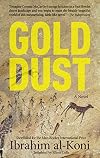
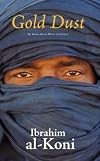
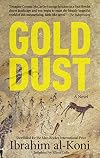
I really couldn't get close to Umayyad--maybe he was too different culturally from me? The Sufi philosophy of Sheikh Musa was often over my head. As the translator said in his Notes, even Arabs are not familiar with that nomadic culture of these blue-veiled men. A Tuareg appears on the cover of my copy of the novel. The strength of the novel was that the harsh desert came before my eyes through the author's vivid descriptions. No time period was specified, but from the vague hints--Italians fighting in Africa and description of the ruins of an Ottoman building--I am assuming the novel was set sometime during World War II.
Recommended as an introduction to this author's works as this is less than 200 pp. long. A Tuareg himself, Mr. al-Koni wrote in Arabic, rather than in their language, Tamasheq. show less
"…when the man [Dudu] died, all his riches would fall into the hands of these cowards. That is the way of this world. They would not sleep a single night until they had torn him limb from limb and blotted him out for good. Flecks of gold dust was all they desired. That vile gold dust. It was the cause of everything that happened. It was gold dust that murdered Dudu, not Ukhayyad. But was there anyone same enough to understand this?"
Ukhayyad flees into a cave with crude prehistoric drawings of a hunt on the walls. Many times in the nights that follow, he has a dream of a ruined house and a shadowy form. Is this an omen? Of what?
I really couldn't get close to Umayyad--maybe he was too different culturally from me? The Sufi philosophy of Sheikh Musa was often over my head. As the translator said in his Notes, even Arabs are not familiar with that nomadic culture of these blue-veiled men. A Tuareg appears on the cover of my copy of the novel. The strength of the novel was that the harsh desert came before my eyes through the author's vivid descriptions. No time period was specified, but from the vague hints--Italians fighting in Africa and description of the ruins of an Ottoman building--I am assuming the novel was set sometime during World War II.
Recommended as an introduction to this author's works as this is less than 200 pp. long. A Tuareg himself, Mr. al-Koni wrote in Arabic, rather than in their language, Tamasheq. show less
A rare book, this - about nomads in the Libyan desert, and about a magnificent camel, and about fate and destiny and nobility... For a short book about a man and his camel, it covers a lot of ground, and makes for a sumptuous read.
Man and his camel in the desert.
I had a book group discussion on this book and have waited until after that to write this review. I had hoped that our Arabic members would have found more content in it and that perhaps I had missed something. But although they seemed to enjoy it more than I did, the discussion did not produce anything new. It is basically a book about a young man, Ukhayyad, who is given a rather special piebald Mahri camel, exquisitely rare, and his relationship with it.
Ukhayyad chose to refuse the bride that his father wanted for him, to unite two tribes, and married for love. As a result he was ostracised from the community and lived in the desert with his camel and his wife. Famine forced him to choose between his show more camel and his family and a large part of the book concerns that dilemna.
Ukhayyad struck me as supremely arrogant man and bragged endlessly about his wondrous camel.
When the camel contracts mange, Ukhayyad tries every remedy he knows to cure his beloved friend and finally has to take the advice of a nomad, to go into a certain part of the Libyan desert and feed the camel on silphium, a herb that is now extinct, but causes halucinations if taken in large amounts. The results of this treatment are another significant part of the narrative.
Finally Ukhayyad's actions catch up with him in a rather gruesome ending.
The author did give a lucid description of life in the desert and I had no reason to feel that Elliott Colla's translation was anything but accurate. The bond between Ukhayyad and his camel was well described, leaving no doubt as to the camel's imnportance. However, the main character was supremely unlikeable and behaved inexcusably, which made it hard to feel more than a moment's compassion for his ultimate fate.
This book reminded me of Paulo Coelho's Alchemist in that it felt like a fable and a moralistic story.
Not a book that I would recommend although I am glad that I have read it. show less
I had a book group discussion on this book and have waited until after that to write this review. I had hoped that our Arabic members would have found more content in it and that perhaps I had missed something. But although they seemed to enjoy it more than I did, the discussion did not produce anything new. It is basically a book about a young man, Ukhayyad, who is given a rather special piebald Mahri camel, exquisitely rare, and his relationship with it.
Ukhayyad chose to refuse the bride that his father wanted for him, to unite two tribes, and married for love. As a result he was ostracised from the community and lived in the desert with his camel and his wife. Famine forced him to choose between his show more camel and his family and a large part of the book concerns that dilemna.
Ukhayyad struck me as supremely arrogant man and bragged endlessly about his wondrous camel.
When the camel contracts mange, Ukhayyad tries every remedy he knows to cure his beloved friend and finally has to take the advice of a nomad, to go into a certain part of the Libyan desert and feed the camel on silphium, a herb that is now extinct, but causes halucinations if taken in large amounts. The results of this treatment are another significant part of the narrative.
Finally Ukhayyad's actions catch up with him in a rather gruesome ending.
The author did give a lucid description of life in the desert and I had no reason to feel that Elliott Colla's translation was anything but accurate. The bond between Ukhayyad and his camel was well described, leaving no doubt as to the camel's imnportance. However, the main character was supremely unlikeable and behaved inexcusably, which made it hard to feel more than a moment's compassion for his ultimate fate.
This book reminded me of Paulo Coelho's Alchemist in that it felt like a fable and a moralistic story.
Not a book that I would recommend although I am glad that I have read it. show less
At the heart of the novel is a fundamental (insufficiently established) assumption. Deep into the novel it lingered…unanswered…. indeed, it remained a prohibitive question. A good example of why translated fiction must overcome a higher literary threshold.
a note to the editors: a book like this, because it is so atypical of the culture it bespeaks, may require a cultural note or disclaimer, for example, that the book is set in an 'isolated' 'nomadic' community not representative of the wider region of origin; or that it is entirely fictional etc. The current formal translation of that community is "Berber" in English. Arabic, the language from which it is translated recognizes that label as derogatory, that information is essential show more to an accurate understanding of the story. The only such indication available in the 2020 edition is The Independent's endorsement quote comparing the work to McCarthy, who's Blood Meridian includes graphic, some would say, gratuitous violence, a discernment the average international reader should not be expected to make, it's too wide a gap to bridge without the translator's guidance. show less
a note to the editors: a book like this, because it is so atypical of the culture it bespeaks, may require a cultural note or disclaimer, for example, that the book is set in an 'isolated' 'nomadic' community not representative of the wider region of origin; or that it is entirely fictional etc. The current formal translation of that community is "Berber" in English. Arabic, the language from which it is translated recognizes that label as derogatory, that information is essential show more to an accurate understanding of the story. The only such indication available in the 2020 edition is The Independent's endorsement quote comparing the work to McCarthy, who's Blood Meridian includes graphic, some would say, gratuitous violence, a discernment the average international reader should not be expected to make, it's too wide a gap to bridge without the translator's guidance. show less
 This review was written for LibraryThing Early Reviewers.
Ratings
Members
- Recently Added By
Author Information

Born in 1948 to a nomadic Saharan family, Ibrahim Al-Koni is an award-winning Arabic-language novelist and has already published more than seventy volumes. A Tuareg whose mother tongue is Tamasheq, he was educated in Moscow and, after many years in Switzerland, now lives in Spain. He is one of the prime authorities on Tuareg culture and folklore. show more William M. Hutchins, Professor in the Philosophy and Religion Department at Appalachian State University, has translated numerous works of Arabic literature into English, including four novels by the Nobel Prize laureate Naguib Mahfouz. He has received two grants from the National Endowment for the Arts for literary translation, both for works by Ibrahim al-Koni. He was co-winner of the 2013 Saif Ghobash Banipal Prize for Arabic Literary Translation for A Land Without Jasmine by Wajdi al-Ahdal. show less
Some Editions
Awards and Honors
Awards
Notable Lists
Series
Belongs to Publisher Series
Common Knowledge
- Canonical title
- Gold Dust
- Original title
- al-Tibr; at-Tibr
- Original publication date
- 1990; 2008 (English Edition) (English Edition)
- People/Characters
- Ukhayyad
- Important places
- Sahara
- Epigraph
- Among those owing fealty to the sultan of this kingdom are the peoples of the deserts of gold dust. The heathen savages who live there bring him gold each year, and when the sultan wishes, he seizes them as his slaves. But as... (show all) the rulers of this kingdom know from experience, no sooner do they conquer one of these cities than the gold begins to swindle. No sooner do they establish Islam there, and no sooner does the call to prayer go out, than the gold dries up completely. Meanwhile, throughout the neighboring heathen countries, the gold continues to grow and grow.
--Ibn Fadlallah al-'Umari (1301-1349), the Kingdom of Mali and its Surroundings - First words
- When Ukhayyad received the camel as a gift from the chief of the Ahaggar tribe, he was still a young colt.
- Last words
- (Click to show. Warning: May contain spoilers.)It had finally become manifest in that moment when Ukhayyad could no longer tell anyone what he had seen.
- Original language
- Arabic
Classifications
- Genres
- Fiction and Literature, General Fiction
- DDC/MDS
- 892.736 — Literature & rhetoric Literatures of other languages Afro-Asiatic literatures Arabic (Egypt, Lebanon, Palestine, Saudi Arabia, Sudan) Arabic fiction 1945–2000
- LCC
- PJ7842 .U54 .T5313 — Language and Literature Oriental languages and literatures Oriental philology and literature Arabic Arabic literature Individual authors or works
- BISAC
Statistics
- Members
- 107
- Popularity
- 298,869
- Reviews
- 6
- Rating
- (3.41)
- Languages
- 9 — Arabic, Danish, Dutch, English, French, German, Italian, Spanish, Swedish
- Media
- Paper, Ebook
- ISBNs
- 16
- ASINs
- 5