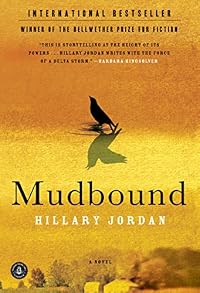
Mudbound
by Hillary Jordan 
On This Page
Description
A powerful piece of Southern literature, Mudbound takes on prejudice in its myriad forms on a Mississippi Delta farm in 1946. City girl Laura McAllen attempts to raise her family despite questionable decisions made by her husband. Tensions continue to rise when her brother-in-law and the son of a family of sharecroppers both return from WWII as changed men bearing the scars of combat.Tags
Recommendations


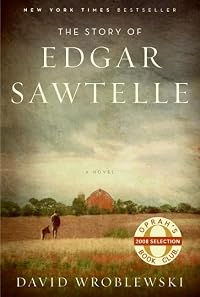
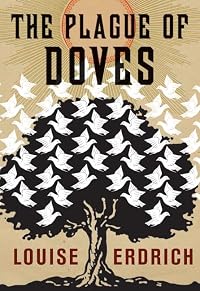
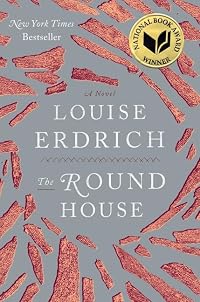
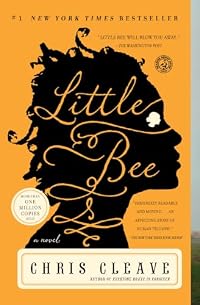
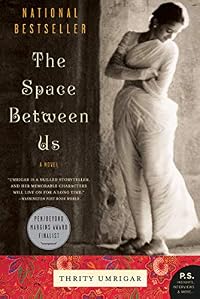
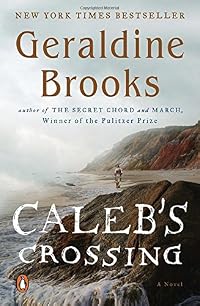
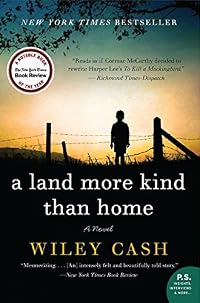
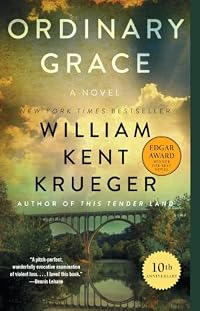


Member Recommendations

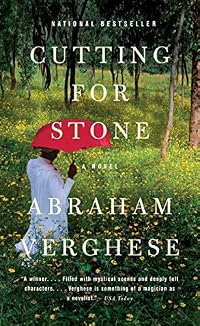
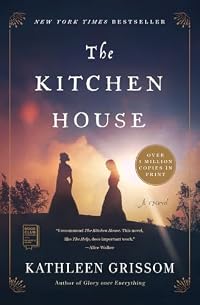
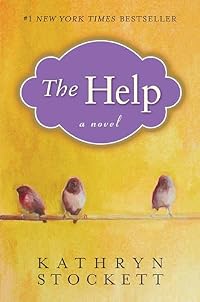
wonderlake Both begin with a death, then go back to tell the story of how it came about

amelielyle Similar themes as Mudbound. Rural early 20th century setting.

Member Reviews
At the time it was published, there was a lot of hype about this book, and for that reason I avoided it. I'm sorry I did. In this case, the hype was deserved.
The novel takes on two themes still pertinent today:PTSD suffered by soldiers returning from war (in this case WW II), and race relations, which although this novel is set in 1946 don't seem to have progressed as much as we would have hoped.
Laura and her husband Henry have begun to farm on the Mississippi delta in 1946. They have several sharecroppers, including a black family. Henry's father, a virulent racist and member of the KKK lives with them. Shortly afterwards, Henry's younger brother, Jamie, a war veteran, comes to stay with them. The oldest son of the black sharecroppers, show more Ronsel, also returns from the war, and he and Jamie strike up a friendship based on their mutual experiences. This doesn't sit well with Henry's father Pappy, or with some of the other townfolk, and we are headed for a tragedy.
The novel is told in alternating chapters by the various characters, including (primarily) Laura, Henry, Jamie, Ronsel, and Ronsel's parents Florence and Hap. The characters are beautifully and realistically depicted, and the story is devastating. Highly recommended.
4 stars show less
The novel takes on two themes still pertinent today:PTSD suffered by soldiers returning from war (in this case WW II), and race relations, which although this novel is set in 1946 don't seem to have progressed as much as we would have hoped.
Laura and her husband Henry have begun to farm on the Mississippi delta in 1946. They have several sharecroppers, including a black family. Henry's father, a virulent racist and member of the KKK lives with them. Shortly afterwards, Henry's younger brother, Jamie, a war veteran, comes to stay with them. The oldest son of the black sharecroppers, show more Ronsel, also returns from the war, and he and Jamie strike up a friendship based on their mutual experiences. This doesn't sit well with Henry's father Pappy, or with some of the other townfolk, and we are headed for a tragedy.
The novel is told in alternating chapters by the various characters, including (primarily) Laura, Henry, Jamie, Ronsel, and Ronsel's parents Florence and Hap. The characters are beautifully and realistically depicted, and the story is devastating. Highly recommended.
4 stars show less
This one took me by surprise. It had been on my bookshelf for close to a year and it may make my
2023 book of the year. Jordan's prose sears like the hot southern sun that bakes everything in sight. This is a magnificent novel, written in one of the most difficult forms of fiction: competing narratives told from the perspective of each character.
Hillary Jordan will weave you into her story so deep, that you will not only read this story you will learn each character so well that you will feel you are there watching this story as it unfolds. I was locked into this book by the third page and was only disappointed when I reached the end and had to stop reading. I continue to be saddened knowing that so many black families suffered such show more great loss and prejudice. show less
2023 book of the year. Jordan's prose sears like the hot southern sun that bakes everything in sight. This is a magnificent novel, written in one of the most difficult forms of fiction: competing narratives told from the perspective of each character.
Hillary Jordan will weave you into her story so deep, that you will not only read this story you will learn each character so well that you will feel you are there watching this story as it unfolds. I was locked into this book by the third page and was only disappointed when I reached the end and had to stop reading. I continue to be saddened knowing that so many black families suffered such show more great loss and prejudice. show less
5***** and a ❤
This is a work of literary fiction that deals with what it means to live in the Jim Crow south just after World War II, when being a war hero isn’t enough to get respect if your skin is black.
The story is told in alternate voices – one character per chapter. We have Laura, a woman from an educated household, a college graduate and “spinster” when she marries Henry McAllan at age 31 in Memphis. Henry is the oldest son of “Pappy” McAllan, a mean, prejudiced cur of a man who sold his wife’s family land at the earliest opportunity and moved in with his married daughter and her banker husband after his wife died. Henry has always longed to be back on the land, farming. And when his brother-in-law dies, and show more he’s left trying to fix his sister’s life and take on the care of his father, he makes a sudden decision (without consulting Laura) to buy a piece of land near Marietta GA. He plans to rent a house in town for Laura and their girls, but he is taken advantage of and without a lease he has no choice but to move the family onto the farm … a ramshackle building with a leaky roof, no electricity, no phone and no plumbing. Laura accepts her lot as Henry’s wife, but puts her foot down when it comes to having Pappy in the same 2-bedroom house – No. So Pappy is moved to the lean-to (after Henry puts in a floor).
As is typical of the South in 1947, they have sharecroppers on the land. Six families live there when Henry buys the place, but he lets three of them go, keeping the three he feels work the hardest. One of these families is the Jacksons – Hap, Florence and their children: Lilly May (who has a club foot), twins Ruel and Marlon (about age 10), and their oldest Ronsel who is away at war when the novel opens. Ronsel is a shining star in the black community – a handsome, strong, intelligent man who has more schooling than most of his contemporaries. He’s a decorated soldier of the 761st Black Panther Tank Battalion and has seen a different world in Europe, where a black man is accepted based on who he is, not shunned based on his skin.
Florence is a strong woman – physically, mentally and emotionally. She’s a midwife and tends her family and her “ladies” with a no-nonsense competence. She also begins to work for the McAllen’s as a cook and housekeeper, helping Laura partly out of pity but mostly because her family can use the extra money. Hap is a man of his race and generation. He’s strong, works hard and smart, is a preacher, and counsels his children to “know their place” in the white man’s world.
And finally we have Jamie, the youngest McAllen son, who has been a bomber pilot in Europe and returns a changed man … charming as ever most of the time, but drinking to excess to quell his demons. His inability to stand up to his father, and his shame over this is a central force in the book.
When Ronsel returns and begins a vague friendship with Jamie over a bottle of whiskey events are set in motion which can only lead to the inevitable tragedy. The ray of hope in the final chapter is a lifeline the author offers. I’m conflicted about accepting it. show less
This is a work of literary fiction that deals with what it means to live in the Jim Crow south just after World War II, when being a war hero isn’t enough to get respect if your skin is black.
The story is told in alternate voices – one character per chapter. We have Laura, a woman from an educated household, a college graduate and “spinster” when she marries Henry McAllan at age 31 in Memphis. Henry is the oldest son of “Pappy” McAllan, a mean, prejudiced cur of a man who sold his wife’s family land at the earliest opportunity and moved in with his married daughter and her banker husband after his wife died. Henry has always longed to be back on the land, farming. And when his brother-in-law dies, and show more he’s left trying to fix his sister’s life and take on the care of his father, he makes a sudden decision (without consulting Laura) to buy a piece of land near Marietta GA. He plans to rent a house in town for Laura and their girls, but he is taken advantage of and without a lease he has no choice but to move the family onto the farm … a ramshackle building with a leaky roof, no electricity, no phone and no plumbing. Laura accepts her lot as Henry’s wife, but puts her foot down when it comes to having Pappy in the same 2-bedroom house – No. So Pappy is moved to the lean-to (after Henry puts in a floor).
As is typical of the South in 1947, they have sharecroppers on the land. Six families live there when Henry buys the place, but he lets three of them go, keeping the three he feels work the hardest. One of these families is the Jacksons – Hap, Florence and their children: Lilly May (who has a club foot), twins Ruel and Marlon (about age 10), and their oldest Ronsel who is away at war when the novel opens. Ronsel is a shining star in the black community – a handsome, strong, intelligent man who has more schooling than most of his contemporaries. He’s a decorated soldier of the 761st Black Panther Tank Battalion and has seen a different world in Europe, where a black man is accepted based on who he is, not shunned based on his skin.
Florence is a strong woman – physically, mentally and emotionally. She’s a midwife and tends her family and her “ladies” with a no-nonsense competence. She also begins to work for the McAllen’s as a cook and housekeeper, helping Laura partly out of pity but mostly because her family can use the extra money. Hap is a man of his race and generation. He’s strong, works hard and smart, is a preacher, and counsels his children to “know their place” in the white man’s world.
And finally we have Jamie, the youngest McAllen son, who has been a bomber pilot in Europe and returns a changed man … charming as ever most of the time, but drinking to excess to quell his demons. His inability to stand up to his father, and his shame over this is a central force in the book.
When Ronsel returns and begins a vague friendship with Jamie over a bottle of whiskey events are set in motion which can only lead to the inevitable tragedy. The ray of hope in the final chapter is a lifeline the author offers. I’m conflicted about accepting it. show less
In 1939, at age thirty-one Laura is considered almost unmarriageable. All of her siblings have married and left the family home in Memphis. She has resigned herself to the fate of spinster schoolteacher when Henry McAllen appears and wants to marry her. He seems like a kind man, even if he is ten years older than her and with a limp from his time in France during the Great War. Unlike her family, he prefers the country and wants someday to move back to Mississippi and have his own farm. Feeling that this may be her only chance for marriage Laura swallows her fears and agrees. World War II changes both of their plans and those of everyone around them, but when the war ends, Henry moves his family, now grown to include two daughters and show more his father, to a farm in rural Mississippi. The life and people they encounter there shape the narrative of Hillary Jordan’s powerful debut novel Mudbound.
Through a series of unfortunate events Henry and Laura do not get the lovely house and acreage Henry described for their farm. Instead, he is swindled and they must live on their land in a shack with no plumbing or electricity. Henry has not deliberately lied to Laura but it hardly matters; her life has gone from one of gentility to one of drudgery. In short order she has not only two children to take care of, but also Henry’s father, a miserable, belligerent racist, who makes everyone’s life as miserable as the inside of his own twisted mind. Their income is derived in part from their own crops and from another family who lives on a parcel of their land. The Jacksons have the same kind of dreams as the McAllens but as blacks in the 1940s South they are even less likely to achieve them.
Jordan gives all of the main characters in Mudbound a voice, and delineates them so clearly it never becomes confusing. As different as they are two of the most memorable are Ronsel and Laura. He is the hope of his parents, but is unable to reconcile himself to being relegated a second class citizen in the country he fought for with distinction. The intelligence and pride that served him so well in Europe only causes him problems in Mississippi. For Laura, life is a dreary, loveless existence acting as a maid to a bitter, racist old man who, despite having sold his son’s birthright, believes his word is law. That Jordan can slip into the skins of such a diverse and conflicted set of characters means that by the end she has laid her story down so skillfully that their actions, as repugnant as some may be, are the only option. Mudbound is filled with a strong, quiet sorrow that permeates the page the way the mud pervades every aspect of its characters’ lives. It is a portrait of a time in American history that is as shameful now as it was then. show less
Through a series of unfortunate events Henry and Laura do not get the lovely house and acreage Henry described for their farm. Instead, he is swindled and they must live on their land in a shack with no plumbing or electricity. Henry has not deliberately lied to Laura but it hardly matters; her life has gone from one of gentility to one of drudgery. In short order she has not only two children to take care of, but also Henry’s father, a miserable, belligerent racist, who makes everyone’s life as miserable as the inside of his own twisted mind. Their income is derived in part from their own crops and from another family who lives on a parcel of their land. The Jacksons have the same kind of dreams as the McAllens but as blacks in the 1940s South they are even less likely to achieve them.
Jordan gives all of the main characters in Mudbound a voice, and delineates them so clearly it never becomes confusing. As different as they are two of the most memorable are Ronsel and Laura. He is the hope of his parents, but is unable to reconcile himself to being relegated a second class citizen in the country he fought for with distinction. The intelligence and pride that served him so well in Europe only causes him problems in Mississippi. For Laura, life is a dreary, loveless existence acting as a maid to a bitter, racist old man who, despite having sold his son’s birthright, believes his word is law. That Jordan can slip into the skins of such a diverse and conflicted set of characters means that by the end she has laid her story down so skillfully that their actions, as repugnant as some may be, are the only option. Mudbound is filled with a strong, quiet sorrow that permeates the page the way the mud pervades every aspect of its characters’ lives. It is a portrait of a time in American history that is as shameful now as it was then. show less
Having now read several of the multiple-generation, multi-race, multiple perspective novels set somewhere in the last century or two, I get bored with them easily. This one stood up to the challenge, however.
The characters are (with the exception of "Pappy," the old cranky grandfather) well developed and real. A couple of plot threads were left unresolved at the end (Where does Ronsel end up? What happens to his kid? Does Henry ever find out about Jaime and Laura? Do they stay on the farm?), but an epilogue would have ruined a lot of the magic of the book.
The characters are so believable that I felt I was listening to a story told by a grandparent, not reading a book about a place I've never been told by a person I've never met. I show more finished it in less than two days, most of it in one sitting. Definitely made me glad that I grew up in a world much less racist than 1940's Mississippi. show less
The characters are (with the exception of "Pappy," the old cranky grandfather) well developed and real. A couple of plot threads were left unresolved at the end (Where does Ronsel end up? What happens to his kid? Does Henry ever find out about Jaime and Laura? Do they stay on the farm?), but an epilogue would have ruined a lot of the magic of the book.
The characters are so believable that I felt I was listening to a story told by a grandparent, not reading a book about a place I've never been told by a person I've never met. I show more finished it in less than two days, most of it in one sitting. Definitely made me glad that I grew up in a world much less racist than 1940's Mississippi. show less
Two families in rural Mississippi shortly after WWII, a black share tenant family, and the white landowners they work for are the major characters as well as the narrative voices of this novel. Each family has a son who served in the war and who stays in Europe for a time after it ends, before coming back to a world where they no longer belong. Jamie MacAllan was a bit messed up before he joined the air corps; his father has always treated him as a lesser being than his much older brother Henry. His distinguished service as a bomber pilot has not improved his father's opinion of him nor his treatment, which is emotionally and sometimes physically abusive. Jamie is tormented by nightmares about the people he dropped bombs on, and by his show more father's taunts that a "real man" would have fought on the ground...facing the people he was paid to kill. Ronsel Jackson served as a tank commander in a segregated unit under General Patton (the real "Black Panthers", the 761st Tank Battalion---its history makes very interesting reading). He comes home to a loving family, but a social environment that has no more respect for a black man than it did before he left. Neither he nor Jamie have any business trying to return to this place, and they have much more in common with each other than they do with their "equals" at home. One of the things they have in common is a fondness for the oblivion bestowed by a bottle of whiskey, which only adds to the inflammatory situations they find themselves in. There are other voices in this novel as well---Henry and his wife, Laura; Ronsel's mother Florence and his father, Hap. All come alive on the page and engage our sympathies to a greater or lesser degree. The only main character we do not hear from directly is Pappy, Henry and Jamie's shiftless cantankerous sire--we are free to despise him without reservation. A page-turner that will churn your stomach and crush your heart.
Review written January 2019 show less
Review written January 2019 show less
Mudbound by Hillary Jordan was an exquisite piece of modern Southern literature. In her debut novel, Jordan crafted a story of family, race and farm life set in 1940’s Mississippi. Heart-wrenching, Mudbound will leave any reader stunned by the tragedy of the American South from not too long ago.
The book has several narrators: Laura, a Memphis belle who reluctantly moved to her husband’s farm; Henry, her husband who loved his farm more than anything; Hap, one of Henry’s tenants; and his wife Florence, a superstitious midwife who could smell trouble a mile away. Added to this mix were Jamey and Ronsel – veterans who came home with a restlessness that could not be resolved on the farm.
At the root of this story was the racial show more injustice prevalent in the 1940’s South. Hap, Florence and Ronsel experience racism every day of their lives– from deferring to their white neighbors to using the back door at the local store. Ronsel, after fighting for his country, could not readjust to the white-centric society. After discovering he fathered a child with a woman in Germany, Ronsel realized that the time to go was now.
However, the white people of this farming community had a different plan for Ronsel, who they found uppity and disrespectful. I don’t want to give away too much, but Ronsel’s ordeal was heart-breaking. He was a character I was rooting for, and I was disgusted with how he was treated by others.
Jordan’s characterization was spot-on. There were characters you loved, ones you felt sorry for and others you hated. It saddens me that racism is part of Southern history, but I believe it’s important to read stories, such as Mudbound, to remind ourselves about this struggle for equality. I highly recommend Mudbound to Southern book lovers everywhere. show less
The book has several narrators: Laura, a Memphis belle who reluctantly moved to her husband’s farm; Henry, her husband who loved his farm more than anything; Hap, one of Henry’s tenants; and his wife Florence, a superstitious midwife who could smell trouble a mile away. Added to this mix were Jamey and Ronsel – veterans who came home with a restlessness that could not be resolved on the farm.
At the root of this story was the racial show more injustice prevalent in the 1940’s South. Hap, Florence and Ronsel experience racism every day of their lives– from deferring to their white neighbors to using the back door at the local store. Ronsel, after fighting for his country, could not readjust to the white-centric society. After discovering he fathered a child with a woman in Germany, Ronsel realized that the time to go was now.
However, the white people of this farming community had a different plan for Ronsel, who they found uppity and disrespectful. I don’t want to give away too much, but Ronsel’s ordeal was heart-breaking. He was a character I was rooting for, and I was disgusted with how he was treated by others.
Jordan’s characterization was spot-on. There were characters you loved, ones you felt sorry for and others you hated. It saddens me that racism is part of Southern history, but I believe it’s important to read stories, such as Mudbound, to remind ourselves about this struggle for equality. I highly recommend Mudbound to Southern book lovers everywhere. show less
Members
- Recently Added By
Lists

Read the book and saw the movie
1,170 works; 195 members

Historical Fiction
889 works; 89 members

Top Five Books of 2014
1,064 works; 397 members

Top Five Books of 2015
811 works; 240 members

Powell's Indiespensable
79 works; 6 members

My TBR Challenge Leftovers
22 works; 1 member
First Novels
373 works; 17 members

Biggest Disappointments
606 works; 163 members

New Southern Fiction
2 works; 2 members

Five star books
1,755 works; 108 members
Author Information

Hillary Jordan is a LibraryThing Author, an author who lists their personal library on LibraryThing.
Some Editions
Awards and Honors
Awards
Distinctions
Notable Lists
Series
Belongs to Publisher Series
Work Relationships
Has the adaptation
Common Knowledge
- Canonical title*
- Fiori nel fango
- Original title
- Mudbound
- Original publication date
- 2008-03-04 (1e édition originale américaine) (1e édition originale américaine); 2010-03-04 (1e traduction et édition française, Littérature étrangère, Belfond) (1e traduction et édition française, Littérature étrangère, Belfond)
- People/Characters
- Laura McAllan; Henry McAllan; Jamie McAllan; Ronsel Jackson; Pappy; Doc Turpin (show all 9); Florence Jackson; Hap Jackson; Vera Atwood
- Important places
- Mississippi, USA; Memphis, Tennessee, USA
- Important events
- World War II
- Related movies
- Mudbound (2017 | IMDb)
- Epigraph
- If I could do it, I'd do no writing at all here. It would be photographs; the rest would be fragments of cloth. bits of cotton, lumps of earth, records of speech, pieces of wood and iron, phials of odors, plates of food and ... (show all)of excrement.... A piece of the body torn out by the roots might be more to the point.----James Agee, "Let us Now Praise Famous Men"
- Dedication
- To Mother, Gay and Nana, for the stories
- First words
- Henry and I dug the hole seven feet deep.
- Last words
- (Click to show. Warning: May contain spoilers.)If he worked and prayed hard enough. If he was stubborn as well as lucky. If he really had a shine.
- Blurbers
- Kingsolver, Barbara; Stewart O'Nan
- Original language
- English US
- Canonical DDC/MDS
- 813.6
*Some information comes from Common Knowledge in other languages. Click "Edit" for more information.
Classifications
Statistics
- Members
- 3,208
- Popularity
- 5,344
- Reviews
- 219
- Rating
- (4.07)
- Languages
- 10 — Dutch, English, French, German, Italian, Norwegian (Bokmål), Norwegian, Portuguese, Spanish, Swedish
- Media
- Paper, Audiobook, Ebook
- ISBNs
- 55
- ASINs
- 17
