Poems
by Anna Ahkmatova
On This Page
Description
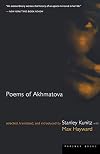
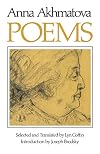
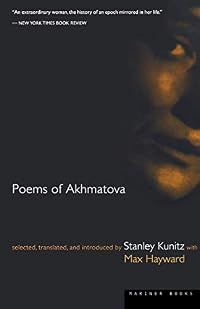
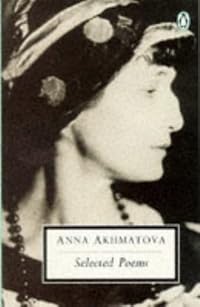
Anna Akhmatova died in 1966, acclaimed as Russia's greatest woman poet. Her brilliant, intense work, of which this volume is a careful selection, can be read in sequence as a powerful chronicle of her country in the twentieth century. Before 1918 she wrote avant-garde verse, was star of the St. Petersburg literary circle and a friend of Boris Pasternak, Osip Mandelstam and Alexander Blok. She lived through the Revolution and the two world wars, endured the siege of Leningrad, and during show more Stalin's great purge of the thirties suffered official contempt and censorship and the loss by death or exile of her loved ones. The stark, searing poems from the time of the Terror onward express all the despair, rage and anguish of the Russian intellectuals of that era. This volume is enhanced by essays on her life and work by the translators.--From publisher description. show lessTags
Recommendations








Member Reviews
There are some works for which the least said is the better. Any fulsome review would be sure to crush the thing. Delicate, hardy, economical, restrained, yet packing an emotional sock in the jaw. One leaves these works with a sense of awe at the power of words.
There are some works for which the least said is the better. Any fulsome review would be sure to crush the thing. Delicate, hardy, economical, restrained, yet packing an emotional sock in the jaw. One leaves these works with a sense of awe at the power of words.
There are some works for which the least said is the better. Any fulsome review would be sure to crush the thing. Delicate, hardy, economical, restrained, yet packing an emotional sock in the jaw. One leaves these works with a sense of awe at the power of words.
Akhmatova's poetry is wonderful. It is to Kunitz's credit that he provides a bilingual edition of the book.
His translations, however, are not wonderful. If I didn't know Russian, I would flip through this book and be utterly bemused as to why anyone thinks Anna Akhmatova is even a remotely good poet. Of course, she really is one of the greatest poets in the history of Russian literature (and one of my favorites too).
To his credit, Kunitz does acknowledge that translating Akhmatova is a very tough task. Since Akhmatova doesn't really use gimmicks in her poetry, it's really difficult to translate, especially because certain formal elements of her poetry are very hard to mimic in English without completely altering the general sense of the show more poetry.
But one could go on forever about why translation is hard, and that doesn't really get to the problem here. There are many times when Akhmatova writes a few lines that form a totally clear sentence. Kunitz translates this into contorted English syntax that makes the speaker spend a long time figuring out what he's even trying to say. That's completely, completely antithetical to the spirit of Akhmatova's poetry, which is generally piercing in its clarity. As near as I can tell, the main motivation of this is to preserve the formal structure of the poetry. Any translation that chooses to completely destroy the sense and feeling of a poem in order to vaguely mimic the rhyme scheme is, I think, truly misguided.
Other, better translations of Akhmatova exist (and, I think, are in print). Any interested reader would be well advised to find them.
(A) show less
His translations, however, are not wonderful. If I didn't know Russian, I would flip through this book and be utterly bemused as to why anyone thinks Anna Akhmatova is even a remotely good poet. Of course, she really is one of the greatest poets in the history of Russian literature (and one of my favorites too).
To his credit, Kunitz does acknowledge that translating Akhmatova is a very tough task. Since Akhmatova doesn't really use gimmicks in her poetry, it's really difficult to translate, especially because certain formal elements of her poetry are very hard to mimic in English without completely altering the general sense of the show more poetry.
But one could go on forever about why translation is hard, and that doesn't really get to the problem here. There are many times when Akhmatova writes a few lines that form a totally clear sentence. Kunitz translates this into contorted English syntax that makes the speaker spend a long time figuring out what he's even trying to say. That's completely, completely antithetical to the spirit of Akhmatova's poetry, which is generally piercing in its clarity. As near as I can tell, the main motivation of this is to preserve the formal structure of the poetry. Any translation that chooses to completely destroy the sense and feeling of a poem in order to vaguely mimic the rhyme scheme is, I think, truly misguided.
Other, better translations of Akhmatova exist (and, I think, are in print). Any interested reader would be well advised to find them.
(A) show less
"Your lynx-eyes Asia,
stare at my discontent,
they bring to light
my buried self,
something formerly unknown,
no more to be endured
than the mid-day sun in Termez.
Pre-memory floods the mind,
like molten lava on the sands,
as if I were drinking my own tears
from a cupped palm of a stranger's hand.
stare at my discontent,
they bring to light
my buried self,
something formerly unknown,
no more to be endured
than the mid-day sun in Termez.
Pre-memory floods the mind,
like molten lava on the sands,
as if I were drinking my own tears
from a cupped palm of a stranger's hand.
I don't get these poems easily--I can't just pick this book up and understand. Still, there are some that strike immediately:
"The three things he loved most in life
Were white peacocks, music at mass,
And tattered maps of America.
He didn't like kids who cried and he
Didn't like raspberry jam with tea
Or womanish hysteria.
...And I was, like it or not, his wife."
"The three things he loved most in life
Were white peacocks, music at mass,
And tattered maps of America.
He didn't like kids who cried and he
Didn't like raspberry jam with tea
Or womanish hysteria.
...And I was, like it or not, his wife."
Infused with great sadness for what became of the generation she grew up with and for her country; some of her earlier poems are lighthearted, witty, sweet. I wonder what she would have written if her life had not been bound fast with tragedy. A few thoughts on one of the poems here: http://rosemaryandreadingglasses.wordpress.com/2013/04/30/like-an-ermine-mantle-...
Members
- Recently Added By
Lists

Harold Bloom - The Western Canon: D. The Chaotic Age
833 works; 24 members

Literary Witches
86 works; 4 members

Favorite Books in Translation
320 works; 133 members
Author Information

236+ Works 3,285 Members
Some Editions
Common Knowledge
- Canonical title
- Poems;
- Alternate titles
- Akhmatova: Poems
Classifications
- Genres
- Poetry, Fiction and Literature
- DDC/MDS
- 891.7142 — Literature & rhetoric Literatures of other languages East Indo-European and Celtic literatures Russian and East Slavic languages Russian poetry USSR 1917–1991 Early 20th century 1917–1945
- LCC
- PG3476 .A324 .A24 — Language and Literature Slavic languages and literatures. Baltic languages. Albanian language Slavic. Baltic. Albanian Russian literature Individual authors and works 1917-1960
- BISAC
Statistics
- Members
- 535
- Popularity
- 55,405
- Reviews
- 8
- Rating
- (4.11)
- Languages
- English, Norwegian, Portuguese, Russian
- Media
- Paper
- ISBNs
- 10
- UPCs
- 1
- ASINs
- 2