
On This Page
Description
Just after World War I, Tommy Beresford and Tuppence Cowley are desperately short of money. With a shortage of job opportunities, they form a partnership, hiring themselves out as "young adventurers, willing to do anything, go anywhere." In their first dangerous assignment, they must use all their ingenuity to save not only their own lives but also the life of a mysterious girl.The girl in the photograph has been missing for five years. Neither her body nor the secret documents she was show more carrying have ever been found. Now postwar England's economic recovery depends on finding her and getting the papers back. But the two young Brits working undercover for the ministry, Tommy and Tuppence, know only that her name was Jane Finn and the only photo of her is in the hands of her rich American cousin. They don't yet know about a mysterious and ruthless man called "Mr. Brown" or the beautiful but sinister older woman who knows all about Jane Finn—and therefore must die.
. show less
Tags
Recommendations














Member Recommendations


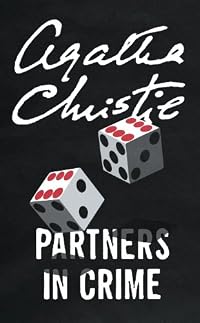
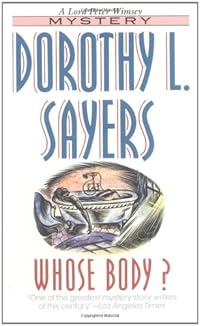
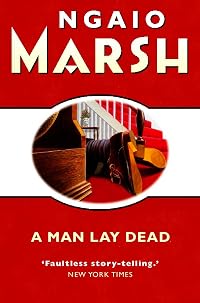
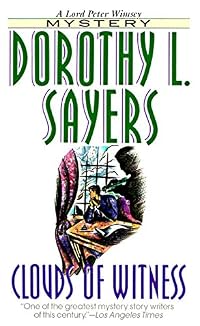
themulhern These books have much the same sort of plot and style, although very different settings.
Member Reviews
Frankly, this is a potboiler, nowhere near the level achieved by Christie in her first novel 'The Mysterious Affair at Styles' which introduced us to Hercule Poirot.
Written in 1922, it is an espionage adventure for a middle class audience terrified of the Bolsheviks and the rising Labour movement. It starts with the Lusitania and secret treaties in 1915 and ends with the threat of a revolutionary-inspired General Strike.
Inbetween, our young heroes scoot around London and Britain as unofficial agents of the British Secret Service (in near-perfect harmony with Washington, then as now) and face death at many turns (though none of it feels very real). The young are filled with energy and the old with wisdom.
The British working class are, show more of course, not the villains but are seen as manipulated victims of foreign interests - criminal, political and, of course, German and Russian (not much changes when it comes to English middle class neurosis when troublesome change is on the horizon).
Deeply patronising stuff but my grandparents had trouble in theearly 1920s scrabbling the money together to feed themselves so were scarcely in a position to spend 7/6 net on a popular hardback. As a result, they were almost certainly unaware of being patronised - at least in popular hardbacks.
Yet, as an insight into the culture of the time, it has its charms - the upper middle class language tics ('old bean', 'I say', 'ever so much'), the respect for authority (unto death in the trenches), the fascination with rich and energetic American cousins - but it is fundamentally shallow.
There is, here as elsewhere in Christie's world, that middle class obsession with money and property (the book feels as if it was written for cash and not art) amongst people who can be both 'on their uppers' and know that they are gentlefolk and must do better.
Whereas Christie's murderers seek to solve their problems through murder against recalcitrant elders and relatives, Tommy and Tuppence show some real entrepreneurial gumption that makes them connections as valuable as any sought by Jane Austen's heroines. The world is much the same.
A certain admiration of the brash American millionaire (probably billionaire in today's money) contains no snobbery. The American rich are the natural country cousins of an upper middle class beset by decline into a shabby lower middle class status and manipulable workers alike.
In fact, the attitude to the English working man, apparently incapable of agency, is not a million miles from that of the modern cosmopolitan middle class (looking to Brussels rather than New York) towards the Brexit Party, allegedly the creature of Russian money and hedge fund bosses.
It reminds us that class attitudes in Britain are very deep rooted and that the Labour Movement then and the Brexit Movement now probably have more in common in their challenge to the prevailing order than may seem at first obvious.
As to the story, even I, not the sharpest tool in the tool box when it comes to mysteries, worked out who the villain was about a third of the way through while the psychology is a world away from that of her first novel - basically, barely existent.
Having said that, the two adventurers, Tommy and Tuppence, are fun and the tale could have been made into a light-hearted film a decade later, along 'Thirty Nine Steps' or 'Thin Man' lines. The villains are villains to the point of caricature and the heroes perfect for light entertainment. show less
Written in 1922, it is an espionage adventure for a middle class audience terrified of the Bolsheviks and the rising Labour movement. It starts with the Lusitania and secret treaties in 1915 and ends with the threat of a revolutionary-inspired General Strike.
Inbetween, our young heroes scoot around London and Britain as unofficial agents of the British Secret Service (in near-perfect harmony with Washington, then as now) and face death at many turns (though none of it feels very real). The young are filled with energy and the old with wisdom.
The British working class are, show more of course, not the villains but are seen as manipulated victims of foreign interests - criminal, political and, of course, German and Russian (not much changes when it comes to English middle class neurosis when troublesome change is on the horizon).
Deeply patronising stuff but my grandparents had trouble in theearly 1920s scrabbling the money together to feed themselves so were scarcely in a position to spend 7/6 net on a popular hardback. As a result, they were almost certainly unaware of being patronised - at least in popular hardbacks.
Yet, as an insight into the culture of the time, it has its charms - the upper middle class language tics ('old bean', 'I say', 'ever so much'), the respect for authority (unto death in the trenches), the fascination with rich and energetic American cousins - but it is fundamentally shallow.
There is, here as elsewhere in Christie's world, that middle class obsession with money and property (the book feels as if it was written for cash and not art) amongst people who can be both 'on their uppers' and know that they are gentlefolk and must do better.
Whereas Christie's murderers seek to solve their problems through murder against recalcitrant elders and relatives, Tommy and Tuppence show some real entrepreneurial gumption that makes them connections as valuable as any sought by Jane Austen's heroines. The world is much the same.
A certain admiration of the brash American millionaire (probably billionaire in today's money) contains no snobbery. The American rich are the natural country cousins of an upper middle class beset by decline into a shabby lower middle class status and manipulable workers alike.
In fact, the attitude to the English working man, apparently incapable of agency, is not a million miles from that of the modern cosmopolitan middle class (looking to Brussels rather than New York) towards the Brexit Party, allegedly the creature of Russian money and hedge fund bosses.
It reminds us that class attitudes in Britain are very deep rooted and that the Labour Movement then and the Brexit Movement now probably have more in common in their challenge to the prevailing order than may seem at first obvious.
As to the story, even I, not the sharpest tool in the tool box when it comes to mysteries, worked out who the villain was about a third of the way through while the psychology is a world away from that of her first novel - basically, barely existent.
Having said that, the two adventurers, Tommy and Tuppence, are fun and the tale could have been made into a light-hearted film a decade later, along 'Thirty Nine Steps' or 'Thin Man' lines. The villains are villains to the point of caricature and the heroes perfect for light entertainment. show less
Tommy & Tuppence mysteries have a much lighter tone than many of Christie's other books, mostly because the pair often seems to stumble into their stories entirely accidentally and use a combination of luck and young & hearty English charm to get out again. The Secret Adversary, which is actually the first installment of Tommy & Tuppence's partnership, is no exception. I really like the book, despite Christie's conservative politics peeping through, and I'll admit I was totally surprised by the final reveal.
By the way, Nadia May does a great job narrating- all the other T&T audiobooks I'm seeing are done by the old stalwart Hugh Fraser, who handles Poirot so deftly and I've never been disappointed by, but I kind of wish I had access to show more more Nadia May, since her Tuppence is so delightful. show less
By the way, Nadia May does a great job narrating- all the other T&T audiobooks I'm seeing are done by the old stalwart Hugh Fraser, who handles Poirot so deftly and I've never been disappointed by, but I kind of wish I had access to show more more Nadia May, since her Tuppence is so delightful. show less
I knew nothing about this book when I started it, other than it was Agatha Christies' second novel, published in 1922 when Agath Christie was in her early thirties. It was a delightful surprise to find that Agatha Christie had written a thriller that wasn't about solving a crime. And what a rollicking good read it was, a true ripping yarn that thought big, moved fast. Good grief, could you have a more dramatic start than being in the Lusitania on the day it's torpedoed? How Hollywood is that?
'The Secret Adversary' took 'The Thirty-Nine Steps', pushed all the stuffy stuff to one side and replaced the omnicompetent male hero with a young couple, Tommy and Tuppence, who are clearly winging it and where the young woman is the one with the show more drive and flair.
Tuppence and Tommy are irrepressible. Tommy is a sort of Hastings but with a better brain and a willingness to use his fists on the bad guys. Tuppence is.. well... Tuppence and all the better for it. These two have none of Marple's acidic insights into human nature or Poirot's strutting use of a 'method'. They're two good kids who have known each other forever, have a had a war full of challenges that have given them confidence in their own abilities and then they've been kicked out into civilian life with no money and no prospects. They are commiserating with each others poverty in a Lyons when Tuppence comes up with the idea that the two of them should form 'A Young Adventurer's Club' and get paid for doing exciting things.
Tuppence and Tommy are irrepressible. Tommy is a sort of Hastings but with a better brain and a willingness to use his fists on the bad guys. Tuppence is.. well... Tuppence and all the better for it. These two have none of Marple's acidic insights into human nature or Poirot's strutting use of a 'method'. They're two good middle-class kids who have known each other forever, have a had a war full of challenges that have given them confidence in their own abilities and then they've been kicked out into civilian life with no money and no prospects. In many ways, they are the exemplars of their generation.
They are commiserating with each other's poverty in a Lyons when Tuppence comes up with the idea that the two of them should form 'A Young Adventurer's Club' and get paid for doing exciting things.
This sounded more like something out of H. Rider Haggard than a business plan. She is certain that what they lack in funds and experience and contacts they can make up for with energy and enthusiasm.
Fortunately, fate intervenes, Tuppence's proposal has been overheard and soon the two of them are in the middle of some murky goings-on related to Russian spies, secret documents, a missing woman and a criminal mastermind intent on bringing down the government.
I loved the lightness of tone of the book, including Agatha Christie's willingness to pile on co-incidence after co-incidence and just smile through it.
The dialogue between Tuppence and Tommy is wonderful. At one point Tuppenence upbraids Tommy by saying
'You're more conceited than I am but with less excuse.'
What a great line.
Then there are the period touches that make me smile, like hearing Tuppence's dress being described as short and then understanding that this meant that it displayed her ankles.
The politics is nonsense but I didn't mind that as it was just a pattern on the wrapping paper for the McGuffin that kept the plot moving.
I also liked that Tuppence and Tommy weren't joined at the hip. They spent most of the novel apart with each of them putting themselves in harm's way and relying on a mixture of courage, quick thinking and pure luck to see them through as they make their chaotic way towards the true identity of the notorious but anonymous criminal mastermind, Mr Brown.
Towards the end, Agatha Christie kicked the plotting up a gear. The action was rapid, the stakes were high and I found myself playing 'Will the real Mr Brown please stand up' right to the end.
I'm glad to see that there are more Tommy and Tuppence novels. I will definitely be reading them. show less
This was fantastic. This mystery was strong and had me guessing with all the twists and turns and drama. I didn't see it coming. Well written, fast paced and humorous. The characters - wow. I LOVED Tommy and Tuppence. Tommy is down to earth, logical and calm. Tuppence is headstrong, quickwitted and severe. I loved how practical and honest Tuppence is - and she has such a sense of adventure. Afterall their inital partnership is thus named The Young Adventurers, Ltd - ‘Two young adventurers for hire. Willing to do anything, go anywhere. Pay must be good. No unreasonable offer refused.’
Christie, Agatha. The Complete Tommy & Tuppence Collection (Tommy & Tuppence Mysteries) . William Morrow Paperbacks. Kindle Edition.
The banter between show more them is adorable. They've known each other since childhood and are great friends and it's clear in every interaction that they have a long history and feel comfortable around one another. Tuppence may be strong willed and imaginative but Tommy is no push over - he's more than willing to call Tuppence out on her crap.
“There wouldn’t be the least difference if you were caught!”
“Perhaps not. But I shouldn’t be caught. I’m so clever.”
“Modesty always was your besetting sin,” remarked Tommy.
Christie, Agatha. The Complete Tommy & Tuppence Collection (Tommy & Tuppence Mysteries) . William Morrow Paperbacks. Kindle Edition.
Together they make one hell of a team. And I don't think I've read any other book set in this time where the female character is so badass. I mean she tackles a guy.
“Just a word with your pretty friend here.” He stretched out an unsteady hand, and clutched Jane by the shoulder. Tuppence heard other footsteps behind. She did not pause to ascertain whether they were friends or foes. Lowering her head, she repeated a manœuvre of childish days, and butted their aggressor full in the capacious middle. The success of these unsportsmanlike tactics was immediate. The man sat down abruptly on the pavement. Tuppence and Jane took to their heels.
Christie, Agatha. The Complete Tommy & Tuppence Collection (Tommy & Tuppence Mysteries) . William Morrow Paperbacks. Kindle Edition.
I mean sure I've read heroines outsmarting people. Thinking for themselves. Being proactive when faced with danger. But I think it's a first to read one who's willing to physically take on an attacker in such a manner. Belting someone over the head with a candlestick yes. Rugby tackling no. And it was freaking awesome!
The romance is very abrupt and somewhat disjointed but the friendship between them is really special and makes it easier to ignore. The other characters were interesting but my favourite was Albert. Especially how he's taken in by the idea of spies and criminals and whatnot. It was adorable to read Tuppence buying threepenny detective novels to make sure she had more cliches ready for him. Plus when Tommy and Albert commando crawl unnecessarily to undertake surveillance. It was awesome.
Overall a solid read. 4.5 stars, rounded to 5. show less
Christie, Agatha. The Complete Tommy & Tuppence Collection (Tommy & Tuppence Mysteries) . William Morrow Paperbacks. Kindle Edition.
The banter between show more them is adorable. They've known each other since childhood and are great friends and it's clear in every interaction that they have a long history and feel comfortable around one another. Tuppence may be strong willed and imaginative but Tommy is no push over - he's more than willing to call Tuppence out on her crap.
“There wouldn’t be the least difference if you were caught!”
“Perhaps not. But I shouldn’t be caught. I’m so clever.”
“Modesty always was your besetting sin,” remarked Tommy.
Christie, Agatha. The Complete Tommy & Tuppence Collection (Tommy & Tuppence Mysteries) . William Morrow Paperbacks. Kindle Edition.
Together they make one hell of a team.
“Just a word with your pretty friend here.” He stretched out an unsteady hand, and clutched Jane by the shoulder. Tuppence heard other footsteps behind. She did not pause to ascertain whether they were friends or foes. Lowering her head, she repeated a manœuvre of childish days, and butted their aggressor full in the capacious middle. The success of these unsportsmanlike tactics was immediate. The man sat down abruptly on the pavement. Tuppence and Jane took to their heels.
Christie, Agatha. The Complete Tommy & Tuppence Collection (Tommy & Tuppence Mysteries) . William Morrow Paperbacks. Kindle Edition.
I mean sure I've read heroines outsmarting people. Thinking for themselves. Being proactive when faced with danger. But I think it's a first to read one who's willing to physically take on an attacker in such a manner. Belting someone over the head with a candlestick yes. Rugby tackling no. And it was freaking awesome!
The romance is very abrupt and somewhat disjointed but the friendship between them is really special and makes it easier to ignore. The other characters were interesting but my favourite was Albert.
Overall a solid read. 4.5 stars, rounded to 5. show less
"Tommy, old thing!"
"Tuppence, old bean!"
The two young people greeted each other affectionately, and momentarily blocked the Dover Street Tube exit in doing so. The adjective "old" was misleading. Their united ages would certainly not have totalled forty-five.
It's 1919, the Great War is over, England's young people are trying to get back on their feet again, and the sinking of the Lusitania is just a memory to most. (Dame Christie's second novel was written around the time of its setting, but not published until 1922.) After a brief prologue set on that sinking ship, we're introduced to our youthful protagonists, childhood friends who decide to team up as The Young Adventurers, Ltd, to make some quick money doing whatever (within reason) show more someone will pay them to do. Bluffing their way through some odd situations, they find themselves searching for the mysterious Jane Finn, who survived the sinking of the Lusitania, possibly with some highly classified documents, then disappeared without a trace. The "good guys" and the "bad guys" are trying to track down the young American woman and the documents to save or destroy England.
Having read through the Hercule Poirot series over the last three years, this was a lovely change. Tommy and Tuppence as young and scrappy, their creator doesn't yet disdain young people (being much closer to their age herself), and there's a bit of a madcap vibe to this one that I really enjoy. AND! I actually figured out the identity of the villain Charming barrister Sir James Peel Edgerton is actually the mysterious Mr. Brown, pulling all the strings to bring about the fall of England , although Christie did her best to throw me off the scent. I look forward to seeing how T & T age through the rest of this brief series. show less
"Tuppence, old bean!"
The two young people greeted each other affectionately, and momentarily blocked the Dover Street Tube exit in doing so. The adjective "old" was misleading. Their united ages would certainly not have totalled forty-five.
It's 1919, the Great War is over, England's young people are trying to get back on their feet again, and the sinking of the Lusitania is just a memory to most. (Dame Christie's second novel was written around the time of its setting, but not published until 1922.) After a brief prologue set on that sinking ship, we're introduced to our youthful protagonists, childhood friends who decide to team up as The Young Adventurers, Ltd, to make some quick money doing whatever (within reason) show more someone will pay them to do. Bluffing their way through some odd situations, they find themselves searching for the mysterious Jane Finn, who survived the sinking of the Lusitania, possibly with some highly classified documents, then disappeared without a trace. The "good guys" and the "bad guys" are trying to track down the young American woman and the documents to save or destroy England.
Having read through the Hercule Poirot series over the last three years, this was a lovely change. Tommy and Tuppence as young and scrappy, their creator doesn't yet disdain young people (being much closer to their age herself), and there's a bit of a madcap vibe to this one that I really enjoy. AND! I actually figured out the identity of the villain
IT was 2 p.m. on the afternoon of May 7, 1915. The Lusitania had been struck by two torpedoes in succession and was sinking rapidly, while the boats were being launched with all possible speed.
This is still one of the most intriguing Agatha Christie opening lines I have read (another can be found in Murder on the Orient Express, but I'll get to that in a different post).
The Secret Adversary is the first adventure of Miss Prudence Cowley and Lieutenant Thomas Beresford, a.k.a. Tommy and Tuppence.
Tommy and Tuppence have known each other since childhood but lost touch over the years with the exception that they met again in 1916, when Tommy was injured in the war and Tuppence worked as an auxiliary nurse. The story sets in as they meet show more again for the first time since 1916, now in London in 1920. Both are best described as Bright Young Things of their time, both are broke, and both are looking for way to make some money.
I absolutely love the start of this story, the setting and the dialogue between Tommy and Tuppence. It's fresh, it's witty, it's believable.
Christie shines through in every aspect of Tuppence, and, based on descriptions of her own circumstances in Christie's autobiography, I have a hunch that Tommy was somewhat inspired by Christie's then husband Archie.
When thinking about bright young things, I usually first think of Waugh's Vile Bodies. However, what is striking about The Secret Adversary is that it was published in 1922 - a whole 8 years before Vile Bodies!
This is only Christie's 2nd(!) published novel, and yet we get such fun dialogue as this:
"Rot!" said Tommy hastily. "Well, that's my position. I'm just about desperate."
"So am I! I've hung out as long as I could. I've touted round. I've answered advertisements. I've tried every mortal blessed thing. I've screwed and saved and pinched! But it's no good. I shall have to go home!"
"Don't you want to?"
"Of course I don't want to! What's the good of being sentimental? Father's a dear--I'm awfully fond of him--but you've no idea how I worry him! He has that delightful early Victorian view that short skirts and smoking are immoral. You can imagine what a thorn in the flesh I am to him! He just heaved a sigh of relief when the war took me off. You see, there are seven of us at home. It's awful! All housework and mothers' meetings! I have always been the changeling. I don't want to go back, but--oh, Tommy, what else is there to do?"
Tommy shook his head sadly. There was a silence, and then Tuppence burst out: "Money, money, money! I think about money morning, noon and night! I dare say it's mercenary of me, but there it is!"
"Same here," agreed Tommy with feeling.
While I love Tummy and Tuppence, the plot of the story doesn't quite work for me. It's Christie's first attempt at international espionage, and, if you ask me, she should have left it at that. After the two friends discuss an idea to go into business together, the plot snowballs out of control fuelled by the most unlikely of coincidences, and at some point I got confused again (and this was my third re-read!) about who is who and who is bluffing whom.
Mystery-wise, this is not the greatest of stories. However, I'd recommend it just for the sheer fun of getting to know Christie in her early years, before the necessity to make money from writing leads her to develop that famous formula that runs through most of her best known creations. show less
This is still one of the most intriguing Agatha Christie opening lines I have read (another can be found in Murder on the Orient Express, but I'll get to that in a different post).
The Secret Adversary is the first adventure of Miss Prudence Cowley and Lieutenant Thomas Beresford, a.k.a. Tommy and Tuppence.
Tommy and Tuppence have known each other since childhood but lost touch over the years with the exception that they met again in 1916, when Tommy was injured in the war and Tuppence worked as an auxiliary nurse. The story sets in as they meet show more again for the first time since 1916, now in London in 1920. Both are best described as Bright Young Things of their time, both are broke, and both are looking for way to make some money.
I absolutely love the start of this story, the setting and the dialogue between Tommy and Tuppence. It's fresh, it's witty, it's believable.
Christie shines through in every aspect of Tuppence, and, based on descriptions of her own circumstances in Christie's autobiography, I have a hunch that Tommy was somewhat inspired by Christie's then husband Archie.
When thinking about bright young things, I usually first think of Waugh's Vile Bodies. However, what is striking about The Secret Adversary is that it was published in 1922 - a whole 8 years before Vile Bodies!
This is only Christie's 2nd(!) published novel, and yet we get such fun dialogue as this:
"Rot!" said Tommy hastily. "Well, that's my position. I'm just about desperate."
"So am I! I've hung out as long as I could. I've touted round. I've answered advertisements. I've tried every mortal blessed thing. I've screwed and saved and pinched! But it's no good. I shall have to go home!"
"Don't you want to?"
"Of course I don't want to! What's the good of being sentimental? Father's a dear--I'm awfully fond of him--but you've no idea how I worry him! He has that delightful early Victorian view that short skirts and smoking are immoral. You can imagine what a thorn in the flesh I am to him! He just heaved a sigh of relief when the war took me off. You see, there are seven of us at home. It's awful! All housework and mothers' meetings! I have always been the changeling. I don't want to go back, but--oh, Tommy, what else is there to do?"
Tommy shook his head sadly. There was a silence, and then Tuppence burst out: "Money, money, money! I think about money morning, noon and night! I dare say it's mercenary of me, but there it is!"
"Same here," agreed Tommy with feeling.
While I love Tummy and Tuppence, the plot of the story doesn't quite work for me. It's Christie's first attempt at international espionage, and, if you ask me, she should have left it at that. After the two friends discuss an idea to go into business together, the plot snowballs out of control fuelled by the most unlikely of coincidences, and at some point I got confused again (and this was my third re-read!) about who is who and who is bluffing whom.
Mystery-wise, this is not the greatest of stories. However, I'd recommend it just for the sheer fun of getting to know Christie in her early years, before the necessity to make money from writing leads her to develop that famous formula that runs through most of her best known creations. show less
WARNING: This review contains spoilers.
****
A rollicking good read from the Queen of Crime. This is only her second novel, too. You'd hardly believe it. This is the first book to feature Tommy and Tuppence, the not-as-well-known Agatha detectives, and it's a load of fun in an over-the-top British way.
Tommy and Tuppence are rather strapped for cash in the wake of the armistice. Neither of them have jobs, so they decide to go in on a joint venture as the Young Adventurers -- basically sleuths or spies for hire. They are about to put in an advertisement in the paper, but a man accosts Tuppence outside of the cafe and tells her he had overheard part of their conversation and thinks he might have a job for them. The task is to find a missing show more girl, Jane Finn, who is in possession of papers that could plunge Britain into anarchy and chaos. Gamely Tommy and Tuppence throw themselves into the task, but little do they know what they're getting into...
As I said earlier, this is an excellent book. Tommy and Tuppence are just the sort of breathless, clever, quick-witted, fun-loving bright young things that bring a smile to your face, and the dialogue is absolutely cracking. Julius Hersheimmer is another entertaining character; Agatha's American characters are just so utterly and completely American in their speech, and it's fun to contrast his speech patterns with, say, Tommy.
I do have to say I suspected Sir James from the start, although it was more of a "this dude came in too randomly to be aboveboard" kind of suspicion than anything else. But of course because Agatha is Agatha, she has you change your mind a few times with the events of the story, and then maybe your initial suspicions will be confirmed. So that is why I am not holding back with the stars on this review, even if I did guess fairly early on who was behind the operation.
This book is highly recommended for Agatha fans, especially those who also like writers such as Wodehouse or Evelyn Waugh or others of that "bright young things" period. show less
****
A rollicking good read from the Queen of Crime. This is only her second novel, too. You'd hardly believe it. This is the first book to feature Tommy and Tuppence, the not-as-well-known Agatha detectives, and it's a load of fun in an over-the-top British way.
Tommy and Tuppence are rather strapped for cash in the wake of the armistice. Neither of them have jobs, so they decide to go in on a joint venture as the Young Adventurers -- basically sleuths or spies for hire. They are about to put in an advertisement in the paper, but a man accosts Tuppence outside of the cafe and tells her he had overheard part of their conversation and thinks he might have a job for them. The task is to find a missing show more girl, Jane Finn, who is in possession of papers that could plunge Britain into anarchy and chaos. Gamely Tommy and Tuppence throw themselves into the task, but little do they know what they're getting into...
As I said earlier, this is an excellent book. Tommy and Tuppence are just the sort of breathless, clever, quick-witted, fun-loving bright young things that bring a smile to your face, and the dialogue is absolutely cracking. Julius Hersheimmer is another entertaining character; Agatha's American characters are just so utterly and completely American in their speech, and it's fun to contrast his speech patterns with, say, Tommy.
I do have to say I suspected Sir James from the start, although it was more of a "this dude came in too randomly to be aboveboard" kind of suspicion than anything else. But of course because Agatha is Agatha, she has you change your mind a few times with the events of the story, and then maybe your initial suspicions will be confirmed. So that is why I am not holding back with the stars on this review, even if I did guess fairly early on who was behind the operation.
This book is highly recommended for Agatha fans, especially those who also like writers such as Wodehouse or Evelyn Waugh or others of that "bright young things" period. show less
Members
- Recently Added By
Lists

The Guardian's 1000 Novels Everyone Must Read
1,005 works; 546 members

Favorite Series
238 works; 93 members

Best Spy Fiction
156 works; 103 members

British Mystery
469 works; 14 members

Crime and Mysteries to Read
746 works; 31 members

Agatha Christie Tommy & Tuppence
5 works; 1 member

Best Books Set in London
157 works; 42 members

Teresa's favorite mystery series and authors
55 works; 2 members

Books About Murder
313 works; 7 members

Detective Stories
343 works; 5 members

Books Read in 2025
4,090 works; 97 members

Books talked about in Pamela Dean's Tam Lin
74 works; 1 member

TBR
77 works; 1 member

Best Mysteries With a Historical Setting
292 works; 160 members

Books Read in 2023
5,547 works; 145 members

Books Read in 2018
4,360 works; 110 members
1920s
141 works; 6 members
In and About the 1920s
181 works; 31 members

Books available on Open Library
171 works; 4 members

Authors from England
147 works; 4 members

Favorite Childhood Books
1,602 works; 516 members

Agatha Christie Chronology
93 works; 1 member
Author Information

2,115+ Works 438,324 Members
One of the most successful and beloved writer of mystery stories, Agatha Mary Clarissa Christie was born in 1890 in Torquay, County Devon, England. She wrote her first novel, The Mysterious Affair at Styles, in 1920, launching a literary career that spanned decades. In her lifetime, she authored 79 crime novels and a short story collection, 19 show more plays, and six novels written under the name of Mary Westmacott. Her books have sold over a billion copies in the English language with another billion in 44 foreign languages. Some of her most famous titles include Murder on the Orient Express, Mystery of the Blue Train, And Then There Were None, 13 at Dinner and The Sittaford Mystery. Noted for clever and surprising twists of plot, many of Christie's mysteries feature two unconventional fictional detectives named Hercule Poirot and Miss Jane Marple. Poirot, in particular, plays the hero of many of her works, including the classic, The Murder of Roger Ackroyd (1926), and Curtain (1975), one of her last works in which the famed detective dies. Over the years, her travels took her to the Middle East where she met noted English archaeologist Sir Max Mallowan. They married in 1930. Christie accompanied Mallowan on annual expeditions to Iraq and Syria, which served as material for Murder in Mesopotamia (1930), Death on the Nile (1937), and Appointment with Death (1938). Christie's credits also include the plays, The Mousetrap and Witness for the Prosecution (1953; film 1957). Christie received the New York Drama Critics' Circle Award for 1954-1955 for Witness. She was also named Dame Commander of the Order of the British Empire in 1971. Christie died in 1976. (Bowker Author Biography) show less
Some Editions
Awards and Honors
Notable Lists
Series
Belongs to Publisher Series
Scherz Krimi (795)
Work Relationships
Is contained in
Five Classic Murder Mysteries: The Murder of Roger Ackroyd / The Secret Adversary / The Boomerang Clue / The Moving Finger / Death Comes as the End by Agatha Christie
1920's Agatha Christie, Vol. 1: The Mysterious Affair at Styles / The Secret Adversary / Murder on the Links by Agatha Christie
Agatha Christie Crime Collection: The Pale Horse / The Big Four / The Secret Adversary by Agatha Christie
1920s Omnibus: The Secret Adversary, The Man in the Brown Suit, The Secret of Chimneys, The Seven Dials Mystery by Agatha Christie
One, Two, Buckle My Shoe ; The A.B.C. Murders ; The Mirror Crack'd from Side to Side ; The Secret Adversary by Agatha Christie
The Mysterious Affair at Styles, The Secret Adversary, The Murder on the Links, The Cornish Mystery, Hercule Poirot's Cases by Agatha Christie
Has the adaptation
Is abridged in
Has as a reference guide/companion
Has as a study
Common Knowledge
- Canonical title
- The Secret Adversary
- Original title
- The Secret Adversary
- Original publication date
- 1922-01-01
- People/Characters
- Tommy Beresford; Prudence 'Tuppence' Cowley; Julius Hersheimmer; Mr. Brown; Jane Finn; Sir James Peel Edgerton (show all 9); Mr. Carter; Marguerite Vandermeyer; Albert
- Important places
- London, England, UK
- Important events
- World War I; Sinking of the Lusitania
- Related movies
- Die Abenteurer G.m.b.H. (1929 | IMDb); The Secret Adversary (1983 | IMDb); Partners in Crime (2015 | IMDb)
- Epigraph
- [None]
- Dedication
- To all those who lead
monotonous lives
in the hope that they may experience
at second hand
the delights and dangers of
adventure - First words
- It was 2 p.m. on the afternoon of May 7, 1915. (Prologue)
"Tommy, old thing!" (Chapter I) - Last words
- (Click to show. Warning: May contain spoilers.)"And a damned good sport too," said Tommy.
- Original language
- English UK
Classifications
Statistics
- Members
- 5,077
- Popularity
- 2,711
- Reviews
- 162
- Rating
- (3.61)
- Languages
- 24 — Catalan, Czech, Danish, Dutch, English, Estonian, Finnish, French, German, Greek, Hungarian, Italian, Korean, Norwegian (Bokmål), Norwegian, Farsi/Persian, Polish, Serbian, Sinhalese, Spanish, Swedish, Tamil, Turkish, Portuguese (Portugal)
- Media
- Paper, Audiobook, Ebook
- ISBNs
- 399
- UPCs
- 4
- ASINs
- 164