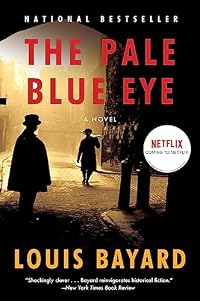
The Pale Blue Eye
by Louis Bayard
On This Page
Description
Soon to be a Netflix film starring Christian Bale, Harry Melling, and Gillian Anderson"Shockingly clever and devoutly unsentimental...Reads like a lost classic. Bayard reinvigorates historical fiction." — New York Times Book Review
"Seamlessly blends Poe into an engrossing whodunit worthy of its inspiration." — USA Today
An ingenious tale of murder and revenge at West Point, featuring a retired detective and a young cadet named Edgar Allan Poe—from the author of Courting Mr. Lincoln.
show more When the body of a suicide victim disappears at West Point Military Academy in 1831, only to be discovered hours later missing its heart, the Academy calls on retired detective Gus Landor to investigate. Landor is something of a legend among his peers, noted for an uncanny, Holmesian ability to read people. When Edgar Allan Poe, a new cadet, comes forth with his own cryptic conclusion—that the man Landor is looking for is a poet—Landor is intrigued and enlists Poe as his assistant. Working together, Landor and Poe narrow down the suspects, all the while dealing with their own personal demons.
. show less
Tags
Recommendations
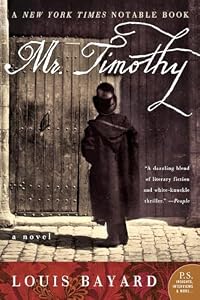
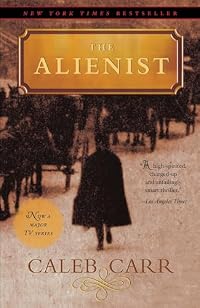
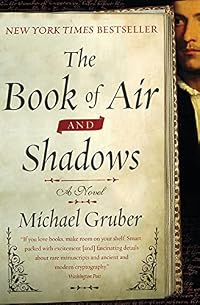
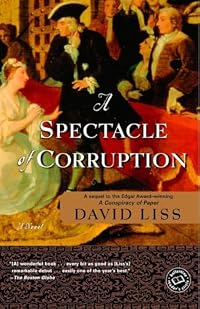
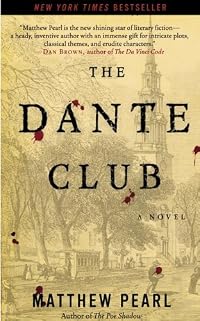
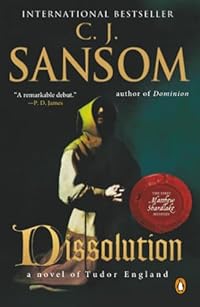
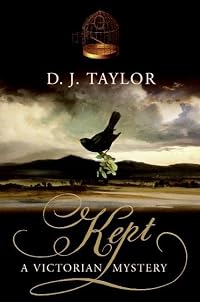
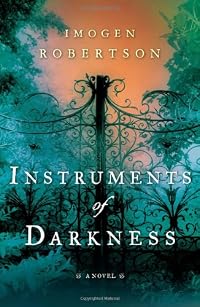
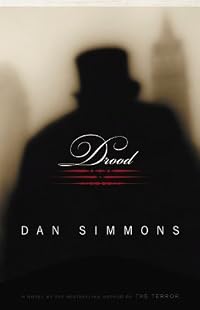
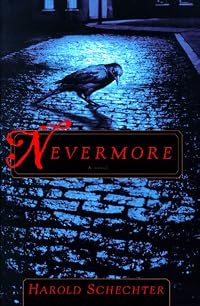
Member Recommendations
rbtanger In the Poe genre. Not quite as well written as The Pale Blue Eye, but The Blackest Bird is still a good and interesting read.
Member Reviews
Being a lover of historical murder mystery stories, I was really looking forward to reading this one. I wasn't expecting it to take me 18 days to read it, though. I was looking forward to flying through the book in 2-3 days, like I did with his wonderful 19th century French police detective Vidocq mystery The Black Tower and his interesting take on Dicken's The Christmas Carol and and adult Tiny Tim in Mr. Timothy. Bayard has shown some consistency in the stories I have read. They all have a dark undercurrent to them that oozes off the pages. Bayard is good with the atmosphere and even the character portrayals, but darn it all, he does have this habit of going too deep, delving too far into the details of his characters, setting the show more stage, or, in the case of this story, in losing track of whether he is creating a unique portrayal of a historical/literary figure or plotting out the story structure of the mystery at hand. I do love a well built story. The plot is tight, the setting is detailed/descriptive and the characters are for the most part well rounded, but by the mid-point of this story I was starting to groan about the slog I felt it was becoming. After some distractions in the form of other books, I came back to The Pale Blue Eye, determined to complete it. I am glad I did. The story continued to have its slogging bits but Bayard provides a very interesting conclusion and reveal that has now actually whet my appetite to go back and re-read the book all over again, with an eye for the subtle clues I did not pick up on my first read through. For straightforward mystery lovers, this book will probably drive you to frustration, until you get to the very end. For historical fiction lovers, this story may have its appeal but as the story has its schizophrenic issues of one minute being a straightforward historical fiction piece and then the next minute being a dark, brooding murder mystery piece, I struggle to find an audience that will completely love this one. After having read Dan Simmon's Drood, I can now see that the two authors share some similar story telling tricks, like talking directly to the reader - Bayard refers repeatedly to 'Reader' while Simmons, in Drood refers to 'Dear Reader' - with a focus of trying to weave complex characters into a cohesive story.
Not my favorite Bayard novel but he continues to be a writer who's works I look forward to exploring further. show less
Not my favorite Bayard novel but he continues to be a writer who's works I look forward to exploring further. show less
So, have I mentioned that I really like Louis Bayard? Yeah, I sure do. This novel is true historical fiction, emphasis on the fiction. Bayard picks a time and location -- West Point academy in the 1830s -- and a few key historical figures -- including, in this case, one Edgar A. Poe, West Point cadet fourth class at the time -- and runs with them, creating a mystery-thriller that twists up some of the metaphysical horrors Poe himself would write about. The narrator is a fictional figure, made all the more interesting and endearing by the commonalities he shares with our friend Poe. Poe himself is a dramatic, Romantic soul here -- quite true to the young man he must have been -- and part of the fun of the novel is watching Bayard stitch show more in some of the bits and pieces that will someday form Poe's opus.
The process of reading this particular novel is sometimes odd -- for reasons that I cannot reveal here, since there is a significant twist at the end, which changes the way the reader looks at the entire novel, and I do not wish to spoil it -- but eventually the jumbled bits that seem off the point make sense. Once again, Bayard has crafted a novel that encompasses suicide, murder, sacrifice, and other dangerous themes, but does not attempt to tie things up in an upbeat, redemptive ending. As a reader, I feel some satisfaction about that, because the novel's ending is quite perfect for the tone and path that Bayard has built, but I mention it because I know that many readers prefer to walk away feeling a bit more chipper.
Overall, I heartily recommend this for those who want beautifully written historical thrillers. Bayard is a master of phrasing and his literary sensibility serves the reader well. Head and shoulders above the usual thriller fodder, this novel will give you the simultaneous thrill of elevated intellect and elevated heart rate. show less
The process of reading this particular novel is sometimes odd -- for reasons that I cannot reveal here, since there is a significant twist at the end, which changes the way the reader looks at the entire novel, and I do not wish to spoil it -- but eventually the jumbled bits that seem off the point make sense. Once again, Bayard has crafted a novel that encompasses suicide, murder, sacrifice, and other dangerous themes, but does not attempt to tie things up in an upbeat, redemptive ending. As a reader, I feel some satisfaction about that, because the novel's ending is quite perfect for the tone and path that Bayard has built, but I mention it because I know that many readers prefer to walk away feeling a bit more chipper.
Overall, I heartily recommend this for those who want beautifully written historical thrillers. Bayard is a master of phrasing and his literary sensibility serves the reader well. Head and shoulders above the usual thriller fodder, this novel will give you the simultaneous thrill of elevated intellect and elevated heart rate. show less
This was a real treat. I love historical fiction and I love mystery but I think it is hard to find a real good blend of the two. A series of murders with post-mortem mutilations haunts 1830's West Point Academy. A fictionalized Edgar Alan Poe is a cadet there and he not only becomes an assistant to the investigator, retired New York detective Gus Landor but intimately involved with the suspects. The story is multi-faceted and fairly suspenseful and actually written quite well with prose that seems authentic to the times in an unselfconscious way.
I waffle between 4 and 5 stars. I guess I settle a bit towards the former because some parts of the end seemed more outlandish than they did horrific; a bit too melodramatic. Otherwise I thought show more the characters were well drawn, a great sense of place and atmosphere, a Wow! what a twist at the end. Didn't see that one coming. And really the young Poe stole the show; you had to love his earnest, self-inflated, but still tender self.
Overall, quite good. Recommended for lovers of more literary mysteries. Reminded me a bit of Caleb Carr's novels. I would definitely read more by this author. show less
I waffle between 4 and 5 stars. I guess I settle a bit towards the former because some parts of the end seemed more outlandish than they did horrific; a bit too melodramatic. Otherwise I thought show more the characters were well drawn, a great sense of place and atmosphere, a Wow! what a twist at the end. Didn't see that one coming. And really the young Poe stole the show; you had to love his earnest, self-inflated, but still tender self.
Overall, quite good. Recommended for lovers of more literary mysteries. Reminded me a bit of Caleb Carr's novels. I would definitely read more by this author. show less
It's the beginning of the 19th century and a murderer is praying on West Point cadets, hanging them and then - literally - cutting out their hearts. Fortunately, a retired police detective of some cunning lives locally: the Commandant of West Point calls him in to solve the crime. But Augustus Landor needs an "inside man" - someone who can report gossip and conduct undercover investigations. For this purpose he seconds a 4th class cadet by the name of Poe. Edgar Allen Poe, that is.
The story is narrated, first person, by investigator Landor, in the form of journal entries directed at the reader. Don't know about you, but first person narration in the hands of skilled writers always makes me wary - one feels it necessary to take the show more precaution of constantly querying the credibility of what the narrator chooses to share. Without spoiling the plot, can tell you that In The Pale Blue Eye, this precaution is wholly justified.
Looking back, it's the parts of the story involving Poe that I'll remember most fondly. Bayard does a worthy job of capturing not only the poet's patterns of speech, word usage, and rhetorical patterns, but also - more impressively - manages to create a character that convincingly reconciles several seemingly contradictory aspects of Poe's life - one of the most jarring of which would seem to be the presence of the poet at an institution designed for the express purpose of churning out graduates lacking in poetry.
What I'm hoping I'll forget are the some of the more silly, melodramatic aspects of the plot. The problem with seconding Poe as a character in your narrative is that it invites potentially unhappy comparisons. In this case, I was left contemplating the notion that when Poe does melodrama you can feel the anguish; but when Bayard indulges in similar excesses (let's face it - does it get more melodramatic than corpses with their hearts cut out?), the result is vaguely uncomfortable.
Giving this 3 1/2 stars because I reserve 4 stars for something I'd read again, and while I enjoyed this the first time through, definitely not the sort of thing I'd ever go back to. show less
The story is narrated, first person, by investigator Landor, in the form of journal entries directed at the reader. Don't know about you, but first person narration in the hands of skilled writers always makes me wary - one feels it necessary to take the show more precaution of constantly querying the credibility of what the narrator chooses to share. Without spoiling the plot, can tell you that In The Pale Blue Eye, this precaution is wholly justified.
Looking back, it's the parts of the story involving Poe that I'll remember most fondly. Bayard does a worthy job of capturing not only the poet's patterns of speech, word usage, and rhetorical patterns, but also - more impressively - manages to create a character that convincingly reconciles several seemingly contradictory aspects of Poe's life - one of the most jarring of which would seem to be the presence of the poet at an institution designed for the express purpose of churning out graduates lacking in poetry.
What I'm hoping I'll forget are the some of the more silly, melodramatic aspects of the plot. The problem with seconding Poe as a character in your narrative is that it invites potentially unhappy comparisons. In this case, I was left contemplating the notion that when Poe does melodrama you can feel the anguish; but when Bayard indulges in similar excesses (let's face it - does it get more melodramatic than corpses with their hearts cut out?), the result is vaguely uncomfortable.
Giving this 3 1/2 stars because I reserve 4 stars for something I'd read again, and while I enjoyed this the first time through, definitely not the sort of thing I'd ever go back to. show less
It’s summer. When I’m looking for books to read in the summer – I’m looking for something that will suck me in, grab my attention during a lazy, sunny afternoon and yet not ask too much of me. And yet, I’ve moved past the days of my twenties where I could grab the latest mass market paperback from the grocery story and enjoy a story that’s been written a million times in a way guaranteed not to provoke a single thought.
So…a murder mystery involving Edgar Allen Poe seemed a perfect fit. Something that would be page turning without being a waste of my time and mind.
I was drawn in right from the beginning by the main character, Gus Landor. His thoughts flow with an easy rhythm, while what he is thinking about and the details show more that he omits have the reader immediately wonder what’s really going on.
At times, also, the fourth wall is broken down in a way that made me feel like Landor was trying to hold my hand, ease me through the story.
“I could live a hundred years, Reader, spend a million words, and not tell you what a sight it was. I will come at it in small steps.”
If done well, an unreliable narrator is one of my favorite plot tricks. I enjoy trying to peek behind the curtain, not only because it keeps me reading, but because the few times I guess correctly, I can mentally pat myself on the back. Landor’s unreliable narrator is done well almost all of the time in that there are only a couple of instances when one can sense the author’s club and feel the bruises on one’s head.
I know very little about Edgar Allen Poe. Some high school required reading, a few passing articles, and oddly enough, the very vivid memory of a recording I had as a child (on a Halloween record maybe?) of “The Telltale Heart”. So when I ran across THIS paragraph, it was almost like going back in time. As I read it, I could almost hear that narrator’s voice…
“…with my vision so effectually stymied, I had only the evidence of those other senses, which by way of compensation, had been stimulated into over acuteness, so that there came to my ears a low, dull, quick sound, such as a watch makes when enveloped in cotton.”
Almost thirty years…and I knew immediately that this was straight from Poe. Guess his words make quite an impact on me.
I enjoyed the characterization of him as well. He plays an assistant to former constable Gus Landor as they investigate a murder at West Point. Gus’s rather easy-going nature plays sharp contrast to Poe’s tortured artist. Poe is extremely intense, as one might expect.
Landor: “Well, I didn’t say quite all that to my young friend, just the nicer parts: sobs, huzzahs. Never have I had a more captive audience (Poe). He sat there at my feet, in a trance, practically watching the words as they came out of my mouth.”
The story is very carefully enfolded, drawing me in as I had hoped, and helping me while away a few sunny afternoons. At times it borders on the credible, but in most cases, I was able to keep by disbelief suspended. And at time, I was caught up by the intensity of a particular passage.
“His mother, though, chose that moment to find her voice again. And there I was, Reader, thinking she had already spent her grief, when in fact she had many rooms more inside her just waiting to be emptied.”
And: “They shrank from each other, yes, but found each other, too. Their eyes met; their heads angled together as if they were old neighbors passing in the street. And in that crossing, I thought I could glimpse the future that lay in store for them.”
So a good mix, then, of exactly what I was looking for. An easy read where I was eager to keep turning the pages…but one that contained just enough treasure to make the trip worthwhile. show less
So…a murder mystery involving Edgar Allen Poe seemed a perfect fit. Something that would be page turning without being a waste of my time and mind.
I was drawn in right from the beginning by the main character, Gus Landor. His thoughts flow with an easy rhythm, while what he is thinking about and the details show more that he omits have the reader immediately wonder what’s really going on.
At times, also, the fourth wall is broken down in a way that made me feel like Landor was trying to hold my hand, ease me through the story.
“I could live a hundred years, Reader, spend a million words, and not tell you what a sight it was. I will come at it in small steps.”
If done well, an unreliable narrator is one of my favorite plot tricks. I enjoy trying to peek behind the curtain, not only because it keeps me reading, but because the few times I guess correctly, I can mentally pat myself on the back. Landor’s unreliable narrator is done well almost all of the time in that there are only a couple of instances when one can sense the author’s club and feel the bruises on one’s head.
I know very little about Edgar Allen Poe. Some high school required reading, a few passing articles, and oddly enough, the very vivid memory of a recording I had as a child (on a Halloween record maybe?) of “The Telltale Heart”. So when I ran across THIS paragraph, it was almost like going back in time. As I read it, I could almost hear that narrator’s voice…
“…with my vision so effectually stymied, I had only the evidence of those other senses, which by way of compensation, had been stimulated into over acuteness, so that there came to my ears a low, dull, quick sound, such as a watch makes when enveloped in cotton.”
Almost thirty years…and I knew immediately that this was straight from Poe. Guess his words make quite an impact on me.
I enjoyed the characterization of him as well. He plays an assistant to former constable Gus Landor as they investigate a murder at West Point. Gus’s rather easy-going nature plays sharp contrast to Poe’s tortured artist. Poe is extremely intense, as one might expect.
Landor: “Well, I didn’t say quite all that to my young friend, just the nicer parts: sobs, huzzahs. Never have I had a more captive audience (Poe). He sat there at my feet, in a trance, practically watching the words as they came out of my mouth.”
The story is very carefully enfolded, drawing me in as I had hoped, and helping me while away a few sunny afternoons. At times it borders on the credible, but in most cases, I was able to keep by disbelief suspended. And at time, I was caught up by the intensity of a particular passage.
“His mother, though, chose that moment to find her voice again. And there I was, Reader, thinking she had already spent her grief, when in fact she had many rooms more inside her just waiting to be emptied.”
And: “They shrank from each other, yes, but found each other, too. Their eyes met; their heads angled together as if they were old neighbors passing in the street. And in that crossing, I thought I could glimpse the future that lay in store for them.”
So a good mix, then, of exactly what I was looking for. An easy read where I was eager to keep turning the pages…but one that contained just enough treasure to make the trip worthwhile. show less
This is a truly engaging book. Don't be deceived by the length; it is in fact a very quick read. The suspense will keep you on your toes, turning pages as quickly as possible to reach the denouement. The story takes place in the 1830s, and a heinous crime has just taken place on the campus of West Point. Augustus Landor, a renowned but now retired New York City police detective, is called on to the case. He soon engages as his assistant a young cadet, a Mr. Edgar Allan Poe. Landor and Poe pull together all their powers of observation and intellect to unravel the mystery, with an ending even the most astute reader will not suspect. In addition to the intriguing plot, the writing style is superb. The author easily distinguishes between show more Landor and Poe's narrative voices, but without being over the top about it. The author clearly shows a fine intellect, but the book is not written to be over the heads of the audience either. I'd recommend this book for either the mystery lover or literary buff. show less
This book is about Augutus Landor, a retired NYC police detective who is called to West Point campus to investigate the bizarre murder of a cadet. Landor seeks the help of one cadet Edgar Allen Poe in his investigation to help prevent any more murders. I thought this books was interesting, moody, and sometimes very funny. I did really enjoy all of the plot twists and I thought that the author kept with the spirit of Poe's eccentricities. I did find some of the writing a bit disjointed at times but it all comes together at the end. A different and delightful mystery.
Members
- Recently Added By
Published Reviews
ThingScore 75
Bayard reinvigorates historical fiction, rendering the 19th century as if he'd witnessed it firsthand.
added by jburlinson
"The Pale Blue Eye" is not quite the unalloyed delight of Bayard's first Victorian thriller, "Mr. Timothy" (in part because of its melancholy setting and principal characters), but it's just as gracefully written, from its descriptions of the river, "glassy, opal-gray, crumpling into a million billows," to the author's unostentatious fidelity to the language and mores of the period.
added by jburlinson
Despite all this hugely accomplished and well-observed character study, the detective story that is meant to act as a framework for the book just doesn't match up to the style and quality of the prose.
added by jburlinson
Lists

Recommend the 20 best books you've read in the last five years
2,167 works; 605 members

Best Crime Fiction
262 works; 39 members
Best Historical Crime
44 works; 17 members

Global Mysteries
90 works; 6 members
Author Information

12+ Works 4,377 Members
Awards and Honors
Common Knowledge
- Canonical title
- The Pale Blue Eye
- Original publication date
- 2007-06-12
- People/Characters
- Edgar Allan Poe; Augustus Landor; Sylvanus Thayer; Ethan Allen Hitchcock; Lea Marquis; Artemus Marquis (show all 7); Patsy
- Important places
- West Point, New York, USA
- Important events
- 1830
- Related movies
- The Pale Blue Eye (2022 | IMDb)
- Epigraph
- The sorrow for the dead is the only sorrow from which we refuse to be divorced. - Washington Irving "Rural Funerals"
- Dedication
- For A.J.
- First words
- In two or three hours...well, it's hard to tell...in three hours, surely, or at the very outside, four hours...within four hours, let us say, I'll be dead.
- Last words
- (Click to show. Warning: May contain spoilers.)Tell me.
- Publisher's editor*
- Collection Néo; le cherche midi
- Original language
- English US
*Some information comes from Common Knowledge in other languages. Click "Edit" for more information.
Classifications
Statistics
- Members
- 1,215
- Popularity
- 20,260
- Reviews
- 46
- Rating
- (3.67)
- Languages
- 6 — English, French, German, Polish, Portuguese, Spanish
- Media
- Paper, Audiobook, Ebook
- ISBNs
- 25
- ASINs
- 6