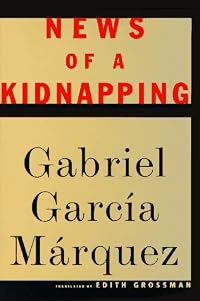
News of a Kidnapping
by Gabriel Garcia Marquez
On This Page
Description
AVAILABLE FOR THE FIRST TIME IN eBOOK! In 1990, fearing extradition to the United States, Pablo Escobar - head of the Medellín drug cartel - kidnapped ten notable Colombians to use as bargaining chips. With the eye of a poet, García Márquez describes the survivors' perilous ordeal and the bizarre drama of the negotiations for their release. He also depicts the keening ache of Colombia after nearly forty years of rebel uprisings, right-wing death squads, currency collapse and show more narco-democracy. With cinematic intensity, breathtaking language and journalistic rigor, García Márquez evokes the sickness that inflicts his beloved country and how it penetrates every strata of society, from the lowliest peasant to the President himself. show lessTags
Recommendations

























Member Reviews
This was the first non-fiction book written by Marquez,a tale of Columbia in the 1990s when the country was at war within itself, with the drug traffickers, especially Pablo Escobar, head of the Medellin cartel. The war was brutal on both sides. The biggest threat to the cartels was extradition to the USA and the prospect of life in a US prison. Escobar kidnapped ten men and women at different times and with different connections to use a bargaining chips in his demand for immunity from extradition, and to secure the protection he sought as the price for surrendering to the government and ending the war. The book reads like something written by a superior investigative reporter (Marquez was a reporter in his earlier life), but Marquez show more also brings a writer’s sensibility to the story with his focus on the narrative of events, the hopes and fears of those held captive and those working for their release, the false starts and successes, the tensions within the government and between the government and those working from the outside (the greatest fear of those working for the release of loved ones was that the security forces would find the kidnappers and attempt a rescue which everyone knew would result in the immediate death of the prisoners), the interplay of characters and personalities, the balance between events dictated and controlled and those that seem to unfold with an uncontrollable inevitability of their own, the gross fear of those who know they can be killed at a moment’s notice and who believe at various times that it is imminent and how different people deal with such monstrous stress. A strength of the book is the even handed perspective from all sides: the victims, the kidnappers, the very young teenaged guards, the President of the country, the husbands, fathers, brothers, sisters, mothers left to hope and pray and work for the release of their family members. A very interesting read. show less
58. News of a Kidnapping by Gabriel García Márquez
translation: 1997, by Edith Grossman
originally published: 1996
format: 391 page paperback
acquired: August
read: Oct 2-21
time reading: care of Bookly, I know it took me 9 hrs, 45 mins to read this. That's 2 pages a minutes, or 29.8 pages per hour
rating: 3
The next book on my Márquez list. I knew going in this wasn't an exciting book. Reviews complain it's long and boring. And, while the first 20 pages are gripping, it is a slow book. There is no effort to glorify and run the adrenaline (although there is some awful stuff). Márquez is patiently exploring the humans involved and watching how the story reveals some things about them and about Colombia.
This is a true story. As Pablo show more Escobar, the Colombian drug lord and billionaire, looked to turn himself in apparently for protection, he needed leverage to protect himself from the government. So, he started kidnapping people connected to prominent people. And when kidnapping the daughter of an ex-president didn't work, he kidnapped more people. Ultimately ten in all, and several by accident because they happened to be with the target. Drivers or guards were merely killed on the spot.
Escobar is essentially looking for legal ransom. He doesn't want to be extradited to the United States where he would be put in a maximum security prison for life. But the book isn't about him. The typical American journalist would open this book with a thrilling depiction of some aspect of the drug business, or Escobar's life style and violence. Márquez barely touches him. We only see Escobar through his people, his lawyers and connections and the different crews running the different kidnappings. Instead Márquez focuses on the life of those kidnapped, and each experience is different. Hero Buss, a German photographer, essentially had an adventure, his first action upon release was to give a bystander a camera to take a picture, documenting the moment. Whereas Maruja Pachón never knew if she was about to be executed, or raped or entertained or left alone and for months on end, and spent her time trying to build useful relationships with her constantly changing captors. Two of those kidnapped were killed (as mentioned in the opening acknowledgements).
I can't say this is anything I would recommend to someone, unless they were really interested in circa-1990 Colombia and couldn't find a more engrossing book, or they wanted an alternate view of then Colombian president César Gaviria, who comes across as cold and calculating but also sincere. And I can't say I feel rewarded by the reading experience. But I never minded the book and I got some interesting things out of it, and, in way, I really appreciated the sort of respectful unheightened approach.
2018
https://www.librarything.com/topic/288371#6617691 show less
translation: 1997, by Edith Grossman
originally published: 1996
format: 391 page paperback
acquired: August
read: Oct 2-21
time reading: care of Bookly, I know it took me 9 hrs, 45 mins to read this. That's 2 pages a minutes, or 29.8 pages per hour
rating: 3
The next book on my Márquez list. I knew going in this wasn't an exciting book. Reviews complain it's long and boring. And, while the first 20 pages are gripping, it is a slow book. There is no effort to glorify and run the adrenaline (although there is some awful stuff). Márquez is patiently exploring the humans involved and watching how the story reveals some things about them and about Colombia.
This is a true story. As Pablo show more Escobar, the Colombian drug lord and billionaire, looked to turn himself in apparently for protection, he needed leverage to protect himself from the government. So, he started kidnapping people connected to prominent people. And when kidnapping the daughter of an ex-president didn't work, he kidnapped more people. Ultimately ten in all, and several by accident because they happened to be with the target. Drivers or guards were merely killed on the spot.
Escobar is essentially looking for legal ransom. He doesn't want to be extradited to the United States where he would be put in a maximum security prison for life. But the book isn't about him. The typical American journalist would open this book with a thrilling depiction of some aspect of the drug business, or Escobar's life style and violence. Márquez barely touches him. We only see Escobar through his people, his lawyers and connections and the different crews running the different kidnappings. Instead Márquez focuses on the life of those kidnapped, and each experience is different. Hero Buss, a German photographer, essentially had an adventure, his first action upon release was to give a bystander a camera to take a picture, documenting the moment. Whereas Maruja Pachón never knew if she was about to be executed, or raped or entertained or left alone and for months on end, and spent her time trying to build useful relationships with her constantly changing captors. Two of those kidnapped were killed (as mentioned in the opening acknowledgements).
I can't say this is anything I would recommend to someone, unless they were really interested in circa-1990 Colombia and couldn't find a more engrossing book, or they wanted an alternate view of then Colombian president César Gaviria, who comes across as cold and calculating but also sincere. And I can't say I feel rewarded by the reading experience. But I never minded the book and I got some interesting things out of it, and, in way, I really appreciated the sort of respectful unheightened approach.
2018
https://www.librarything.com/topic/288371#6617691 show less
In this work of non-fiction published in 1996, Gabriel García Márquez describes the kidnappings and captivities of ten Colombian journalists abducted by a group called the “Extraditables.” They were a group of narcotraffickers led by Pablo Escobar. Escobar’s objective in ordering the kidnappings was to bully the Colombian government into banning extradition, which would mean they would be imprisoned in Colombia rather than face more severe penalties in other countries, particularly the United States.
The author portrays the responses of the hostages’ families and their actions to free them. He recounts the entire event in the context of Colombia's ongoing struggle to combat the illegal drug trade. The storyline focuses on the show more victims, the conditions they faced, and their thoughts, fears, and responses to captivity. There are many players, including President Gaviria, a high-profile priest, a family of drug trafficking brothers who turned themselves into authorities, and relatives of the victims, many of whom have connections to the government officials (one of the reasons they were taken hostage).
As the account unfolds, there are many people involved, and the author does an excellent job of describing the pressures and difficulties that must be overcome to ensure a workable plan. He depicts the anguish of the victims’ families as they try to influence the negotiations. García Márquez is a skilled writer who can weave together these complex elements into a cohesive whole. It almost felt like reading a historical fiction. Unfortunately, it was all too real, and the outcome was not positive for all involved.
I think the text could have benefited from the inclusion of a list of participants and their functions / relationships, as well as a timeline of events. But overall, this book provides an informative account of the perils of the drug trade and the relationship between the narcotraffickers and the Colombian government. Readers can learn a lot from this book, especially those outside Colombia.
It is based on interviews, news accounts, broadcast media, and diaries kept by the hostages. It is a partial glimpse of a harrowing period in Colombian history. Definitely worth reading. I read the English translation by Edith Grossman. show less
The author portrays the responses of the hostages’ families and their actions to free them. He recounts the entire event in the context of Colombia's ongoing struggle to combat the illegal drug trade. The storyline focuses on the show more victims, the conditions they faced, and their thoughts, fears, and responses to captivity. There are many players, including President Gaviria, a high-profile priest, a family of drug trafficking brothers who turned themselves into authorities, and relatives of the victims, many of whom have connections to the government officials (one of the reasons they were taken hostage).
As the account unfolds, there are many people involved, and the author does an excellent job of describing the pressures and difficulties that must be overcome to ensure a workable plan. He depicts the anguish of the victims’ families as they try to influence the negotiations. García Márquez is a skilled writer who can weave together these complex elements into a cohesive whole. It almost felt like reading a historical fiction. Unfortunately, it was all too real, and the outcome was not positive for all involved.
I think the text could have benefited from the inclusion of a list of participants and their functions / relationships, as well as a timeline of events. But overall, this book provides an informative account of the perils of the drug trade and the relationship between the narcotraffickers and the Colombian government. Readers can learn a lot from this book, especially those outside Colombia.
It is based on interviews, news accounts, broadcast media, and diaries kept by the hostages. It is a partial glimpse of a harrowing period in Colombian history. Definitely worth reading. I read the English translation by Edith Grossman. show less
Hubo una época, muy negra en la hermosa Colombia, cuando por una lucha de poderes, legal e ilegal, provocó muchos problemas sociales, los grandes narcotraficantes, desesperados por el cerco que les estaba poniendo en ese entonces el Gobierno Colombiano y por el miedo a ser extraditados a Estados Unidos, hicieron muchas cosas, entre ellas secuestrar gente conocida.
La historia comienza cuando Pablo (Escobar) secuestra a un grupo de 10 personas entre ellos a Maruja y Marina que para mi son los personajes mas importantes o ejes del escrito.
García Marquez, nos relata lo que vivieron este grupo de personas secuestradas en su cautiverio, en ello, nos describe a los captores, los guardianes de los secuestrados.
Algo brutales fruto de su show more miedo, otros enérgicos pero accesibles, sabían que iban a morir jóvenes, la disculpa de estar en ese abominable trabajo era que tenían que sostener a su familia, comprar buena ropa, motocicletas etc. Vivían aferrados al divino niño o de la virgen para poder hacer sus cosas.
Por lo tanto, en el relato, vemos una realidad que no solo le pertenece a Colombia de esa época, si no desafortunadamente a muchos paises, donde, jóvenes pobres son reclutados por la mafia y por el dinero fácil, por la necesidad en muchos casos, por gusto en otros, se ven inmersos en la delincuencia.
Nos retrata el sufrimiento de los secuestrados, su miedo, pero también de quienes esperan que sean liberados, amigos, familiares.
Un libro que sale de lo común escrito por García Marques, una extraordinaria narración de hechos sucedidos y que desgraciadamente siguen sucediendo show less
La historia comienza cuando Pablo (Escobar) secuestra a un grupo de 10 personas entre ellos a Maruja y Marina que para mi son los personajes mas importantes o ejes del escrito.
García Marquez, nos relata lo que vivieron este grupo de personas secuestradas en su cautiverio, en ello, nos describe a los captores, los guardianes de los secuestrados.
Algo brutales fruto de su show more miedo, otros enérgicos pero accesibles, sabían que iban a morir jóvenes, la disculpa de estar en ese abominable trabajo era que tenían que sostener a su familia, comprar buena ropa, motocicletas etc. Vivían aferrados al divino niño o de la virgen para poder hacer sus cosas.
Por lo tanto, en el relato, vemos una realidad que no solo le pertenece a Colombia de esa época, si no desafortunadamente a muchos paises, donde, jóvenes pobres son reclutados por la mafia y por el dinero fácil, por la necesidad en muchos casos, por gusto en otros, se ven inmersos en la delincuencia.
Nos retrata el sufrimiento de los secuestrados, su miedo, pero también de quienes esperan que sean liberados, amigos, familiares.
Un libro que sale de lo común escrito por García Marques, una extraordinaria narración de hechos sucedidos y que desgraciadamente siguen sucediendo show less
Ik moest mezelf er een paar keer aan herinneren dat dit allemaal echt gebeurd is. Garcia Marquez heeft in deze niks verzonnen of aangedikt. Hij legt op een spannende manier verslag van een bizarre periode in de Colombiaanse geschiedenis. Dat doet hij aan de hand van talloze interviews met de direct betrokkenen en nog andere bronnen. Zeker de moeite waard.
Na década de 1990 a Colômbia vivia sob o fogo cruzado das guerrilhas e de narcotraficantes. Pablo Escobar, líder de uma das mais poderosas quadrilhas, ordenava atentados a bomba e sequestros. É sobre um grupo de nove jornalistas sequestrados e usados para pressionar o governo contra a temida extradição para os EUA que trata “Notícia de um Sequestro”.
Lançando mão de todo seu talento literário, Gabriel García Márquez relata a captura dos reféns, seu cotidiano no cativeiro e as tensas negociações do governo com Pablo Escobar por sua libertação. Um livro-reportagem pleno de um jornalismo que tem se tornado raro.
Lançando mão de todo seu talento literário, Gabriel García Márquez relata a captura dos reféns, seu cotidiano no cativeiro e as tensas negociações do governo com Pablo Escobar por sua libertação. Um livro-reportagem pleno de um jornalismo que tem se tornado raro.
I probably would not have finished this book if I hadn't been stuck in a room for several hours with nothing else to read. Marquez is a great writer -- but I simply didn't find this one compelling. The copy attempts to sell its blend of journalistic veracity and Marquez's powerful prose, but I felt like there was more journalistic veracity than anything else. I felt as though I was reading a very long news story. The events themselves were a great tragedy, but I don't felt like they lent themselves well to a novel; in order to respect the victims, Marquez refrained from invention, and without invention, he could not delve very deeply into things like the psychological states of the victims. I don't think it compares to his other works show more in terms of storytelling, although its historical value is very important. show less
Members
- Recently Added By
Lists

Books Read in 2016
4,666 works; 197 members

SHOULD Read Books!
354 works; 9 members
Author Information

380+ Works 146,730 Members
Gabriel García Márquez was born in Aracataca, Colombia on March 6, 1927. After studying law and journalism at the National University of Colombia in Bogota, he became a journalist. In 1965, he left journalism, to devote himself to writing. His works included Leaf Storm, No One Writes to the Colonel, The Evil Hour, One Hundred Years of Solitude, show more Love in the Time of Cholera, The Autumn of the Patriarch, Chronicle of a Death Foretold, The General in His Labyrinth, Clandestine in Chile, and the memoir Living to Tell the Tale. He won the Nobel Prize for Literature in 1982. He died on April 17, 2014 at the age of 87. (Bowker Author Biography) show less
Some Editions
Awards and Honors
Series
Belongs to Publisher Series
Work Relationships
Is contained in
Has the adaptation
Has as a student's study guide
Common Knowledge
- Canonical title
- News of a Kidnapping
- Original title
- Noticia de un secuestro; Viva Sandino
- Alternate titles*
- Il sequestro
- Original publication date
- 1996
- People/Characters
- Pablo Escobar
- Important places
- Colombia
- First words
- She looked over her shoulder before getting into the car to be sure no one was following her.
Antes de entrar en el automóvil miró por encima del hombro para estar segura de que nadie la acechaba.
(Hebrew)
לפני שנכנסה למכונית, הציצה אל מעבר לכתפה כדי לוודא שאיש אינו אורב לה. השכה היתה שבע וחמישה בערב, בבּוֹגוֹתָה. - Last words*
- (Click to show. Warning: May contain spoilers.)'Je zou over deze hele geschiedenis een boek kunnen schrijven'.
- Original language
- Spanish
- Canonical DDC/MDS
- 868.99361
*Some information comes from Common Knowledge in other languages. Click "Edit" for more information.
Classifications
- DDC/MDS
- 868.99361 — Literature & rhetoric Spanish, Portuguese, Galician literatures Spanish miscellaneous writings Spanish language literature outside of Spain Hispanic South America Colombia and Ecuador Colombia
- LCC
- HV6604 .C7 .G3713 — Social sciences Social pathology. Social and public welfare. Criminology Social pathology. Social and public welfare. Criminology Crimes and offenses
- BISAC
Statistics
- Members
- 2,744
- Popularity
- 6,656
- Reviews
- 47
- Rating
- (3.68)
- Languages
- 39 — Arabic, Bulgarian, Czech, Danish, Dutch, English, Finnish, French, Georgian, German, Irish, Greek, Hebrew, Hungarian, Icelandic, Indonesian, Italian, Japanese, Korean, Latvian, Lithuanian, Macedonian, Norwegian (Bokmål), Norwegian, Farsi/Persian, Polish, Romanian, Russian, Serbian, Croatian, Slovak, Slovenian, Spanish, Swedish, Turkish, Portuguese (Portugal), Portuguese (Brazil), Chinese, traditional, Chinese, simplified
- Media
- Paper, Audiobook, Ebook
- ISBNs
- 90
- ASINs
- 25