
Gérard de Nerval (1808–1855)
Author of Gérard de Nerval: Selected Writings
About the Author
Gérard de Nerval was the pen name of the French poet, essayist and translator Gérard Labrunie, one of the most essential Romantic French poets. He was born on May 22, 1808, in Paris, France. Nerval first became noted because of his translation of Goethe's Faust (1828). Gérard de Nerval's first show more nervous breakdown occurred during 1841. In a series of novellas, collected as Les Illuminés, ou les précurseurs du socialisme (1852), he described feelings that followed his third breakdown. Increasingly poverty-stricken and disoriented, he committed suicide in 1855, hanging himself from a window grating. (Bowker Author Biography) show less
Image credit: Gérard de Nerval photographié par Nadar vers 1954
Series
Works by Gérard de Nerval
Les Chimeres: La Boheme Galante Petits Chateaux de Boheme (French Edition) (2005) 22 copies, 1 review
Aurelia Y Otros Cuentos Fantasticos/ Aurelia and Other Fantastic Stories (Spanish Edition) (2007) 10 copies
Historia del califa Hakem; Historia de la reina de la Mañana y de Solimán, príncipe de los Genios (1996) 9 copies, 1 review
Fortune's fool : 35 poems 4 copies
Chimere e altre poesie — Author — 4 copies
OEUVRES - TOME 1. TEXTE ETABLI, PRESENTE ET ANNOTE PAR ALBERT BEGUIN ET JEAN RICHER. (1970) 3 copies
Sílvia 3 copies
Al dictado de la locura 2 copies
Voyage en Orient 2 copies
Notes d'un amateur de musique 2 copies
VOYAGE EN ORIENT TOME III 2 copies
Fiche de lecture Les Chimères de Gérard de Nerval (analyse littéraire de référence et résumé complet) (2022) 2 copies
Oeuvres, tome 1 2 copies
Œuvres II 2 copies
Pandora ; Les amours de Vienne (Bibliotheque du XIXe siecle ; 1) (French Edition) (1975) 2 copies, 1 review
Il sogno e la vita 2 copies
Las quimeras y otros poemas 1 copy
Silvia: ricordi del Valois 1 copy
aurilia / αυρηλία 1 copy
Viaje al oriente. Relatos 1 copy
Calatorie in Orient 1 copy
Œuvres 1 copy
MUHTESEM ISTANBUL 1 copy
Poëmes 1 copy
Le figlie del fuoco 1 copy
Nerval Gerard de 1 copy
Noches de octubre 1 copy
Aurélia 1 copy
El Cairo II 1851 1 copy
ÁLBUM NERVAL 1 copy
KÜÇÜK AYVALIK ŞATOLARI 1 copy
Podróż na Wschód 1 copy
Zwierzenia Mikołaja Restifa 1 copy
Poesii 1 copy
Sílvia ; Octàvia ; Isis 1 copy
Al dictado de la locura 1 copy
Poésies suivi de petits châteaux de bohême - Les nuits d'octobre - Promenades et souvenirs - La Pandora - Contes et facéties (1964) 1 copy
Aurèlia 1 copy
Poésies 1 copy
Fiicele focului: Aurélia 1 copy
La main enchantée 1 copy
Gérard de Nerval: Poésies 1 copy
Nerval Werke in drei Bänden, Band II: Oktobernächte / Lorelei / Die Illuminaten (Winkler Dünndruck Ausgabe) (1988) 1 copy
Le Marquis de Fayolle 1 copy
flâneries parisiennes 1 copy
Les fêtes de Hollande 1 copy
Noche de Octubre 1 copy
Silvia y la mano encantada 1 copy
Angélique 1 copy
Sylvie ; Aurelie 1 copy
Cinquenta Poemas 1 copy
Jemmy 1 copy
Emilia 1 copy
Pages choisies 1 copy
Poésies : suivies de Petits châteaux de Bohème, Les nuits d'Octobre, Promenades et souvenirs, la Pandora, Contes et Facéties (1964) 1 copy
Oeuvres (2) 1 copy
Le voyage en Orient 1 copy
Poésies Choisies 1 copy
Racconti 1 copy
La mà encantada. Emília 1 copy
Oeuvres I 1 copy
Sylwia i inne opowiadania 1 copy
Œuvres 1 copy
Oeuvres II 1 copy
Les Chimères de Gérard de Nerval (fiche de lecture et analyse complète de l'oeuvre) (French Edition) (2023) 1 copy
Oeuvres... [3e édition.] 1 copy
Poésies ; Petits châteaux de Bohème ; Les nuits d'Octobre ; Promenades et souvenirs ; La Pandora ; Contes et facéties (1854) 1 copy
La reina de los peces 1 copy
Nerval Werke in drei Bänden, Band III: Die Töchter der Flamme - Erzählungen und Gedichte (1989) 1 copy
Voyages en Orient, volume IV 1 copy
ネルヴァル全集 II 1 copy
Associated Works
World Poetry: An Anthology of Verse from Antiquity to Our Time (1998) — Contributor — 496 copies, 2 reviews
La dimension fantastique, Tome 1 : Treize nouvelles de Hoffmann à Claude Seignolle (1998) — Contributor; Contributor — 80 copies, 2 reviews
Demons of the Night: Tales of the Fantastic, Madness, and the Supernatural from Nineteenth-Century France (1995) — Contributor — 52 copies
Gedoemde dichters : van Gérard de Nerval tot en met Antonin Artaud : een bloemlezing uit de "poètes maudits" (1957) — Contributor — 9 copies
Historie osobliwe i fantastyczne : nowela francuska od Cazotte'a do Apollinaire'a — Contributor — 4 copies
Weird Fiction in France: A Showcase Anthology of Its Origins and Development (2020) — Contributor — 3 copies
Profil littérature, profil d'une oeuvre : Nerval : Sylvie - Aurélia (12 sujets corrigés) (1994) — Contributor — 2 copies
Narrativa romántica francesa — Contributor — 1 copy
Tagged
Common Knowledge
- Canonical name
- Nerval, Gérard de
- Legal name
- Labrunie, Gérard
- Birthdate
- 1808-05-22
- Date of death
- 1855-01-26
- Gender
- male
- Education
- Collège Charlemagne
- Occupations
- poet
translator
short story writer
travel writer - Organizations
- Le Petit Cénacle
- Relationships
- Gautier, Théophile (friend)
- Cause of death
- suicide
- Nationality
- France
- Birthplace
- Paris, Île-de-France, France
- Places of residence
- Paris, France
- Place of death
- Paris, Île-de-France, France
- Burial location
- Cimetière du Père-Lachaise, Paris, France
- Map Location
- France
Members
Reviews
Journey to the Orient. Selected, translated ... and with an introduction by Norman Glass by Gerard De Nerval

At something of a low point in his life (he was recovering from a nervous breakdown, and Jenny Colon, the singer he had been in love with, married someone else and subsequently died), Gérard de Nerval followed the advice of his friends and went off to spend the whole of 1843 travelling around the Eastern Mediterranean. As was the custom, he turned this into a travel book when he got home, although Voyage à l'Orient took him about six years to write and came out looking more like a work of show more fiction than a simple record of a voyage. He rearranged his journeys to give a better sequence, tippexed out an inconvenient travelling companion, and interpolated several novella-length stories in the text, which he claims to have heard along the way but were obviously mostly his own work.
In this abridged translation, Norman Glass gives us two of the interpolated stories plus one of the more journalistic parts of the book, the story of how Nerval bought the Javanese slave Zetnaybia during his stay in Cairo. Glass tells us that in reality it was his companion, Joseph de Fonfrède (or Fonfride) who bought the girl, but in any case it's Nerval who takes the credit for this adventure, or, as far as any modern reader is concerned, the blame. The front cover tagline of the seventies paperback gives a pretty fair assessment of what we're in for "An exotic quest for women, hashish and Eastern mystery." We can't say they didn't warn us!
By 1843, even a romantic poet on the fringes of respectable society can't get away with pretending that slavery is just a quaint local custom, so the whole Zetnaybia story is hedged about with caveats and excuses: Nerval needs a woman in the house to get around the rule that unmarried foreigners in Cairo are supposed to live in hostels; Ottoman slavery is quite different from what goes on in the Americas; we're told that Zetnaybia herself is happy with the social standing it gives her, with more rights and legal protection than a "free" Ottoman woman. Nerval is careful to avoid ever saying that he's bought her in order to have sex with her, even though it's hard to imagine what else she could be doing: she has been brought up to look beautiful, and refuses to do any cooking and cleaning. And it's obvious how the situation appears to outsiders when the Greek captain of a ship they are travelling on offers to exchange his beautiful little boy for Zetnaybia for the duration of the voyage. The whole thing ends rather clumsily, mostly due to Glass's cuts, with Zetnaybia temporarily parked in a private boarding-school for young ladies in Beirut. But there's some quite unpleasant reading here, especially the descriptions of Nerval's repeated shopping expeditions to slave-dealers who never have quite the right thing in stock. And his unapologetically racist ideas of beauty. In bad taste when it was written, worse now.
The Tale of Caliph Hakem, supposedly told to Nerval by a Druze sheik imprisoned in Lebanon, is a romantic version of the life of the 11th century Fatimid ruler who is regarded by followers of the Druze religion as an incarnation of God. Nerval seems to be particularly interested in Hakem because of the way accusations of madness go together with his role as a religious martyr — in the story he is locked up in an asylum for claiming to be the Caliph, which in fact he is. And he has a Doppelgänger, in the best romantic tradition, who likes to eat hashish with the incognito Caliph...
The third part Glass translates is the tale of Solomon and the Queen of Sheba, which Nerval claims to have heard in an Istanbul coffee-house. Where the Hakem story carefully sidestepped relying on supernatural elements, this includes all kinds of magic, including a full-on mythical section where Adoniram, Solomon's building contractor for the Temple project, is conducted on a tour of the earth's core by his ancestor Tubalcain. But its real charm is in the character of the Queen, who outwits Solomon repeatedly. Unfortunately, Solomon's inability to keep up with her in philosophical debate, and his poor taste in architecture and poetry seem to have more to do with Nerval's antisemitic prejudices than with any real notion of turning the Queen into a feminist hero.
Both the narratives were very entertainingly written, with all the exotic orientalist background carefully dosed not to get in the way of the action more than he needs to tease us a little. I also dipped a bit further into the parts of this very long book that Glass doesn't translate, and I had the feeling that he's doing Nerval a disservice by cutting out so much of the purely journalistic writing. There are obviously some lovely bits of description he's missing out. show less
In this abridged translation, Norman Glass gives us two of the interpolated stories plus one of the more journalistic parts of the book, the story of how Nerval bought the Javanese slave Zetnaybia during his stay in Cairo. Glass tells us that in reality it was his companion, Joseph de Fonfrède (or Fonfride) who bought the girl, but in any case it's Nerval who takes the credit for this adventure, or, as far as any modern reader is concerned, the blame. The front cover tagline of the seventies paperback gives a pretty fair assessment of what we're in for "An exotic quest for women, hashish and Eastern mystery." We can't say they didn't warn us!
By 1843, even a romantic poet on the fringes of respectable society can't get away with pretending that slavery is just a quaint local custom, so the whole Zetnaybia story is hedged about with caveats and excuses: Nerval needs a woman in the house to get around the rule that unmarried foreigners in Cairo are supposed to live in hostels; Ottoman slavery is quite different from what goes on in the Americas; we're told that Zetnaybia herself is happy with the social standing it gives her, with more rights and legal protection than a "free" Ottoman woman. Nerval is careful to avoid ever saying that he's bought her in order to have sex with her, even though it's hard to imagine what else she could be doing: she has been brought up to look beautiful, and refuses to do any cooking and cleaning. And it's obvious how the situation appears to outsiders when the Greek captain of a ship they are travelling on offers to exchange his beautiful little boy for Zetnaybia for the duration of the voyage. The whole thing ends rather clumsily, mostly due to Glass's cuts, with Zetnaybia temporarily parked in a private boarding-school for young ladies in Beirut. But there's some quite unpleasant reading here, especially the descriptions of Nerval's repeated shopping expeditions to slave-dealers who never have quite the right thing in stock. And his unapologetically racist ideas of beauty. In bad taste when it was written, worse now.
The Tale of Caliph Hakem, supposedly told to Nerval by a Druze sheik imprisoned in Lebanon, is a romantic version of the life of the 11th century Fatimid ruler who is regarded by followers of the Druze religion as an incarnation of God. Nerval seems to be particularly interested in Hakem because of the way accusations of madness go together with his role as a religious martyr — in the story he is locked up in an asylum for claiming to be the Caliph, which in fact he is. And he has a Doppelgänger, in the best romantic tradition, who likes to eat hashish with the incognito Caliph...
The third part Glass translates is the tale of Solomon and the Queen of Sheba, which Nerval claims to have heard in an Istanbul coffee-house. Where the Hakem story carefully sidestepped relying on supernatural elements, this includes all kinds of magic, including a full-on mythical section where Adoniram, Solomon's building contractor for the Temple project, is conducted on a tour of the earth's core by his ancestor Tubalcain. But its real charm is in the character of the Queen, who outwits Solomon repeatedly. Unfortunately, Solomon's inability to keep up with her in philosophical debate, and his poor taste in architecture and poetry seem to have more to do with Nerval's antisemitic prejudices than with any real notion of turning the Queen into a feminist hero.
Both the narratives were very entertainingly written, with all the exotic orientalist background carefully dosed not to get in the way of the action more than he needs to tease us a little. I also dipped a bit further into the parts of this very long book that Glass doesn't translate, and I had the feeling that he's doing Nerval a disservice by cutting out so much of the purely journalistic writing. There are obviously some lovely bits of description he's missing out. show less

The French Romantic poet Gérard de Nerval published Les Illuminés: Recits et Portraits in 1852, gathering into a book a set of six biographical essays he had written since 1839. The 2023 annotated English translation by Peter Valente is titled The Illuminated in an effort to comprehend the double sense of Nerval's title, which means both the "Enlightened" and the "Illuminati." Nerval himself in the introductory piece "My Uncle's Library" implies that the common thread joining the disparate show more figures of his studies is "a certain tendency to mysticism" (3).
Valente also expands the subtitle to or The Precursors of Socialism: Tales and Portraits. The mid-nineteenth century publication of Les Illuminés was just after the Revolutions of 1848, but prior to the development of Marxist organizations and democratic socialist parties. At that time, "socialist" schools of thought might be identified equally with the egalitarian materialism of Henri de Saint-Simon and the passional liberationism of Charles Fourier.
The biographies are arranged in order of historical chronology, rather than the sequence in which Nerval wrote them. They span from the sixteenth century into the nineteenth, although at least half of them are centered in the 1700s. The earliest concerns Raoul Spifame, "the King of Bicêtre." This French lawyer was a passable doppelganger of King Henry II. After misadventures that led to his imprisonment, he became unhinged and was regularly convinced that he was in fact the king. He escaped and briefly imposed on the public to issue a variety of "royal decrees," before he was confronted and apprehended by the king's officers. The actual Henry II magnanimously (or superstitiously, or cannily) provided Spifame with one of his own country palaces where he was maintained and provided with servants who catered to his delusion. The various edicts and reforms that Spifame composed were printed posthumously.
The second figure is Jean-Albert d'Archambaud a.k.a. the abbé de Bucquoy. Although he had taken Trappist vows early in life and later advanced various ideas for social regeneration and reform, this adventurer is best known for his escape from the prison of the Bastille in 1709, which earned him a celebrity that sustained him in later life, thus prefiguring Giacomo Casanova's escape from the Leads decades later. Nerval's account treats the imprisonment and escape of the Abbé de Bucquoy in novelistic detail.
The longest of the included pieces concerns Nicolas Restif de la Bretonne, a prolific author of novels and proposals for social reform, among which the earliest titles include Le Pied de Fanchette (a tale of foot fetishism) and Le Pornographe (a proposal to regulate prostitution). Just a few years after his contemporary Casanova wrote his compendiously confessional memoirs, Restif followed suit. Nerval's biography of Restif is the first in which he is explicit about comparisons to the Illuminés "Pernetty, d'Argens, Delille de Salles, d'Espréménil, and Saint Martin" (160).
Nerval's sketch of Jacques Cazotte compares his novel The Devil in Love to The Golden Ass of Apuleius. Nerval relates the lore according to which the publication of the book occasioned a visit to the author from an anonymous adept who said that it had exposed occult matters, and who then offered and provided further secret instruction (196-7). (This trope was to be renewed in Aleister Crowley's account of his induction to the Sovereign Sanctuary of O.T.O. because of his ignorant disclosures in The Book of Lies.) Cazotte later became a mystical Cassandra of the French Terror, and was himself executed in 1792.
The first section of the chapter on Cagliostro is largely devoted to Nerval's summary of the history of the esoteric tradition as he understood it. Then he provides a detailed account of the Adoptive Rite of Egyptian Freemasonry, organized by Madame Cagliostro for the lady aspirants of Paris. The description of the initiatory system here is nevertheless characterized by some circumlocutions.
The final portrait is of Gabriel André Aucler, who adopted the moniker Quintus. This lawyer and revolutionary opposed the atheist tendencies of his comrades and proposed a complete neopagan system of religion. His 1799 book La Thréicie (The Thracian) was thus a sort of French renewal of the project in the Nomoi of Gemistos Plethon. Nerval accepts the allegation of Aucler's deathbed conversion to Christianity and calls him "the last pagan" (271).
Translator Peter Valente provides a robust apparatus including an introduction and extensive notes (in regrettably tiny type) that supply historical context and references. With the exception of Cagliostro, Nerval chose to treat literary figures rather than the occult organizers of the periods he surveyed, but through them he shows the emergence of occult ideas into social visibility. He in fact published at the same time as the inception of the esoteric career of Éliphas Lévi. With Valente's scholarship, The Illuminated seems to me like a useful, if limited, French supplement to Godwin's Theosophical Enlightenment regarding the origins of modern occultism. show less
Valente also expands the subtitle to or The Precursors of Socialism: Tales and Portraits. The mid-nineteenth century publication of Les Illuminés was just after the Revolutions of 1848, but prior to the development of Marxist organizations and democratic socialist parties. At that time, "socialist" schools of thought might be identified equally with the egalitarian materialism of Henri de Saint-Simon and the passional liberationism of Charles Fourier.
The biographies are arranged in order of historical chronology, rather than the sequence in which Nerval wrote them. They span from the sixteenth century into the nineteenth, although at least half of them are centered in the 1700s. The earliest concerns Raoul Spifame, "the King of Bicêtre." This French lawyer was a passable doppelganger of King Henry II. After misadventures that led to his imprisonment, he became unhinged and was regularly convinced that he was in fact the king. He escaped and briefly imposed on the public to issue a variety of "royal decrees," before he was confronted and apprehended by the king's officers. The actual Henry II magnanimously (or superstitiously, or cannily) provided Spifame with one of his own country palaces where he was maintained and provided with servants who catered to his delusion. The various edicts and reforms that Spifame composed were printed posthumously.
The second figure is Jean-Albert d'Archambaud a.k.a. the abbé de Bucquoy. Although he had taken Trappist vows early in life and later advanced various ideas for social regeneration and reform, this adventurer is best known for his escape from the prison of the Bastille in 1709, which earned him a celebrity that sustained him in later life, thus prefiguring Giacomo Casanova's escape from the Leads decades later. Nerval's account treats the imprisonment and escape of the Abbé de Bucquoy in novelistic detail.
The longest of the included pieces concerns Nicolas Restif de la Bretonne, a prolific author of novels and proposals for social reform, among which the earliest titles include Le Pied de Fanchette (a tale of foot fetishism) and Le Pornographe (a proposal to regulate prostitution). Just a few years after his contemporary Casanova wrote his compendiously confessional memoirs, Restif followed suit. Nerval's biography of Restif is the first in which he is explicit about comparisons to the Illuminés "Pernetty, d'Argens, Delille de Salles, d'Espréménil, and Saint Martin" (160).
Nerval's sketch of Jacques Cazotte compares his novel The Devil in Love to The Golden Ass of Apuleius. Nerval relates the lore according to which the publication of the book occasioned a visit to the author from an anonymous adept who said that it had exposed occult matters, and who then offered and provided further secret instruction (196-7). (This trope was to be renewed in Aleister Crowley's account of his induction to the Sovereign Sanctuary of O.T.O. because of his ignorant disclosures in The Book of Lies.) Cazotte later became a mystical Cassandra of the French Terror, and was himself executed in 1792.
The first section of the chapter on Cagliostro is largely devoted to Nerval's summary of the history of the esoteric tradition as he understood it. Then he provides a detailed account of the Adoptive Rite of Egyptian Freemasonry, organized by Madame Cagliostro for the lady aspirants of Paris. The description of the initiatory system here is nevertheless characterized by some circumlocutions.
The final portrait is of Gabriel André Aucler, who adopted the moniker Quintus. This lawyer and revolutionary opposed the atheist tendencies of his comrades and proposed a complete neopagan system of religion. His 1799 book La Thréicie (The Thracian) was thus a sort of French renewal of the project in the Nomoi of Gemistos Plethon. Nerval accepts the allegation of Aucler's deathbed conversion to Christianity and calls him "the last pagan" (271).
Translator Peter Valente provides a robust apparatus including an introduction and extensive notes (in regrettably tiny type) that supply historical context and references. With the exception of Cagliostro, Nerval chose to treat literary figures rather than the occult organizers of the periods he surveyed, but through them he shows the emergence of occult ideas into social visibility. He in fact published at the same time as the inception of the esoteric career of Éliphas Lévi. With Valente's scholarship, The Illuminated seems to me like a useful, if limited, French supplement to Godwin's Theosophical Enlightenment regarding the origins of modern occultism. show less
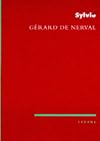
I came to Gerard de Nerval's short novella Sylvie 1) through a comparison I heard made with Madame Bovary through its exploration of love as an end in itself, the state of being "in love with love" and the eternal and 2) through Proust's fascination with it - the influence it had is really obvious to see as this is a book absolutely obsessed with memory and the places, things, sensations etc. that go with them as well as the worldly sadness as we watch a world that feels most real and show more natural to us - that of our childhood, in particular - disappear or alter beyond recognition, places changing shape, people disappearing from our lives and so on. As I also suggested, it's very much a novel about a man and his lifelong intoxication and infatuations with women, specifically three of them - we begin with the actress Aurelie, but as it turns out this is but an illusion, a case of her being mistaken for a girl he saw only once in his childhood but who coloured every romance and the trajectory of his life ever since, Adrienne. She is contrasted with the Sylvie of the title who represents a more realistic love, one he at first ignores only to run back towards by which point it's all too late.
Adrienne is most interesting for her only appearance early in the book, one which is never forgotten as even while pursuing Sylvie our narrator seems to really be looking for her, as when he considers detouring into a convent, as Adrienne had disappeared from life when she was sent to a convent some years after the meeting (and perhaps his love for Sylvie is part of his attempt to relive and capture at least part of the memory of that unforgettable day). Maybe this is me projecting my own nature more widely but I feel like all of us have an Adrienne of kinds, a dream and ideal we're forever chasing after that lies just beyond and out of reach from wherever we go, an unquenchable desire for completion that is impossible in an imperfect existence; reading this brought out that side of me for definite, and the potent evocation of lost worlds and memories that exist as the only fragments of them made me feel a deep sadness for the same events and people in my own life. A beautiful, entrancing work. show less
Adrienne is most interesting for her only appearance early in the book, one which is never forgotten as even while pursuing Sylvie our narrator seems to really be looking for her, as when he considers detouring into a convent, as Adrienne had disappeared from life when she was sent to a convent some years after the meeting (and perhaps his love for Sylvie is part of his attempt to relive and capture at least part of the memory of that unforgettable day). Maybe this is me projecting my own nature more widely but I feel like all of us have an Adrienne of kinds, a dream and ideal we're forever chasing after that lies just beyond and out of reach from wherever we go, an unquenchable desire for completion that is impossible in an imperfect existence; reading this brought out that side of me for definite, and the potent evocation of lost worlds and memories that exist as the only fragments of them made me feel a deep sadness for the same events and people in my own life. A beautiful, entrancing work. show less

Ma come potrebbe la saggezza umana, con i suoi angusti limiti, raggiungere l’INFINITO? (301)
L’essere nervaliano e’ sempre pronto a scivolare sul piano inclinato che dalla veglia porta al sonno, da cio’ che rassicura a cio’ che ossessiona, sfociando in una dimensione incerta dove sparsi elementi di realta’ coesistono con immemoriali figure, appunti cronachistici si volgono in racconti onirici, confondendo reminiscenze storiche e memorie personali in uno spazio divelto e show more frammentato. (introduzione, 11)
La donna e’ piu’ amara della morte; il suo cuore e’ una trappola e le sue mani sono catene. Il servo di Dio la fuggira’, e il folle si fara’ prendere. (Ecclesiaste, 83)
Si’ - continuo’ la sua guida; e’ un dio che ha meno forza che ingegno ed e’ piu’ geloso che generoso, il dio Adonai! Ha creato l’uomo dal fango, a dispetto dei geni del fuoco; poi, spaventato dalla sua opera e dalla loro condiscendenza per questa triste creatura, senza pieta’ per le loro lacrime, l’ha condannata a morire. Ecco la causa del contrasto che ci divide: tutta la vita terrestre che procede dal fuoco e’ attratta dal fuoco che sta al centro della terra. Avevamo voluto che in cambio il fuoco centrale fosse attratto dalla circonferenza e che si irradiasse all’esterno: questo scambio di principi avrebbe permesso la vita senza fine. (177) show less
L’essere nervaliano e’ sempre pronto a scivolare sul piano inclinato che dalla veglia porta al sonno, da cio’ che rassicura a cio’ che ossessiona, sfociando in una dimensione incerta dove sparsi elementi di realta’ coesistono con immemoriali figure, appunti cronachistici si volgono in racconti onirici, confondendo reminiscenze storiche e memorie personali in uno spazio divelto e show more frammentato. (introduzione, 11)
La donna e’ piu’ amara della morte; il suo cuore e’ una trappola e le sue mani sono catene. Il servo di Dio la fuggira’, e il folle si fara’ prendere. (Ecclesiaste, 83)
Si’ - continuo’ la sua guida; e’ un dio che ha meno forza che ingegno ed e’ piu’ geloso che generoso, il dio Adonai! Ha creato l’uomo dal fango, a dispetto dei geni del fuoco; poi, spaventato dalla sua opera e dalla loro condiscendenza per questa triste creatura, senza pieta’ per le loro lacrime, l’ha condannata a morire. Ecco la causa del contrasto che ci divide: tutta la vita terrestre che procede dal fuoco e’ attratta dal fuoco che sta al centro della terra. Avevamo voluto che in cambio il fuoco centrale fosse attratto dalla circonferenza e che si irradiasse all’esterno: questo scambio di principi avrebbe permesso la vita senza fine. (177) show less
Lists
Awards


You May Also Like


Associated Authors
Statistics
- Works
- 280
- Also by
- 24
- Members
- 2,686
- Popularity
- #9,562
- Rating
- 3.9
- Reviews
- 41
- ISBNs
- 311
- Languages
- 15
- Favorited
- 22

