The Short Stories of Katherine Mansfield
by Katherine Mansfield
On This Page
Description
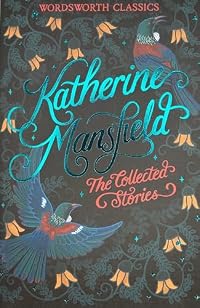
Eighty-eight modernist short stories from the New Zealand author, Kathleen Mansfield Murry, published under her pen name. She was recognized as innovative, accessible, and psychologically acute, one of the pioneers of the avant-garde in the creation of the short story. Her language was clear and precise; her emotion and reaction to experience carefully distilled and resonant. Her use of image and symbol were sharp, suggestive, and new without seeming forced or written to some preconceived show more formula. show lessTags
Recommendations


















Member Reviews
Katherine Mansfield is one of the accomplished masters of that most difficult of literary forms - the short story. Almost all of the 21 stories in this collection are outstanding examples of her art.
Mansfield is labelled as a modernist writer: her stories do not follow the classic narrative structure of a beginning, middle and end many a time. Sometimes, they do not tell a story in the traditional sense at all. They are, rather, mirrors held up to the nature of her characters - mostly young women - and an incident or incidents which illuminate the soul of the protagonist. There is humour, often of a sarcastic variety, but mostly sympathetic. Sometimes, it transforms into the dark variety - and occasionally into total darkness. Katherine show more Mansfield is where Jane Austen meets Emily Bronte.
Of the stories in the current collection, one common theme may be seen to be pervasive - the difficulty for a woman in finding fulfillment. In The Tiredness of Rosabel, the first story in the volume, the heroine dreams of a life outside her mundane job in a hat shop, with a glamourous customer: of course, she is prudent to restrict her longings to her active imagination. In The Swing of the Pendulum, Viola takes it one step further to flirting with a man caller – and pays the price by inviting an unwanted sexual advance. In the long stories Prelude and its continuation At the Bay, the unfulfilled Beryl also flirts with life… and finds an unwelcome caller. In The Little Governess, this theme is taken to its logical extreme, ending with the protagonist’s life in a shambles – even though she is not physically violated, her psyche, reputation and future is scarred for life.
Katherine Mansfield, extremely daring and unconventional herself, has no illusions about woman’s lot in life. She can choose to be man’s possession, moving about in the constrained space allotted to her by society (the tale of two spinsters, left rudderless at the death of their tyrannical father in Daughters of the Late Colonel - often touted as Mansfield’s finest story – shows the plight of such women when the man in their life disappears), or she can go out and become “bad”. Both are equally undesirable. It is this tension that constantly colours her stories, and make walk the tightrope between humour and horror.
Though most of the tales are set in Europe, among “civilised" folk, a couple are set in New Zealand and show a different face of the author. Both these stories (Millie and The Woman in the Store) inhabit a more primal and violent world than the chaste drawing rooms of the continent, and the themes are also darker. Mansfield has captured this atmosphere beautifully in a sentence in the latter story:
There is no twilight in our New Zealand days, but a curious half-hour when everything appears grotesque—it frightens—as though the savage spirit of the country walked abroad and sneered at what it saw.
It is this half-light which illuminates this story – the light which is kept at bay in the brilliantly lit interiors of her other stories. But it is always there, promising to show us the bloodthirsty yakshi hidden behind the beautiful visage of a nubile young woman. And that is why this is my most favourite story in the book: here the author casts away her refined aura, and enters into the truly wild spirit of her native country – the spirit of the wanton woman.
Highly recommended. show less
Mansfield is labelled as a modernist writer: her stories do not follow the classic narrative structure of a beginning, middle and end many a time. Sometimes, they do not tell a story in the traditional sense at all. They are, rather, mirrors held up to the nature of her characters - mostly young women - and an incident or incidents which illuminate the soul of the protagonist. There is humour, often of a sarcastic variety, but mostly sympathetic. Sometimes, it transforms into the dark variety - and occasionally into total darkness. Katherine show more Mansfield is where Jane Austen meets Emily Bronte.
Of the stories in the current collection, one common theme may be seen to be pervasive - the difficulty for a woman in finding fulfillment. In The Tiredness of Rosabel, the first story in the volume, the heroine dreams of a life outside her mundane job in a hat shop, with a glamourous customer: of course, she is prudent to restrict her longings to her active imagination. In The Swing of the Pendulum, Viola takes it one step further to flirting with a man caller – and pays the price by inviting an unwanted sexual advance. In the long stories Prelude and its continuation At the Bay, the unfulfilled Beryl also flirts with life… and finds an unwelcome caller. In The Little Governess, this theme is taken to its logical extreme, ending with the protagonist’s life in a shambles – even though she is not physically violated, her psyche, reputation and future is scarred for life.
Katherine Mansfield, extremely daring and unconventional herself, has no illusions about woman’s lot in life. She can choose to be man’s possession, moving about in the constrained space allotted to her by society (the tale of two spinsters, left rudderless at the death of their tyrannical father in Daughters of the Late Colonel - often touted as Mansfield’s finest story – shows the plight of such women when the man in their life disappears), or she can go out and become “bad”. Both are equally undesirable. It is this tension that constantly colours her stories, and make walk the tightrope between humour and horror.
Though most of the tales are set in Europe, among “civilised" folk, a couple are set in New Zealand and show a different face of the author. Both these stories (Millie and The Woman in the Store) inhabit a more primal and violent world than the chaste drawing rooms of the continent, and the themes are also darker. Mansfield has captured this atmosphere beautifully in a sentence in the latter story:
There is no twilight in our New Zealand days, but a curious half-hour when everything appears grotesque—it frightens—as though the savage spirit of the country walked abroad and sneered at what it saw.
It is this half-light which illuminates this story – the light which is kept at bay in the brilliantly lit interiors of her other stories. But it is always there, promising to show us the bloodthirsty yakshi hidden behind the beautiful visage of a nubile young woman. And that is why this is my most favourite story in the book: here the author casts away her refined aura, and enters into the truly wild spirit of her native country – the spirit of the wanton woman.
Highly recommended. show less
Read during Summer 2006
I had heard of but never read anything by Katherine Mansfield so I was curious when this turned up at a BooKCrossing Meetup. I enjoyed her style of writing, drawing characters with just a few phrases or gestures but the plotting didn't always work. Part of it is my own problems with short stories, I'm not a big fan of many of them. Some here worked very well and some less so. The first story I was very drawn into and then didn't even realize it has ended because the main character named stayed so similair. However, I'd like to read full-length novel and found some on Project Gutenberg. I also just enjoyed physically reading this older book with thick paper and bold font. It reminds me of how reading off a screen show more is never the same. show less
I had heard of but never read anything by Katherine Mansfield so I was curious when this turned up at a BooKCrossing Meetup. I enjoyed her style of writing, drawing characters with just a few phrases or gestures but the plotting didn't always work. Part of it is my own problems with short stories, I'm not a big fan of many of them. Some here worked very well and some less so. The first story I was very drawn into and then didn't even realize it has ended because the main character named stayed so similair. However, I'd like to read full-length novel and found some on Project Gutenberg. I also just enjoyed physically reading this older book with thick paper and bold font. It reminds me of how reading off a screen show more is never the same. show less
A wonderful collection of the short stories by Katherine Mansfield. The stories a beautifully written, each with its own unique feel and vibe. I loved the way I could dip in and read at my leisure, each time taking away a renewed love of short stories. My favourite of the collection is ‘The Doll’s House’ which captures the heart of being a little girl showing of her prized treasure.
This book is a must for all Kiwi book shelves.
This book is a must for all Kiwi book shelves.
I 'love' this book. Great to pick up inbetween big reads. Also like the way it's presented overall.
i found this a lot of short stories to get through. i took a break about half-way which is one of the joys of short stories. but overall very good. this was a selection of 500 best books by women.
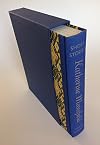
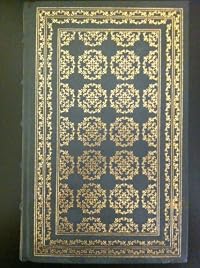
The Franklin Library, Pennsylvania, 1982. Full-Leather. Book Condition: Fine. Dawson, John D. (illustrator). Limited Edition. Heavy Large 8vo. Red original publisher's leather binding; lettering in gilt on the spine and on the front cover; elaborate design in gilt on the front cover and on the spine; a.e.g.; three raised bands on the spine; red moire end papers; hinges, book and binding are as new; sewn-in ribbon marker; a beautiful copy.
Ratings
Members
- Recently Added By
Author Information

385+ Works 8,715 Members
Katherine Mansfield was born Katherine Beauchamp in Wellington, New Zealand on October 14, 1888, the third daughter of a prominent banker. She attended the Wellington College for Girls before entering Queen's College in London in 1903. Her interest in the cello led to lessons at the Royal Academy of Music, where she became secretly engaged to a show more young prodigy named Arnold Trowell, who already had a successful concert career. Upon being summoned back to New Zealand by her father in 1906, she decided to abandon music in favor of writing. She soon had three stories published in a Melbourne monthly and gained her father's consent to return to England. Once there, she became depressed when she found that Trowell no longer loved her, and she rushed into a hasty marriage to a young musician, only to leave him a few days later. She had a miscarriage, which marked the beginning of her decline in health. After returning to England in 1910, Katherine Beauchamp published her work under the name Katherine Mansfield. A collection of her stories, "In a German Pension," was published in 1911. A year later, she met John Middleton Murry, who eventually became her second husband when she was finally able to secure a divorce. By the time of this marriage in 1918, Mansfield was found to have tuberculosis. Her ill health, combined with the death of her brother in World War I, turned the focus of her work inward and on her homeland. Her memoirs, collected in a book entitled "Bliss," secured her reputation as a writer, and she followed it up with the equally acclaimed "Garden Party and Other Stories." Her lyrical style and stream of consciousness method placed her along side James Joyce and Virginia Woolf for her strength of characterization and her subtlety of detail. Katherine Mansfield died on January 9, 1923 at the Gurdjieff Institute for the Harmonic Development of Man at Fontainebleau. (Bowker Author Biography) show less
Work Relationships
Has as a study
Common Knowledge
- First words
- The Tiredness of Rosabel: At the corner of Oxford Circus Rosabel bought a bunch of violets, and that was practically the reason why she had so little tea--for a scone and a boiled egg and a cup of cocoa at Lyons are not ample... (show all) sufficiency after a hard day's work in a millinery establishment.
- Last words
- (Click to show. Warning: May contain spoilers.)But isn't it extraordinary that under his sweet, joyful little singing it was just this--sadness?--Ah, what is it?--that I heard?
Classifications
Statistics
- Members
- 271
- Popularity
- 117,167
- Reviews
- 6
- Rating
- (4.24)
- Languages
- English, German
- Media
- Paper, Audiobook, Ebook
- ISBNs
- 21
- ASINs
- 17