
Richard W. Wise
Author of Secrets of the Gem Trade: The Connoisseur's Guide to Precious Gemstones
Works by Richard W. Wise
Tagged
Common Knowledge
- Gender
- male
- Occupations
- gemologist
Members
Reviews
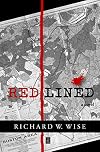
Redlined: A Novel of Boston is set in 1974 and focuses on the Jamaica Plain section of town. This area has been redlined by banks, due to the housing market's crash, which sets the stage for racial steering and blockbusting, prompting the transition from a healthy neighborhood to a slum. Abandoned buildings proliferate as crime rises.
When a building is burned and the body of a community activist is uncovered, fellow community organizer and Marine combat veteran Jedidiah Flynt and assistant show more Alexis Jordan become determined to stop the destruction of the neighborhood. They assume the role of amateur investigators who probe the arson and death with a focus and determination reflective of their abilities.
All too soon, however, adversity strikes even closer to home. Jedediah and Alexis face their own prejudices, pasts, and the initial discomfort of a forthright, sexual woman confronting a former Marine already uncomfortable with the power women have assumed in society and the workplace. These experiences capture the first phase in the blossoming women's movement that was to change many of these roles.
This interpersonal interplay of emotions sets the stage for a dual confrontation as the unlikely team forays into unfamiliar territory both personally and politically.
At first, Redlined reads with the setup and motivation of a murder mystery. Readers are in for a bigger treat, however, because Richard W. Wise incorporates real, contemporary social issues and tensions into this story, along with a special dynamic between the investigators, which elevates his read beyond a typical whodunit.
From Jedediah's ability to face Alex's charge that he is a "consummate opportunist' whose worldview affects his life choices and taints his perspective to their shared zeal and campaign, the politics which plays dirty tricks behind the scenes in Boston affairs, and gang members (a coalition of actors; real estate agents, developers, crime syndicate, who make money from the destruction of an urban neighborhood) who play a key part in community choices and makeup, Richard W. Wise tailors the kind of story that is steeped as much in Boston's unique cultural and social makeup as it is in community struggles to change it.
While investigative mystery readers will be the likely audience of Redlined, the story will especially appeal to women who like their characters strong and purposeful. Another audience will be readers familiar with Boston's cultural milieu, who will find Redlined an absorbing series of conundrums that lead ever deeper into the heart of a community's manipulations, politics, and social interactions. Highly recommended.
--D. Donovan, Sr. Reviewer, Midwest Book Review show less
When a building is burned and the body of a community activist is uncovered, fellow community organizer and Marine combat veteran Jedidiah Flynt and assistant show more Alexis Jordan become determined to stop the destruction of the neighborhood. They assume the role of amateur investigators who probe the arson and death with a focus and determination reflective of their abilities.
All too soon, however, adversity strikes even closer to home. Jedediah and Alexis face their own prejudices, pasts, and the initial discomfort of a forthright, sexual woman confronting a former Marine already uncomfortable with the power women have assumed in society and the workplace. These experiences capture the first phase in the blossoming women's movement that was to change many of these roles.
This interpersonal interplay of emotions sets the stage for a dual confrontation as the unlikely team forays into unfamiliar territory both personally and politically.
At first, Redlined reads with the setup and motivation of a murder mystery. Readers are in for a bigger treat, however, because Richard W. Wise incorporates real, contemporary social issues and tensions into this story, along with a special dynamic between the investigators, which elevates his read beyond a typical whodunit.
From Jedediah's ability to face Alex's charge that he is a "consummate opportunist' whose worldview affects his life choices and taints his perspective to their shared zeal and campaign, the politics which plays dirty tricks behind the scenes in Boston affairs, and gang members (a coalition of actors; real estate agents, developers, crime syndicate, who make money from the destruction of an urban neighborhood) who play a key part in community choices and makeup, Richard W. Wise tailors the kind of story that is steeped as much in Boston's unique cultural and social makeup as it is in community struggles to change it.
While investigative mystery readers will be the likely audience of Redlined, the story will especially appeal to women who like their characters strong and purposeful. Another audience will be readers familiar with Boston's cultural milieu, who will find Redlined an absorbing series of conundrums that lead ever deeper into the heart of a community's manipulations, politics, and social interactions. Highly recommended.
--D. Donovan, Sr. Reviewer, Midwest Book Review show less
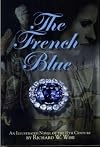
The French Blue is a heaven send to anybody who likes historical fiction, gemstones, adventure and danger, travel to far-away places, details about the French court in the 1600s, or Jean-Baptiste Tavernier. I claimed interest in four of the six before reading this book, now claim interest in all six.
Tavernier, a Frenchman who lived from 1605 to 1689, was the son of a Parisian cartographer and engraver who was inspired to travel because of his father’s work and contacts. He became a gem show more merchant. He traveled to Persia and India 6 times during the period 1630 – 1668, always returning with fabulous gems.
He is credited with bringing the French Blue diamond out of India. He sold it to Louis XIV, the Sun King, for much less than its worth. Possibly as an additional incentive to the sale, Louis granted Tavernier a Patent of Nobility and Tavernier became the Baron of Aubonne. Tavernier seemed to know that he couldn’t get what the diamond was worth, yet got enough of value to make him happy. I got the sense throughout the book that Tavernier was politically sophisticated and knew how to take care of himself, yet there is not much in the book of Tavernier’s inner life or musings. Wise has said elsewhere that that’s how the journals read, so at least this method of presenting Tavernier is consistent with how he wrote for posterity.
The story ends when Tavernier is made Baron of Aubonne, and to tell the truth, the French Blue itself occupies very little of the story of the book. I didn’t mind this at all, because the stories of his travels were enough on their own and held me fascinated. There is enough information on the internet to fill in the rest of the story, both of Tavernier and of the Hope Diamond.
One thing I always appreciate is keeping people true to the period they’re living in. Wise does not whitewash the prejudices and opinions of a 17th-century man. I did not once think “Wait a minute, that doesn’t feel right for the time period.” The language is modern without infusing modern ideas into the identities of the people or events; yet has interesting phrasing, some directly attributable to Tavernier, and activites and words obsolete in our time. The sights, smells, and sounds of France, Persia, and India are brought vividly to life.
Acceptable in a work of fiction, Wise does take a bit of poetic license with Madeleine Goisse, turning her from the daughter of a Parisian jeweler into the daughter of a Persian king. This license brings life to Tavernier, showing him an emotional being even as he is gone from Paris for years at a time doing the work he loved and seeking the best gems he could find.
The book reads like a charm. It is detailed and interesting. It is a beautiful book physically, with an artistic dust jacket, crisp white paper, beautiful font, and, unusual and wonderful in a book of fiction, illustrations. There are illustrations of the Louvre, illustrations taken from Tavernier’s journals, and illustrations of people and places.
The only thing I can criticize is a certain strangeness to some of the punctuation – especially hyphens and question marks. Both seem to be used in places I wouldn’t expect them to be used and were occasionally disconcerting. Several times I wondered whether there should be an exclamation point instead of a question mark. But I soon lost myself in the story again and enjoyed that story very much indeed. 4 ½ stars for a stunning book. show less
Tavernier, a Frenchman who lived from 1605 to 1689, was the son of a Parisian cartographer and engraver who was inspired to travel because of his father’s work and contacts. He became a gem show more merchant. He traveled to Persia and India 6 times during the period 1630 – 1668, always returning with fabulous gems.
He is credited with bringing the French Blue diamond out of India. He sold it to Louis XIV, the Sun King, for much less than its worth. Possibly as an additional incentive to the sale, Louis granted Tavernier a Patent of Nobility and Tavernier became the Baron of Aubonne. Tavernier seemed to know that he couldn’t get what the diamond was worth, yet got enough of value to make him happy. I got the sense throughout the book that Tavernier was politically sophisticated and knew how to take care of himself, yet there is not much in the book of Tavernier’s inner life or musings. Wise has said elsewhere that that’s how the journals read, so at least this method of presenting Tavernier is consistent with how he wrote for posterity.
The story ends when Tavernier is made Baron of Aubonne, and to tell the truth, the French Blue itself occupies very little of the story of the book. I didn’t mind this at all, because the stories of his travels were enough on their own and held me fascinated. There is enough information on the internet to fill in the rest of the story, both of Tavernier and of the Hope Diamond.
One thing I always appreciate is keeping people true to the period they’re living in. Wise does not whitewash the prejudices and opinions of a 17th-century man. I did not once think “Wait a minute, that doesn’t feel right for the time period.” The language is modern without infusing modern ideas into the identities of the people or events; yet has interesting phrasing, some directly attributable to Tavernier, and activites and words obsolete in our time. The sights, smells, and sounds of France, Persia, and India are brought vividly to life.
Acceptable in a work of fiction, Wise does take a bit of poetic license with Madeleine Goisse, turning her from the daughter of a Parisian jeweler into the daughter of a Persian king. This license brings life to Tavernier, showing him an emotional being even as he is gone from Paris for years at a time doing the work he loved and seeking the best gems he could find.
The book reads like a charm. It is detailed and interesting. It is a beautiful book physically, with an artistic dust jacket, crisp white paper, beautiful font, and, unusual and wonderful in a book of fiction, illustrations. There are illustrations of the Louvre, illustrations taken from Tavernier’s journals, and illustrations of people and places.
The only thing I can criticize is a certain strangeness to some of the punctuation – especially hyphens and question marks. Both seem to be used in places I wouldn’t expect them to be used and were occasionally disconcerting. Several times I wondered whether there should be an exclamation point instead of a question mark. But I soon lost myself in the story again and enjoyed that story very much indeed. 4 ½ stars for a stunning book. show less
In his historical novel, The French Blue, author Richard Wise tells the amazing story of Jean Baptiste Tavernier, a 17th Century traveler and gem merchant. Son of a cartographer in Paris, he becomes fascinated with gemology and leaves home at an early age to travel to Persia and India to learn about pearls, rubies, and diamonds. He eventually becomes a highly respected gem dealer, buying for Cardinal Richelieu, Louis XIV and other nobles The title refers to his greatest find, an amazing blue show more diamond that eventually came to be known as the Hope Diamond. Most of the novel describes Tavernier's travels though exotic lands and his dealings with merchants and royalty. Wise does an amazing job of describing the physical conditions of travel, risky at best, and the cultural environments Tavernier has to navigate. The best historical novels whisk you away to another time and place and give you a real sense of being there. Wise is a master at this. I was not familiar with this character before I read the book, and I found it very helpful that he includes an appendix which explains the fictional aspects of the story. If you like historical fiction, this book is a must read. I couldn't put it down! show less
Jean-Baptiste Tavernier was a gem trader in the seventeenth century who completed six voyages through Persia and India and is perhaps most widely remembered for his discovery of The French Blue; an enormous blue diamond that was eventually recut into The Hope Diamond. Tavernier's life and astounding adventurers form the basis of Richard W. Wise's historical fiction work The French Blue: An Illustrated Novel of the Seventeenth Century.
Wise did a magnificent job in choosing the subject for his show more book, as Tavernier proves to be a fascinating protagonist. From the pearl divers of Persia to the diamond mines in India and the splendors of the court at Versailles, the story is ripe with action and information and peppered with romance and politics. The tale moves at a perfect pace and Wise's skill at research is equal to his mastery of prose, as the fictional and factual characters are seamlessly blended together - and sometimes nearly indistinguishable. The inclusion of figures and illustrations also add a wonderful seasoning to an expertly constructed work.
The French Blue was a highly enjoyable novel. Much like the gems described throughout the plot, this is a book that is eye-catching, intriguing, and overall a stunning treasure. show less
Wise did a magnificent job in choosing the subject for his show more book, as Tavernier proves to be a fascinating protagonist. From the pearl divers of Persia to the diamond mines in India and the splendors of the court at Versailles, the story is ripe with action and information and peppered with romance and politics. The tale moves at a perfect pace and Wise's skill at research is equal to his mastery of prose, as the fictional and factual characters are seamlessly blended together - and sometimes nearly indistinguishable. The inclusion of figures and illustrations also add a wonderful seasoning to an expertly constructed work.
The French Blue was a highly enjoyable novel. Much like the gems described throughout the plot, this is a book that is eye-catching, intriguing, and overall a stunning treasure. show less
Awards

Statistics
- Works
- 4
- Members
- 108
- Popularity
- #179,296
- Rating
- 4.5
- Reviews
- 10
- ISBNs
- 10
