
Georgina Kleege
Author of Blind Rage: Letters to Helen Keller
About the Author
Georgina Kleege is Lecturer in English at the university of California, Berkeley. Her previous books include Blind Rage: Letters to Helen Keller (2006) and Sight Unseen (1999).
Works by Georgina Kleege
Gendering Disability 1 copy
Associated Works
About Us: Essays from the Disability Series of the New York Times (2019) — Contributor — 93 copies, 1 review
Tagged
Common Knowledge
- Gender
- female
Members
Reviews
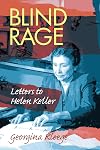
Daring format, interesting topic and thoughtful reflections. If you are looking for a biography, then no, this isn't it. This is Kleege's reading of all those other Hellen Keller books, her response to them, the ways in which she fills the gaps left by provable history and facts and comments on Keller's disability from the perspective of her own modern blind experience.
Kleege is really interested in Keller's romantic life, I'm not convinced it is entirely because officially Keller is so show more asexualized as part of the process of turning her into a saint but that is a decent reason. Although asexuality is real, can you think of a less likely candidate than someone for whom touch is a primary sense? Not to mention that while real, it is also quite rare and being deaf-blind is already a rarity indeed. Kleege's speculations were interesting, then she won me over by suggesting than Keller and Teacher (AKA Anne Sullivan) might have had a romantic relationship (a Boston marriage) and Teacher's own marriage to Macy might have been a cover up for that (or a threeway relationship!). Basically I'm about to start writing them fanfic now, since this feels quite like meta.
Many seem to find the second person narratative tedious, I love it. It's intimate and different, makes you think of the words. It also perfect for the game of 'what ifs' that this book ultimately is (it's reliance on actual facts is not the best, afaik, but that is also not the point).
I really liked the analysis of language (how dare a blind person speak of colours?) and Keller's explanation that no language existed to describe the variety of input she got through touch/smell/taste in the English language, and, if it did, it would not be understood by Normals. As well as the general criticism of abled-bodied people of the supposed capacities of those who lack one or more sense (the author gets corrected when she writes 'I was reading a book' instead of 'I was listening to a book'), I have considered whether it is accurate to use 'read' to refer to audiobooks and concluded that it is (it's actually *harder* for me to listen, tbh).
I really enjoyed this and you should know Hellen Keller's own books are available at Guttenberg Project for free. "The World I Live In" looks great! show less
Kleege is really interested in Keller's romantic life, I'm not convinced it is entirely because officially Keller is so show more asexualized as part of the process of turning her into a saint but that is a decent reason. Although asexuality is real, can you think of a less likely candidate than someone for whom touch is a primary sense? Not to mention that while real, it is also quite rare and being deaf-blind is already a rarity indeed. Kleege's speculations were interesting, then she won me over by suggesting than Keller and Teacher (AKA Anne Sullivan) might have had a romantic relationship (a Boston marriage) and Teacher's own marriage to Macy might have been a cover up for that (or a threeway relationship!). Basically I'm about to start writing them fanfic now, since this feels quite like meta.
Many seem to find the second person narratative tedious, I love it. It's intimate and different, makes you think of the words. It also perfect for the game of 'what ifs' that this book ultimately is (it's reliance on actual facts is not the best, afaik, but that is also not the point).
I really liked the analysis of language (how dare a blind person speak of colours?) and Keller's explanation that no language existed to describe the variety of input she got through touch/smell/taste in the English language, and, if it did, it would not be understood by Normals. As well as the general criticism of abled-bodied people of the supposed capacities of those who lack one or more sense (the author gets corrected when she writes 'I was reading a book' instead of 'I was listening to a book'), I have considered whether it is accurate to use 'read' to refer to audiobooks and concluded that it is (it's actually *harder* for me to listen, tbh).
I really enjoyed this and you should know Hellen Keller's own books are available at Guttenberg Project for free. "The World I Live In" looks great! show less
Daring format, interesting topic and thoughtful reflections. If you are looking for a biography, then no, this isn't it. This is Kleege's reading of all those other Hellen Keller books, her response to them, the ways in which she fills the gaps left by provable history and facts and comments on Keller's disability from the perspective of her own modern blind experience.
Kleege is really interested in Keller's romantic life, I'm not convinced it is entirely because officially Keller is so show more asexualized as part of the process of turning her into a saint but that is a decent reason. Although asexuality is real, can you think of a less likely candidate than someone for whom touch is a primary sense? Not to mention that while real, it is also quite rare and being deaf-blind is already a rarity indeed. Kleege's speculations were interesting, then she won me over by suggesting than Keller and Teacher (AKA Anne Sullivan) might have had a romantic relationship (a Boston marriage) and Teacher's own marriage to Macy might have been a cover up for that (or a threeway relationship!). Basically I'm about to start writing them fanfic now, since this feels quite like meta.
Many seem to find the second person narratative tedious, I love it. It's intimate and different, makes you think of the words. It also perfect for the game of 'what ifs' that this book ultimately is (it's reliance on actual facts is not the best, afaik, but that is also not the point).
I really liked the analysis of language (how dare a blind person speak of colours?) and Keller's explanation that no language existed to describe the variety of input she got through touch/smell/taste in the English language, and, if it did, it would not be understood by Normals. As well as the general criticism of abled-bodied people of the supposed capacities of those who lack one or more sense (the author gets corrected when she writes 'I was reading a book' instead of 'I was listening to a book'), I have considered whether it is accurate to use 'read' to refer to audiobooks and concluded that it is (it's actually *harder* for me to listen, tbh).
I really enjoyed this and you should know Hellen Keller's own books are available at Guttenberg Project for free. "The World I Live In" looks great! show less
Kleege is really interested in Keller's romantic life, I'm not convinced it is entirely because officially Keller is so show more asexualized as part of the process of turning her into a saint but that is a decent reason. Although asexuality is real, can you think of a less likely candidate than someone for whom touch is a primary sense? Not to mention that while real, it is also quite rare and being deaf-blind is already a rarity indeed. Kleege's speculations were interesting, then she won me over by suggesting than Keller and Teacher (AKA Anne Sullivan) might have had a romantic relationship (a Boston marriage) and Teacher's own marriage to Macy might have been a cover up for that (or a threeway relationship!). Basically I'm about to start writing them fanfic now, since this feels quite like meta.
Many seem to find the second person narratative tedious, I love it. It's intimate and different, makes you think of the words. It also perfect for the game of 'what ifs' that this book ultimately is (it's reliance on actual facts is not the best, afaik, but that is also not the point).
I really liked the analysis of language (how dare a blind person speak of colours?) and Keller's explanation that no language existed to describe the variety of input she got through touch/smell/taste in the English language, and, if it did, it would not be understood by Normals. As well as the general criticism of abled-bodied people of the supposed capacities of those who lack one or more sense (the author gets corrected when she writes 'I was reading a book' instead of 'I was listening to a book'), I have considered whether it is accurate to use 'read' to refer to audiobooks and concluded that it is (it's actually *harder* for me to listen, tbh).
I really enjoyed this and you should know Hellen Keller's own books are available at Guttenberg Project for free. "The World I Live In" looks great! show less
Not a big Helen Keller fan? I wasn't either, but believe me, this book is amazing. Not because it's a big Keller slam (which it isn't), but because it directly addresses many of the reasons why modern blind people have avoided her like the plague. At the same time, it tells Helen's story (do you mind if I call her Helen?) in a totally engaging style and with healthy chunks of fantasy and libelous speculation thrown in for good measure. I found it so compelling that I immediately followed it show more with Helen's autobiography which I've avoided for years, titled "The Story of my Life," written when the little brat was only 21 and only a quarter of the way through the actual life being chronicled. If you're anything like me, you've been dodging Helen for years (except for sleeping through a showing of "the Miracle Worker," in fifth grade). I've had such antipathy towards her, but Kleege tells her story in such an insidious way that I am forced to admit to admiration, respect, and even a little pity for poor Helen who seems never to have been given a moment’s peace. Not so grudging is my enormous appreciation for Kleege's skill as a writer, and her insight into this enormously significant blind eyecon. Kleege takes back Keller, peals off the layers of AFB paint, and reveals her to a modern blind (and sighted) readership as the incredibly capable and flexible woman she was. I’m sorry, Helen. I had gravely misjudged you. show less
This is clear minded, personal but intelligently related to both the circumstances of the sighted and the blind and quite simply, to human perception. I will be thinking of it for a long time and reading about Monsieur Braille ASAP.
You May Also Like
Associated Authors
Statistics
- Works
- 5
- Also by
- 3
- Members
- 75
- Popularity
- #235,803
- Rating
- 4.0
- Reviews
- 8
- ISBNs
- 12