
Kashmir Hill
Author of Your Face Belongs to Us: A Secretive Startup's Quest to End Privacy as We Know It
About the Author
Image credit: Kashmir Hill
Works by Kashmir Hill
Your Face Belongs to Us: A Secretive Startup's Quest to End Privacy as We Know It (2023) 161 copies, 4 reviews
Associated Works
Tagged
Common Knowledge
There is no Common Knowledge data for this author yet. You can help.
Members
Reviews
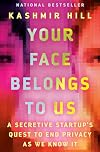
Loved the book. I was intrigued by the history of facial recognition software, the early stages and how it eventually evolved into where it is today. The author was quite thorough in her research, naming names and how they affected this area.
The book is scary. What is the potential for facial recognition software for abuse? There doesn’t currently appear to be any controls put into place by our government (the fact they use it for certain purposes themselves doesn’t exactly make them show more impartial when looking at controls that could be legislated). The implicit message by the author is that we are not far from abuse occurring.
We already know that Madison Square Garden uses facial recognition software to ban individuals (for instance, attorneys whose law firms have active lawsuits against MSG) from entering any events there. Security is pinged when such individuals pass through the turnstile, and they are politely told they are not welcome there and escorted out.
What could happen if this software started to be used to prevent you from shopping in a certain store, or perhaps banned from dining in a restaurant because their owner or their staff members do not like your political beliefs?
Although facial recognition was not used in the situation that comes to mind, there was an instance where some individuals that supported a certain president were told they were not welcome to dine in a restaurant. One could always say it’s up to the owner of a store or restaurant to decide who to serve…until you are on the receiving end of being banned because YOUR politics are not agreeable.
We already know that China uses facial recognition software to manage their populations’ activities. Do things the CCP likes and wants you to do, and you get points assigned to you, similar to a credit card rewards program. The more points you receive, the more privileges you are granted. Do things the CCP does not like, and your level of privileges never increases, or perhaps goes down. Are you ready for prime time for this to occur in the USA?
This is dangerous stuff. show less
The book is scary. What is the potential for facial recognition software for abuse? There doesn’t currently appear to be any controls put into place by our government (the fact they use it for certain purposes themselves doesn’t exactly make them show more impartial when looking at controls that could be legislated). The implicit message by the author is that we are not far from abuse occurring.
We already know that Madison Square Garden uses facial recognition software to ban individuals (for instance, attorneys whose law firms have active lawsuits against MSG) from entering any events there. Security is pinged when such individuals pass through the turnstile, and they are politely told they are not welcome there and escorted out.
What could happen if this software started to be used to prevent you from shopping in a certain store, or perhaps banned from dining in a restaurant because their owner or their staff members do not like your political beliefs?
Although facial recognition was not used in the situation that comes to mind, there was an instance where some individuals that supported a certain president were told they were not welcome to dine in a restaurant. One could always say it’s up to the owner of a store or restaurant to decide who to serve…until you are on the receiving end of being banned because YOUR politics are not agreeable.
We already know that China uses facial recognition software to manage their populations’ activities. Do things the CCP likes and wants you to do, and you get points assigned to you, similar to a credit card rewards program. The more points you receive, the more privileges you are granted. Do things the CCP does not like, and your level of privileges never increases, or perhaps goes down. Are you ready for prime time for this to occur in the USA?
This is dangerous stuff. show less

A really important expose, but somehow lacks in any kind of emotion or feeling. Maybe I'm just fatigued by the recent election results, but this just felt flat to me.
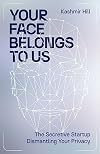
Kashmir Hill's book, 'Your Face Belongs to Us,' is fascinating but represents work that does not delve deep enough into facial recognition.
Governments always spy on their citizens, and citizens have always tried to peek into the workings of government and bureaucracies. Citizens always won minor battles but lost the war. The tension is ongoing, and dystopian writers paint horrific pictures for us.
Though surveillance cameras have been around for a while, and face recognition software has show more become more widespread in mobile phones, no one has–until now–created and commercialized a 'Google for face recognition.' This company is Clearview AI and Kashmir Hill tells its and its founders' stories.
Hoan Ton-That (an Australian of Vietnamese origin who migrated to America) and Richard Schwartz founded the company in 2019. However, while the book's narrative follows a meandering path, a few points stand out to the discerning reader.
First, the founders want to make money at any cost. Their fascinating history gives clues to their motivations. The story also highlights how entrepreneurs sometimes drift from one idea to another before arriving at their destination.
The shadowy nature of the company's physical location matches the founders' career trajectory and presumed personality. However, the book makes this point implicitly.
Kashmir Hill touches on various points that bother her, notably the loss of individual privacy and (to some extent) liberty. When someone can extract your life story from a photograph, your story becomes subject to that person's interpretation, leading to potentially painful consequences. Losing privacy is the least painful of these problems. However, again, she does not explore this point in any detail.
The book contains a fascinating chapter on face recognition technology in America, Russia, and China, prompting me to wonder if this path is the future wave. Kashmir Hill missed the opportunity to compare this technology and worlds of surveillance we read about in many dystopian novels like '1984' and 'We.'
The book is fascinating book to read, despite its shortcomings. The author could have combined the two: a racy tale with deep analysis. show less
Governments always spy on their citizens, and citizens have always tried to peek into the workings of government and bureaucracies. Citizens always won minor battles but lost the war. The tension is ongoing, and dystopian writers paint horrific pictures for us.
Though surveillance cameras have been around for a while, and face recognition software has show more become more widespread in mobile phones, no one has–until now–created and commercialized a 'Google for face recognition.' This company is Clearview AI and Kashmir Hill tells its and its founders' stories.
Hoan Ton-That (an Australian of Vietnamese origin who migrated to America) and Richard Schwartz founded the company in 2019. However, while the book's narrative follows a meandering path, a few points stand out to the discerning reader.
First, the founders want to make money at any cost. Their fascinating history gives clues to their motivations. The story also highlights how entrepreneurs sometimes drift from one idea to another before arriving at their destination.
The shadowy nature of the company's physical location matches the founders' career trajectory and presumed personality. However, the book makes this point implicitly.
Kashmir Hill touches on various points that bother her, notably the loss of individual privacy and (to some extent) liberty. When someone can extract your life story from a photograph, your story becomes subject to that person's interpretation, leading to potentially painful consequences. Losing privacy is the least painful of these problems. However, again, she does not explore this point in any detail.
The book contains a fascinating chapter on face recognition technology in America, Russia, and China, prompting me to wonder if this path is the future wave. Kashmir Hill missed the opportunity to compare this technology and worlds of surveillance we read about in many dystopian novels like '1984' and 'We.'
The book is fascinating book to read, despite its shortcomings. The author could have combined the two: a racy tale with deep analysis. show less
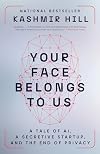
Spotify Premium included audiobook June/July 2024
Lists
Awards


You May Also Like
Associated Authors
Statistics
- Works
- 1
- Also by
- 1
- Members
- 161
- Popularity
- #131,050
- Rating
- 4.1
- Reviews
- 4
- ISBNs
- 9