
Melissa Yuan-Innes
Author of Code Blues: When Medicine Becomes Murder (Hope Sze medical mystery Book 1)
About the Author
Series
Works by Melissa Yuan-Innes
Code Blues: When Medicine Becomes Murder (Hope Sze medical mystery Book 1) (2011) 36 copies, 1 review
The Most Unfeeling Doctor in the World and Other True Tales From the Emergency Room (2011) 9 copies, 2 reviews
Space and Time Books 2 copies
Trouble and Strife 2 copies
Butcher's Hook 2 copies
Butcher’s hook 1 copy
Blood Diamonds: a Hope Sze story originally published in Jewish Noir (Hope Sze medical mystery) (2015) 1 copy
The Shapes of Wrath: Hell Hath No Fury Like a Surgeon Scorned (Hope’s Seven Deadly Sins Book 1) 1 copy
Associated Works
Jewish Noir: Contemporary Tales of Crime and Other Dark Deeds (2015) — Contributor — 49 copies, 1 review
'Ike Pāpālua: Science Fiction & Fantasy Stories from the Hawaiian Islands (2023) — Contributor — 3 copies
Tagged
Common Knowledge
- Other names
- Yi, Melissa
- Gender
- female
Members
Reviews
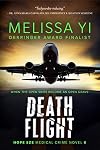
This may be the sixth book in this series but it is the first book that I have read. In fact, when I first picked up a copy of this book I did not know it was part of a series. I am happy to report that this book can be picked up and read as a stand alone novel. Which, usually a lot of books in a series can be but sometimes books don't translate so easily.
Instantly, I connected with both Hope and Tucker. Although, I was not familiar with their relationship dynamics; from what I read and saw show more in this book, they seem to have a nice personal relationship. Yet, I will never travel with Hope or Tucker. They have some of the worst luck that I have ever seen. Even before they boarded the airplane; they were encountering problems.
It only got worse once they were on the airplane.
The only downfall I had with this book is that I found some of the passengers to be very annoying. To the point that it took away some from the story as I was distracted by them. Overall, I did enjoy this book a lot and do want to go back and start at the beginning with this series. show less
Instantly, I connected with both Hope and Tucker. Although, I was not familiar with their relationship dynamics; from what I read and saw show more in this book, they seem to have a nice personal relationship. Yet, I will never travel with Hope or Tucker. They have some of the worst luck that I have ever seen. Even before they boarded the airplane; they were encountering problems.
It only got worse once they were on the airplane.
The only downfall I had with this book is that I found some of the passengers to be very annoying. To the point that it took away some from the story as I was distracted by them. Overall, I did enjoy this book a lot and do want to go back and start at the beginning with this series. show less
thriller, kidnapping, medical-perspective, suspense,*****,
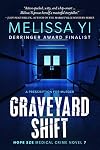
Loved it! Having worked nights in Emergency as well as having been a nurse in county jails, I can testify to the condensed version of very probable incidents. The sleuthing, suspense, and characters who truly are makes for a fascinating book of manageable length. Which is a good thing as it forced me to finish it in one long day!
I requested and received a free ebook copy from Kobo Writing Life via NetGalley. Thank you!
Loved it! Having worked nights in Emergency as well as having been a nurse in county jails, I can testify to the condensed version of very probable incidents. The sleuthing, suspense, and characters who truly are makes for a fascinating book of manageable length. Which is a good thing as it forced me to finish it in one long day!
I requested and received a free ebook copy from Kobo Writing Life via NetGalley. Thank you!
The Most Unfeeling Doctor in the World and Other True Tales From the Emergency Room by Melissa Yuan-Innes
medical-doctor, medical-perspective, humor, essays *****
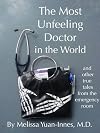
This is not an unbiased review. As a retired RN who has spent years translating Medicalese into patient/family speak I love the humanity revealed with good humor. Most of the incidents related are from before the author went into independent practice but are representative of every Western medical practitioner I have ever worked with. Patients can learn a lot from this short book. I loved it.
Louise Sproul gave an excellent audio show more performance. show less
This is not an unbiased review. As a retired RN who has spent years translating Medicalese into patient/family speak I love the humanity revealed with good humor. Most of the incidents related are from before the author went into independent practice but are representative of every Western medical practitioner I have ever worked with. Patients can learn a lot from this short book. I loved it.
Louise Sproul gave an excellent audio show more performance. show less
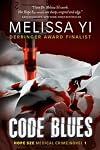
This is the first in the Hope Sze series; I’m afraid that this first does not instill in me any desire to read more of the series.
Dr. Hope Sze arrives for her first year of residency at St. Joseph’s Hospital in Montreal. The day after she arrives, when she is working her first shift, the body of Dr. Kurt Radshaw, a dedicated and respected physician, is discovered. Since his death is suspicious, Hope immediately sets out to find the killer.
My first issue with the book is Hope’s show more motivation for wanting to find the murderer. She has just begun working at the hospital and meets Dr. Radshaw once; nonetheless, she appoints herself the lead investigator? She states, “But something in me wasn’t content to sit around and wait for the [autopsy] report. The more I found out about Dr. Radshaw, the more I wanted to uncover the truth” (75). Later, she explains, “’I guess I was one of the first people to find him. When I met him, he seemed like a nice guy. And everyone loved him so much. I just wanted to make it up to him somehow’” (90). Minutes later, she thinks, “Maybe if we looked into his death, it would help free Alex [from Dr. Radshaw’s shadow]” (97). In case the reader is not convinced, she repeats, “But the more I got to know about Dr. Radshaw, the more curious I got” (113). A few pages later, she adds, “Even though I never really knew Dr. Kurt alive, I still respected him and wanted him to be at peace” (121) and “I hadn’t been able to bring him back to life. But maybe I could make sure he hadn’t died in vain” (121). Yet again, “His death wasn’t right. I wanted to fix it’ (158). None of these statements convince me. Would she react the same way if one of her patients died?
Then there are the gaps in logic. A code blue is called for the operating room but the body is found in the men’s change room? While having lunch with Hope, Alex says, “’You don’t even like rum balls’” (96); what a stupid comment since there is no way he would know this, especially when she had just joked that she’d like all the desserts (87). How is it that they have two different desserts when their lunch included “the dessert of the day” (88)? One minute a bed has “an orange, plaid blanket and white sheets” (188) and the next minute it has “orange plaid sheets . . . [with] their pattern of red, yellow, and green stripes” (189). At one point, Hope says, “Alex had turned off the air conditioning” (200) but then he “flicked off the air conditioning” (202) again?
Hope is new to the hospital, yet she knows a lot about its functioning: “I heard you needed a numerical access code for the elevator” (43) and “Bob Clarkson was originally a family doctor, but he’d cut his patients loose after he’d gone into administration” (129). Then at other times, she is so stupid. She actually feels she has to call the police and tell them that if they found Dr. Radshaw’s pager, they could trace who might have called him (226)? She can spot an abused woman, based on contact for a few minutes, yet she can’t recognize drug usage in someone with whom she has regular contact? What “had been nagging at the back of [her] head” (176) should have been at the forefront!
The book has a lot of extraneous detail. Do we always have to be told, in detail, what someone is wearing? “She was wearing a non-descript, black shirt and white, knee-length shorts” (161) and “My gaze moved to his walnut dress pants and leather sneakers. They were like old Adidas, with the stripes and little lace-ups, except instead of red and white canvas, they were made of medium-brown leather” (228) and “a grey shirt with solid red sleeves, ‘80s style, dark olive cargo pants, and sandals” (229) and “A full-length, stretchy black skirt, a white cotton shirt, even a chunky bead necklace” (122) and “a fitted, ultramarine blouse and white, pleated skirt which fell about mid-thigh” (165). Hope’s descriptions of people suggest a shallowness: “Her square-jawed face might have been pretty, if she hadn’t been forcing a smile” (10) and “her eyes a little close-set for classic beauty” (44) and “His features were too coarse to be good-looking” (110).
Did a copyeditor not proofread this book before publication? A couple of errors can be excused but there are just so many. I started keeping track only after the first 100 pages: “we’d only suffered once suspicious death recently” (129) and “I seemed to be doing a lot sneaking around today” (131) and “If I hadn’t been still been breathing hard . . .” (141) and “Those are two the specialties where the nurses are notoriously protective . . . ” (149) and “I check out her way her shoulders seemed to huddle against him” (161) and “released me enough to flick the on the light switch” (188) and “I have to go outside the soak the speculum in warm water” (219) and “I bet attrition took its toll over course of the afternoon” (240).
This is supposed to be a mystery but the mystery is often in the background. I would have preferred more mystery and less romance. That detailed sex scene seems to have been included just to titillate. And don’t get me started on the melodramatic scenes. For example, Mireille’s visit to Hope’s apartment has a lot of “up close” action: “We were so close that I could see the small brown freckles on her nose, cheeks, and forehead” (101) and “Up close, [her eyes] were hazel, green with brown webs in her irises” (102) and “She pressed so close that our noses almost touched” (102) and “She pushed her face in mine” (103) and “She came close enough that I could smell her breath” (103).
From the perspective of an Ontarian living close to the Quebec border, I chuckled at some of Hope’s commentary. “When I hit the Quebec border . . . I noticed that my Ford Focus began bouncing over more frequent potholes” (7) and “Some planning committee thought it was a good idea to run Highway 20 through the heart of little bergs” (7) are comments my husband and I have made on our way east to Montreal. But then, Hope goes on and on about the police: “I never wanted to meet the Sûreté de Québec. The only time they make the national news is when they shoot young black men for no defensible reason. When I got my match results, that I’d be doing family medicine in Montreal, one unbidden thought was, I hope they don’t shoot me. They didn’t regularly mow down young Asian women, but I figured, once unbalanced, always unbalanced” (38). After these remarks, her complaint that “Some people meet you and immediately think they know you through the o-so-true stereotypes” (100) seems hypocritical.
I know my review is harsh, but I honestly found little to like about the book. It should have been more carefully revised and edited. Perhaps the later books in the series are better in this respect? As is, the writing of this book is the equivalent of my doing surgery with only the knowledge gained from a basic first aid course and medical dramas on television.
Note: Please check out my reader's blog (https://schatjesshelves.blogspot.com/) and follow me on Twitter (@DCYakabuski). show less
Dr. Hope Sze arrives for her first year of residency at St. Joseph’s Hospital in Montreal. The day after she arrives, when she is working her first shift, the body of Dr. Kurt Radshaw, a dedicated and respected physician, is discovered. Since his death is suspicious, Hope immediately sets out to find the killer.
My first issue with the book is Hope’s show more motivation for wanting to find the murderer. She has just begun working at the hospital and meets Dr. Radshaw once; nonetheless, she appoints herself the lead investigator? She states, “But something in me wasn’t content to sit around and wait for the [autopsy] report. The more I found out about Dr. Radshaw, the more I wanted to uncover the truth” (75). Later, she explains, “’I guess I was one of the first people to find him. When I met him, he seemed like a nice guy. And everyone loved him so much. I just wanted to make it up to him somehow’” (90). Minutes later, she thinks, “Maybe if we looked into his death, it would help free Alex [from Dr. Radshaw’s shadow]” (97). In case the reader is not convinced, she repeats, “But the more I got to know about Dr. Radshaw, the more curious I got” (113). A few pages later, she adds, “Even though I never really knew Dr. Kurt alive, I still respected him and wanted him to be at peace” (121) and “I hadn’t been able to bring him back to life. But maybe I could make sure he hadn’t died in vain” (121). Yet again, “His death wasn’t right. I wanted to fix it’ (158). None of these statements convince me. Would she react the same way if one of her patients died?
Then there are the gaps in logic. A code blue is called for the operating room but the body is found in the men’s change room? While having lunch with Hope, Alex says, “’You don’t even like rum balls’” (96); what a stupid comment since there is no way he would know this, especially when she had just joked that she’d like all the desserts (87). How is it that they have two different desserts when their lunch included “the dessert of the day” (88)? One minute a bed has “an orange, plaid blanket and white sheets” (188) and the next minute it has “orange plaid sheets . . . [with] their pattern of red, yellow, and green stripes” (189). At one point, Hope says, “Alex had turned off the air conditioning” (200) but then he “flicked off the air conditioning” (202) again?
Hope is new to the hospital, yet she knows a lot about its functioning: “I heard you needed a numerical access code for the elevator” (43) and “Bob Clarkson was originally a family doctor, but he’d cut his patients loose after he’d gone into administration” (129). Then at other times, she is so stupid. She actually feels she has to call the police and tell them that if they found Dr. Radshaw’s pager, they could trace who might have called him (226)? She can spot an abused woman, based on contact for a few minutes, yet she can’t recognize drug usage in someone with whom she has regular contact? What “had been nagging at the back of [her] head” (176) should have been at the forefront!
The book has a lot of extraneous detail. Do we always have to be told, in detail, what someone is wearing? “She was wearing a non-descript, black shirt and white, knee-length shorts” (161) and “My gaze moved to his walnut dress pants and leather sneakers. They were like old Adidas, with the stripes and little lace-ups, except instead of red and white canvas, they were made of medium-brown leather” (228) and “a grey shirt with solid red sleeves, ‘80s style, dark olive cargo pants, and sandals” (229) and “A full-length, stretchy black skirt, a white cotton shirt, even a chunky bead necklace” (122) and “a fitted, ultramarine blouse and white, pleated skirt which fell about mid-thigh” (165). Hope’s descriptions of people suggest a shallowness: “Her square-jawed face might have been pretty, if she hadn’t been forcing a smile” (10) and “her eyes a little close-set for classic beauty” (44) and “His features were too coarse to be good-looking” (110).
Did a copyeditor not proofread this book before publication? A couple of errors can be excused but there are just so many. I started keeping track only after the first 100 pages: “we’d only suffered once suspicious death recently” (129) and “I seemed to be doing a lot sneaking around today” (131) and “If I hadn’t been still been breathing hard . . .” (141) and “Those are two the specialties where the nurses are notoriously protective . . . ” (149) and “I check out her way her shoulders seemed to huddle against him” (161) and “released me enough to flick the on the light switch” (188) and “I have to go outside the soak the speculum in warm water” (219) and “I bet attrition took its toll over course of the afternoon” (240).
This is supposed to be a mystery but the mystery is often in the background. I would have preferred more mystery and less romance. That detailed sex scene seems to have been included just to titillate. And don’t get me started on the melodramatic scenes. For example, Mireille’s visit to Hope’s apartment has a lot of “up close” action: “We were so close that I could see the small brown freckles on her nose, cheeks, and forehead” (101) and “Up close, [her eyes] were hazel, green with brown webs in her irises” (102) and “She pressed so close that our noses almost touched” (102) and “She pushed her face in mine” (103) and “She came close enough that I could smell her breath” (103).
From the perspective of an Ontarian living close to the Quebec border, I chuckled at some of Hope’s commentary. “When I hit the Quebec border . . . I noticed that my Ford Focus began bouncing over more frequent potholes” (7) and “Some planning committee thought it was a good idea to run Highway 20 through the heart of little bergs” (7) are comments my husband and I have made on our way east to Montreal. But then, Hope goes on and on about the police: “I never wanted to meet the Sûreté de Québec. The only time they make the national news is when they shoot young black men for no defensible reason. When I got my match results, that I’d be doing family medicine in Montreal, one unbidden thought was, I hope they don’t shoot me. They didn’t regularly mow down young Asian women, but I figured, once unbalanced, always unbalanced” (38). After these remarks, her complaint that “Some people meet you and immediately think they know you through the o-so-true stereotypes” (100) seems hypocritical.
I know my review is harsh, but I honestly found little to like about the book. It should have been more carefully revised and edited. Perhaps the later books in the series are better in this respect? As is, the writing of this book is the equivalent of my doing surgery with only the knowledge gained from a basic first aid course and medical dramas on television.
Note: Please check out my reader's blog (https://schatjesshelves.blogspot.com/) and follow me on Twitter (@DCYakabuski). show less
Awards

You May Also Like
Associated Authors
Statistics
- Works
- 26
- Also by
- 24
- Members
- 110
- Popularity
- #176,728
- Rating
- 3.6
- Reviews
- 7
- ISBNs
- 31