
Amelia Thomas
Author of The Zoo on the Road to Nablus: A Story of Survival from the West Bank
Works by Amelia Thomas
What Sheep Think About the Weather: How to Listen to What Animals Are Trying to Say (2025) 38 copies, 1 review
Tagged
Common Knowledge
- Gender
- female
- Occupations
- journalist
- Nationality
- UK
- Associated Place (for map)
- UK
Members
Reviews
First of all, let's be clear about one thing: This is not the story of a zoo. It is the story of Dr. Sami of the Qalqilya Zoo, who prioritizes his job, his reputation, and his unrealistic dreams over the welfare of the animals who he's paid to care for. It is the story of a man who focuses much of his time on expanding two museums (and at the end desires three), one of Natural History and one of Agriculture, and on bringing in more animals, rather than on caring for and ensuring the welfare show more of those he has.
You might read this and think it's harsh, or think I'm exaggerating. I'm not. Some of the anecdotes included in the book show him taking bottles full of grass snakes from boys who bring them to him in the hopes of some reward--they're local snakes, accustomed to living in the local environment. He admits that, under his care, these snakes never survive long because they don't seem to like the food the zoo offers them. Does he let them go back into the nearby bushes where they would thrive? No, he puts them in aquariums, not expecting them to survive. There's a conversation between him and another man where it's suggested that one or two of their bears be sent to another zoo where they can live in better habitats, in a zoo which is better equipped to care for them and which has the room and the proper facilities. He laughs, thinking the idea absurd. Similarly, it was suggested that his giraffe be sent elsewhere to breed, and he scoffed at the proposition, though the other zoo clearly had better facilities--even temporarily, it was out of the question. His giraffe, lonely and alone, eventually died after having ingested some cleaner. This is a zoo where a snake was killed by the cold because a keeper forgot to turn on a heater, and where patrons through rocks at the bears, and where even the veterinarian who likely does care more for the animals than anyone else on the premises, admits that the facilities are not satisfactory. And yeah, he asks for more. This is His story, not the zoo's.
Now, here's the thing: I can admire a love of animals, and the desire to have an international zoo. I love visiting zoos, truth be told, and I admire all they do for conservation and for education--that is, I admire the good ones. It's true that a small zoo has to be built up to become an international one, a truly great one, but this isn't the way that happens. I can admire, in some ways, that Dr. Sami seems to have good intentions, if unreasonable ones. That's not enough.
As an animal lover, I have to compare the man at the center of this narrative--and those who support him--to a woman who loves dogs, and wants to take home a lot of them, but she has a very small apartment in a city, and doesn't have the money to pay for adequate food or veterinary care. But, because she wants to help dogs in the shelter and because she loves dogs, she adopts twenty of them, not understanding that she's truly ill-equipped to care for them, and that they'd be better off taking their chances at a shelter, rather than in a too small space without room or resources for even basic health and contentment. Every time Dr. Sami, in this book, asked for more animals, the truth is that I shuddered at the thought of him getting them. By the end of the book, I'd just as soon he be eaten by a lion.
Now, you want me to get back to the book. Sorry for the rant. Here's the other problem, though: I'm not even sure the writer of this book cares about animals or understands the cruelty element involved in some of what's being reported. The author, like Dr. Sami, is ever condescending, ever wry, and real compassion for the animals rarely comes through. In my humble opinion, I rather believe that this was a book about animals written for people who don't particularly like or care for animals.
Simply, I had a hard time reading this book. I was disgusted by what I read, and even in relation to the people at the center of the book working in and around the zoo. I've read other books about the survival of zoos, about people struggling to maintain the status quo in regard to a zoo, and the health and welfare of its animals, even in the middle east. This isn't a book like that. This is a book that suggests that a badly run zoo, which is ill equipped and ill staffed, is far, far, far worse than no zoo at all.
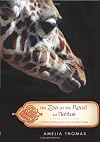
So, no, I don't recommend this book--the best thing about it is the cover, which breaks my heart now when I look at it. show less
You might read this and think it's harsh, or think I'm exaggerating. I'm not. Some of the anecdotes included in the book show him taking bottles full of grass snakes from boys who bring them to him in the hopes of some reward--they're local snakes, accustomed to living in the local environment. He admits that, under his care, these snakes never survive long because they don't seem to like the food the zoo offers them. Does he let them go back into the nearby bushes where they would thrive? No, he puts them in aquariums, not expecting them to survive. There's a conversation between him and another man where it's suggested that one or two of their bears be sent to another zoo where they can live in better habitats, in a zoo which is better equipped to care for them and which has the room and the proper facilities. He laughs, thinking the idea absurd. Similarly, it was suggested that his giraffe be sent elsewhere to breed, and he scoffed at the proposition, though the other zoo clearly had better facilities--even temporarily, it was out of the question. His giraffe, lonely and alone, eventually died after having ingested some cleaner. This is a zoo where a snake was killed by the cold because a keeper forgot to turn on a heater, and where patrons through rocks at the bears, and where even the veterinarian who likely does care more for the animals than anyone else on the premises, admits that the facilities are not satisfactory. And yeah, he asks for more. This is His story, not the zoo's.
Now, here's the thing: I can admire a love of animals, and the desire to have an international zoo. I love visiting zoos, truth be told, and I admire all they do for conservation and for education--that is, I admire the good ones. It's true that a small zoo has to be built up to become an international one, a truly great one, but this isn't the way that happens. I can admire, in some ways, that Dr. Sami seems to have good intentions, if unreasonable ones. That's not enough.
As an animal lover, I have to compare the man at the center of this narrative--and those who support him--to a woman who loves dogs, and wants to take home a lot of them, but she has a very small apartment in a city, and doesn't have the money to pay for adequate food or veterinary care. But, because she wants to help dogs in the shelter and because she loves dogs, she adopts twenty of them, not understanding that she's truly ill-equipped to care for them, and that they'd be better off taking their chances at a shelter, rather than in a too small space without room or resources for even basic health and contentment. Every time Dr. Sami, in this book, asked for more animals, the truth is that I shuddered at the thought of him getting them. By the end of the book, I'd just as soon he be eaten by a lion.
Now, you want me to get back to the book. Sorry for the rant. Here's the other problem, though: I'm not even sure the writer of this book cares about animals or understands the cruelty element involved in some of what's being reported. The author, like Dr. Sami, is ever condescending, ever wry, and real compassion for the animals rarely comes through. In my humble opinion, I rather believe that this was a book about animals written for people who don't particularly like or care for animals.
Simply, I had a hard time reading this book. I was disgusted by what I read, and even in relation to the people at the center of the book working in and around the zoo. I've read other books about the survival of zoos, about people struggling to maintain the status quo in regard to a zoo, and the health and welfare of its animals, even in the middle east. This isn't a book like that. This is a book that suggests that a badly run zoo, which is ill equipped and ill staffed, is far, far, far worse than no zoo at all.
So, no, I don't recommend this book--the best thing about it is the cover, which breaks my heart now when I look at it. show less
What Sheep Think About the Weather: How To Listen To What Animals Are Trying To Say by Amelia Thomas

It started with a hummingbird. When the cheeky little guy got all up in her business, animal lover Amelia Thomas began to wonder if it was trying to tell her something. And what about her dogs, pigs, horses, and the other animals, wild and domesticated, that populate her family's Canadian farm?
Over her year-long journey, Thomas examines the science of animal communication, learns from a variety of top-notch animal trainers, and explores the more esoteric area of animal communicators and show more psychics. For me, that third section got a little bit "woo-woo," as Thomas herself would say, but all in all I enjoyed this look at animal communication that ranges from bacteria to great apes. It's chock full of interesting facts, and I also found myself growing fond of the specific animals on Amelia's farm, particularly the pigs. For animal lovers, definitely recommended -- even if you don't have a specific animal in your life right now. show less
Over her year-long journey, Thomas examines the science of animal communication, learns from a variety of top-notch animal trainers, and explores the more esoteric area of animal communicators and show more psychics. For me, that third section got a little bit "woo-woo," as Thomas herself would say, but all in all I enjoyed this look at animal communication that ranges from bacteria to great apes. It's chock full of interesting facts, and I also found myself growing fond of the specific animals on Amelia's farm, particularly the pigs. For animal lovers, definitely recommended -- even if you don't have a specific animal in your life right now. show less
This is the story of the neglected Qalqilya zoo, struggling to survive after falling into disrepair during decades of Israeli-Palestinian fighting. It seems a bleak and intimidating place, utterly devoid of hope until you meet the hero of the story, the compassionate and determined vet, Dr. Sami Khader, who tends to the ragtag collection of animals in enclosures pocked with bullet holes. His dream of turning Qalqilya zoo into one of international standing lies at the heart of this gem of a show more book which he tries to do with a lot of hope, humour and sheer persistence while working with the zoo’s shoe-string budget and battles with scheming colleagues and greedy bureaucrats.
Journalist Amelia Thomas tells this inspiring story without mushy sentimentality and dewy-eyed emotionalism making the impact of the dismal conditions and daunting obstacles shocking strong. I found it a moving testament to human resilience and good-heartedness. show less
Journalist Amelia Thomas tells this inspiring story without mushy sentimentality and dewy-eyed emotionalism making the impact of the dismal conditions and daunting obstacles shocking strong. I found it a moving testament to human resilience and good-heartedness. show less
Story of the only zoo veterinarian on the West Bank who kept the Qalqilya Zoo open during the Al Aqsa intifada singlehandedly.
You May Also Like
Associated Authors
Statistics
- Works
- 8
- Members
- 158
- Popularity
- #133,025
- Rating
- 3.3
- Reviews
- 4
- ISBNs
- 20
- Languages
- 1