
Fuad al-Takarli (1927–2008)
Author of Long Way Back
About the Author
Series
Works by Fuad al-Takarli
Associated Works
Tagged
Common Knowledge
- Other names
- al-Tikerly, Fouad
Takarli, Fuad - Birthdate
- 1927-08-22
- Date of death
- 2008-02-11
- Education
- University of Baghdad
- Occupations
- judge
- Awards and honors
- Al Owais Award (1999)
- Birthplace
- Baghdad, Iraq
- Places of residence
- Paris, France
Tunisia - Place of death
- Amman, Jordan
- Map Location
- Iraq
Members
Reviews
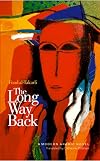
Puzzlement remains the word I’d use to describe my reaction to this slice of life novel. The writing is meditative – I give it four stars. Plot is non-existent; told from multiple points of view, this is the interior story of individuals in an extended family living in Baghdad in the early 1960s.
I made a family tree to organize the characters (each generation of women has similar names). None of them are happy, unless Midhat is at the beginning of the story. Although external events show more intersect with their lives, the novel focuses on the internal thoughts, feelings, and struggles of each character.
I came away most focused on the story of Munria, wondering what would happen to her next. And my impression was that I knew the women better than the men, although more page space is devoted to the brothers Midhat and Karumi.
The author was a lawyer & a judge who wrote on the side. In an interview published in 2007 in Al Jadid, Takarli refers to this novel as “The faraway man.” Neither that nor “the long way back” strike me as especially fitting titles, but I’m not sure what I would call it either.
I read this for an online reading group. show less
I made a family tree to organize the characters (each generation of women has similar names). None of them are happy, unless Midhat is at the beginning of the story. Although external events show more intersect with their lives, the novel focuses on the internal thoughts, feelings, and struggles of each character.
I came away most focused on the story of Munria, wondering what would happen to her next. And my impression was that I knew the women better than the men, although more page space is devoted to the brothers Midhat and Karumi.
The author was a lawyer & a judge who wrote on the side. In an interview published in 2007 in Al Jadid, Takarli refers to this novel as “The faraway man.” Neither that nor “the long way back” strike me as especially fitting titles, but I’m not sure what I would call it either.
I read this for an online reading group. show less
This is a story of 4 generations of a family told through the private thoughts of numerous of the characters. It explores the conflict between personal and societal values and the mechanisms of the mind dealing with tragedy. It conveys the isolation of individuals despite the ties of family.
Awards


You May Also Like
Associated Authors
Statistics
- Works
- 1
- Also by
- 3
- Members
- 35
- Popularity
- #405,583
- Rating
- 3.8
- Reviews
- 2
- ISBNs
- 4