
Ruth Suckow (1892–1960)
Author of The Folks
About the Author
Works by Ruth Suckow
The Bonney family 6 copies
The Odyssey of a nice girl 4 copies
The Kramer girls 3 copies
A Memoir 2 copies
A Start in Life [short story] 2 copies
Children and Older People 1 copy
The Little Girl from Town 1 copy
Carry-over, 1 copy
memoir (A) 1 copy
Associated Works
Fierce Pajamas: An Anthology of Humor Writing from The New Yorker (2001) — Contributor — 788 copies, 5 reviews
The Best Short Stories of 1923 and the Yearbook of the American Short Story (1924) — Contributor — 11 copies
The Best Short Stories of 1924 and the Yearbook of the American Short Story (1925) — Contributor — 10 copies, 1 review
Contemporary Short Stories: Representative Selections, Volume 3 — Contributor — 6 copies
The Best Short Stories of 1928 and the Yearbook of the American Short Story (1928) — Contributor — 3 copies
The Ethnic Image in Modern American Literature, 1900-1950, Volumes 1-2 (1984) — Contributor — 1 copy
Eleven American Stories — Contributor — 1 copy
Tagged
Common Knowledge
- Canonical name
- Suckow, Ruth
- Birthdate
- 1892-08-06
- Date of death
- 1960-01-23
- Gender
- female
- Education
- University of Denver
- Occupations
- writer
- Nationality
- USA
- Birthplace
- Hawarden, Iowa, USA
- Places of residence
- Claremont, California, USA
Boston, Massachusetts, USA
Denver, Colorado, USA
Earlville, Iowa, USA
Santa Fe, New Mexico, USA
Washington, D.C., USA - Place of death
- Claremont, California, USA
- Burial location
- Greenwood Cemetery, Cedar Falls, Iowa, USA
- Associated Place (for map)
- USA
Members
Reviews
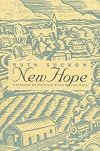
Ruth Suckow's 1942 novel, NEW HOPE, has lost none of its brilliance in the past seventy years, and the University of Iowa has done serious readers everywhere a great service in putting it back in print.
The story of a tiny town in western Iowa is peopled with 'salt of the earth' type folks. The main characters here are two small children, Clarence Miller (son of the town banker) and Delight Greenwood (daughter of the new Congregational minister), who become inseparable friends during the show more scant two years covered in the story.
Suckow, who was herself a minister's daughter in west Iowa, obviously knew her small town rural milieu and characters. Clarence's father is a blustery town booster. His brother Ira, a partner in the bank, is more reserved and quiet. Another brother, Andy, is a farmer, and Suckow knows them too, as she describes Andy:
"Andy had the hard-bitten skepticism of a grower and outdoor worker, who had to take the seasons as they came ... He had a farmer's diffidence, as well as a farmer's skepticism, with those who could put things into words."
The author knows soil too, as evidenced in this description:
"The plow cut down through fine, even, brown-black soil and came out almost as sharp and clean as it entered, with a few moist particles clinging ... Ages had gone into the making of the cornfield ... centuries of steaming heat and of crushing glacial cold, rotting and grinding to make a deep rich foundation before the topsoil was brought and deposited."
There is a rich cast of characters of all "types" who make up the town. But I agree with the reviewers from the forties who said that the town of New Hope itself is perhaps the main 'character' of the story.
Clarence and Delight are unmistakable the stars though. You watch them slowly mature and the nature of their friendship changes, however slowly and inexorably. In the second year, little Clarence even tags along with a group of older boys and there is a dark scene reminiscent of the "kill the pig!" part of LORD OF THE FLIES, in which Clarence takes part in the killing and mutilating of a muskrat.
"The boys broke the circle and ran forward. Blood streaked the muddy water. The muskrat was trying to turn and swim away. But the kids yelled and reached in with sticks, and brought it to shore. They beat and pounded until it was dead. The flat tail threshed in the mud more and more feebly. Clarence had joined wildly with the others. He wanted the thing to be dead. They were all yelling in triumph."
The subtle dividing line between the sexes is emphasized throughout the book, in the depictions of both children and adults. Clarence becomes gradually aware of the unique relationship between Reverend Greenwood and his wife Alice; sees that it is more of a 'partnership' than the marriage of his parents where his father is always dominant and deferred to by his wife and children.
NEW HOPE is not a book with a great deal of rising and falling action. It is more a look at the turning of the seasons. There is birth and death. There are young people and old people and the usual tension that can develop between them. There are subtle inklings of darker things, represented in a theft from the church, and also by the shadowy figure of the monument works, one Ollie Jenks. Clarence's father warns him away from Jenks, saying only: "You'd better stay away from the marble works. I don't want you hanging around there."
NEW HOPE can probably be read on several levels, with its allusions to the Old and New Testament and the 'new' residents and those from the 'old community.' But the writing is exceptional. I was reminded of Thornton Wilder's classic play OUR TOWN, as well as William Maxwell's beautiful novel, THEY CAME LIKE SWALLOWS. The story is timeless. I hope it will remain in print for a long time and continue to find readers who enjoy good storytelling. Kudos to the University of Iowa Press for bringing it back and giving it new life. show less
The story of a tiny town in western Iowa is peopled with 'salt of the earth' type folks. The main characters here are two small children, Clarence Miller (son of the town banker) and Delight Greenwood (daughter of the new Congregational minister), who become inseparable friends during the show more scant two years covered in the story.
Suckow, who was herself a minister's daughter in west Iowa, obviously knew her small town rural milieu and characters. Clarence's father is a blustery town booster. His brother Ira, a partner in the bank, is more reserved and quiet. Another brother, Andy, is a farmer, and Suckow knows them too, as she describes Andy:
"Andy had the hard-bitten skepticism of a grower and outdoor worker, who had to take the seasons as they came ... He had a farmer's diffidence, as well as a farmer's skepticism, with those who could put things into words."
The author knows soil too, as evidenced in this description:
"The plow cut down through fine, even, brown-black soil and came out almost as sharp and clean as it entered, with a few moist particles clinging ... Ages had gone into the making of the cornfield ... centuries of steaming heat and of crushing glacial cold, rotting and grinding to make a deep rich foundation before the topsoil was brought and deposited."
There is a rich cast of characters of all "types" who make up the town. But I agree with the reviewers from the forties who said that the town of New Hope itself is perhaps the main 'character' of the story.
Clarence and Delight are unmistakable the stars though. You watch them slowly mature and the nature of their friendship changes, however slowly and inexorably. In the second year, little Clarence even tags along with a group of older boys and there is a dark scene reminiscent of the "kill the pig!" part of LORD OF THE FLIES, in which Clarence takes part in the killing and mutilating of a muskrat.
"The boys broke the circle and ran forward. Blood streaked the muddy water. The muskrat was trying to turn and swim away. But the kids yelled and reached in with sticks, and brought it to shore. They beat and pounded until it was dead. The flat tail threshed in the mud more and more feebly. Clarence had joined wildly with the others. He wanted the thing to be dead. They were all yelling in triumph."
The subtle dividing line between the sexes is emphasized throughout the book, in the depictions of both children and adults. Clarence becomes gradually aware of the unique relationship between Reverend Greenwood and his wife Alice; sees that it is more of a 'partnership' than the marriage of his parents where his father is always dominant and deferred to by his wife and children.
NEW HOPE is not a book with a great deal of rising and falling action. It is more a look at the turning of the seasons. There is birth and death. There are young people and old people and the usual tension that can develop between them. There are subtle inklings of darker things, represented in a theft from the church, and also by the shadowy figure of the monument works, one Ollie Jenks. Clarence's father warns him away from Jenks, saying only: "You'd better stay away from the marble works. I don't want you hanging around there."
NEW HOPE can probably be read on several levels, with its allusions to the Old and New Testament and the 'new' residents and those from the 'old community.' But the writing is exceptional. I was reminded of Thornton Wilder's classic play OUR TOWN, as well as William Maxwell's beautiful novel, THEY CAME LIKE SWALLOWS. The story is timeless. I hope it will remain in print for a long time and continue to find readers who enjoy good storytelling. Kudos to the University of Iowa Press for bringing it back and giving it new life. show less
4997. New Hope, by Ruth Suckow (read 28 Jan 2013) I read this because the author was born near where I live, and is a well-known Iowa author. It tells of a minister and his family coming to the new Iowa town and staying two years. There is nothing except blandness for the first 200 pages and very little excitement even after that. Most of the time is spent telling how a six year old boy is infatuated by the minister's six year old daughter. Other than being bored spitless by the show more non-happenings related, one can revel in what life was like before cars in an Iowa small town. There will be no shock to your sensibilities in this book, and when you get to the last page you will be glad so that you can read something less bland. show less
Lists
Awards
You May Also Like
Associated Authors
Statistics
- Works
- 17
- Also by
- 17
- Members
- 111
- Popularity
- #175,483
- Rating
- 3.5
- Reviews
- 2
- ISBNs
- 11