
Jerome Silbergeld
Author of Chinese Painting Style: Media, Methods, and Principles of Form
About the Author
Jerome Silbergeld is Professor of Art History at the University of Washington, Seattle.
Image credit: Jerome Silbergeld. Picture from Princeton.
Works by Jerome Silbergeld
China into Film: Frames of Reference in Contemporary Chinese Cinema (Reaktion Books - Envisioning Asia) (2000) 19 copies
Hitchcock with a Chinese Face: Cinematic Doubles, Oedipal Triangles, and China's Moral Voice (2004) 6 copies
Contradictions : artistic life, the socialist state, and the Chinese painter Li Huasheng (1993) 5 copies
Outside In: Chinese x American x Contemporary Art (Princeton University Art Museum Series) (2009) 5 copies
Body in Question: Image and Illusion in Two Chinese Films by Director Jiang Wen (Tang Center Lecture) (2008) 3 copies
The Family Model in Chinese Art and Culture (Publications of the Department of Art and Archaeology, Princeton University) (2013) 3 copies
Associated Works
Tagged
Common Knowledge
There is no Common Knowledge data for this author yet. You can help.
Members
Reviews
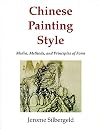
Originally written for undergraduate university students, Professor Silbergeld has gifted the world with a gem of a book--a basic introduction to Chinese painting that first introduces the basics of its tools (brushes, ink, paper, seals) and formatting (wall paintings, screens, hand scrolls, albums...) before venturing further into its elements (line, wash, colour and texture), and various aspects of composition.
It does this through a careful selection of around 40 Chinese paintings that it show more repeatedly uses to illustrate points carefully demarcated for viewers by thin red lines and reference letters (a, b, c...) so each painting is used to illustrate a diverse range of points. This makes the book leaner than many introductions to Chinese painting (68 pages plus plates), but the result is one turns the last page with a surprising depth of knowledge of how classical Chinese paintings were constructed by their artists and an intimate knowledge of some of the most familiar Chinese paintings (for example, Ni Zan's "The Jung-shi Studio" and Liang Kai's "Huineng Tearing Sutras").
Regardless of one's exposure to classical Chinese painting (however faint or broad), there is plenty to learn, whether it is the date when paper was "first consciously championed as a medium for painting promoted by the Chinese gentry" (11C, page 9) or how to date paintings by how artists depicted a facial characteristic (pre and post-late 8C, page 47). Each reading will reveal more depths of fascinating information, just as each viewing reveals more secrets in a painting.
Highly recommended to anyone wishing to learn more about Chinese painting, and the short but excellent Bibliography at the end will show you the way ahead. One last point--while the text refers to artists by their Wade-Giles names (still preferred in Taiwan), the Index provides its Pinyin (PRC) equivalent, so any reader encountering an unfamiliar name can refer to the Index to discover that Tao-chi is Daoji. show less
It does this through a careful selection of around 40 Chinese paintings that it show more repeatedly uses to illustrate points carefully demarcated for viewers by thin red lines and reference letters (a, b, c...) so each painting is used to illustrate a diverse range of points. This makes the book leaner than many introductions to Chinese painting (68 pages plus plates), but the result is one turns the last page with a surprising depth of knowledge of how classical Chinese paintings were constructed by their artists and an intimate knowledge of some of the most familiar Chinese paintings (for example, Ni Zan's "The Jung-shi Studio" and Liang Kai's "Huineng Tearing Sutras").
Regardless of one's exposure to classical Chinese painting (however faint or broad), there is plenty to learn, whether it is the date when paper was "first consciously championed as a medium for painting promoted by the Chinese gentry" (11C, page 9) or how to date paintings by how artists depicted a facial characteristic (pre and post-late 8C, page 47). Each reading will reveal more depths of fascinating information, just as each viewing reveals more secrets in a painting.
Highly recommended to anyone wishing to learn more about Chinese painting, and the short but excellent Bibliography at the end will show you the way ahead. One last point--while the text refers to artists by their Wade-Giles names (still preferred in Taiwan), the Index provides its Pinyin (PRC) equivalent, so any reader encountering an unfamiliar name can refer to the Index to discover that Tao-chi is Daoji. show less
You May Also Like
Associated Authors
Statistics
- Works
- 13
- Also by
- 1
- Members
- 128
- Popularity
- #157,244
- Rating
- 4.2
- Reviews
- 1
- ISBNs
- 19