
John Daido Loori (1931–2009)
Author of The Zen of Creativity: Cultivating Your Artistic Life
About the Author
John Daido Loori (1931-2009) was one of the West's leading Zen masters and the author of numerous books, including The Eight Gates of Zen and The True Dharma Eye. He was the founder and director of the Mountains and Rivers Order (MRO), an organization of Zen Buddhist temples, practice centers, and show more meditation groups in the United States and abroad. He also founded Dharma Communications, an educational and outreach branch of the MRO. show less
Image credit: Photo by Jeffrey Radcliffe / Flickr.
Works by John Daido Loori
The Art of Just Sitting: Essential Writings on the Zen Practice of Shikantaza (2002) 232 copies, 4 reviews
The Heart of Being: Moral and Ethical Teachings of Zen Buddhism (Tuttle Library of Enlightenment) (1996) 136 copies, 1 review
Finding the Still Point (Book and CD): A Beginner's Guide to Zen Meditation (Dharma Communications) (1996) 104 copies, 2 reviews
Invoking Reality: Moral and Ethical Teachings of Zen (Dharma Communications) (1998) 65 copies, 1 review
Bringing the Sacred to Life: The Daily Practice of Zen Ritual (Dharma Communications) (2008) 51 copies
Making Love with Light: Contemplating Nature with Words and Photographs (Dharma Communications) (2000) 30 copies
The way of mountains and rivers : teachings on Zen and the environment with commentary on Zen Master Dogen's Mountains and Rivers Sutra (2009) 7 copies
Mountains and rivers : Mystical Realism of Zen Master Dogen [video recording] (2003) — Directed, Produced — 2 copies
Mountain Record Volume 9, Number 2 2 copies
Heart of Being 1 copy
Invoking reality 1 copy
Sitting with Koans 1 copy
[No title] 1 copy
The Calling of the Dragon : Zen Mountain Monastery 20th Anniversary [video recording] (2000) — Filmmaker, Interview — 1 copy
Eight Gates of Zen 1 copy
Practice is Enlightenment: Zen Master Dogen's 300 Koan Shobgenzo Case #123 [video recording] (1998) 1 copy
Plum Blossoms--The Coming of Eternal Spring : Koans of the Way of Reality [video recording] (2005) 1 copy
Zen practice at home [CD] 1 copy
Entering the Mountain Gate 1 copy
Mountain Record Winter 2001 1 copy
Associated Works
Dogen's Extensive Record: A Translation of the Eihei Koroku (2004) — Introduction, some editions — 124 copies, 1 review
Sacred Stories: A Celebration of the Power of Story to Transform and Heal (1993) — Contributor — 114 copies, 1 review
Self Realization of Noble Wisdom: The Lankavatara Sutra (1932) — Foreword, some editions — 70 copies
Now I Know You : A Tribute to Taizan Maezumi Roshi [video recording] (1996) — Executive Producer — 1 copy
Tagged
Common Knowledge
- Canonical name
- Loori, John Daido
- Other names
- Loori, John James (birth name)
- Birthdate
- 1931-06-14
- Date of death
- 2009-10-09
- Gender
- male
- Occupations
- photographer
teacher
Buddhist monk - Organizations
- Zen Mountain Monastery (founder)
Dharma Communications (founder)
Mountains and Rivers Order of Zen Buddhism (founder)
White Plum Asanga - Relationships
- Loori Romero, Rachael (wife)
- Nationality
- USA
- Birthplace
- Jersey City, New Jersey, USA
- Place of death
- Mount Tremper, New York, USA
- Associated Place (for map)
- USA
Members
Reviews
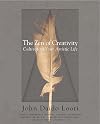
This book is what Julia Cameron's "Artist's Way" should have been (sorry, my opinion!): anecdotal, with exercises, but without the self-indulgence. In fact, rather than engaging in perpetual self reflection, he pulls us away from our preoccupation with ourselves and into the world of the "object as it is"
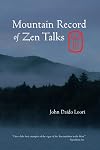
Genuine Zen spirit and practice are transmitted through the lineage of realized masters, and we are fortunate now to be witnessing a time when first-generation American teachers are speaking directly to American students in their own idiom. Addressing issues relevant to twentieth century practitioners, in context of a Buddhist tradition spanning 2500 years, Mountain Record of Zen Talks is a collection of teachings both very modern and universal. Based on dharma talks given by John Daido show more Loori, Roshi, the book explores areas of training that are the focus of practice at Zen Mountain Monastery: meditation, face-to-face study with the teacher, liturgy, precepts, academics, art practice, body practice, and work practice.Daido Roshi gives special attention to unraveling the enigma of the koan through discussion of several classical Zen texts. He also comments on martial arts, illness and healing, and the importance of egalitarian principles in Western Zen, where women and men, monks and lay practitioners, train together as equals. The presentations in this volume are an expression of vigorous Zen flourishing on American soil. show less

When the thirteenth century master Eihei Dogen, one of the most influential thinkers in Zen Buddhism and founder of the Japanese Soto school, returned to Japan after four years of study in China, the fruit of his pilgrimage was recorded in a collection of koans called the Chinese Shobogenzo, also known as Shinji or Mana Shobogenzo. This collection of three hundred main cases was first published in 1766 under the title Shobogenzo Sambyakusoku (Treasury of the True Dharma Eye: Three Hundred show more Cases), and was known to have provided the raw material for much of Dogen's better known Japanese-language Kana Shobogenzo.
Dogen's collection of koans may come as a surprise to students of Zen as Dogen and the Soto school are generally known for the practice of shikantaza, or "just sitting," rather than for koan practice. Nevertheless, a careful study of Dogen's work reveals that he did use koans extensively in his writing and teaching, not only in the Kana Shobogenzo, but most of his other works as well. Zen students and scholars will find The True Dharma Eye to be a source of deep insight into the mind of one of the world's greatest religious thinkers, as well as the practice of koan study itself.
Following the spirit of Dogen's pioneering efforts to carry the dharma across cultural divides, John Daido Loori Roshi, one of the West's most respected Zen teachers, has added his own verses and commentaries to each koan. The resulting volume presents readers with a uniquely contemporary perspective on Dogen's profound teachings and their relevance for twenty-first-century Western practitioners of Zen. show less
Dogen's collection of koans may come as a surprise to students of Zen as Dogen and the Soto school are generally known for the practice of shikantaza, or "just sitting," rather than for koan practice. Nevertheless, a careful study of Dogen's work reveals that he did use koans extensively in his writing and teaching, not only in the Kana Shobogenzo, but most of his other works as well. Zen students and scholars will find The True Dharma Eye to be a source of deep insight into the mind of one of the world's greatest religious thinkers, as well as the practice of koan study itself.
Following the spirit of Dogen's pioneering efforts to carry the dharma across cultural divides, John Daido Loori Roshi, one of the West's most respected Zen teachers, has added his own verses and commentaries to each koan. The resulting volume presents readers with a uniquely contemporary perspective on Dogen's profound teachings and their relevance for twenty-first-century Western practitioners of Zen. show less
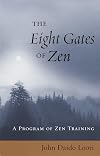
A super interesting look at what it really means to become a Zen Buddhist, whether monk or lay practitioner.
Even if your only intention is to sit and meditate Zen style, there’s still plenty in this book to interest you. Cherry pick at your leisure.
Even if your only intention is to sit and meditate Zen style, there’s still plenty in this book to interest you. Cherry pick at your leisure.
You May Also Like


Associated Authors
Statistics
- Works
- 60
- Also by
- 6
- Members
- 1,957
- Popularity
- #13,135
- Rating
- 4.0
- Reviews
- 25
- ISBNs
- 64
- Languages
- 5