
Sara Baker
Author of Do You Do a Didgeridoo?
About the Author
Works by Sara Baker
Associated Works
Tagged
Common Knowledge
There is no Common Knowledge data for this author yet. You can help.
Members
Reviews
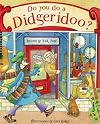
This book is rhythmic reading. A man goes to a music store in search of a didgeridoo, “One that blows a low wa-hoo”. The response from the Music Man is always the same, “No. We didgeridon’t.” The colors are bright and the illustrations are fantastic! This book is great! I love the rhythmic words and the repetition. My seven year old daughter loves this book and asks for it again and again. She also joins in with the repetition phrases. The classroom extension would be exploration show more of a new word, didgeridoo. Also, you can capture the students’ attention and draw them into the story with the repetitive phrases throughout the book. show less
This is a really fun poetry book about a man looking for a didgeridoo in a music shop, I think this is a great introduction to different types of instruments as well as to poetry. And the storyline and use of the word digeridoo makes it interesting for young readers.

This is not very good. The art is nice, but the writing sucks. The entire book is a poem, which I find clever, and every line ends with a rhyme of didgeridoo, which is also clever, albeit forced. The problem comes with the story, it gets tedious and annoying and the ending is ridiculous. All about a man who goes to a music shop and wants to buy a didgeridoo, the owner says no, and the man keeps asking him. Finally the owner says yes and the man changes his mind. Silly.
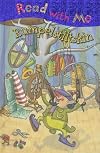
1. A miller lies to the king by telling him that his daughter can spin straw into gold. The king locks the millers’ daughter in a room full of straw to spin into gold, she cries because she can’t spin the straw into gold. A little man leaps from a door in the floor and spins the straw into gold for the necklace the young lady in wearing. The next morning the king is delighted with the gold and give the young lady another room full of straw to spin into gold. The little man spins the show more straw into gold for a ring she is wearing, and all is well until the king fills the room with straw to be spun into gold again. The little man appeared again and spins the straw into gold when the young lady promised she would give him her first child. The next day the king was pleased with the gold and married the young lady. Time passed and she had a son and the little man to collect on his promise. The little man tested her at sunset for three day to see if she could guest his name. She was unsuccessful on the first and second days. On the third day a messenger over heard a man in the mountains celebrating and told the queen what he heard. When the little man came before the queen on the last night she told him his name and he burst like a balloon.
2. I liked illustrations, colors, and the twist at the end (burst like a balloon).
3. I would use this book as a lead into 2nd grade social studies PASS Objective
Standard 5: The student will understand basic economic elements found in communities.
1. Distinguish between basic needs (food, clothing, and shelter) and wants (luxuries), and explain how needs and wants can be met (e.g., earning money, saving, and gifts).
2. Describe the occupations and roles of people in the neighborhood and community who provide goods and services.
3. Describe ways people are paid (e.g., by check, in cash, and with goods), the places to keep their money safe (e.g., the bank), and ways they pay for goods and services (e.g., check, cash, credit card, and barter [trading goods and services]). show less
2. I liked illustrations, colors, and the twist at the end (burst like a balloon).
3. I would use this book as a lead into 2nd grade social studies PASS Objective
Standard 5: The student will understand basic economic elements found in communities.
1. Distinguish between basic needs (food, clothing, and shelter) and wants (luxuries), and explain how needs and wants can be met (e.g., earning money, saving, and gifts).
2. Describe the occupations and roles of people in the neighborhood and community who provide goods and services.
3. Describe ways people are paid (e.g., by check, in cash, and with goods), the places to keep their money safe (e.g., the bank), and ways they pay for goods and services (e.g., check, cash, credit card, and barter [trading goods and services]). show less
You May Also Like


Associated Authors
Statistics
- Works
- 12
- Also by
- 5
- Members
- 601
- Popularity
- #41,821
- Rating
- 3.7
- Reviews
- 6
- ISBNs
- 40