
Lynne Cheney
Author of America : A Patriotic Primer
About the Author
Lynne Cheney was born on August 14, 1941 in Casper, Wyoming. She received a B.A. with honors from Colorado College, a M.A. in English from the University of Colorado, and a Ph.D. in 19th century British literature from the University of Wisconsin. She was the editor of Washingtonian Magazine from show more 1983 to 1986. As chairman of the National Endowment for the Humanities from 1986 to 1993, she wrote and spoke about the importance of knowing American history and she worked to provide opportunities for teachers to gain the knowledge that leads to inspired instruction. She has written several books including We the People: The Story of Our Constitution and James Madison: A Life Reconsidered. (Bowker Author Biography) show less
Image credit: White House Photo by David Bohrer (Wikimedia Commons)
Works by Lynne Cheney
When Washington Crossed the Delaware: A Wintertime Story for Young Patriots (2004) — Author — 680 copies, 3 reviews
The Virginia Dynasty: Four Presidents and the Creation of the American Nation (2020) 116 copies, 2 reviews
Telling the Truth: Why Our Culture and Our Country Have Stopped Making Sense - And What We Can Do About It (1995) 98 copies, 2 reviews
Kings of the Hill: How Nine Powerful Men Changed the Course of American History (1983) 50 copies, 1 review
American memory : a report on the humanities in the nation's public schools (1988) 4 copies, 2 reviews
Associated Works
Presidential Leadership: Rating the Best and the Worst in the White House (2004) — Contributor — 158 copies, 3 reviews
Tagged
Common Knowledge
- Canonical name
- Cheney, Lynne
- Legal name
- Cheney, Lynne Anne Vincent
- Birthdate
- 1941-08-14
- Gender
- female
- Education
- Colorado College (BA | English Literature)
University of Colorado, Boulder (MA)
University of Wisconsin-Madison (PhD | 19th Century British Literature) - Occupations
- Second Lady (USA|2001-2009)
author
scholar
talk show host - Organizations
- American Enterprise Institute
United Methodist Church
National Endowment for the Humanities (NEH)
American Council of Trustees and Alumni
Reader's Digest Association, Inc. - Relationships
- Cheney, Mary (daughter)
Cheney, Dick (husband) - Nationality
- USA
- Birthplace
- Casper, Wyoming, USA
- Places of residence
- Casper, Wyoming, USA
Boulder, Colorado, USA
Madison, Wisconsin, USA
Washington, D.C., USA
McLean, Virginia, USA
Jackson, Wyoming, USA - Associated Place (for map)
- USA
Members
Reviews
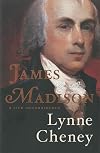
I've been reading a lot of biographies of the founding fathers and this one is unique in its tone and structure. Cheney certainly has strong feelings about both her subject and his actions, which she is not shy to share, and I'm fine with that, whether I agree with her opinions or not. That sort of editorializing helps to keep a book from becoming dry. My bigger issue with the book is how it delves into Madison and his life; although all the high points are covered, I feel at times as though show more the book is rushing through his life, without the detail I've found in many of the other biographies I've read recently. Perhaps because of that, I also never felt like I knew James Madison; I walked away with a general feeling of the man, but I almost feel like I know him better through biographies of other men in this period. It was disappointing to feel like, after over 400 pages, I still had only the barest sketch of who James Madison was. show less
Cheney’s biography is a thorough and very well-written but ideologically driven account of James Madison’s life and especially his influence on the Constitution. She writes:
"By the time of the Philadelphia convention, Madison was the political equivalent of Mozart in the late 1770s, who after years of writing music was about to create his greatest works. He was Einstein, who after years of studying with ‘holy zeal’ was on the verge of his annus mirabilis, the miracle year of 1905, in show more which he would establish the basis of the theory of relativity and quantum physics.”
This paragraph is a good example of one of the main problems I had with this book. The hyperbole about Madison is way over the top. While Cheney occasionally mentions at least some of the intellectual contributions of other Enlightenment thinkers in the 1700s (all of whom influenced both Jefferson and Madison) including Locke, Montesquieu, Hume, Kant, Rousseau, and Voltaire, basically Madison is to Cheney an original thinker showing a rare genius with few equals in history. She never even mentions the large impact made by the American, Roger Williams, with his seminal 1644 treatise about the freedom of religion, which inspired the Enlightenment figures (particularly John Locke) who then in turn influenced the Americans of the next Century.
Furthermore, she downplays the huge role of Alexander Hamilton in the Federalist Papers, which is absurd considering that he produced most of the essays. Rather, Cheney contends, it was Madison who was the chief architect and primary interpreter of the Constitution, and “more than any other individual . . . responsible for creating the United States of America in the form we know it today.” Most historians would list Jefferson, Hamilton, and even George Washington in that capacity before they would throw Madison’s name into that hat. [Hamilton's Reports on the Treasury were also voluminous, brilliant, and consequential for the evolving shape of the country.]
Another complaint I have is Cheney’s depiction of the issues that fired the quest for independence. She mentions the imposition of taxes, for example, but completely omits how many objections to them were related to the fact that they would cut into the profits of successful smugglers, like John Hancock. She also never mentions the anger the colonists felt over the British having the nerve to enforce treaties they made with the Native Americans, rather than just allowing the colonists to take over all that rich land. Similarly, she takes no note of the role George Washington played in actually starting the French and Indian War, only observing that he had a reputation for great courage in that conflict. In other words, like other conservative historians, she is eager to cast the early Americans in the best light, leaving out evidence of their greed, hypocrisy, and other instances of bad behavior.
Speaking of bad behavior, Cheney, in enumerating all that Madison had in common with his BFF Jefferson, avers:
"They both hated slavery, upon which Virginia’s culture and commerce were built. They understood the contradiction between the liberty they sought for mankind and the servitude they witnessed daily, yet at the end of long lives they would both die owning slaves.”
What she elides over here is that they didn’t just “witness” servitude, they actively participated in it, particularly Jefferson. Jefferson not only pursued slaves who ran away, but had his overseer whip the young male slaves when they didn’t work hard and long enough. Moreover, neither freed their slaves upon their deaths, even, in Jefferson’s case, in spite of promising at least to free the offspring of his mistress, Sally Hemings. (Madison did in fact have a legal problem with dower slaves, so that he wasn’t entirely able to free all of them upon his death even if he so desired. Jefferson, who had no living spouse, did not have that excuse.)
But the meat of the book is a very exhaustive account of Madison’s political life. Cheney provides a lot of minutiae, and quotes extensively from Madison’s papers. Even Dolley, as delightful as she was by all accounts, doesn’t get much coverage in this book. While this makes the book a welcome resource for scholars, it makes it a little too dense for leisurely history reading.
Discussion: Some critics have argued that the agenda of the book is to establish Madison’s supremacy as a Constitutional “Founding Father.” This would definitely be of assistance to the right wing of the current Supreme Court because of Madison’s advocacy of strict construction and states’ rights. Madison did in fact write in Federalist No. 45, “The powers delegated by the proposed Constitution to the federal government, are few and defined. Those which are to remain in the State governments are numerous and indefinite.”
But Madison, like Jefferson, discovered that once he held the office of President, he regarded the power split quite differently. In fact, he was driven to claim that the very idea that he once supported state nullification was totally wrong. (He seems to have forgotten that he actually authored the Virginia Resolution of 1798. Cheney contends it was Jefferson who inserted the words “null, void, and of no force or effect” into Madison’s draft, but that Madison was too loyal to his friend to point that out.) She also records Madison’s outrage on Jefferson’s behalf when Jefferson’s private letters were disclosed revealing his own lack of hesitation to wield executive power when he thought circumstances called for it. Madison huffed that private communications should remain private.
Cheney also downplays Madison’s darker side. Just to take one example, consider Madison’s authorship of the so-called Helvidius essays. Jefferson often used Madison to do his dirty work. In this instance, in 1793, he wanted Madison to attack Hamilton:
"For God’s sake, my dear Sir, take up your pen, select the most striking heresies, and cut him to pieces in the face of the public.”
Usually, Madison was a willing patsy for Jefferson, although this time, he was not eager to do it for a variety of reasons, some of which had to do with his health and other commitments. In any event, Cheney merely notes that Madison argued “the nuances of legislative versus executive power” and other such academic issues. Ron Chernow, in his biography of Hamilton, provides specific quotes from the essays to show that Madison (anonymously of course) showed little reticence in print, revealing a great deal of animosity as he “flayed Hamilton as a monarchist ….”
Evaluation: Cheney is very polished as a writer, and very detailed (at least when it suits her agenda) as an historian. In most respects, this biography provides a thorough, if a bit white-washed and exaggerated account of Madison’s participation in, and importance to, the founding of the American Republic. show less
"By the time of the Philadelphia convention, Madison was the political equivalent of Mozart in the late 1770s, who after years of writing music was about to create his greatest works. He was Einstein, who after years of studying with ‘holy zeal’ was on the verge of his annus mirabilis, the miracle year of 1905, in show more which he would establish the basis of the theory of relativity and quantum physics.”
This paragraph is a good example of one of the main problems I had with this book. The hyperbole about Madison is way over the top. While Cheney occasionally mentions at least some of the intellectual contributions of other Enlightenment thinkers in the 1700s (all of whom influenced both Jefferson and Madison) including Locke, Montesquieu, Hume, Kant, Rousseau, and Voltaire, basically Madison is to Cheney an original thinker showing a rare genius with few equals in history. She never even mentions the large impact made by the American, Roger Williams, with his seminal 1644 treatise about the freedom of religion, which inspired the Enlightenment figures (particularly John Locke) who then in turn influenced the Americans of the next Century.
Furthermore, she downplays the huge role of Alexander Hamilton in the Federalist Papers, which is absurd considering that he produced most of the essays. Rather, Cheney contends, it was Madison who was the chief architect and primary interpreter of the Constitution, and “more than any other individual . . . responsible for creating the United States of America in the form we know it today.” Most historians would list Jefferson, Hamilton, and even George Washington in that capacity before they would throw Madison’s name into that hat. [Hamilton's Reports on the Treasury were also voluminous, brilliant, and consequential for the evolving shape of the country.]
Another complaint I have is Cheney’s depiction of the issues that fired the quest for independence. She mentions the imposition of taxes, for example, but completely omits how many objections to them were related to the fact that they would cut into the profits of successful smugglers, like John Hancock. She also never mentions the anger the colonists felt over the British having the nerve to enforce treaties they made with the Native Americans, rather than just allowing the colonists to take over all that rich land. Similarly, she takes no note of the role George Washington played in actually starting the French and Indian War, only observing that he had a reputation for great courage in that conflict. In other words, like other conservative historians, she is eager to cast the early Americans in the best light, leaving out evidence of their greed, hypocrisy, and other instances of bad behavior.
Speaking of bad behavior, Cheney, in enumerating all that Madison had in common with his BFF Jefferson, avers:
"They both hated slavery, upon which Virginia’s culture and commerce were built. They understood the contradiction between the liberty they sought for mankind and the servitude they witnessed daily, yet at the end of long lives they would both die owning slaves.”
What she elides over here is that they didn’t just “witness” servitude, they actively participated in it, particularly Jefferson. Jefferson not only pursued slaves who ran away, but had his overseer whip the young male slaves when they didn’t work hard and long enough. Moreover, neither freed their slaves upon their deaths, even, in Jefferson’s case, in spite of promising at least to free the offspring of his mistress, Sally Hemings. (Madison did in fact have a legal problem with dower slaves, so that he wasn’t entirely able to free all of them upon his death even if he so desired. Jefferson, who had no living spouse, did not have that excuse.)
But the meat of the book is a very exhaustive account of Madison’s political life. Cheney provides a lot of minutiae, and quotes extensively from Madison’s papers. Even Dolley, as delightful as she was by all accounts, doesn’t get much coverage in this book. While this makes the book a welcome resource for scholars, it makes it a little too dense for leisurely history reading.
Discussion: Some critics have argued that the agenda of the book is to establish Madison’s supremacy as a Constitutional “Founding Father.” This would definitely be of assistance to the right wing of the current Supreme Court because of Madison’s advocacy of strict construction and states’ rights. Madison did in fact write in Federalist No. 45, “The powers delegated by the proposed Constitution to the federal government, are few and defined. Those which are to remain in the State governments are numerous and indefinite.”
But Madison, like Jefferson, discovered that once he held the office of President, he regarded the power split quite differently. In fact, he was driven to claim that the very idea that he once supported state nullification was totally wrong. (He seems to have forgotten that he actually authored the Virginia Resolution of 1798. Cheney contends it was Jefferson who inserted the words “null, void, and of no force or effect” into Madison’s draft, but that Madison was too loyal to his friend to point that out.) She also records Madison’s outrage on Jefferson’s behalf when Jefferson’s private letters were disclosed revealing his own lack of hesitation to wield executive power when he thought circumstances called for it. Madison huffed that private communications should remain private.
Cheney also downplays Madison’s darker side. Just to take one example, consider Madison’s authorship of the so-called Helvidius essays. Jefferson often used Madison to do his dirty work. In this instance, in 1793, he wanted Madison to attack Hamilton:
"For God’s sake, my dear Sir, take up your pen, select the most striking heresies, and cut him to pieces in the face of the public.”
Usually, Madison was a willing patsy for Jefferson, although this time, he was not eager to do it for a variety of reasons, some of which had to do with his health and other commitments. In any event, Cheney merely notes that Madison argued “the nuances of legislative versus executive power” and other such academic issues. Ron Chernow, in his biography of Hamilton, provides specific quotes from the essays to show that Madison (anonymously of course) showed little reticence in print, revealing a great deal of animosity as he “flayed Hamilton as a monarchist ….”
Evaluation: Cheney is very polished as a writer, and very detailed (at least when it suits her agenda) as an historian. In most respects, this biography provides a thorough, if a bit white-washed and exaggerated account of Madison’s participation in, and importance to, the founding of the American Republic. show less

This book is not lesbian erotica. There are no 'hot' scenes. The possible lesbian sexual relationship between two of the characters is probably a 'Boston marriage', as speculated by the most worldly character in this novel. The only sex scene is heterosexual, and it is nothing that will get anyone hot and bothered. Incest and a threesome are part of the plot, but they are not dealt with erotically.
While it certainly would have been delicious for the wife of the (former) Republican Vice show more President to have written a lesbian romance, Cheney hasn't. The politically interesting point here is that Cheney is more sympathetic to poor homesteaders and Native Americans than to rich cattle barons. Perhaps that would have been embarassing to Dick earlier in his career, but not now.
The novel is a competently written, if lackluster, historical romance set in Wyoming in the late 19th century. Unless you have a real need to collect Wyoming historical fiction, you would be a fool to pay the prices being asked for this book. It is not erotic and it is not politically charged. I'm disturbed that all the bogus reviews on Amazon.com are allowed to remain. If anyone who has written one of them is also selling a copy, they are in violation of Amazon terms of service for sellers.
Cheney would be wise to allow a new edition, to quell all the rumors. Meanwhile, get a copy to read through your library's Inter Library Loan service show less
While it certainly would have been delicious for the wife of the (former) Republican Vice show more President to have written a lesbian romance, Cheney hasn't. The politically interesting point here is that Cheney is more sympathetic to poor homesteaders and Native Americans than to rich cattle barons. Perhaps that would have been embarassing to Dick earlier in his career, but not now.
The novel is a competently written, if lackluster, historical romance set in Wyoming in the late 19th century. Unless you have a real need to collect Wyoming historical fiction, you would be a fool to pay the prices being asked for this book. It is not erotic and it is not politically charged. I'm disturbed that all the bogus reviews on Amazon.com are allowed to remain. If anyone who has written one of them is also selling a copy, they are in violation of Amazon terms of service for sellers.
Cheney would be wise to allow a new edition, to quell all the rumors. Meanwhile, get a copy to read through your library's Inter Library Loan service show less
As far as I can tell (this being the only biography of Madison I've read), the main part of his life that is being reconsidered here is his health. Madison has apparently usually been described as having "delicate" health. Cheney argues that overall, Madison was quite hale and hearty, but that his health difficulties can be ascribed to periodic epileptic symptoms, which would not have been something that anyone would really be talking about due to the belief that epilepsy was the result of show more demonic possession. In that case, it's remarkable that he was able to ascend to the heights of influence he did while merely being thought to be frail.
Madison was not quite as private a person as Thomas Jefferson was, but close to it. Like Jefferson and Washington before him, much of his personal correspondence was burned near the end of his life or shortly thereafter. In the letters that remained, Madison didn't hesitate to redact or change things that he thought might be hurtful to others. In a lot of ways, this sort of consideration illuminates his character. He seems to have cared deeply about those close to him, even to the point of, near the end of his life, potentially damaging his own reputation in order to protect that of the deceased Thomas Jefferson.
Madison was known by strangers to be reticent to the point of standoffishness, but once he was comfortable, people found him witty and warm. He seems to have had an even temper, able to balance out the more expressive Jefferson, and so they worked well together. What they had in common, though, was an ability to nearly disappear outside of public life. This makes Madison a difficult biography subject, since we only seem to catch glimpses of his personality through mentions in other people's letters.
The book is a reasonably quick read, and avoids drawing too many far-flung conclusions. Speculation about what he might have read or thought or been exposed to is stated as such and limited to things like what ideas he may have discovered through books in his father's library, or what medicines ordered by his mother might have been given to him. show less
Madison was not quite as private a person as Thomas Jefferson was, but close to it. Like Jefferson and Washington before him, much of his personal correspondence was burned near the end of his life or shortly thereafter. In the letters that remained, Madison didn't hesitate to redact or change things that he thought might be hurtful to others. In a lot of ways, this sort of consideration illuminates his character. He seems to have cared deeply about those close to him, even to the point of, near the end of his life, potentially damaging his own reputation in order to protect that of the deceased Thomas Jefferson.
Madison was known by strangers to be reticent to the point of standoffishness, but once he was comfortable, people found him witty and warm. He seems to have had an even temper, able to balance out the more expressive Jefferson, and so they worked well together. What they had in common, though, was an ability to nearly disappear outside of public life. This makes Madison a difficult biography subject, since we only seem to catch glimpses of his personality through mentions in other people's letters.
The book is a reasonably quick read, and avoids drawing too many far-flung conclusions. Speculation about what he might have read or thought or been exposed to is stated as such and limited to things like what ideas he may have discovered through books in his father's library, or what medicines ordered by his mother might have been given to him. show less
Lists
Awards


You May Also Like


Associated Authors
Statistics
- Works
- 23
- Also by
- 1
- Members
- 5,451
- Popularity
- #4,564
- Rating
- 4.0
- Reviews
- 87
- ISBNs
- 59
- Languages
- 1
- Favorited
- 1