

Adam Wiśniewski-Snerg (1937–1995)
Author of Robot
About the Author
Works by Adam Wiśniewski-Snerg
A robot 1 copy
Associated Works
Tagged
Common Knowledge
- Canonical name
- Wiśniewski-Snerg, Adam
- Legal name
- Wiśniewski, Adam
- Other names
- Snerg
- Birthdate
- 1937-01-01
- Date of death
- 1995-08-23
- Gender
- male
- Education
- self-taught
- Occupations
- writer
- Cause of death
- suicide
- Nationality
- Poland
- Birthplace
- Płock, Poland
- Places of residence
- Warsaw, Poland
- Place of death
- Warsaw, Poland
- Associated Place (for map)
- Warsaw, Poland
Members
Reviews
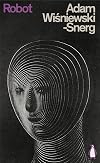
Penguin Classics Science Fiction editions are so beautifully designed that I find them irresistible, even when I have zero prior knowledge of the book itself. They are well worth taking a chance on should you spot one on a library or bookshop shelf. [b:Robot|54873914|Robot (Penguin Science Fiction)|Adam Wiśniewski-Snerg|https://i.gr-assets.com/images/S/compressed.photo.goodreads.com/books/1619345206l/54873914._SY75_.jpg|12831867] reminded me of [a:Stanisław Lem|10991|Stanisław show more Lem|https://images.gr-assets.com/authors/1246185166p2/10991.jpg]'s [b:Memoirs Found in a Bathtub|497121|Memoirs Found in a Bathtub|Stanisław Lem|https://i.gr-assets.com/images/S/compressed.photo.goodreads.com/books/1348416568l/497121._SY75_.jpg|485271], which is unsurprising as both are set in bunkers, satirise arbitrary and bizarre institutional structures, and were written in Poland during the Cold War. I preferred [b:Robot|54873914|Robot (Penguin Science Fiction)|Adam Wiśniewski-Snerg|https://i.gr-assets.com/images/S/compressed.photo.goodreads.com/books/1619345206l/54873914._SY75_.jpg|12831867], as its strangeness was more substantive and satisfying. The atmosphere is eerie and disorientating from the start, as the narrator awakens as a blank slate. Who is he - a man or robot double? Where is he - an underground bomb shelter, a time loop, a spaceship, or some combination of all three? As well as being a major theme, the instability of reality is discussed directly at various points. There's an excellent sequence that's too long to quote in full which asks: what if, for the sake of argument, mustard was the most important thing in the world?
Feelings of confusion and claustrophobia are sustained throughout, but do not become uninteresting due to the ingenious weirdness experienced by the narrator as he investigates anomalies of physics.
[b:Robot|54873914|Robot (Penguin Science Fiction)|Adam Wiśniewski-Snerg|https://i.gr-assets.com/images/S/compressed.photo.goodreads.com/books/1619345206l/54873914._SY75_.jpg|12831867] concludes with an extended debate about whether humanity could recognise intelligences more advanced than our own, should we encounter them. It's a great example of Cold War scifi, combining deeply ominous vibes, wild scientific extrapolation, and bleak humour. show less
Mindful of the lasting tendency of any absurd situation to reinforce itself, one could fight not through disputes about mustard and its history (written down on tonnes of paper and illustrated in art and song), because this way one would only become fascinated with it more and more, but by trying to replace it with other values. You could try arguing with the madman's followers by saying it's absurd to view everything from such a narrow, mustard-centric perspective. "How come?" they'd ask in amazement. "Mustard exists in an objective way!" "Yes!" you'd say. "But so do other things. Mustard's not the most important thing in the world." They wouldn't believe you. "You're wrong! It's the most important thing in our lives!" they'd shout triumphantly.
'If I understand you correctly, you're saying that each individual world is created by overlooking the existence of other worlds?' I asked.
'Precisely.'
'And that the only objective fact is the Universe, extended in time and space?'
'Yes, that is my conclusion.'
Feelings of confusion and claustrophobia are sustained throughout, but do not become uninteresting due to the ingenious weirdness experienced by the narrator as he investigates anomalies of physics.
Was it all an illusion, a fiction, a dream, an empty image? No, it had to be true. [...] According to Unevoris, the Shelter had been ripped out of the Earth by an alien research station collecting samples of organised life, just as our own biologists remove anthills from the forest to study them in their labs. We were trapped in a prison, transported by the thrust of a photoemission engine through the cold and dead galactic void. This hypothesis, ridiculed and rejected by other scientists, could prove to be true or false any day now. It sounded like a terrifying vision of doom. But did the fact that I was not below the Earth's surface, but somewhere between Earth and an indefinite point of the Universe, worsen my situation in any way, especially since the lid of our coffin had been nailed shut and might not be opened for years?
[b:Robot|54873914|Robot (Penguin Science Fiction)|Adam Wiśniewski-Snerg|https://i.gr-assets.com/images/S/compressed.photo.goodreads.com/books/1619345206l/54873914._SY75_.jpg|12831867] concludes with an extended debate about whether humanity could recognise intelligences more advanced than our own, should we encounter them. It's a great example of Cold War scifi, combining deeply ominous vibes, wild scientific extrapolation, and bleak humour. show less
Enjoyed much of this book. Poignant depiction of depression at the start of it. I found the science in this heavy-handed and clunkily shoehorned into the story, which made for somewhat dull reading at times.
Lists
Awards

You May Also Like
Associated Authors
Statistics
- Works
- 9
- Also by
- 1
- Members
- 173
- Popularity
- #123,687
- Rating
- 3.7
- Reviews
- 2
- ISBNs
- 29
- Languages
- 4