

Katrina van Grouw
Author of The Unfeathered Bird
About the Author
Works by Katrina van Grouw
Tagged
Common Knowledge
- Other names
- Cook, Katrina
- Birthdate
- 1965
- Gender
- female
- Nationality
- UK
- Birthplace
- Pontipool, South Wales, UK
- Associated Place (for map)
- South Wales, UK
Members
Reviews
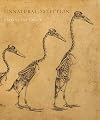
How does evolution happen?
This is the behind Unnatural Selection, written by natural history curator and illustrator Katrina van Grouw. She approaches it from a direction unfashionable these days, though one that Charles Darwin received inspiration from: the selective breeding of domesticated animals. Unnatural Selection is a book about the skeletons of dogs and cats, pigeons and ducks, compared and contrasted with each other, and if you think one chicken breed, say, is much the same as show more another, their bones tell a different story.
In addition to the mouth-watering pencil illustrations (dark graphite on rich, toothy paper, loose enough to display character, yet tight enough for scientific accuracy) there are stories about genetics, scientists of the past, anthropology, and the breeds themselves. Take, for example, the tale of the crested chicken. Some chicken breeds, such as Polish, sport a ruff of feathers on top of their heads. Unusual, but no big deal; there are plenty of birds with crests. But what lies beneath that feather cap, that’s a different story. There’s a hole in the skull, a fatty pad, and sometimes extrusions of bone sticking out of that pad, and the feathers themselves don’t belong to the head, they are those of the tail. It’s a mutation of more than a few feathers growing where they shouldn’t. The unasked question is, how does a single mutation start a cascade of effects to create the hole, the pad, the horns, the foreign feathers?
It sounded to me like the genes that grow feathers on the bird’s fatty rump somehow triggered the same growth on the head – an error of placement and developmental timing. Such a mutation, the book suggests, could have created a new race of horned and frilled chickens, if they found the right environment and were allowed to expand within it, becoming, in short time, a new species. Evolution may move by leaps as well as gradual adaptations, and if the book is firm on anything it’s that genetics isn’t always neat and tidy and doesn’t always follow the rules. Creature and environment work in conjunction with each other. If there is some environmental advantage for the chicken to have this odd headgear, it will survive and perpetuate. Or, perhaps not, but the genes are still there, waiting for their moment. It’s only a matter of time before they pop out again.
As a book about a specific branch of hard science Unnatural Selection was too anecdotal, but as a series of essays continuing on each other, it worked well and for me filled in some of the gaps from my more convention reading in genetics (I cannot recommend She Has Her Mother’s Laugh, by Carl Zimmer, highly enough.) show less
This is the behind Unnatural Selection, written by natural history curator and illustrator Katrina van Grouw. She approaches it from a direction unfashionable these days, though one that Charles Darwin received inspiration from: the selective breeding of domesticated animals. Unnatural Selection is a book about the skeletons of dogs and cats, pigeons and ducks, compared and contrasted with each other, and if you think one chicken breed, say, is much the same as show more another, their bones tell a different story.
In addition to the mouth-watering pencil illustrations (dark graphite on rich, toothy paper, loose enough to display character, yet tight enough for scientific accuracy) there are stories about genetics, scientists of the past, anthropology, and the breeds themselves. Take, for example, the tale of the crested chicken. Some chicken breeds, such as Polish, sport a ruff of feathers on top of their heads. Unusual, but no big deal; there are plenty of birds with crests. But what lies beneath that feather cap, that’s a different story. There’s a hole in the skull, a fatty pad, and sometimes extrusions of bone sticking out of that pad, and the feathers themselves don’t belong to the head, they are those of the tail. It’s a mutation of more than a few feathers growing where they shouldn’t. The unasked question is, how does a single mutation start a cascade of effects to create the hole, the pad, the horns, the foreign feathers?
It sounded to me like the genes that grow feathers on the bird’s fatty rump somehow triggered the same growth on the head – an error of placement and developmental timing. Such a mutation, the book suggests, could have created a new race of horned and frilled chickens, if they found the right environment and were allowed to expand within it, becoming, in short time, a new species. Evolution may move by leaps as well as gradual adaptations, and if the book is firm on anything it’s that genetics isn’t always neat and tidy and doesn’t always follow the rules. Creature and environment work in conjunction with each other. If there is some environmental advantage for the chicken to have this odd headgear, it will survive and perpetuate. Or, perhaps not, but the genes are still there, waiting for their moment. It’s only a matter of time before they pop out again.
As a book about a specific branch of hard science Unnatural Selection was too anecdotal, but as a series of essays continuing on each other, it worked well and for me filled in some of the gaps from my more convention reading in genetics (I cannot recommend She Has Her Mother’s Laugh, by Carl Zimmer, highly enough.) show less
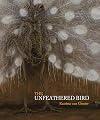
A large format collection of hundreds of drawings of bird anatomy of about 200 different bird species. The author's discussion of each bird relates their anatomy to their evolution and behavior. A brilliant project.
Reminded of this last evening, and so glad I have a copy. Re-read always a lovely thing. Excellent drawings, solidly informative and interesting text.
Awards


Statistics
- Works
- 6
- Members
- 152
- Popularity
- #137,197
- Rating
- 4.5
- Reviews
- 3
- ISBNs
- 8
- Languages
- 1