
Alexander Starritt
Author of We Germans
Works by Alexander Starritt
Drayton and Mackenzie: 'Will have you hooked' The Times Best Summer Books (2025) 27 copies, 1 review
Late Fame 3 copies
Associated Works
The Unhappiness of Being a Single Man: Essential Stories (2018) — Translator, some editions — 66 copies, 1 review
Tagged
Common Knowledge
- Birthdate
- 1985
- Gender
- male
- Education
- Somerville College, Oxford
- Occupations
- translator
critic
novelist - Nationality
- UK
- Places of residence
- London, England, UK
- Associated Place (for map)
- England, UK
Members
Reviews
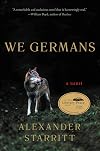
When a grandson asks what he did during the war, Meissner gives a brief and irritated answer, but after his death, a letter is found addressed to his grandson. This is that letter. Focusing on a specific event during the final days of the war, Meissner writes about his eight years lost to service in the German Army, from the first heady days to his years in a Soviet work camp. But mostly he describes when he and a small group head out to find food while on retreat in Poland, acting on a show more rumor that a village has a hidden cache.
Alexander Starritt has written a deceptively straight-forward narrative with a depth that reveals itself slowly. Honest and unsparing, Meissner is uninterested in defending himself. There's a lot going on in this brief novel, and the focus on the ordinary German soldier was different enough to make this one noteworthy. show less
Alexander Starritt has written a deceptively straight-forward narrative with a depth that reveals itself slowly. Honest and unsparing, Meissner is uninterested in defending himself. There's a lot going on in this brief novel, and the focus on the ordinary German soldier was different enough to make this one noteworthy. show less
The genre of war memoir has a sub-genre where the grandson/daughter finds a stack of old letters and photographs long forgotten, or perhaps interviews them 80 years later, and turns it into a book by the soldier but really a product of the younger relative. These memoirs by their nature open questions about the nature of truth, perspective and reliable narrator. As it happens these are the same things modern literature is concerned with. Starritt took it a step further and created a war show more memoir by a grandson about his German relative that is completely fictional, yet also completely believable. The mind spins a little, but you have to wonder, what is the point, why not just read one of the real memoirs. Starritt though is interested in more than mimicking a war novel, he goes into deeper questions of what it means to have fought on the wrong side of history, and likewise to have a relative who did, and he does so with a light literary sensibility. It's not an experimental work or difficult to read. A few scenes will probably stick with you - for me it will be attacking a tank while riding a donkey and holding a bayonet like a lance - which sounds unrealistic but makes sense in the book with the surreal nature of war. This is a short and kind of fun but also rewarding story. show less
For more reviews and bookish posts please visit: http://www.ManOfLaBook.com
We Germans by Alexander Starritt is a novella which follows a long letter a German grandfather written his grandson about his thoughts on fighting on the wrong side of the war in World War II against the Russians. Mr. Starritt is a Scottish-German novelist, journalist and entrepreneur
This novella is told from the viewpoint of both the grandfather and the grandson. When the grandfather was alive, his grandson, now in show more England, asked him about the war and fighting on the wrong side. After the grandfather’s death, a long letter is found telling of his experiences on the Eastern Front knowing that Germany is going to lose the war, and deservingly so
This novella reminded of the famous scene, later a meme, from the British comedy show That Mitchell and Webb about Nazi soldiers that ask “are we the baddies?”. While We Germans by Alexander Starritt is not as direct, the realization is clear as the grandfather pontificates on his reflections on war.
The grandfather and his three friends are in the midst of retreating from Russia, witnessing atrocities committed by their own forces against the Russian population and their own forces. The grandfather talks about his feelings of guilt and lies, coming to the realization that he’s been on, what basically amounts to, a fool’s errand.
This is a thought provoking book, as it goes into why an obviously evil regime was embraced by millions of Germans, as well as a person who is suddenly confronted with a good, hard look into a mirror and doesn’t like what he sees. I think that the questions on lack of guilt and shame are very relevant in today’s political climate around the world.
Maybe those questions never even went away?
The grandfather, Meissner, and his exhausted companions are living a nightmare for two and a half years. Somehow barely surviving, committing war crimes and treason as they make their way back home in order to live another day. Meissner is a small cog in the machine of war, he’s just a grunt, not part of killing squads, had nothing to do with the Holocaust, but his realization that he is no only on the losing side, but on the wrong side as well, is crystal clear.
This is not a war journal per say. The author’s descriptions are vivid, the characters are humanized and colorful. While Meissner does come across as a sympathetic figure, he is by no means a lovable one.
Among the grandfather’s profound analysis there are comments from his grandson, which I found to be clumsy and an exact opposite to the grandfather profound pontifications. There are some validity to the story, his struggles as grandson to a German soldier living in England could not have been easy, but by and large I found them to be a distraction.
I enjoyed reading this book and its attempt to come to terms with the banality of evil. There are many other books, fiction and non-fiction, which talk about the subject, ranging from the German high command’s realization that all is lost, to ones like this where the grunt on the field realizes that. show less
We Germans by Alexander Starritt is a novella which follows a long letter a German grandfather written his grandson about his thoughts on fighting on the wrong side of the war in World War II against the Russians. Mr. Starritt is a Scottish-German novelist, journalist and entrepreneur
This novella is told from the viewpoint of both the grandfather and the grandson. When the grandfather was alive, his grandson, now in show more England, asked him about the war and fighting on the wrong side. After the grandfather’s death, a long letter is found telling of his experiences on the Eastern Front knowing that Germany is going to lose the war, and deservingly so
This novella reminded of the famous scene, later a meme, from the British comedy show That Mitchell and Webb about Nazi soldiers that ask “are we the baddies?”. While We Germans by Alexander Starritt is not as direct, the realization is clear as the grandfather pontificates on his reflections on war.
The grandfather and his three friends are in the midst of retreating from Russia, witnessing atrocities committed by their own forces against the Russian population and their own forces. The grandfather talks about his feelings of guilt and lies, coming to the realization that he’s been on, what basically amounts to, a fool’s errand.
This is a thought provoking book, as it goes into why an obviously evil regime was embraced by millions of Germans, as well as a person who is suddenly confronted with a good, hard look into a mirror and doesn’t like what he sees. I think that the questions on lack of guilt and shame are very relevant in today’s political climate around the world.
Maybe those questions never even went away?
The grandfather, Meissner, and his exhausted companions are living a nightmare for two and a half years. Somehow barely surviving, committing war crimes and treason as they make their way back home in order to live another day. Meissner is a small cog in the machine of war, he’s just a grunt, not part of killing squads, had nothing to do with the Holocaust, but his realization that he is no only on the losing side, but on the wrong side as well, is crystal clear.
This is not a war journal per say. The author’s descriptions are vivid, the characters are humanized and colorful. While Meissner does come across as a sympathetic figure, he is by no means a lovable one.
Among the grandfather’s profound analysis there are comments from his grandson, which I found to be clumsy and an exact opposite to the grandfather profound pontifications. There are some validity to the story, his struggles as grandson to a German soldier living in England could not have been easy, but by and large I found them to be a distraction.
I enjoyed reading this book and its attempt to come to terms with the banality of evil. There are many other books, fiction and non-fiction, which talk about the subject, ranging from the German high command’s realization that all is lost, to ones like this where the grunt on the field realizes that. show less

An ARC copy via netgalley
(published in the UK in May)
In this novel a British grandson annotates the moving letter of explanation by his German grandfather, describing a key incident from his participation in the retreat from the East. The chaos and dehumanization of a terrible campaign are movingly told. Less effective (at least for me) was the philosophical debates on the nature of German guilt vs shame. For me, less telling/ exploration/ reiteration of the point would have been more show more effective, but still, recommended if you enjoy thoughtful historical fiction. Similar in tone to The Reader.
"It’s sometimes said that the war in the East, its cruelty, the genocide, was like hell or like the apocalypse. I’ve felt those things. But really all they mean is that it exceeded our power of comparison." show less
(published in the UK in May)
In this novel a British grandson annotates the moving letter of explanation by his German grandfather, describing a key incident from his participation in the retreat from the East. The chaos and dehumanization of a terrible campaign are movingly told. Less effective (at least for me) was the philosophical debates on the nature of German guilt vs shame. For me, less telling/ exploration/ reiteration of the point would have been more show more effective, but still, recommended if you enjoy thoughtful historical fiction. Similar in tone to The Reader.
"It’s sometimes said that the war in the East, its cruelty, the genocide, was like hell or like the apocalypse. I’ve felt those things. But really all they mean is that it exceeded our power of comparison." show less
Awards


Statistics
- Works
- 4
- Also by
- 3
- Members
- 158
- Popularity
- #133,025
- Rating
- 4.1
- Reviews
- 6
- ISBNs
- 23
- Languages
- 3