
Chiori Santiago (1952–2007)
Author of Home to Medicine Mountain
About the Author
Image credit: Chiori.News
Works by Chiori Santiago
Tagged
Common Knowledge
- Canonical name
- Santiago, Chiori
- Other names
- Eloui Roberts
- Birthdate
- 1952-09-10
- Date of death
- 2007-04-14
- Gender
- female
- Education
- University of California, Berkeley (BA)
California Elementary Teaching Credential
Berkeley High School - Occupations
- performance arts writer
freelance writer
editor
television commentator
creative writer/essayist - Organizations
- Smithsonian Magazine
Parenting Magazine
Mas Magazine
Diablo Magazine
Oakland Tribune
San Jose Mercury News (show all 9)
East Bay Express
U.C. Berkeley Art Museum
San Fransisco Chronicle - Awards and honors
- Gloria Hess Award (Travel Writing ∙ 2000)
ABA Children's Book Award - Relationships
- Santiago, Roberto R. (son)
Palmieri, Jiro (son) - Short biography
- “Chiori Santiago, a writer who covered the Bay Area visual arts, performance and music scene for more than 20 years, died early Saturday after a short battle with kidney cancer. She was 54.
Ms. Santiago died at Alta Bates Summit surrounded by a small group of family and friends after she requested that life support be turned off, said her son Roberto Santiago, 30.”
Adapted from the bio in Home to Medicine Mountain and City of Oakland Crafts and Cultural Arts Cultural Funding Program Funding Advisory Committee Member Bios
As a child, Chiori Santiago and her family lived in Asia and Europe while her father worked with the Asia Foundation. Of Japanese, Italian, and Native American descent, Chiori believes that being part of a multiracial family and having lived in various cultures has greatly influenced her perspective as a writer. She feels that the common childhood experiences she and Judith shared gave her the personal insight and connection she needed to write Home to Medicine Mountain. A freelance writer and editor, Chiori Santiago contributes articles frequently to both regional and national publications. She worked as a contributing editor for Parenting and Mas magazines and as a regular columnist for Mas and Diablo magazines. She has also been a feature writer for Smithsonian magazine since 1993. Santiago has served as an art critic and cultural writer for the Oakland Tribune and San Jose Mercury News and as Latin music critic for the East Bay Express. She is the recipient of the Gloria Hess Award for Travel Writing in 2000, and the American Book Award in 1999 for her first children’s book, Home to Medicine Mountain. Santiago has Bachelor of Arts Degree from the University of California at Berkeley as well as a California Elementary Teaching Credential. Santiago is an appointed member of the Community Advisory Committee of the U.C. Berkeley Art Museum. - Nationality
- USA
- Birthplace
- Chicago, Illinois, USA
- Places of residence
- San Francisco, California, USA
Karachi, Pakistan
Berkeley, California, USA
Oakland, California, USA - Place of death
- Berkeley, California, USA
- Burial location
- Ashes spread on the bay
- Associated Place (for map)
- California, USA
Members
Reviews

This attractive picture book, based on the true story of illustrator Judith Lowry’s father and uncle, focuses on two American Indian boys. They, like so many other indigenous children in North America were removed from their family homes and carried off to residential schools far away, with the express purpose of erasing the Indian in them and indoctrinating them into the ways and beliefs of the European settlers.Both the text and the illustrations highlight the contrast between rigid, show more militaristic, mechanistic ways of the whites (the drills, rows of desks and beds, uniforms, and clocks at the school in southern California) with the natural, soft flow of time at home near Medicine Mountain in the northern part of the state.
The residential Indian school pays for the brothers’ train transportation there, but not for their trip home in the summer months. Stanley And Benny Len watch as other Indian students leave by train for the summer. The latter, younger brother is extremely distressed when they cannot travel home too.
A major flaw in the book is that it is never clarified why some children are able to leave and others can’t. Did Stanley and Benny Len’s parents not know the boys would not be sent home for the summer, or did they lack the funds to pay for train tickets? Whatever the case, the older boy, Stanley, comes up with a solution: they will ride the rails. And they do. It’s a two-day trip through California’s varied landscape, and not without danger. Stanley ties Benny Len to a rail on the roof of the boxcar so the younger child won’t fall off while he sleeps. There is, of course, great joy when the boys are reunited with their family and beloved grandmother, a teller of traditional tales.
As attractive as the book is, I found it a bit emotionally flat. The relationship between the brothers themselves and between the boys and other children at the school is not well developed.As a result, the picture book, while a competent and reasonably informative one, is not wholly satisfying. (Some of the beliefs and rituals of the tribe are well communicated, however.)
I’m familiar with many Canadian books for kids on Indian residential schools. This is only the second I’ve read about the American equivalent. I have to believe there are more effective picture books on this topic out there than this one. show less
The residential Indian school pays for the brothers’ train transportation there, but not for their trip home in the summer months. Stanley And Benny Len watch as other Indian students leave by train for the summer. The latter, younger brother is extremely distressed when they cannot travel home too.
A major flaw in the book is that it is never clarified why some children are able to leave and others can’t. Did Stanley and Benny Len’s parents not know the boys would not be sent home for the summer, or did they lack the funds to pay for train tickets? Whatever the case, the older boy, Stanley, comes up with a solution: they will ride the rails. And they do. It’s a two-day trip through California’s varied landscape, and not without danger. Stanley ties Benny Len to a rail on the roof of the boxcar so the younger child won’t fall off while he sleeps. There is, of course, great joy when the boys are reunited with their family and beloved grandmother, a teller of traditional tales.
As attractive as the book is, I found it a bit emotionally flat. The relationship between the brothers themselves and between the boys and other children at the school is not well developed.As a result, the picture book, while a competent and reasonably informative one, is not wholly satisfying. (Some of the beliefs and rituals of the tribe are well communicated, however.)
I’m familiar with many Canadian books for kids on Indian residential schools. This is only the second I’ve read about the American equivalent. I have to believe there are more effective picture books on this topic out there than this one. show less
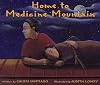
In this book's introduction, illustrator Judith Lowry tells the reader that Home to Medicine Mountain is based on a true story about how her father and uncle found their way home from a government-run Native American boarding school in the 1930's. During this era, Native Californian children were taken away from their families in order for them to learn how to "assimilate" into mainstream, Anglo culture. As author Chiori Santiago and illustrator Judith Lowry relate, this can be a show more heartbreaking experience. At the beginning of the story, Benny Len and his older brother Stanley are taking a train ride from Medicine Mountain (near Susanville) to a Riverside boarding school. When they arrive, they are given uniforms and stiff new shoes and expected to follow the norms of the institution. These rules include speaking only in English (no native languages were allowed), sleeping in dormitories, and marching drills in the yard. Benny Len escapes this harsh existence through his dreams, which let him travel home whenever he wanted. There he lived again with his grandmother and watched the men of his community dance in the roundhouse. Benny Len is devastated when he discovers that he would not be allowed to go home in the summer. (The government paid for the trip to the school, but not for the trip home!) His brother Stanley comes up with the plan to hop a train back to Medicine Mountain and the latter part of the book relates their journey home. The painted illustrations by Lowry are clear and colorful and add a lot to the story. Just one of the pictures which illustrates the clash of cultures is the blackboard on page nine which lists milestones in American history which affected native people: "1492 Discovery of America, Manifest Destiny, Louisiana Purchase, and (the)1849 Gold Rush of California". By reading this book, fourth graders will learn a lot about an almost forgotten period of California history. show less
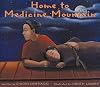
This book was very informative for me because I had no idea that Native American children were taken from their families and sent to boarding schools. I found it disturbing that they were deprived of their culture and not even allowed to speak their native language in the classroom. The illustrations were vivid full page paintings.
Picture book based on the true story of two Indian boys sent to boarding school and how they made their way back home on the train
Awards


Statistics
- Works
- 1
- Members
- 154
- Popularity
- #135,794
- Rating
- 3.9
- Reviews
- 5
- ISBNs
- 6