
Sònia Hernández
Author of Prosopagnosia
About the Author
Works by Sònia Hernández
Associated Works
Granta 113: The Best of Young Spanish Language Novelists (2011) — Contributor — 165 copies, 3 reviews
Tagged
Common Knowledge
- Canonical name
- Hernández, Sònia
- Birthdate
- 1976
- Gender
- female
- Awards and honors
- Granta magazine, Best Young Spanish-Language Novelists (2010)
- Nationality
- Spain
- Birthplace
- Barcelona, Spain
- Map Location
- Spain
Members
Reviews
As someone the same age as both the author and the narrator, I appreciate Hernández's reflections on parenthood and midlife. I like the exploration of reality and how our context shapes our perspective of the world and ourselves, how we choose to believe things that conform to our perception of the world. There also seems to be commentary on how Spain has reinvented itself post-Franco, how instead of integrating a difficult past, it's just sort of declared itself reborn as a post-fascist show more democracy, although I don't think I catch all of those nuances.
I received this ARC through LibraryThing Early Reviewers (although I'm kind of slow, so "early" is relative). show less
I received this ARC through LibraryThing Early Reviewers (although I'm kind of slow, so "early" is relative). show less
 This review was written for LibraryThing Early Reviewers.
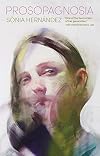
While the writing was beautiful, this book fell a bit short for me, as I don't feel like there was a conclusion. Prosopagnosia is a condition known as 'face blindness', and in this book, the daughter plays a game where she stares at herself in the mirror for so long that she no longer recognizes herself. Her mother is also looking for a new perspective with her husband leaving and having gained weight. The plot felt a little loose, but perhaps this was due to the translation.
This review was written for LibraryThing Early Reviewers.One of the last sentences sums it up perfectly.
"Although she didn't understand a word of it, she thought it was beautiful."
I identified in some way with each character, though I don't know that I can specify why in most cases. Phrases rang true, over and over, though I've never had the thought before. Motivations were intensely human and yet foreign in their follow through.
This was not an easy book to read, and I found that I put it down more often than I picked it up, but I still loved it. show more Perhaps, as a 40 something year old, going through her own mid-life crisis, while parenting young teens who are finding their own ways, I related to it more than other readers might.
I look forward to reading this one again. show less
"Although she didn't understand a word of it, she thought it was beautiful."
I identified in some way with each character, though I don't know that I can specify why in most cases. Phrases rang true, over and over, though I've never had the thought before. Motivations were intensely human and yet foreign in their follow through.
This was not an easy book to read, and I found that I put it down more often than I picked it up, but I still loved it. show more Perhaps, as a 40 something year old, going through her own mid-life crisis, while parenting young teens who are finding their own ways, I related to it more than other readers might.
I look forward to reading this one again. show less
This review was written for LibraryThing Early Reviewers."Prosopagnosia" is a novella that spends most of its time philosophizing about art and reality with three characters who aren't happy with their lives or themselves.
There's the unhappy, unempathetic teenager named Berta, whose experiences so far in life have made her believe that "beautiful things weren't made for" her. She attempts to alter the way she sees the world with a worrying habit, holding her breath while looking in the mirror until she can no longer recognize her own face (she show more then passes out).
There's her unnamed mother, who is obsessed with an "ideal" image of herself, which is beautiful and thin (she has an especially strong hatred of fatness) and admired. She's aimless after her husband leaves and is desperately trying to find meaning in her life; also, she's actually the main character.
Finally there's "the man who believed he was Vincente Rojo" (this is actually the original title in Spanish, so I don't really consider it a spoiler). He was also unhappy with his reality, but he decided to do something rather more unusual about it.
It's a novella about looking at the world differently, challenging notions of beauty (kind of). deconstructing reality as it is, deluding oneself with the right brand philosophy into believing anything in order to escape reality...that kind of thing.
In essence: "...art is about turning truth into lies in such a way that it can remain true." & "The artist no longer wishes to copy from the reality he sees, but instead wishes to create a new reality, one that would be much truer." etc. There are many quotes like this.
Obviously not for everyone. It's not particularly for me, even, but I found it interesting and the writing was good and it was a short book. show less
There's the unhappy, unempathetic teenager named Berta, whose experiences so far in life have made her believe that "beautiful things weren't made for" her. She attempts to alter the way she sees the world with a worrying habit, holding her breath while looking in the mirror until she can no longer recognize her own face (she show more then passes out).
There's her unnamed mother, who is obsessed with an "ideal" image of herself, which is beautiful and thin (she has an especially strong hatred of fatness) and admired. She's aimless after her husband leaves and is desperately trying to find meaning in her life; also, she's actually the main character.
Finally there's "the man who believed he was Vincente Rojo" (this is actually the original title in Spanish, so I don't really consider it a spoiler). He was also unhappy with his reality, but he decided to do something rather more unusual about it.
It's a novella about looking at the world differently, challenging notions of beauty (kind of). deconstructing reality as it is, deluding oneself with the right brand philosophy into believing anything in order to escape reality...that kind of thing.
In essence: "...art is about turning truth into lies in such a way that it can remain true." & "The artist no longer wishes to copy from the reality he sees, but instead wishes to create a new reality, one that would be much truer." etc. There are many quotes like this.
Obviously not for everyone. It's not particularly for me, even, but I found it interesting and the writing was good and it was a short book. show less
This review was written for LibraryThing Early Reviewers.Awards

You May Also Like
Associated Authors
Statistics
- Works
- 5
- Also by
- 1
- Members
- 45
- Popularity
- #340,916
- Rating
- 3.4
- Reviews
- 13
- ISBNs
- 11
- Languages
- 1
