
Emmanuel Chastellière
Author of Célestopol
About the Author
Works by Emmanuel Chastellière
Himilce 3 copies
Associated Works
Tagged
Common Knowledge
There is no Common Knowledge data for this author yet. You can help.
Members
Reviews
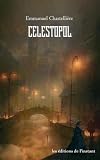
This is the first edition of the short story collection on Célestopol, the second book by French author and translator Emmanuel Chastellière. I bought this one back in 2018, yet never came round to reading it; the classic excuse: too many books, not enough time. Later on I bought the revised reissue, but for completion reasons, I'll add the review (link) here as well.
However, the cover art of the original edition better reflects what Célestopol looks like than that of the reissue, show more probably because Libretto has its own policies regarding cover art.
----------
Célestopol is the second book by French translator and author Emmanuel Chastellière. It came out in 2017 via a small publisher, Les Éditions de l'instant. Unfortunately, this little publisher had to close its books after a few years, but Mr Chastellière found a new home for Célestopol: Libretto. They reissued the short story collection in a slightly revised edition: the obligatory corrections.
This "novel" is indeed composed of short stories, in a non-chronological order. You're taken back to the early 20th century, in a uchronic setting: Tsar Nicholas II of Russia (Wikipedia) is ruling Célestopol with an iron fist, very egotistically as he doesn't care what everybody else (incl. his mother) thinks of it. Russia has colonised the moon, went up there with particular rockets, straight from Jules Verne's From the Earth to the Moon (as the new cover indicates and is mentioned at the back of the book).
Via the short stories, we get to know about (all is not divulged, however) this wonderful city with all its wonders and glory, its relationships with Earth, but also and not in the least, its gloom and doom, for all is not well if you're not part of the right classes in society. Various characters are put into the spotlight, some even returning later on.
A non-chronological order then, as the first stories take place in 1913, from there we travel two years back (1911), to finally end the journey in 1932.
Emmanuel Chastellière did his research on a historical level and added quite some historical and cultural references (art, books, ...), several of which ring no bell with me, unfortunately. Again, this is a uchronic story with some touches of steampunk, some magic (via our "beloved" tsar, for instance) and some scientific elements, like selenium (the toxic version; Wikipedia). And not to forget the androids used as servants, for example. Also, the city is also covered by a large glass dome. If that should break, then Célestopol will soon meet its demise. Its population for sure. The dome would also be a symbol of the tsar's way of ruling or his failure to do it properly.
Presenting a story in this way - short stories, not necessarily in a chronological order - is a original way of taking the reader on a journey, especially one far from his/her daily life. Mr Chastellière's style is not always that accessible (i.e. not your basic French, not that it's badly written, on the contrary), yet the stories do pique one's interest to read on and discover Célestopol in small chunks. Almost like putting together a puzzle like in archaeology.
Since then, a new collection has come out, expanding on the Russian empire's colony: Célestopol 1922 (2021). I guess I'll have to read that one as well to find out what other secrets Célestopol has to offer, even though, once more, it's not the happiest place to live in (corruption, deception, autocratic rule, ...), also because of the grey image and toxic fumes of . Then again, what was it like living during the reign of Tsar Nicholas II?
Long story short: a recommended puzzle, this first collection of Célestopol stories. show less
However, the cover art of the original edition better reflects what Célestopol looks like than that of the reissue, show more probably because Libretto has its own policies regarding cover art.
----------
Célestopol is the second book by French translator and author Emmanuel Chastellière. It came out in 2017 via a small publisher, Les Éditions de l'instant. Unfortunately, this little publisher had to close its books after a few years, but Mr Chastellière found a new home for Célestopol: Libretto. They reissued the short story collection in a slightly revised edition: the obligatory corrections.
This "novel" is indeed composed of short stories, in a non-chronological order. You're taken back to the early 20th century, in a uchronic setting: Tsar Nicholas II of Russia (Wikipedia) is ruling Célestopol with an iron fist, very egotistically as he doesn't care what everybody else (incl. his mother) thinks of it. Russia has colonised the moon, went up there with particular rockets, straight from Jules Verne's From the Earth to the Moon (as the new cover indicates and is mentioned at the back of the book).
Via the short stories, we get to know about (all is not divulged, however) this wonderful city with all its wonders and glory, its relationships with Earth, but also and not in the least, its gloom and doom, for all is not well if you're not part of the right classes in society. Various characters are put into the spotlight, some even returning later on.
A non-chronological order then, as the first stories take place in 1913, from there we travel two years back (1911), to finally end the journey in 1932.
Emmanuel Chastellière did his research on a historical level and added quite some historical and cultural references (art, books, ...), several of which ring no bell with me, unfortunately. Again, this is a uchronic story with some touches of steampunk, some magic (via our "beloved" tsar, for instance) and some scientific elements, like selenium (the toxic version; Wikipedia). And not to forget the androids used as servants, for example. Also, the city is also covered by a large glass dome. If that should break, then Célestopol will soon meet its demise. Its population for sure. The dome would also be a symbol of the tsar's way of ruling or his failure to do it properly.
Presenting a story in this way - short stories, not necessarily in a chronological order - is a original way of taking the reader on a journey, especially one far from his/her daily life. Mr Chastellière's style is not always that accessible (i.e. not your basic French, not that it's badly written, on the contrary), yet the stories do pique one's interest to read on and discover Célestopol in small chunks. Almost like putting together a puzzle like in archaeology.
Since then, a new collection has come out, expanding on the Russian empire's colony: Célestopol 1922 (2021). I guess I'll have to read that one as well to find out what other secrets Célestopol has to offer, even though, once more, it's not the happiest place to live in (corruption, deception, autocratic rule, ...), also because of the grey image and toxic fumes of . Then again, what was it like living during the reign of Tsar Nicholas II?
Long story short: a recommended puzzle, this first collection of Célestopol stories. show less
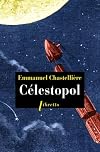
Célestopol is the second book by French translator and author Emmanuel Chastellière. It came out in 2017 via a small publisher, Les Éditions de l'instant. Unfortunately, this little publisher had to close its books after a few years, but Mr Chastellière found a new home for Célestopol: Libretto. They reissued the short story collection in a slightly revised edition: the obligatory corrections.
This "novel" is indeed composed of short stories, in a non-chronological order. You're taken show more back to the early 20th century, in a uchronic setting: Tsar Nicholas II of Russia (Wikipedia) is ruling Célestopol with an iron fist, very egotistically as he doesn't care what everybody else (incl. his mother) thinks of it. Russia has colonised the moon, went up there with particular rockets, straight from Jules Verne's From the Earth to the Moon (as the new cover indicates and is mentioned at the back of the book).
Via the short stories, we get to know about (all is not divulged, however) this wonderful city with all its wonders and glory, its relationships with Earth, but also and not in the least, its gloom and doom, for all is not well if you're not part of the right classes in society. Various characters are put into the spotlight, some even returning later on.
A non-chronological order then, as the first stories take place in 1913, from there we travel two years back (1911), to finally end the journey in 1932.
Emmanuel Chastellière did his research on a historical level and added quite some historical and cultural references (art, books, ...), several of which ring no bell with me, unfortunately. Again, this is a uchronic story with some touches of steampunk, some magic (via our "beloved" tsar, for instance) and some scientific elements, like selenium (the toxic version; Wikipedia). And not to forget the androids used as servants, for example. Also, the city is also covered by a large glass dome. If that should break, then Célestopol will soon meet its demise. Its population for sure. The dome would also be a symbol of the tsar's way of ruling or his failure to do it properly.
Presenting a story in this way - short stories, not necessarily in a chronological order - is a original way of taking the reader on a journey, especially one far from his/her daily life. Mr Chastellière's style is not always that accessible (i.e. not your basic French, not that it's badly written, on the contrary), yet the stories do pique one's interest to read on and discover Célestopol in small chunks. Almost like putting together a puzzle like in archaeology.
Since then, a new collection has come out, expanding on the Russian empire's colony: Célestopol 1922 (2021). I guess I'll have to read that one as well to find out what other secrets Célestopol has to offer, even though, once more, it's not the happiest place to live in (corruption, deception, autocratic rule, ...), also because of the grey image and toxic fumes of . Then again, what was it like living during the reign of Tsar Nicholas II?
Long story short: a recommended puzzle, this first collection of Célestopol stories. show less
This "novel" is indeed composed of short stories, in a non-chronological order. You're taken show more back to the early 20th century, in a uchronic setting: Tsar Nicholas II of Russia (Wikipedia) is ruling Célestopol with an iron fist, very egotistically as he doesn't care what everybody else (incl. his mother) thinks of it. Russia has colonised the moon, went up there with particular rockets, straight from Jules Verne's From the Earth to the Moon (as the new cover indicates and is mentioned at the back of the book).
Via the short stories, we get to know about (all is not divulged, however) this wonderful city with all its wonders and glory, its relationships with Earth, but also and not in the least, its gloom and doom, for all is not well if you're not part of the right classes in society. Various characters are put into the spotlight, some even returning later on.
A non-chronological order then, as the first stories take place in 1913, from there we travel two years back (1911), to finally end the journey in 1932.
Emmanuel Chastellière did his research on a historical level and added quite some historical and cultural references (art, books, ...), several of which ring no bell with me, unfortunately. Again, this is a uchronic story with some touches of steampunk, some magic (via our "beloved" tsar, for instance) and some scientific elements, like selenium (the toxic version; Wikipedia). And not to forget the androids used as servants, for example. Also, the city is also covered by a large glass dome. If that should break, then Célestopol will soon meet its demise. Its population for sure. The dome would also be a symbol of the tsar's way of ruling or his failure to do it properly.
Presenting a story in this way - short stories, not necessarily in a chronological order - is a original way of taking the reader on a journey, especially one far from his/her daily life. Mr Chastellière's style is not always that accessible (i.e. not your basic French, not that it's badly written, on the contrary), yet the stories do pique one's interest to read on and discover Célestopol in small chunks. Almost like putting together a puzzle like in archaeology.
Since then, a new collection has come out, expanding on the Russian empire's colony: Célestopol 1922 (2021). I guess I'll have to read that one as well to find out what other secrets Célestopol has to offer, even though, once more, it's not the happiest place to live in (corruption, deception, autocratic rule, ...), also because of the grey image and toxic fumes of . Then again, what was it like living during the reign of Tsar Nicholas II?
Long story short: a recommended puzzle, this first collection of Célestopol stories. show less
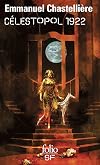
"Célestopol 1922" is the "sequel of sorts" to the original "Célestopol" collection of stories. I've read the latter a good half year ago and found it quite interesting (review). The historical elements, the variety in the stories, ... even if Célestopol isn't the happiest place to live in (the fog, the corruption, ...).
To expand on the moon's history and its human settlers (mainly Slaves, Russians, ...), Emmanuel Chastellière wrote another pile of stories. In this new collection, some show more characters of before return (our detective duo, the android servants, ...). A new cast of historical figures were given a guest role, like the British archaeologist Howard Carter, the Archduke Franz Ferdinand of Austria, and the Polish-French chemist and physicist Marie Curie.
Like before, variation is key, also style-wise: detective stories, a bit of steampunk, even a touch of Lovecraft (or Lovecraftian stories). However, as someone else here wrote, and I can agree with that: "Célestopol 1922" misses the spark of "originality" of the first collection. While the first half of the stories manages to hold one's attention and desire to read on, the second half (or more towards the last few stories) was less to my liking or didn't hold my attention as much as several of the preceding stories.
"Célestopol 1922" is, despite not having that spark of the first collection, an entertaining follow-up to the first book, but a little heavier to get through. show less
To expand on the moon's history and its human settlers (mainly Slaves, Russians, ...), Emmanuel Chastellière wrote another pile of stories. In this new collection, some show more characters of before return (our detective duo, the android servants, ...). A new cast of historical figures were given a guest role, like the British archaeologist Howard Carter, the Archduke Franz Ferdinand of Austria, and the Polish-French chemist and physicist Marie Curie.
Like before, variation is key, also style-wise: detective stories, a bit of steampunk, even a touch of Lovecraft (or Lovecraftian stories). However, as someone else here wrote, and I can agree with that: "Célestopol 1922" misses the spark of "originality" of the first collection. While the first half of the stories manages to hold one's attention and desire to read on, the second half (or more towards the last few stories) was less to my liking or didn't hold my attention as much as several of the preceding stories.
"Célestopol 1922" is, despite not having that spark of the first collection, an entertaining follow-up to the first book, but a little heavier to get through. show less
Awards


Statistics
- Works
- 8
- Also by
- 1
- Members
- 21
- Popularity
- #570,575
- Rating
- 3.8
- Reviews
- 3
- ISBNs
- 10