
Mario Scalini
Author of Benvenuto Cellini
Works by Mario Scalini
Associated Works
Tagged
Common Knowledge
- Gender
- male
Members
Reviews
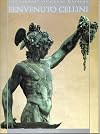
Initially, I had thought that this was a simple picture book of Cellini's art. However, it is a bit of a mixture between an illustrated version of Cellini's own autobiography and an independent commentary on Cellini's life and work. One of the things I found frustrating was the lack of connection of the text with the illustrations. And, in fact, the difficulty of linking the inscriptions to the actual photos themselves. (Typically the numbered inscriptions would be on one page whilst the show more photo was, maybe, three pages prior). However, the photos really are of high quality and I was impressed with them. However, another annoying issue was that throughout the text there were references to page numbers that bore no connection with the book. For example there is a reference to a sculpture on p177. But the whole book only has 80 pages. With a bit of detective work I discovered that the page references were to Cellini's autobiography.....and a particular edition of this book. (Actually, I happen to have a copy of that exact version so should be able to cross reference .....if I can locate it on my shelves).
I found myself wondering about Scalini's credentials when he talks about working on a bronze cast with hammer and chisels to "strengthen it". It's not to strengthen it but to remove the flashing, or pits and bumps that occur in the casting process. And, of course, to rework the sections where the runners and risers had been attached. There is also the curious reference on p60 where he suggests that the sixty pounds of tin may have evaporated on contact. I find this comment incredible. In fact, Cellini is right. The melting point of pure copper is 1083 degrees C whilst the melting point of bronze (after tin has been added) drops to 950 degrees C. So Cellini's story is quite feasible....the added tin would make the bronze flow more readily. (Probably the plateware would have been pewter or a mixture of tin and lead ...which would potentially have dropped the melting point even a bit lower) Though whether this actually happened with the Perseus or with some other casting and the story was merely added in for drama in the autobiography, I wouldn't know, but it does make me worried about Scalini, the author.
I actually remember reading Cellini's biography and this particular incident when I was doing the midnight to dawn shift for the Bronze Works sculpture casting in Fyshwick when I had my own set of worries about the moulds and the amount of bronze to fill the mould.
Hard to fault the quality of the photos ...which was the major reason I bought the book but some of these other defects could easily have been remedied by slightly better editing. (I wonder if any of the editors knew anything about bronze casting?).
Still, despite some faults, I enjoyed the book, three stars from me. show less
I found myself wondering about Scalini's credentials when he talks about working on a bronze cast with hammer and chisels to "strengthen it". It's not to strengthen it but to remove the flashing, or pits and bumps that occur in the casting process. And, of course, to rework the sections where the runners and risers had been attached. There is also the curious reference on p60 where he suggests that the sixty pounds of tin may have evaporated on contact. I find this comment incredible. In fact, Cellini is right. The melting point of pure copper is 1083 degrees C whilst the melting point of bronze (after tin has been added) drops to 950 degrees C. So Cellini's story is quite feasible....the added tin would make the bronze flow more readily. (Probably the plateware would have been pewter or a mixture of tin and lead ...which would potentially have dropped the melting point even a bit lower) Though whether this actually happened with the Perseus or with some other casting and the story was merely added in for drama in the autobiography, I wouldn't know, but it does make me worried about Scalini, the author.
I actually remember reading Cellini's biography and this particular incident when I was doing the midnight to dawn shift for the Bronze Works sculpture casting in Fyshwick when I had my own set of worries about the moulds and the amount of bronze to fill the mould.
Hard to fault the quality of the photos ...which was the major reason I bought the book but some of these other defects could easily have been remedied by slightly better editing. (I wonder if any of the editors knew anything about bronze casting?).
Still, despite some faults, I enjoyed the book, three stars from me. show less
You May Also Like
Associated Authors
Statistics
- Works
- 16
- Also by
- 1
- Members
- 74
- Popularity
- #238,153
- Rating
- 4.2
- Reviews
- 1
- ISBNs
- 25
- Languages
- 5