
Deborah Underwood
Author of The Quiet Book
About the Author
Deborah Underwood grew up in Walla Walla, Washington. Her father was a math professor and her mother taught English. After colege, she became a street musician, then she worked in an office typing memos for accountants. During her breaks she would write screenplays. She finally decided to write for show more kids. Deborah also started writing nonfiction at the suggestion of her publisher. Her children's titles include: The Quiet Book, The Christmas Quiet Book, A Balloon for Isabel, Sugar Plum Ballerinas, and The Loud Book. Her nonfiction titles include: Mexco or Bust, Animal Secrets, 101 Ways to Save the Planet and Ballroom Dancing. In 2014 her title, Here Comes The Easter Cat, made The New York Times Best Seller List. (Bowker Author Biography) show less
Image credit: via author's website
Series
Works by Deborah Underwood
The Fairy Tale Fixers: Cinderella: A Graphic Novel (The Fairy Tale Fixers, 1) (2025) 17 copies, 4 reviews
Skunks's Picnic Surprise 1 copy
Associated Works
Tagged
Common Knowledge
- Canonical name
- Underwood, Deborah
- Other names
- UNDERWOOD, Deborah
- Gender
- female
- Nationality
- USA
- Birthplace
- Walla Walla, Washington, USA
- Associated Place (for map)
- Washington, USA
Members
Reviews

Fairy-tale meets space opera in this delightful picture-book, with rhyming text and colorful artwork combining with marvelous effect. In this telling, Cinderella is mechanically inclined, and dreams of repairing space ships. When her stepmother and sisters leave her behind on the day of the Prince's Royal Space Parade, Cinderella's fairy godrobot appears to save the day, providing her with the sonic socket wrench needed to repair her ship and get to the parade. Once there, she makes a big show more impression, fixing the prince's spaceship as well - a skill the prince will use to identify her again, when he must search for his fleeing love. But does this Cinderella want to be a bride, or does she have other dreams…?
As someone who enjoys both Star Trek-style science fiction, and fairy-tale fare of all kind, I was pretty much guaranteed to enjoy Interstellar Cinderella, which I found charming. I found the colorful artwork appealing, and think the rhyming text would make for an excellent read-aloud. The re-invention here of the eponymous character as a mechanic, rather than a maid, felt both natural and inspired, and I particularly appreciated the conclusion, in which Cinderella declares thatshe is too young to marry, but would love to become the prince's mechanic ! Recommended to all fairy-tale lovers, particularly those who enjoy fractured retellings. show less
As someone who enjoys both Star Trek-style science fiction, and fairy-tale fare of all kind, I was pretty much guaranteed to enjoy Interstellar Cinderella, which I found charming. I found the colorful artwork appealing, and think the rhyming text would make for an excellent read-aloud. The re-invention here of the eponymous character as a mechanic, rather than a maid, felt both natural and inspired, and I particularly appreciated the conclusion, in which Cinderella declares that
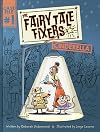
In a Nutshell: A children’s comic about a bumbling “fairy” forced to turn godmother for Cinderella. Whimsical, witty, and wonderful! Love how it adds its own twist to the Cinderella story. I had great fun reading this. Much recommended.
~~~~~~~~~~~~~~~~~~~~~~~
Plot Preview:
I enjoy fairy tale retellings. But this is the first time I have read a retelling aimed at children. It offers one heck of a ride!
The key characters in this story – Fairy and Mouse – are brilliant in various ways. You would think that Fairy, with his detective-like trenchcoat and magical powers, would find it easy to resolve the issue Mouse is facing in Cinderella’s house. You might also assume that Fairy is kind and sweet, like fictional fairies often are. So to see this Fairy—so sarcastic and selfish and short-sighted—bumble and stumble through the rescue is hilarious. Mouse acts as the perfect counterfoil to Fairy’s goofs. I love how she points out Fairy’s shortcomings without insulting him outright. That said, she also has a selfish agenda behind her request.
The retelling approach of this story is also wonderful. It contains all the usual suspects: Cinderella, the stepmother and the two stepsisters, and of course, Prince Charming. But it even adds two interesting new characters to the fairytale cast. The characters from the original tale reprise their roles but not their personalities. As such, the fundamental flaws of the fairy tale, especially with respect to Cinderella’s “rescue”, are mostly ironed out in this version. The new characters are outstanding. (This might be the first and last time I ever say this: the cockroach was adorable! I wish there had been more of him.)
As with all retellings, the story will deliver better if you know the original, though it is a hoot even on its own. There were many scenes when my buddy reader and I burst out laughing. The humour is a nice mix of witty and silly and cheesy. Perfect for the target age group.
The plot leaves out a few key details. We don’t know Fairy’s background or how he began this business, or how he ventures into a book and alters its story. Given the amazing opening scene, with Fairy sitting at his table like a detective from a classic noir movie and answering his antiquated rotary phone, I wish we could have had more of his backstory. Then again, this isn't the kind of book to be read with the head. It promises sheer entertainment, and it delivers on this from start to end.
This is not to say that the book offers no learning points. Au contraire, it offers plenty of discussion fodder in terms of gender assumptions, predetermined roles in society, fulfilment of responsibilities, and helping others for one’s own benefit. Cinderella’s arc with its twist, though somewhat guessable, is perfect for this modern era, and one that kids and adults are sure to appreciate. Fairy’s cocky assumptions and half-baked ideas also offer much learning to children about not jumping to preconceived conclusions and preparing and planning better before beginning a task.
The vocabulary level is perfect for this age group. There are plenty of onomatopoeic effects to add to the fun. Font size variations are used to great effect.
The graphics might remind you of the Geronimo Stilton series, but this one is way better. The characters, their expressions, and the magical transitions all pop out amazingly due to the colour scheme. I love how Cinderella is not blonde and blue-eyed as is the usual depiction for fairytale FMCs.
All in all, I had a jolly good time with this children’s graphic novel. Anyone who loves smartly silly stories ought to give this a try. The ending indicates that this is the first of a planned series, and based on this experience, count me in for all further fairy-tale fixing adventures of Fairy and Mouse.
Definitely recommended to little fans of fractured fairy tales with modernised tropes. The official target audience is kids aged 6-10 years.
4.5 stars, delighted to round up.
My thanks to HarperCollins Children's Books and Clarion Books for providing the DRC of “The Fairy Tale Fixers: Cinderella” via NetGalley. This review is voluntary and contains my honest opinion about the book.
~~~~~~~~~~~~~~~~~~~~~~~
Connect with me through:
My Blog || The StoryGraph || Instagram || Threads || X/Twitter || Facebook || show less
~~~~~~~~~~~~~~~~~~~~~~~
Plot Preview:
Fairy, a trenchcoat-wearing rat (or mouse – not sure), works as a fixer of fairy tales. When something goes wrong in stories, he steps into the book and sorts out the issue. Rather, he claims to do so. His latestshow more
client Mouse discovers, much to her surprise and dismay, that Fairy has no idea how to resolve most messes, and that he wings the solutions as he goes along. Mouse can see that he needs help, probably as much help as Cinderella does. Can Fairy and Mouse work together to fix Cinderella’s life without worsening the situation?
I enjoy fairy tale retellings. But this is the first time I have read a retelling aimed at children. It offers one heck of a ride!
The key characters in this story – Fairy and Mouse – are brilliant in various ways. You would think that Fairy, with his detective-like trenchcoat and magical powers, would find it easy to resolve the issue Mouse is facing in Cinderella’s house. You might also assume that Fairy is kind and sweet, like fictional fairies often are. So to see this Fairy—so sarcastic and selfish and short-sighted—bumble and stumble through the rescue is hilarious. Mouse acts as the perfect counterfoil to Fairy’s goofs. I love how she points out Fairy’s shortcomings without insulting him outright. That said, she also has a selfish agenda behind her request.
The retelling approach of this story is also wonderful. It contains all the usual suspects: Cinderella, the stepmother and the two stepsisters, and of course, Prince Charming. But it even adds two interesting new characters to the fairytale cast. The characters from the original tale reprise their roles but not their personalities. As such, the fundamental flaws of the fairy tale, especially with respect to Cinderella’s “rescue”, are mostly ironed out in this version. The new characters are outstanding. (This might be the first and last time I ever say this: the cockroach was adorable! I wish there had been more of him.)
As with all retellings, the story will deliver better if you know the original, though it is a hoot even on its own. There were many scenes when my buddy reader and I burst out laughing. The humour is a nice mix of witty and silly and cheesy. Perfect for the target age group.
The plot leaves out a few key details. We don’t know Fairy’s background or how he began this business, or how he ventures into a book and alters its story. Given the amazing opening scene, with Fairy sitting at his table like a detective from a classic noir movie and answering his antiquated rotary phone, I wish we could have had more of his backstory. Then again, this isn't the kind of book to be read with the head. It promises sheer entertainment, and it delivers on this from start to end.
This is not to say that the book offers no learning points. Au contraire, it offers plenty of discussion fodder in terms of gender assumptions, predetermined roles in society, fulfilment of responsibilities, and helping others for one’s own benefit. Cinderella’s arc with its twist, though somewhat guessable, is perfect for this modern era, and one that kids and adults are sure to appreciate. Fairy’s cocky assumptions and half-baked ideas also offer much learning to children about not jumping to preconceived conclusions and preparing and planning better before beginning a task.
The vocabulary level is perfect for this age group. There are plenty of onomatopoeic effects to add to the fun. Font size variations are used to great effect.
The graphics might remind you of the Geronimo Stilton series, but this one is way better. The characters, their expressions, and the magical transitions all pop out amazingly due to the colour scheme. I love how Cinderella is not blonde and blue-eyed as is the usual depiction for fairytale FMCs.
All in all, I had a jolly good time with this children’s graphic novel. Anyone who loves smartly silly stories ought to give this a try. The ending indicates that this is the first of a planned series, and based on this experience, count me in for all further fairy-tale fixing adventures of Fairy and Mouse.
Definitely recommended to little fans of fractured fairy tales with modernised tropes. The official target audience is kids aged 6-10 years.
4.5 stars, delighted to round up.
My thanks to HarperCollins Children's Books and Clarion Books for providing the DRC of “The Fairy Tale Fixers: Cinderella” via NetGalley. This review is voluntary and contains my honest opinion about the book.
~~~~~~~~~~~~~~~~~~~~~~~
Connect with me through:
My Blog || The StoryGraph || Instagram || Threads || X/Twitter || Facebook || show less
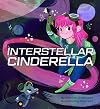
I absolutely ADORED this book. Everything, from the cover to the story, to the art, is just absolute magic. My favorite aspects of this book remain the cover art (I am a huge fan of cover art) and the overall narrative of the book. The cover immediately catches your eye. The raised titling font, along with the fact it is done in this sort of glittery, starlight material, immediately gives you that magical fantasy feel. The character, Cinderella, is drawn to showcase her desired profession: a show more space mechanic. You see her holding a drill, while a robot mouse watches closely. It is a cover that catches your eye, which is one of my favorite things in this world.
The second aspect that I absolutely love is the spin on the classic fairytale it gives. No longer is it about Cinderella not having a dress, but a working spaceship--as all aspects of the story are built on Cinderella's desire to be the best space mechanic ever. In fact, when she meets the prince, it is to help fix his ship, and she leaves a socket wrench behind! However, the most clever aspect of the book is that Cinderella tells the Prince she's too young to marry, but she would gladly be his mechanic--a sort of realistic ending to the fairytale, outside of the setting of space.
The message of this book is very apparent: follow your goals, and don't let anything--love, gender, family--hold you back from achieving those goals. We see a main character girl in a position of being skilled in what is arguably a STEM related field, and make the choice to keep pursuing that dream, regardless of all obstacles. show less
The second aspect that I absolutely love is the spin on the classic fairytale it gives. No longer is it about Cinderella not having a dress, but a working spaceship--as all aspects of the story are built on Cinderella's desire to be the best space mechanic ever. In fact, when she meets the prince, it is to help fix his ship, and she leaves a socket wrench behind! However, the most clever aspect of the book is that Cinderella tells the Prince she's too young to marry, but she would gladly be his mechanic--a sort of realistic ending to the fairytale, outside of the setting of space.
The message of this book is very apparent: follow your goals, and don't let anything--love, gender, family--hold you back from achieving those goals. We see a main character girl in a position of being skilled in what is arguably a STEM related field, and make the choice to keep pursuing that dream, regardless of all obstacles. show less

As the simple but poetic narrative speaks of the beauty and lure of the outside, which waits for us, tempting us to return to it, the lovely artwork in Outside In captures all of the tricks outside plays, in order to capture our attention. The light and shadows coming in our windows, the scents and sights, everything trying to get us to return, and eventually, we do...
On my first read of Outside In, I found myself concentrating on the artwork of illustrator Cindy Derby, which is perhaps not show more surprising, considering that this title was one of four Caldecott Honor books chosen this year (2021), along with Zetta Elliott and Noa Denmon's A Place Inside of Me: A Poem to Heal the Heart, Cozbi A. Cabrera's Me & Mama, and Irene Latham, Karim Shamsi-Basha and Yuko Shimizu's The Cat Man of Aleppo. These illustrations, created using watercolor and powdered graphite, with some lines being made using flower stems and thread soaked in ink, are beautiful, with a lovely color palette, and an expressive, sometimes chaotic composition, one which suggests a world always in motion. I enjoyed these images, and I appreciated the ideas in Deborah Underwood's text, but it was only on my second read that I really appreciated the deeper meaning here. The narrative begins: "Once we were part of Outside, and Outside was part of us. There was nothing between us." It goes on to describe all the ways we have found to separate ourselves from Outside, from nature, and all the ways in which Outside calls to us, to renew our connection. This is not just a call to spend more time outdoors, it is a call to return to an earlier state of being, as humans, a state of being in which we too were part of nature, rather than standing outside of it, and visiting it upon occasion. How superbly ironic that Outside In was published in April of 2020, as the whole world was hunkering down inside. Although this serendipitous timing could not have been planned, it does make the book all the more powerful, the more one ponders it! Recommended to picture-book readers looking for subtler, more philosophical tales, ones which celebrate our connection to the natural world around us. show less
On my first read of Outside In, I found myself concentrating on the artwork of illustrator Cindy Derby, which is perhaps not show more surprising, considering that this title was one of four Caldecott Honor books chosen this year (2021), along with Zetta Elliott and Noa Denmon's A Place Inside of Me: A Poem to Heal the Heart, Cozbi A. Cabrera's Me & Mama, and Irene Latham, Karim Shamsi-Basha and Yuko Shimizu's The Cat Man of Aleppo. These illustrations, created using watercolor and powdered graphite, with some lines being made using flower stems and thread soaked in ink, are beautiful, with a lovely color palette, and an expressive, sometimes chaotic composition, one which suggests a world always in motion. I enjoyed these images, and I appreciated the ideas in Deborah Underwood's text, but it was only on my second read that I really appreciated the deeper meaning here. The narrative begins: "Once we were part of Outside, and Outside was part of us. There was nothing between us." It goes on to describe all the ways we have found to separate ourselves from Outside, from nature, and all the ways in which Outside calls to us, to renew our connection. This is not just a call to spend more time outdoors, it is a call to return to an earlier state of being, as humans, a state of being in which we too were part of nature, rather than standing outside of it, and visiting it upon occasion. How superbly ironic that Outside In was published in April of 2020, as the whole world was hunkering down inside. Although this serendipitous timing could not have been planned, it does make the book all the more powerful, the more one ponders it! Recommended to picture-book readers looking for subtler, more philosophical tales, ones which celebrate our connection to the natural world around us. show less
Lists
Awards


You May Also Like


Associated Authors
Statistics
- Works
- 85
- Also by
- 1
- Members
- 6,201
- Popularity
- #3,958
- Rating
- 4.0
- Reviews
- 325
- ISBNs
- 326
- Languages
- 9
- Favorited
- 2