

Joshunda Sanders
Author of Women of the Post: A Novel
About the Author
Works by Joshunda Sanders
Associated Works
Beyond Belief: The Secret Lives of Women in Extreme Religions (2013) — Contributor — 75 copies, 6 reviews
Bitch Magazine: Feminist Response to Pop Culture #39: The Wired Issue — Contributor — 6 copies
Tagged
Common Knowledge
There is no Common Knowledge data for this author yet. You can help.
Members
Reviews
"But no matter where we go, coming over here as property means anybody who looks at us sees servitude in our faces, in our skin. And that's out of our hands."
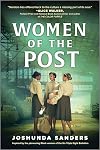
Women of the Post by Joshunda Sanders was a touching read about the Six Triple Eight, an All-Black Women's Battalion, who served during World War II and took on the noble cause of sorting the postal mail. Their motto was "No mail, low morale." They realized the importance of soldiers staying in contact with family in order to remain show more hopeful during the war. This was no small feat, since there were over 2 million pieces of mail and they were always in danger of being attacked.
This book was a celebration of the bravery of Black women and their determination to take their destinies in their own hands, rather than stay at home and work manual jobs for slave wages. These women displayed fortitude, resilience through all the racism they endured and great wisdom for future generations of Black women. The bonds they created with each other and their friendship carried them through their assignment and personal griefs. Their tenacity never wavered and they realized their greatest power was in holding on to joy in the every day and not letting society dictate who Black women are.
This book was inspiring and I learned so much from it. It was beautiful to see how they held space for each other and supported each other through the racism of the Army. I wish their historic achievements were widely taught because Black women need to see more stories like this one instead of just slave narratives that diminish how powerful they really are. If you love historical fiction and stories about the power of Black feminism, add this one to your list.
Other books that would pair nicely with this one are:
🪖 Sisters In Arms (HF)- Kaia Anderson
🪖 One Woman's Army: A Black Officer Remembers WAC (memoir)- Charity Adam's Early
🪖 The Courageous Six Triple: The All-Black Female Battalion of World War II- Artika R. Tyner (children's)
🪖 Bitter Fruit: African American Women in World War II- Maureen Honey (NF)
Thanks to @parkrowbooks and to @hearourvoicestours for the gifted copy. show less
Women of the Post by Joshunda Sanders was a touching read about the Six Triple Eight, an All-Black Women's Battalion, who served during World War II and took on the noble cause of sorting the postal mail. Their motto was "No mail, low morale." They realized the importance of soldiers staying in contact with family in order to remain show more hopeful during the war. This was no small feat, since there were over 2 million pieces of mail and they were always in danger of being attacked.
This book was a celebration of the bravery of Black women and their determination to take their destinies in their own hands, rather than stay at home and work manual jobs for slave wages. These women displayed fortitude, resilience through all the racism they endured and great wisdom for future generations of Black women. The bonds they created with each other and their friendship carried them through their assignment and personal griefs. Their tenacity never wavered and they realized their greatest power was in holding on to joy in the every day and not letting society dictate who Black women are.
This book was inspiring and I learned so much from it. It was beautiful to see how they held space for each other and supported each other through the racism of the Army. I wish their historic achievements were widely taught because Black women need to see more stories like this one instead of just slave narratives that diminish how powerful they really are. If you love historical fiction and stories about the power of Black feminism, add this one to your list.
Other books that would pair nicely with this one are:
🪖 Sisters In Arms (HF)- Kaia Anderson
🪖 One Woman's Army: A Black Officer Remembers WAC (memoir)- Charity Adam's Early
🪖 The Courageous Six Triple: The All-Black Female Battalion of World War II- Artika R. Tyner (children's)
🪖 Bitter Fruit: African American Women in World War II- Maureen Honey (NF)
Thanks to @parkrowbooks and to @hearourvoicestours for the gifted copy. show less
4.5⭐️
“Segregation in civilian life was still very much the law of the land, but the wartime needs in all areas of the military forced the government to admit that they would need to make some exceptions in order to win the war.”
In 1944, as WWII rages on, Judy Washington and her mother are struggling to make ends meet. Judy’s husband Herbert is off fighting the War, enlisting after the bombing of Pearl Harbor resulted in African American men being drafted into the Armed Services. show more However, correspondence and money from Herbert had been irregular, forcing Judy and her mother to join the Bronx Slave Market where Black women wait on street corners hoping to be employed for domestic services by White women in exchange for a pittance. With the men fighting the war, there was an opportunity for women to join the Woman’s Army Corps (WAC) and after the massive loss of lives in the D-Day Invasion, Allied soldiers from different branches including those handling the post were also called onto the front leading to short staffing and a lag in postal services thereby creating an opening for women, including Black women to join the war effort. Judy decides to enlist eventually becoming a part of the 6888th Central Postal Battalion or the Six Triple Eight Battalion as it was commonly referred to, led by Captain Charity Adams (one of the most high-ranking Black officers in the WAC). The Battalion included approximately 850 Black women who were tasked with sorting and redirecting a massive backlog of correspondence between soldiers and their loved ones back home.
“No mail, no morale. It will be our mantra.”
We also meet others from Judy’s Battalion including Stacy McFadden who hails from a farming family in Missouri, Bernadette Moore from Chicago and Mary Alyce Dixon from Vermont whose journey is made more difficult after a personal revelation leaves her shaken. The narrative follows these women over the next year and a half as they complete their training, cross the Atlantic and are eventually stationed in Birmingham, England till the end of the war. We bear witness to their personal struggles and aspirations, their camaraderie and how they become an integral part of one another’s support systems in difficult moments. The story is shared from the perspectives of Judy, Charity and Mary Alyce for the most part and not only details the working of the Six Triple Eight Battalion but also paints a picture of the bigotry, segregation, sexism and discrimination not only in WWII era United States by also within Army ranks and also how their experiences outside their country allows them an opportunity to view life as Black women from a different perspective, which impacts the decisions they make in the aftermath of the war.
“Everything in America, in life, made it clear that remembering one’s place meant remembering your inferiority to anyone white. The signs, the looks, the treatment—what waited for her back home was now the inferior version of a run-down waiting room, a crowded hospital, a diner’s back entrance or a broken water fountain.”
The brilliant Author’s Note sheds light on the real events and people who inspired this novel while also detailing the facts and fictionalized elements that have been woven into the narrative.
Overall, I found Women of the Post by Joshunda Sanders to be an impeccably researched, informative, insightful and engrossing read that highlights the contribution of African American women to the WWII effort. This is the first work of fiction where I have come across this aspect of the war effort and I commend the author for the beautiful way she has told this story. With its excellent writing, superb characterizations and a rare glimpse into a part of history that is rarely talked about, this is an exceptionally written novel that I would not hesitate to recommend to those who enjoy WWII fiction inspired by true events/people.
Many thanks to NetGalley and Harlequin Trade Publishing/Park Row Books for the digital review copy and a special thanks to the publisher for the gifted copy. All opinions expressed in this review are my own. show less
A wonderful novel about how institutionalized racism has done so much harm to the US. But a group of determined black women saw a way to fulfill their duty to their country despite the deep-seated hate with which they grew up. They became WACs in the military and helped unclog backed up mail from home to American men fighting in Europe.
Coming from different US cities, they came together to help and do so much good to turn the tide of WWII. They became friends, supportin each other during show more frightening challenges. They deserve our praise and respect. Once the war ended, knowing that attitudes toward black men and women had sadly, maddeningly changed little, made bold choices about where to live and who to live with. Some stayed in Europe, some moved from the South to the north to improve their lives.
Mary Alyce's story is especially poignant. Believing she is white like her mother, she finds out that her father was black and the reason she must serve with the black WACs..With help from black WACs Judy, Stacy and Bernadette she processes her life's changes and expectations. On returning to the US she decides to live in the South with her father's family.
Amazing stories of strength, courage, sacrifice and love. show less
Coming from different US cities, they came together to help and do so much good to turn the tide of WWII. They became friends, supportin each other during show more frightening challenges. They deserve our praise and respect. Once the war ended, knowing that attitudes toward black men and women had sadly, maddeningly changed little, made bold choices about where to live and who to live with. Some stayed in Europe, some moved from the South to the north to improve their lives.
Mary Alyce's story is especially poignant. Believing she is white like her mother, she finds out that her father was black and the reason she must serve with the black WACs..With help from black WACs Judy, Stacy and Bernadette she processes her life's changes and expectations. On returning to the US she decides to live in the South with her father's family.
Amazing stories of strength, courage, sacrifice and love. show less
I loved this book and learned a lot along the way. Based on true events, it is about the all-Black battalion of the Women’s Army Corps that served in Europe during WWII. Their mission was to sort over one million pieces of mail that had backlogged in Europe. To boost the morale of the soldiers, it was imperative that this mail be delivered to the soldiers and their families.
Told from the perspectives of three members of the 6888th Central Postal Battalion, I learned a lot about why these show more women took the radical step of joining the military at a time when Black men were still fighting to be accepted, so the women had an even bigger fight ahead of them. The story of the Bronx “slave markets” endured by Judy Washington and her mother was heartbreaking and infuriating.
Judy, Stacy, Bernadette, and Mary Alyce become close friends almost from the start. It took a little longer for Mary Alyce to accept the others. Mary Alyce finds her mother kept a secret from her, a secret that would change every aspect of her life. She discovers that the father that died before she was born was Black. Having fair skin, she had loved her life as a White female with a White mother. I could not even begin to imagine the change this knowledge set into play in her life. The battalion is led by Charity Adams, one of the VERY few Black female officers in the Army.
This is a story of finding purpose in one’s life, of strong female friendships, and of stepping out of your comfort zone.
It is obvious that the author did extensive research for this historical fiction novel. While I am burned out on WWII stories, once I became aware of the specific topic, I could not resist reading it. I am so glad I did. I highly recommend it.
I received an advance copy of the book. The opinions expressed here are entirely my own. show less
Told from the perspectives of three members of the 6888th Central Postal Battalion, I learned a lot about why these show more women took the radical step of joining the military at a time when Black men were still fighting to be accepted, so the women had an even bigger fight ahead of them. The story of the Bronx “slave markets” endured by Judy Washington and her mother was heartbreaking and infuriating.
Judy, Stacy, Bernadette, and Mary Alyce become close friends almost from the start. It took a little longer for Mary Alyce to accept the others. Mary Alyce finds her mother kept a secret from her, a secret that would change every aspect of her life. She discovers that the father that died before she was born was Black. Having fair skin, she had loved her life as a White female with a White mother. I could not even begin to imagine the change this knowledge set into play in her life. The battalion is led by Charity Adams, one of the VERY few Black female officers in the Army.
This is a story of finding purpose in one’s life, of strong female friendships, and of stepping out of your comfort zone.
It is obvious that the author did extensive research for this historical fiction novel. While I am burned out on WWII stories, once I became aware of the specific topic, I could not resist reading it. I am so glad I did. I highly recommend it.
I received an advance copy of the book. The opinions expressed here are entirely my own. show less
Lists
Awards

You May Also Like
Associated Authors
Statistics
- Works
- 5
- Also by
- 4
- Members
- 142
- Popularity
- #144,864
- Rating
- 3.9
- Reviews
- 11
- ISBNs
- 15
- Languages
- 1