
Nancy Reyner
Author of Acrylic Revolution
About the Author
Works by Nancy Reyner
Acrylic Illuminations: Reflective and Luminous Acrylic Painting Techniques (2013) 27 copies, 1 review
AcrylicWorks - The Best of Acrylic Painting: Ideas and Techniques for Today's Artists (2014) 12 copies
Painting Acrylic with Nancy Reyner Book and DVD Bundle (North Light Bringing Art to Life) (2010) 1 copy
Acrylic Innovation II 1 copy
Tagged
Common Knowledge
- Gender
- female
Members
Reviews
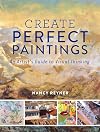
Being an amateur artist with no formal training, I’m always on the lookout for art books that are both inspiring and instructional. Create Perfect Paintings: An Artist’s Guide to Visual Thinking fits the bill perfectly. Sure, art is highly subjective and what's perfect for one person may not be for another. But I learned so much, and at times felt like I was attending lectures from a wise and kindly professor at art school. From start to finish, reading this book was an enjoyable show more experience
There are five sections to this book, but the bulk of it is about learning how to critique your own work. And that, for me, is a huge takeaway. Most artists work alone and don’t get feedback (so necessary for growth and improvement), so learning to self-critique is absolutely essential.
Nancy Reyner breaks down the process into actionable steps that even a rank beginner like myself can understand and follow. If you’ve ever looked at one of your own paintings and wonder why it’s ‘not working’, this is the book for you.
Reyner uses plenty of paintings (ranging from Old Masters to her own contemporary artwork) to illustrate her process, and it’s both enlightening and super helpful. If you have no formal training but enjoy painting and want to get better at it, this is a great reference book that belongs on your bookshelf. show less
There are five sections to this book, but the bulk of it is about learning how to critique your own work. And that, for me, is a huge takeaway. Most artists work alone and don’t get feedback (so necessary for growth and improvement), so learning to self-critique is absolutely essential.
Nancy Reyner breaks down the process into actionable steps that even a rank beginner like myself can understand and follow. If you’ve ever looked at one of your own paintings and wonder why it’s ‘not working’, this is the book for you.
Reyner uses plenty of paintings (ranging from Old Masters to her own contemporary artwork) to illustrate her process, and it’s both enlightening and super helpful. If you have no formal training but enjoy painting and want to get better at it, this is a great reference book that belongs on your bookshelf. show less
Acrylic Revolution : New Tricks and Techniques for Working with the World's Most Versatile Medium by Nancy Reyner

I am a mostly self-taught hobbyist painter. I took a couple of art classes my last year of undergrad, and they were the first "real" art classes I had ever had. I discovered that I really enjoy art, but had no idea how to use the tools available or how to get certain effects.
This book was really helpful for me. It shows many different techniques for using acrylic paint and related supplies, which can be used in many different ways. Although I was aware of some from my painting class, others show more were completely new to me, and I've already attempted some with great results. I've also shared the book with friends who are more skilled with acrylic painting, and they've said that they appreciate the tips and reminders when they were stuck with certain things they wanted to do.
It's a good size, and the hardcover combined with spiral binding make it really easy to use - it lies flat on the table or it can stand upright/lean against something and stay open.
Some of the organization is a bit confusing to me, and I often have to read through the entire book to find the one part I was wanting to reference. Post-it notes or paperclips are useful for marking out the topic sections to make it easier to go quickly to the right page. I also recommend reading it through front to back one time in order to become familiar with the contents, which makes future referencing much easier.
This is a very useful book. I got it from a used bookstore for less than half the price of it new at the art store, but I probably wouldn't have paid full price for it. show less
This book was really helpful for me. It shows many different techniques for using acrylic paint and related supplies, which can be used in many different ways. Although I was aware of some from my painting class, others show more were completely new to me, and I've already attempted some with great results. I've also shared the book with friends who are more skilled with acrylic painting, and they've said that they appreciate the tips and reminders when they were stuck with certain things they wanted to do.
It's a good size, and the hardcover combined with spiral binding make it really easy to use - it lies flat on the table or it can stand upright/lean against something and stay open.
Some of the organization is a bit confusing to me, and I often have to read through the entire book to find the one part I was wanting to reference. Post-it notes or paperclips are useful for marking out the topic sections to make it easier to go quickly to the right page. I also recommend reading it through front to back one time in order to become familiar with the contents, which makes future referencing much easier.
This is a very useful book. I got it from a used bookstore for less than half the price of it new at the art store, but I probably wouldn't have paid full price for it. show less
Acrylic Revolution: New Tricks & Techniques for Working With the World's Most Versatile Medium by Nancy Reyner
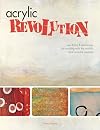
This book is a terrific compendium of techniques and information on Golden acrylic paints and mediums. The author is a part of Golden's "practicing artist's" program. Some of the techniques in her book are described elsewhere by other authors (e.g., using sprayed water or alcohol to create texture, mixing interference colors with black to increase the effect), but as a fan of Golden acrylics, I learned much useful information which I put to immediate use in my painting. For example, I used show more Reyner's advice on mixing fluid metallic acrylics (stainless steel and micaceous iron oxide) with "modern" transparent colors (see p . 110) to solve a value and texture problem in my recent work "Tiles Series V, No. 1" I also used Reyner's suggestion to apply several isolation coats to create depth and luster - she advises using soft gel mixed 3:2 with water (p. 105, 113). In addition to brushing this on, Reyner gives suggestions for pouring (pp. 115, 116) and spraying (p. 74) an isolation or final coat of clear medium. I used such isolation coats in the aforementioned "Tiles" work, as well as two recent landscapes (see e.g. the work on my home page). Some of my additional favorites from the book are:
• I often use tape to create edges In my "Tiles" series. Prior to reading Reyner's book I had used matte gel medium to create a clean edge, but this doesn't work well with applications where I am trying to achieve an overall glossy finish. Reyner suggests using GAC 500 when taping edges (p. 82).
• Reyner also suggests ways to make the surface smooth and "brushless" (p. 92) which is always an issue with isolation coats and final varnishes.
Some of the tricks I haven't yet tried but intend to use:
• Using clear tar gel in various interesting ways (pp. 93, 111 - 112)
• Using Golden polymer medium as a resist (p. 41)
• Using crackle paste to create a "fresco" effect (p. 64)
• Using Golden light molding paste (instead of white paint) to tint colors (p. 96)
• To create an opaque look with transparent paint, first apply a tint of the color, then glaze the undiluted color over the tint (p. 98)
• Applying Absorbent Ground to a painting in progress to correct mistakes (p. 101)
• Applying gels to create textures on ink jet prints (p. 114)
• Using Interference acrylics mixed with traditional colors (there is also an article on this on the Daniel Smith website) - Reyner notes that the modern transparent pigments work best and that adding gloss gels increases the effect (p. 108).
Reyner includes several inspiring sample paintings (e.g., p. 41, 110, 120).My only criticism is that there are not enough illustrations for all the techniques she includes and the images of the sample art works are too small to see the detail. Overall, however, I recommend this book to anyone who is interested in experimenting with acrylic techniques and mediums. If you use Golden products, the book is a must read. You can order the book at www.nancyreyner.com/book.htm show less
• I often use tape to create edges In my "Tiles" series. Prior to reading Reyner's book I had used matte gel medium to create a clean edge, but this doesn't work well with applications where I am trying to achieve an overall glossy finish. Reyner suggests using GAC 500 when taping edges (p. 82).
• Reyner also suggests ways to make the surface smooth and "brushless" (p. 92) which is always an issue with isolation coats and final varnishes.
Some of the tricks I haven't yet tried but intend to use:
• Using clear tar gel in various interesting ways (pp. 93, 111 - 112)
• Using Golden polymer medium as a resist (p. 41)
• Using crackle paste to create a "fresco" effect (p. 64)
• Using Golden light molding paste (instead of white paint) to tint colors (p. 96)
• To create an opaque look with transparent paint, first apply a tint of the color, then glaze the undiluted color over the tint (p. 98)
• Applying Absorbent Ground to a painting in progress to correct mistakes (p. 101)
• Applying gels to create textures on ink jet prints (p. 114)
• Using Interference acrylics mixed with traditional colors (there is also an article on this on the Daniel Smith website) - Reyner notes that the modern transparent pigments work best and that adding gloss gels increases the effect (p. 108).
Reyner includes several inspiring sample paintings (e.g., p. 41, 110, 120).My only criticism is that there are not enough illustrations for all the techniques she includes and the images of the sample art works are too small to see the detail. Overall, however, I recommend this book to anyone who is interested in experimenting with acrylic techniques and mediums. If you use Golden products, the book is a must read. You can order the book at www.nancyreyner.com/book.htm show less
Acrylic Revolution: New Tricks and Techniques for Working with the World's Most Versatile Medium by Nancy Reyner
Great "guidebook" for people like me who have no art training, no idea what they're doing, and at a loss as to HOW to work with art materials. Clears up a lot of my confusion!
You May Also Like


Statistics
- Works
- 8
- Members
- 276
- Popularity
- #84,077
- Rating
- 4.1
- Reviews
- 6
- ISBNs
- 15
- Languages
- 1