
Jean Mohr (1925–2018)
Author of At the Edge of the World
About the Author
Jean Mohr was born Hans Adolf Mohr in Geneva, Switzerland on September 13, 1925. He received a degree in economics and social sciences from the University of Geneva and briefly worked in advertising. He then spent two years working with Palestinian refugees on behalf of the United Nations Relief show more and Work Agency and the International Committee of the Red Cross. He discovered photography at the age of 30 and worked taking photographs for international organizations like the Red Cross and the World Health Organization. He collaborated on several books with John Berger including A Fortunate Man: The Story of a Country Doctor, A Seventh Man, and Another Way of Telling. He collaborated with Edward W. Said on After the Last Sky: Palestinian Lives. He died of cancer on November 3, 2018 at the age of 93. (Bowker Author Biography) show less
Works by Jean Mohr
Associated Works
Tagged
Common Knowledge
- Legal name
- Mohr, Hans Adolf
- Birthdate
- 1925-09-13
- Date of death
- 2018-11-03
- Gender
- male
- Education
- University of Geneva (Economic and Social Sciences)
- Occupations
- photographer
- Nationality
- Switzerland
- Birthplace
- Geneva, Geneva, Switzerland
- Place of death
- Geneva, Switzerland
- Associated Place (for map)
- Geneva, Switzerland
Members
Reviews
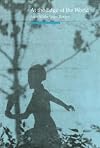
...from the Topographics series published by Reaktion Books; a collection of experimental writing about place, established under a remit to provide ‘criticism with original expressive writing, to explore the creative collision between physical space and the human mind’...
Mohr’s photo-essay begins by recounting the author’s difficult decision: to let cancer take its natural course, with minor hope of remission, or to endure an operation certain to diminish quality of life. Opting for show more the latter, and as part of his convalescing, Mohr takes to looking out at the idyllic panorama from the rooftop of the clinic. From here, what intrigues him is ‘what went on out of sight, behind the trees, close to the river. That was where mystery lay’ (p. 20). He suggests that writers, play- wrights, film-makers – in short, story-tellers – can take on such a mystery in imagery, but for himself (as a photographer), he can envisage only one solution: ‘to leave my watchtower as quickly as possible and go down to the actual spot’ (p. 20). The desire to actually enter this imagery, rather than represent it from afar is a recurring theme of the book.
His closing words, placed before an image of an empty bed frame in an anonymous and bare room, make for a rather sad resolution: ‘In Reality, one never reaches the edge of the world. One has to be satisfied with moving tirelessly from one world to another’ (p. 174). The photographs in this collection are unquestionably more powerful than their accompanying text. To flick through is to be showered with myriad possibilities, a series of collisions with the ‘memory of the stranger’. Could it be, as Baudrillard asks, ‘that all systems, all individuals, harbour a secret urge to be rid of their ideas [. . .] to transport themselves simultaneously to every point of the compass?’ Whatever the reasons ‘a dissociation of this kind can only be fatal. A thing which has lost its idea is like a man who has lost his shadow, and it must either fall under the sway of madness or perish’ (1993: 6). Unless we remind ourselves of the opening images of the book, those taken of ‘what went out of sight, behind the trees, close to the river’ (p. 20), one is inclined to read a sad, even fatal story. A story of a wounded healer, since the one shadow that can never be captured for/in its own delight is Mohr’s own. This shadow – un-kept by words – remains as that which we can never lose: a reminder of our (lacking) sense of place. It is not necess- arily adequate to point to it, or caption it, only inhabit it in such a way that something of its madness is conveyed; as is the case with Mohr’s opening images of ‘where the mystery lay’.
FULL REVIEW:
Experimental Text-image Travel Literature in Theory, Culture & Society, 2003, Vol.20, no.3, pp.127-138.
http://tcs.sagepub.com/cgi/reprint/20/3/127?maxtoshow=&HITS=10&hits=10&a... show less
Mohr’s photo-essay begins by recounting the author’s difficult decision: to let cancer take its natural course, with minor hope of remission, or to endure an operation certain to diminish quality of life. Opting for show more the latter, and as part of his convalescing, Mohr takes to looking out at the idyllic panorama from the rooftop of the clinic. From here, what intrigues him is ‘what went on out of sight, behind the trees, close to the river. That was where mystery lay’ (p. 20). He suggests that writers, play- wrights, film-makers – in short, story-tellers – can take on such a mystery in imagery, but for himself (as a photographer), he can envisage only one solution: ‘to leave my watchtower as quickly as possible and go down to the actual spot’ (p. 20). The desire to actually enter this imagery, rather than represent it from afar is a recurring theme of the book.
His closing words, placed before an image of an empty bed frame in an anonymous and bare room, make for a rather sad resolution: ‘In Reality, one never reaches the edge of the world. One has to be satisfied with moving tirelessly from one world to another’ (p. 174). The photographs in this collection are unquestionably more powerful than their accompanying text. To flick through is to be showered with myriad possibilities, a series of collisions with the ‘memory of the stranger’. Could it be, as Baudrillard asks, ‘that all systems, all individuals, harbour a secret urge to be rid of their ideas [. . .] to transport themselves simultaneously to every point of the compass?’ Whatever the reasons ‘a dissociation of this kind can only be fatal. A thing which has lost its idea is like a man who has lost his shadow, and it must either fall under the sway of madness or perish’ (1993: 6). Unless we remind ourselves of the opening images of the book, those taken of ‘what went out of sight, behind the trees, close to the river’ (p. 20), one is inclined to read a sad, even fatal story. A story of a wounded healer, since the one shadow that can never be captured for/in its own delight is Mohr’s own. This shadow – un-kept by words – remains as that which we can never lose: a reminder of our (lacking) sense of place. It is not necess- arily adequate to point to it, or caption it, only inhabit it in such a way that something of its madness is conveyed; as is the case with Mohr’s opening images of ‘where the mystery lay’.
FULL REVIEW:
Experimental Text-image Travel Literature in Theory, Culture & Society, 2003, Vol.20, no.3, pp.127-138.
http://tcs.sagepub.com/cgi/reprint/20/3/127?maxtoshow=&HITS=10&hits=10&a... show less
You May Also Like
Associated Authors
Statistics
- Works
- 6
- Also by
- 4
- Members
- 32
- Popularity
- #430,837
- Rating
- 3.9
- Reviews
- 1
- ISBNs
- 5
- Languages
- 2