

Evelina Santangelo
Author of Senzaterra
Works by Evelina Santangelo
Associated Works
Tagged
Common Knowledge
- Gender
- female
Members
Reviews
Gothic and horror literature has long been derided as a mere purveyor of chills and thrills. While there is nothing intrinsically wrong with literature providing “cheap thrills”, the genre has, from inception, been more than that. More often than not, it has also reflected (and reflected upon) social and political concerns. One thinks, for example, of Godwin’s radical Caleb Williams, or the urban Gothic of the 19th Century with its portrayal of the misery of the lower classes. In our show more times, the proliferation of feminist Gothic is a continuation of this socially and politically aware tradition, as are other contemporary works, such as Stephen Graham Johnson’s The Only Good Indians, Ahmed Saadawi’s Frankenstein in Baghdad with its ghoulish portrayal of Iraq and the Peruvian horror of Red April by Santiago Roncagliolo.
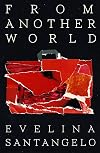
From Another World, Ruth Clarke’s English translation of “Da Un Altro Mondo” by Sicilian author Evelina Santangelo fits well in this company. Even though it is not being marketed primarily as a “Gothic novel”, its central premise is chilling and eerie. Set alternately in Brussels and different parts of Italy, Santangelo’s novel imagines a Sicily haunted by apparitions of migrant children, who intermingle with local students, only to disappear, unaccounted for, whenever one tries to pin them down. I call them “apparitions”, but their nature remains vague and enigmatic. One could interpret them as ghosts of youths who failed to complete the deadly sea-journey towards Europe, or spectres of migrant children who died in accidents while working on the black market. Ultimately, however, these mysterious “visions” are possibly best understood as a metaphor – African migrants in Europe are, more often than not, stateless and without an official identity. Like spectral creatures, they are there-and-not-there. At the same time, the panic created by these “apparitions” reflects the often unfounded “fear of the other” which serves to fuel racist rhetoric.
Around this central idea, Santangelo weaves a number of related sub-plots – for instance, the story of immigrant Khaled who, after his younger brother dies in an accident in Brussels, starts an arduous voyage to return his remains home. Or the tale of Karolina, who searches for her missing son, unsure whether he’s joined a far-right group or, on the contrary, whether he’s been radicalised by an Islamist cell in Brussels (a timely reminder that all extremists are, ultimately, of the same ilk).
From a narrative perspective, I found From Another World disappointing because its various plot threads never really coalesce, and seem to deliberately avoid closure. This notwithstanding, the novel still leaves an impact because of the powerful imagery at its heart, and because of the way in which it successfully harnesses Gothic tropes to highlight a topical and urgent subject. I feel that this is one of those books which some will find wanting, but which can just as easily become a timely “cult novel”.
3.5*
https://endsoftheword.blogspot.com/2021/09/from-another-world-by-evelina-santang... show less
From Another World, Ruth Clarke’s English translation of “Da Un Altro Mondo” by Sicilian author Evelina Santangelo fits well in this company. Even though it is not being marketed primarily as a “Gothic novel”, its central premise is chilling and eerie. Set alternately in Brussels and different parts of Italy, Santangelo’s novel imagines a Sicily haunted by apparitions of migrant children, who intermingle with local students, only to disappear, unaccounted for, whenever one tries to pin them down. I call them “apparitions”, but their nature remains vague and enigmatic. One could interpret them as ghosts of youths who failed to complete the deadly sea-journey towards Europe, or spectres of migrant children who died in accidents while working on the black market. Ultimately, however, these mysterious “visions” are possibly best understood as a metaphor – African migrants in Europe are, more often than not, stateless and without an official identity. Like spectral creatures, they are there-and-not-there. At the same time, the panic created by these “apparitions” reflects the often unfounded “fear of the other” which serves to fuel racist rhetoric.
Around this central idea, Santangelo weaves a number of related sub-plots – for instance, the story of immigrant Khaled who, after his younger brother dies in an accident in Brussels, starts an arduous voyage to return his remains home. Or the tale of Karolina, who searches for her missing son, unsure whether he’s joined a far-right group or, on the contrary, whether he’s been radicalised by an Islamist cell in Brussels (a timely reminder that all extremists are, ultimately, of the same ilk).
From a narrative perspective, I found From Another World disappointing because its various plot threads never really coalesce, and seem to deliberately avoid closure. This notwithstanding, the novel still leaves an impact because of the powerful imagery at its heart, and because of the way in which it successfully harnesses Gothic tropes to highlight a topical and urgent subject. I feel that this is one of those books which some will find wanting, but which can just as easily become a timely “cult novel”.
3.5*
https://endsoftheword.blogspot.com/2021/09/from-another-world-by-evelina-santang... show less
Gothic and horror literature has long been derided as a mere purveyor of chills and thrills. While there is nothing intrinsically wrong with literature providing “cheap thrills”, the genre has, from inception, been more than that. More often than not, it has also reflected (and reflected upon) social and political concerns. One thinks, for example, of Godwin’s radical Caleb Williams, or the urban Gothic of the 19th Century with its portrayal of the misery of the lower classes. In our show more times, the proliferation of feminist Gothic is a continuation of this socially and politically aware tradition, as are other contemporary works, such as Stephen Graham Johnson’s The Only Good Indians, Ahmed Saadawi’s Frankenstein in Baghdad with its ghoulish portrayal of Iraq and the Peruvian horror of Red April by Santiago Roncagliolo.
From Another World, Ruth Clarke’s English translation of “Da Un Altro Mondo” by Sicilian author Evelina Santangelo fits well in this company. Even though it is not being marketed primarily as a “Gothic novel”, its central premise is chilling and eerie. Set alternately in Brussels and different parts of Italy, Santangelo’s novel imagines a Sicily haunted by apparitions of migrant children, who intermingle with local students, only to disappear, unaccounted for, whenever one tries to pin them down. I call them “apparitions”, but their nature remains vague and enigmatic. One could interpret them as ghosts of youths who failed to complete the deadly sea-journey towards Europe, or spectres of migrant children who died in accidents while working on the black market. Ultimately, however, these mysterious “visions” are possibly best understood as a metaphor – African migrants in Europe are, more often than not, stateless and without an official identity. Like spectral creatures, they are there-and-not-there. At the same time, the panic created by these “apparitions” reflects the often unfounded “fear of the other” which serves to fuel racist rhetoric.
Around this central idea, Santangelo weaves a number of related sub-plots – for instance, the story of immigrant Khaled who, after his younger brother dies in an accident in Brussels, starts an arduous voyage to return his remains home. Or the tale of Karolina, who searches for her missing son, unsure whether he’s joined a far-right group or, on the contrary, whether he’s been radicalised by an Islamist cell in Brussels (a timely reminder that all extremists are, ultimately, of the same ilk).
From a narrative perspective, I found From Another World disappointing because its various plot threads never really coalesce, and seem to deliberately avoid closure. This notwithstanding, the novel still leaves an impact because of the powerful imagery at its heart, and because of the way in which it successfully harnesses Gothic tropes to highlight a topical and urgent subject. I feel that this is one of those books which some will find wanting, but which can just as easily become a timely “cult novel”.
3.5*
https://endsoftheword.blogspot.com/2021/09/from-another-world-by-evelina-santang... show less
From Another World, Ruth Clarke’s English translation of “Da Un Altro Mondo” by Sicilian author Evelina Santangelo fits well in this company. Even though it is not being marketed primarily as a “Gothic novel”, its central premise is chilling and eerie. Set alternately in Brussels and different parts of Italy, Santangelo’s novel imagines a Sicily haunted by apparitions of migrant children, who intermingle with local students, only to disappear, unaccounted for, whenever one tries to pin them down. I call them “apparitions”, but their nature remains vague and enigmatic. One could interpret them as ghosts of youths who failed to complete the deadly sea-journey towards Europe, or spectres of migrant children who died in accidents while working on the black market. Ultimately, however, these mysterious “visions” are possibly best understood as a metaphor – African migrants in Europe are, more often than not, stateless and without an official identity. Like spectral creatures, they are there-and-not-there. At the same time, the panic created by these “apparitions” reflects the often unfounded “fear of the other” which serves to fuel racist rhetoric.
Around this central idea, Santangelo weaves a number of related sub-plots – for instance, the story of immigrant Khaled who, after his younger brother dies in an accident in Brussels, starts an arduous voyage to return his remains home. Or the tale of Karolina, who searches for her missing son, unsure whether he’s joined a far-right group or, on the contrary, whether he’s been radicalised by an Islamist cell in Brussels (a timely reminder that all extremists are, ultimately, of the same ilk).
From a narrative perspective, I found From Another World disappointing because its various plot threads never really coalesce, and seem to deliberately avoid closure. This notwithstanding, the novel still leaves an impact because of the powerful imagery at its heart, and because of the way in which it successfully harnesses Gothic tropes to highlight a topical and urgent subject. I feel that this is one of those books which some will find wanting, but which can just as easily become a timely “cult novel”.
3.5*
https://endsoftheword.blogspot.com/2021/09/from-another-world-by-evelina-santang... show less
Il mare, con la sua vastità infinita e il suo mistero profondo, ha sempre esercitato un fascino irresistibile sugli scrittori di ogni epoca. È un luogo carico di emozioni, simbolismo e significato, che ha ispirato innumerevoli opere letterarie. Il sentimento del mare è stato descritto in modo magistrale da autori di diverse culture e periodi, offrendo una ricchezza di prospettive e interpretazioni.
In molte opere, il mare è rappresentato come uno specchio dell'anima umana, riflettendo le show more emozioni e i conflitti interiori dei personaggi. È un luogo di introspezione e di confronto con l'infinito, dove i protagonisti si confrontano con la loro fragilità e cercano risposte alle domande esistenziali.
Un esempio classico di questa rappresentazione è presente nel romanzo "Moby Dick" di Herman Melville. Il mare assume la forma di una forza oscura e insondabile, che richiama il capitano Ahab in un'ossessione distruttiva. Il mare diventa un simbolo della lotta tra l'uomo e la natura, tra la ragione e la follia, tra la ricerca di senso e l'inesorabile destino.
Altri autori hanno invece esaltato il mare come fonte di ispirazione, gioia e libertà. Ernest Hemingway, ad esempio, ha descritto il mare come uno spazio di avventura e di sfida nella sua opera "Il vecchio e il mare". Il vecchio pescatore Santiago si immerge nelle profondità dell'oceano per catturare un enorme pesce, combattendo contro la solitudine e gli ostacoli della vita. Il mare diventa un simbolo di coraggio, resilienza e speranza.
La letteratura romantica, in particolare, ha spesso celebrato il mare come un luogo di bellezza e di passione. Lord Byron, con il suo poema "Le Corsaire", dipinge un quadro affascinante di mari tempestosi, di pirati audaci e di amori appassionati. Il mare diventa un'ambientazione romantica e suggestiva, in cui si svolgono avventure epiche e si esplorano i confini dell'amore e della libertà.
Ma il mare non è solo un luogo di conflitti e avventure. È anche una fonte di quiete e serenità, capace di lenire le ferite dell'anima. In molte opere, la sua immensità e la sua bellezza hanno un effetto terapeutico sui personaggi. Virginia Woolf, nella sua opera "Al faro", descrive il mare come un elemento di guarigione e di riconciliazione. I personaggi si ritrovano sulla costa, circondati dall'abbraccio dell'oceano, e trovano una tregua dai tormenti interiori.
In conclusione, il sentimento del mare nella letteratura è un tema ricco e multiforme, capace di evocare una vasta gamma di emozioni e di significati. Dal suo potere distruttivo alla sua bellezza ispiratrice, il mare rappresenta la complessità della vita umana e le sfide che dobbiamo affrontare. È un simbolo di speranza, avventura, libertà e introspezione, che continua a risuonare nell'immaginario letterario, trasmettendo emozioni profonde e universali ai lettori di ogni tempo.
----
Non posso ancora esprimere il mio giudizio su questo libro, lo sto leggendo. Ho voluto soltanto anticipare qualche idea che ho sull'argomento. Evelina Santangelo personalizza la sua esperienza in maniera davvero straordinaria .... show less
In molte opere, il mare è rappresentato come uno specchio dell'anima umana, riflettendo le show more emozioni e i conflitti interiori dei personaggi. È un luogo di introspezione e di confronto con l'infinito, dove i protagonisti si confrontano con la loro fragilità e cercano risposte alle domande esistenziali.
Un esempio classico di questa rappresentazione è presente nel romanzo "Moby Dick" di Herman Melville. Il mare assume la forma di una forza oscura e insondabile, che richiama il capitano Ahab in un'ossessione distruttiva. Il mare diventa un simbolo della lotta tra l'uomo e la natura, tra la ragione e la follia, tra la ricerca di senso e l'inesorabile destino.
Altri autori hanno invece esaltato il mare come fonte di ispirazione, gioia e libertà. Ernest Hemingway, ad esempio, ha descritto il mare come uno spazio di avventura e di sfida nella sua opera "Il vecchio e il mare". Il vecchio pescatore Santiago si immerge nelle profondità dell'oceano per catturare un enorme pesce, combattendo contro la solitudine e gli ostacoli della vita. Il mare diventa un simbolo di coraggio, resilienza e speranza.
La letteratura romantica, in particolare, ha spesso celebrato il mare come un luogo di bellezza e di passione. Lord Byron, con il suo poema "Le Corsaire", dipinge un quadro affascinante di mari tempestosi, di pirati audaci e di amori appassionati. Il mare diventa un'ambientazione romantica e suggestiva, in cui si svolgono avventure epiche e si esplorano i confini dell'amore e della libertà.
Ma il mare non è solo un luogo di conflitti e avventure. È anche una fonte di quiete e serenità, capace di lenire le ferite dell'anima. In molte opere, la sua immensità e la sua bellezza hanno un effetto terapeutico sui personaggi. Virginia Woolf, nella sua opera "Al faro", descrive il mare come un elemento di guarigione e di riconciliazione. I personaggi si ritrovano sulla costa, circondati dall'abbraccio dell'oceano, e trovano una tregua dai tormenti interiori.
In conclusione, il sentimento del mare nella letteratura è un tema ricco e multiforme, capace di evocare una vasta gamma di emozioni e di significati. Dal suo potere distruttivo alla sua bellezza ispiratrice, il mare rappresenta la complessità della vita umana e le sfide che dobbiamo affrontare. È un simbolo di speranza, avventura, libertà e introspezione, che continua a risuonare nell'immaginario letterario, trasmettendo emozioni profonde e universali ai lettori di ogni tempo.
----
Non posso ancora esprimere il mio giudizio su questo libro, lo sto leggendo. Ho voluto soltanto anticipare qualche idea che ho sull'argomento. Evelina Santangelo personalizza la sua esperienza in maniera davvero straordinaria .... show less
Aug 13, 2023Italian
You May Also Like
Associated Authors
Statistics
- Works
- 9
- Also by
- 2
- Members
- 35
- Popularity
- #405,583
- Rating
- 3.4
- Reviews
- 3
- ISBNs
- 10
- Languages
- 1