
Hristo Kyuchukov
Author of My Name Was Hussein
About the Author
Image credit: By Hkyuchukov - Own work, CC BY-SA 4.0, https://commons.wikimedia.org/w/index.php?curid=49189127
Works by Hristo Kyuchukov
Tagged
Common Knowledge
- Legal name
- Kyuchukov, Hristo Slavov
Кючуков, Христо Славов - Other names
- Kyuchukov, Christo
- Birthdate
- 1962-07-19
- Gender
- male
- Education
- University of Amsterdam (Ph.D.) (general linguistics (psycholinguistics) (1995)
- Occupations
- professor of social psychology and applied linguistics
Professor of General Linguistics (Psycholinguistics) - Organizations
- University of Shumen
University of Veliko Tarnovo
Constantine the Philosopher University, Nitra
St. Elizabeth University, Bratislava
University of Silesia
Matej Bel University, Banska Bystrica (show all 8)
"Diversity" Balkan Foundation for Cross-cultural education and understanding
Institute of Educational Policy at Open Society Institute-Budapest - Awards and honors
- Academician of the International Academy of Sciences for Teacher Training, Moscow (MANPO) (2014)
- Short biography
- Prof. Kyuchukov is a Bulgarian Rom. His research interests are in the field of bilingualism, education of Roma and Turkish children in Europe, language acquisition, psycholinguistics and sociolinguistics, languages in contact, Roma Holocaust and Antigypsyism in Europe. His linguistic research are on Romani, Balkan Turkish, Gagauz and Tatar languages in Bulgaria, and on Bulgarian, Slovak, Russian and German languages.
Kyuchukov introduced the Romani language education in Bulgaria to primary and secondary school children at the beginning of the 1990s, and also introduced new University programs connected to Romani language education at University level. He was responsible for development of educational strategies for Roma and minority children education in Central and East European countries. - Nationality
- Bulgaria
- Birthplace
- Provadia, Varna, Bulgaria
- Associated Place (for map)
- Varna, Bulgaria
Members
Reviews
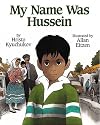
I enjoyed this book greatly, and think that it would be a wonderful exposure for students into the real world stories of children growing up in warring areas. The main character is framed as a very relatable little boy, growing up in a culture that is different from that of Americans, but not disconnected in any way, discussing holiday celebrations and love for family members. Then, life changes drastically for the little boy when soldiers invade his town and begin implementing procedures to show more wipe away his culture. The reader experiences this sharp twist along with the character, with the sentences “Then one day everything changed. The army came with tanks, cannons, guns, and dogs” and a sudden darkening of the illustrations on the page. This contrast was a choice that created a very effective reaction while reading.
The author, Hristo Kyuchukov, chose to focus on how the infiltration of soldiers affected the little boy as an individual, which I believe will allow young readers to more fully connect with the message. Kyuchukov created a message for his readers: this is a story that happens to real people, not just characters. A tool he used to do this was the use of a direct question on the last page of the book, “What would you call me? My name was Hussain”. This powerful challenge to the reader makes them consider what they would do, and serves as a tool to place the reader in both the shoes of the main character and of the other characters of the story. show less
The author, Hristo Kyuchukov, chose to focus on how the infiltration of soldiers affected the little boy as an individual, which I believe will allow young readers to more fully connect with the message. Kyuchukov created a message for his readers: this is a story that happens to real people, not just characters. A tool he used to do this was the use of a direct question on the last page of the book, “What would you call me? My name was Hussain”. This powerful challenge to the reader makes them consider what they would do, and serves as a tool to place the reader in both the shoes of the main character and of the other characters of the story. show less
This story made me feel every emotion - both heartwarming and heartbreaking. We meet Hussein, a little boy who is of the Muslim faith and very proud of his religion and culture. He shares many traditions with his family and explains the celebration of Ramadan through his eyes as a child. However, after WW2 when communist ruling took over and made life extremely difficult for minorities in other countries, he also showed all the ways he suffered because of his faith. He and his father were no show more longer allowed to pray at the mosque, to visit their grandparents for Ramadan, and he felt the fear through his parents. He and his family were forced to change their names to Christian names. Hussein became Harry, but did feel like Harry and did not know him. At home, his parents still called him by his childhood nickname. This story stuck with me, I wish it had been longer so that there could have been a happier ending. However, I do not believe that was the purpose it was written for. show less
I loved this book for a few reasons. First, I liked how the author chose to have the syntax and narration of the book mimic what a child would sound like. It was from Hussein’s perspective, and it used some of the language a child of his age would use. This included short and simple sentences with little to no adjectives or figurative language. For example, Hussein says, “I love my grandparents. They are happy when they see me”. This captured my attention and it made more of an impact show more as I truly imagined a child going through this hardship.
I also enjoyed how the author highlighted the stark contrast of Hussein’s life before and after the police came to his village. In the beginning a positive connotation was evident, “They hug me and hold me on their laps…they give me candies that smell nice, like roses”. The illustrations also seemed to be brighter in this portion of the story as well. Towards the end, Hussein takes on a darker tone, “My little brother was crying, he wanted a new shirt”. This was after the communist police came in and began restricting the people’s freedoms. I appreciated this contrast as it was sudden and it further highlighted the oppression of the people.
The moral of this story is that there is a lot of power behind one’s name. Someone can take your freedom away, but they can never truly take your name and identity away with it. Once the communists took over the village, Hussein was forced to change his name to a more “Christian” name. However, he stood against this oppression and claimed that his name is still what it always has been, Hussein. show less
I also enjoyed how the author highlighted the stark contrast of Hussein’s life before and after the police came to his village. In the beginning a positive connotation was evident, “They hug me and hold me on their laps…they give me candies that smell nice, like roses”. The illustrations also seemed to be brighter in this portion of the story as well. Towards the end, Hussein takes on a darker tone, “My little brother was crying, he wanted a new shirt”. This was after the communist police came in and began restricting the people’s freedoms. I appreciated this contrast as it was sudden and it further highlighted the oppression of the people.
The moral of this story is that there is a lot of power behind one’s name. Someone can take your freedom away, but they can never truly take your name and identity away with it. Once the communists took over the village, Hussein was forced to change his name to a more “Christian” name. However, he stood against this oppression and claimed that his name is still what it always has been, Hussein. show less
I gave this book 5 stars because of the reaction it gave my children. They just couldn’t believe a 9 year old boy would be forced to change his name. I asked them how that would make them feel, if they had to change their names. They replied with “Weird” and “Confused.” My son noticed that one illustration showed soldiers refusing Muslims into their mosques, which lead us into a discussion of what a mosque, a temple, a synagogue, and a church is. It was a relatable story allowing show more my children to feel empathy for the main character as he and his family are discriminated against. show less
Awards


You May Also Like
Associated Authors
Statistics
- Works
- 4
- Members
- 131
- Popularity
- #154,466
- Rating
- 4.3
- Reviews
- 34
- ISBNs
- 7