
T. R. Napper
Author of 36 Streets
About the Author
Works by T. R. Napper
The Line 1 copy
Flame Trees 1 copy
A Strange Loop {short story} 1 copy
Grimdark Magazine Issue #36 1 copy
Grimdark Magazine Issue #45 1 copy
Grimdark Magazine Issue #45 1 copy
36 Streets 1 copy
Twelve Minutes To Vinh Quang 1 copy
Associated Works
L. Ron Hubbard Presents Writers of the Future, Volume 31 (2015) — Contributor — 79 copies, 13 reviews
The Magazine of Fantasy and Science Fiction May/June 2023, Vol. 144, Nos. 5 & 6 — Contributor — 5 copies
Tagged
Common Knowledge
- Birthdate
- 20th century
- Gender
- male
- Nationality
- Australia
- Associated Place (for map)
- Australia
Members
Reviews
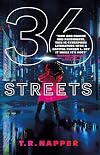
T.R. Napper’s 36 Streets is a gritty, violent, neo-noir story with compelling characters, high-stakes action, and a fascinating, cyberpunk look at near-future Hanoi.
Lin Vu is an enforcer and investigator in crime lord Bao Nguyen’s organization, patrolling the 36 Streets neighborhood in a Chinese-occupied, near future, wartorn Vietnam. While Vu is Vietnamese by birth, she was raised in Australia, painting her as an outcast in either place.
Vu’s clearly had a hard life, even by 36 Streets show more standards. Between doing her boss’s dirty work and being groomed by him to eventually take over the gang, I’m not surprised. Napper’s Hanoi is a marvel of cyberpunk inventiveness, reminding me that the genre still has a lot of life. 36 Streets is more body horror than corporate hacking, though. Expect a lot of graphic violence and body modding. Napper presents Vu as an archetypal antihero, more concerned with the outcomes than who happens to get hurt along the way there. The only exception to Vu’s hard edge would possibly be her twin sister, and even that’s debatable. But for anyone else, including Vu’s girlfriend, it’s open season.
Setting the story in a Chinese-occupied Vietnam was a nice touch, lending the near-future tale a realistic, day after tomorrow vibe. Napper’s descriptions of future warfare are chilling, as they should be. Several quirks of the writing, including AR translations of non-English languages, aptly helped Napper avoid the pitfalls inherent in multilingual writing.
This book contains mentions of physical and mental abuse, loss of family members, and descriptions of war, violence, rape, and death. show less
Lin Vu is an enforcer and investigator in crime lord Bao Nguyen’s organization, patrolling the 36 Streets neighborhood in a Chinese-occupied, near future, wartorn Vietnam. While Vu is Vietnamese by birth, she was raised in Australia, painting her as an outcast in either place.
Vu’s clearly had a hard life, even by 36 Streets show more standards. Between doing her boss’s dirty work and being groomed by him to eventually take over the gang, I’m not surprised. Napper’s Hanoi is a marvel of cyberpunk inventiveness, reminding me that the genre still has a lot of life. 36 Streets is more body horror than corporate hacking, though. Expect a lot of graphic violence and body modding. Napper presents Vu as an archetypal antihero, more concerned with the outcomes than who happens to get hurt along the way there. The only exception to Vu’s hard edge would possibly be her twin sister, and even that’s debatable. But for anyone else, including Vu’s girlfriend, it’s open season.
Setting the story in a Chinese-occupied Vietnam was a nice touch, lending the near-future tale a realistic, day after tomorrow vibe. Napper’s descriptions of future warfare are chilling, as they should be. Several quirks of the writing, including AR translations of non-English languages, aptly helped Napper avoid the pitfalls inherent in multilingual writing.
This book contains mentions of physical and mental abuse, loss of family members, and descriptions of war, violence, rape, and death. show less
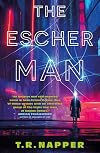
This one checks all the boxes for me when it comes to noir cyberpunk novel.
Endel "Endgame" Ebbinghouse is cold-blooded enforcer for Macau crime Syndicate led by mysterious Mr. Long. What makes Endgame's job specific is the fact that he gets his memory wiped after every action thus becoming impenetrable to any police investigation. And Endgame is OK with this until something starts to nag at him - if he is such a man of violence how is it possible he can have a relationship with his estranged show more wife and kids of the sorts he has? His wife wants to talk to him, she wants his children to see him - how is this possible if he is such a horror of a man? So Endgame starts the investigation, of course he does not disclose it to the rest of the syndicate and very soon he finds himself in the middle of the maze - not knowing how he got there and where is he going towards. People around him seem - you know sort-of-a - to know more, but how to trust them since they are in the same business as Endgame?
Author manages to describe this - vertigo? - feeling our hero has of not being able to figure out if he is in control or just driven like a drone very vividly. How can one decide to forego all his memories, what makes the person the person one is. Sum of experiences, views on life ..... everything, abandoned for the services to Syndicate. Endgame justifies this by need to be free of incriminating evidence, and also as a means of protecting his family, but is that truly the case? Or is it just for Syndicate? What Endgame discovers just keeps growing and growing and escalating, until the end (of course, all knowledge is bought by blood, as in Endgame's blood).
From Macau, Southern China, to Northern Vietnam - Endgame goes through the motions and comes across people that shed ever more light on his circumstances. He is not super capable spy hero, nor someone that can fight through insurmountable odds - he gets caught, gets kicked around but he manages to pick himself up and move on. And when he comes across something he cannot understand he applies his trickery and aggression to create such mayhem that he forces all the filth to pop up. Now, in most cases this bites him in his a*** but again it is not like Endgame is subtle to begin with.
He is very much like Takeshi Kovacs, if Kovacs would actually decide to end his life as mortal. Reason why Endgame is not such a complete cynic is because he is living normal life span, while Kovacs' stack allows him to live for centuries [and after a while see rest of humanity in not so positive light]. But if there was ever a SF character that got close to Kovacs (of course, I can only relate to my book-shelf) then it is Endgame.
Supporting characters are also superb, from various enforcers, mercenaries, to mysterious Mr. Long, Chrome, Jain and kids, not to forget Axe, and Ommissioners (memory doctors), specially the one in the experimental village in Vietnam.
Action scenes, as a matter entire prose is so lean and full of energy. Only reason it took me a week to go through it was because of work (argh :)) Whenever I would find some free time and sit down I would go through chapters in minutes.
Theme of the book is of course corporatism and memory manipulation. The former is usually inseparable from the genre but latter is what gave me creeps. imagine being able to control the thoughts of masses? Being able to implant false memories or ideas to support this or that. It is wet dream of any foreign policy (and lately, as events show from last few years, of internal policy structures too). This is in my opinion the ultimate nightmare. Constant relaxation of the brain power and reliance on external sources as sources of truth makes people pliable to this type of exploitation. Horror. While Inception comes to mind when one thinks about this subject, The Escher Man presents this approach to mind control on a more industrial level, and thus more terrifying.
And finally what I especially liked - and which is something so needed in this genre (I am starting to like this word :)) - is ending. Pure gold.
If you are looking for a book that is baby of Hardwired and Altered Carbon - look no further. If you are looking for a good crime, action adventure - look no further. If you want to read perfect Cyberpunk novel - look no further.
Highly, highly recommended. One of the best books I have read so far. show less
Endel "Endgame" Ebbinghouse is cold-blooded enforcer for Macau crime Syndicate led by mysterious Mr. Long. What makes Endgame's job specific is the fact that he gets his memory wiped after every action thus becoming impenetrable to any police investigation. And Endgame is OK with this until something starts to nag at him - if he is such a man of violence how is it possible he can have a relationship with his estranged show more wife and kids of the sorts he has? His wife wants to talk to him, she wants his children to see him - how is this possible if he is such a horror of a man? So Endgame starts the investigation, of course he does not disclose it to the rest of the syndicate and very soon he finds himself in the middle of the maze - not knowing how he got there and where is he going towards. People around him seem - you know sort-of-a - to know more, but how to trust them since they are in the same business as Endgame?
Author manages to describe this - vertigo? - feeling our hero has of not being able to figure out if he is in control or just driven like a drone very vividly. How can one decide to forego all his memories, what makes the person the person one is. Sum of experiences, views on life ..... everything, abandoned for the services to Syndicate. Endgame justifies this by need to be free of incriminating evidence, and also as a means of protecting his family, but is that truly the case? Or is it just for Syndicate? What Endgame discovers just keeps growing and growing and escalating, until the end (of course, all knowledge is bought by blood, as in Endgame's blood).
From Macau, Southern China, to Northern Vietnam - Endgame goes through the motions and comes across people that shed ever more light on his circumstances. He is not super capable spy hero, nor someone that can fight through insurmountable odds - he gets caught, gets kicked around but he manages to pick himself up and move on. And when he comes across something he cannot understand he applies his trickery and aggression to create such mayhem that he forces all the filth to pop up. Now, in most cases this bites him in his a*** but again it is not like Endgame is subtle to begin with.
He is very much like Takeshi Kovacs, if Kovacs would actually decide to end his life as mortal. Reason why Endgame is not such a complete cynic is because he is living normal life span, while Kovacs' stack allows him to live for centuries [and after a while see rest of humanity in not so positive light]. But if there was ever a SF character that got close to Kovacs (of course, I can only relate to my book-shelf) then it is Endgame.
Supporting characters are also superb, from various enforcers, mercenaries, to mysterious Mr. Long, Chrome, Jain and kids, not to forget Axe, and Ommissioners (memory doctors), specially the one in the experimental village in Vietnam.
Action scenes, as a matter entire prose is so lean and full of energy. Only reason it took me a week to go through it was because of work (argh :)) Whenever I would find some free time and sit down I would go through chapters in minutes.
Theme of the book is of course corporatism and memory manipulation. The former is usually inseparable from the genre but latter is what gave me creeps. imagine being able to control the thoughts of masses? Being able to implant false memories or ideas to support this or that. It is wet dream of any foreign policy (and lately, as events show from last few years, of internal policy structures too). This is in my opinion the ultimate nightmare. Constant relaxation of the brain power and reliance on external sources as sources of truth makes people pliable to this type of exploitation. Horror. While Inception comes to mind when one thinks about this subject, The Escher Man presents this approach to mind control on a more industrial level, and thus more terrifying.
And finally what I especially liked - and which is something so needed in this genre (I am starting to like this word :)) - is ending. Pure gold.
If you are looking for a book that is baby of Hardwired and Altered Carbon - look no further. If you are looking for a good crime, action adventure - look no further. If you want to read perfect Cyberpunk novel - look no further.
Highly, highly recommended. One of the best books I have read so far. show less
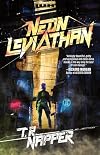
I have to say Australian writers always surprise me in a very positive way. Works from down-under are not that frequent in my area (and sometimes are very much of local character and dont reachn world wide readers) but what gets published to the rest of the world (indie publishing or one of the known publishing houses) are truly gems.
While advertised as cyberpunk, all stories collected here would be more precisely be identified as stories from Twilight Zone set in so distant future (an in show more some aspects being extremely contemporary).
Backdrop of this collection is world in the last decades of 21st and first decades of 22nd century. Location - Australian-Asian area, more concretely Australia and [as far as I can see] Vietnam. It is time of war between China and ASEAN (with Vietnam suffering the brunt of the war and getting hit by pretty nasty nano and biological combat drones). China seems to be a victor of this pan-Asian-Indo-Pacific war (considering the hints given throughout the stories) and all other major powers ended up as either pulverized or totally pushed aside to political and military irrelevance. It is time of utter disaster and collapse, corporations control all the data and influence the normal every day life while remaining states/coalitions apply very disturbing (and again, rather contemporary) social means of control (very similar to West's modern approach to control of media and constant fight against "disinformation" with ostracizing everyone thinking differently and of course Chinese Great Firewall and terrifying social points system).
Why do I say these are stories from the Twilight Zone? Well, while technology is present it is not carrier of the story - you do not see net plugs, "surfing" the virtual worlds, human machine symbiosis nor cyborgs. Story is about ordinary people (or in some case extraordinary people) in extraordinary situations. Technology is there to show how use of technology gave birth to the dystopia but meat of every story are people, men and women and kids trying to survive the complete social collapse, trying to somehow provide for their families. And this is second thing that plays the role in this collection - family. Basic unit of human species finally returns and for me this was truly refreshing.
Stories are very diverse - from the battlefields of Asia, criminal underground, halls of overpowering corporations, Orwellian state control offices in form of Adjustment and Harmony departments and people trying to survive oligarchs playing people for money in pit fights or using them as fodder in dirty industries (complete fall back to abysmal conditions of miners and heavy industry workers before 20th century). Besides these, there are few stories that are true Twilight Zone stories that have nothing with the cyberpunk genre at all (E.T. betting industry was truly weird story :) ).
Stories are all very .... depressive and very few even have a hint of [some sort] of happy ending because that happy ending always comes at cost of something else - human decency or human lives - and nobody gets away clean (short story of organization in Australia organizing and paying for moving families from war torn Vietnam was excellent - weapon purchases go without problems but saving people, that is something that is under constant sanctions and prevention).
Philip K. Dick was obviously an inspiration (as author acknowledges in the afterword of this collection) and it shows in characters never-ending fight to keep their own personality, sanity and humanity intact by holding to the memories and constantly fighting to live in reality. Opposite to this we have constant efforts of the opposing forces (corporations, state social and media control/censorship) to warp these very memories in various ways - from buying them out, playing on persons complete disorientation and inability to discern reality from fantasy under duress so that nefarious goals are reached, controlling the main media and publishing the disinformation to break the opposition to alternating actual memories to fit the narrative using clandestine or overt ways and in that way placing people as unwilling undercover agents, using them and then discarding them. Best examples of these mind-altering stories are story of Klara from Adjustment Bureau of Australia and Eromanga tank crew story (this one was sicko in the twist, such a 6th Sense moment).
All in all very disturbing future but future all our progressive and freedom loving leaders lead us to. And people follow like sheep. Unfortunately. You know how they say - road to hell is paved by good intentions.
Very down-to-earthiness of the stories might cool down people to observe these stories as warnings and not something to aspire to (or consider it something unchangeable and let one self to it). Because believe me, we do not want to live in this world.
Highly recommended. show less
While advertised as cyberpunk, all stories collected here would be more precisely be identified as stories from Twilight Zone set in so distant future (an in show more some aspects being extremely contemporary).
Backdrop of this collection is world in the last decades of 21st and first decades of 22nd century. Location - Australian-Asian area, more concretely Australia and [as far as I can see] Vietnam. It is time of war between China and ASEAN (with Vietnam suffering the brunt of the war and getting hit by pretty nasty nano and biological combat drones). China seems to be a victor of this pan-Asian-Indo-Pacific war (considering the hints given throughout the stories) and all other major powers ended up as either pulverized or totally pushed aside to political and military irrelevance. It is time of utter disaster and collapse, corporations control all the data and influence the normal every day life while remaining states/coalitions apply very disturbing (and again, rather contemporary) social means of control (very similar to West's modern approach to control of media and constant fight against "disinformation" with ostracizing everyone thinking differently and of course Chinese Great Firewall and terrifying social points system).
Why do I say these are stories from the Twilight Zone? Well, while technology is present it is not carrier of the story - you do not see net plugs, "surfing" the virtual worlds, human machine symbiosis nor cyborgs. Story is about ordinary people (or in some case extraordinary people) in extraordinary situations. Technology is there to show how use of technology gave birth to the dystopia but meat of every story are people, men and women and kids trying to survive the complete social collapse, trying to somehow provide for their families. And this is second thing that plays the role in this collection - family. Basic unit of human species finally returns and for me this was truly refreshing.
Stories are very diverse - from the battlefields of Asia, criminal underground, halls of overpowering corporations, Orwellian state control offices in form of Adjustment and Harmony departments and people trying to survive oligarchs playing people for money in pit fights or using them as fodder in dirty industries (complete fall back to abysmal conditions of miners and heavy industry workers before 20th century). Besides these, there are few stories that are true Twilight Zone stories that have nothing with the cyberpunk genre at all (E.T. betting industry was truly weird story :) ).
Stories are all very .... depressive and very few even have a hint of [some sort] of happy ending because that happy ending always comes at cost of something else - human decency or human lives - and nobody gets away clean (short story of organization in Australia organizing and paying for moving families from war torn Vietnam was excellent - weapon purchases go without problems but saving people, that is something that is under constant sanctions and prevention).
Philip K. Dick was obviously an inspiration (as author acknowledges in the afterword of this collection) and it shows in characters never-ending fight to keep their own personality, sanity and humanity intact by holding to the memories and constantly fighting to live in reality. Opposite to this we have constant efforts of the opposing forces (corporations, state social and media control/censorship) to warp these very memories in various ways - from buying them out, playing on persons complete disorientation and inability to discern reality from fantasy under duress so that nefarious goals are reached, controlling the main media and publishing the disinformation to break the opposition to alternating actual memories to fit the narrative using clandestine or overt ways and in that way placing people as unwilling undercover agents, using them and then discarding them. Best examples of these mind-altering stories are story of Klara from Adjustment Bureau of Australia and Eromanga tank crew story (this one was sicko in the twist, such a 6th Sense moment).
All in all very disturbing future but future all our progressive and freedom loving leaders lead us to. And people follow like sheep. Unfortunately. You know how they say - road to hell is paved by good intentions.
Very down-to-earthiness of the stories might cool down people to observe these stories as warnings and not something to aspire to (or consider it something unchangeable and let one self to it). Because believe me, we do not want to live in this world.
Highly recommended. show less
My review of Napper's previous novel, 36 Streets, closed with saying "I believe Napper has a truly great novel inside him, he just needs a little more time to find his voice." With The Escher Man, he has.
Endel ‘Endgame’ Ebbinghaus is a soldier and assassin for the Macau Syndicate. Wake up, have a drink and a cigarette, remember some awful shit, find a bloke, shoot them, drink, repeat. He's got an ex-wife and a daughter, normal citizens he watches and doesn't touch for everyone's good. show more And something is deeply deeply wrong with his head. The Syndicate wipes and rewrites Endel's memory on a regular basis, making him who they need to be.
Endel is locked into a path with only one end, when some subconscious desire to break free surfaces. He attempts to recover his identity, connect with his family, and get out of the Syndicate's clutches. Instead, he's dropped into criminal and political intrigues way above his pay grade and his fragmented identity, where a Vietnamese border resort is serving as the test bed for an experimental psychological warfare program to dominate the last private spaces of the soul. Survival, let alone victory, is going to take everything Endel has and then some.
The Escher Man hits a lot of the same beats of Napper's other work in this setting: Aussies in Southeast Asia, the collapse of memory and identity, violent criminals and loyal families. This book is executed with verve, real passion, and a lot of love. show less
Endel ‘Endgame’ Ebbinghaus is a soldier and assassin for the Macau Syndicate. Wake up, have a drink and a cigarette, remember some awful shit, find a bloke, shoot them, drink, repeat. He's got an ex-wife and a daughter, normal citizens he watches and doesn't touch for everyone's good. show more And something is deeply deeply wrong with his head. The Syndicate wipes and rewrites Endel's memory on a regular basis, making him who they need to be.
Endel is locked into a path with only one end, when some subconscious desire to break free surfaces. He attempts to recover his identity, connect with his family, and get out of the Syndicate's clutches. Instead, he's dropped into criminal and political intrigues way above his pay grade and his fragmented identity, where a Vietnamese border resort is serving as the test bed for an experimental psychological warfare program to dominate the last private spaces of the soul. Survival, let alone victory, is going to take everything Endel has and then some.
The Escher Man hits a lot of the same beats of Napper's other work in this setting: Aussies in Southeast Asia, the collapse of memory and identity, violent criminals and loyal families. This book is executed with verve, real passion, and a lot of love. show less
Awards


You May Also Like
Associated Authors
Statistics
- Works
- 14
- Also by
- 12
- Members
- 236
- Popularity
- #95,934
- Rating
- 3.6
- Reviews
- 12
- ISBNs
- 16