
Kaneto Shindo (1912–2012)
Author of Onibaba [1964 film]
About the Author
Works by Kaneto Shindo
Tagged
Common Knowledge
- Canonical name
- Shindo, Kaneto
- Legal name
- 新藤 兼人
- Other names
- Shindō Kaneto
- Birthdate
- 1912-04-22
- Date of death
- 2012-05-29
- Gender
- male
- Occupations
- film director
screenwriter
film producer
writer - Cause of death
- natural causes
- Nationality
- Japan
- Birthplace
- Saeki, Hiroshima Prefecture, Japan
- Places of residence
- Tokyo, Japan
Hiroshima, Japan - Place of death
- Hiroshima, Japan
- Associated Place (for map)
- Japan
Members
Reviews
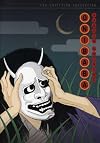
Shindo's rhythm is much faster than most Japanese directors such as Ozu or Mizoguchi. This is just DRIPPING with weird psychological overtones. The story involves an old woman and her daughter-in-law living off the spoils of wars. Various samurai from countless wars are always stumbling into these bandits' territory and to be summarily jacked for their armor and weapons. It's one big happy family until an old comrade of the daughter's husband returns home and reports that the daughter's show more husband is dead. We're never really sure if this man killed the husband. This is a cinematic spectacle, and one that has few equals in its field. It's the perfect fusion between art-house cinema and atmospheric horror. Loosely based on a Buddhist fable, Onibaba tells a story of lust, envy, wrath and betrayal which is wrapped up by way of a hideous demon mask. Onibaba is a human drama before it's a horror movie - all the character actions are driven by their various needs and wants, and the all the comeuppance emancipates from there. show less
May 30, 2025English (UK)
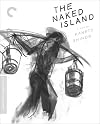
"The Naked Island", although devoid of exaggerated pathos, can be perceived as an ode to the glory of the filmmaker's homeland, helping to better understand the reasons (and the price!) of the achievements of an island state not spoiled by nature, but which managed to enter the ranks of great military and then economic powers. Overcoming difficulties hardens the character, and even the tragedy (the sudden death of the eldest son from illness), which befell the poor spouses and made Toyo, for show more a moment, fall into despair, feeling the meaninglessness of existence, still cannot eradicate the vital spirit. However, Kaneto Shindo gives the events an extremely generalized sound, forcing us to recall the original meaning of Friedrich Engels' formula that freedom "consists in mastery over oneself and over external nature, based on knowledge of the needs of nature." This is not an apology for the scientific, industrial and technological successes of modern times, which threaten to give way to the cyclopean principle. Senta and Toyo are not farmers, but peasants in the full sense of the word, being inextricably linked to the cultivated land, for whom the usual attributes of civilization arouse only moderate curiosity. The process of rapid urbanization has made this way of life an exception to the rule, in extreme cases reaching a dark absurdity, as demonstrated, for example, by Kobo Abe and Hiroshi Teshigahara in the novel "Woman in the Dunes" /1962/ and the brilliant film adaptation. The final shot takes on, one might say, a cosmic scale (the camera, flying upwards, covers the entire island, where only a small space is occupied by a field planted with sweet potatoes), but the lonely figures do not at all seem pitiful and lost in space, and the memorable melody of Hikaru Hayashi leaves you in a state of peace and happiness. Something similar, more than four decades later, was conveyed (albeit with the support of the Buddhist worldview in its modern interpretation) by Korean director Kim Ki-duk in a parable about “spring, summer, autumn, winter and… spring again.”
. show less
. show less
Apr 12, 2025Portuguese (Brazil)

Post war Hiroshima: It's been four years since the last time she visited her hometown. Takako faces the after effects of the A-bomb when she travels around the city to call on old friends. (fonte: Imdb)
Gli effetti del bombardamento atomico sui bambini di Hiroshima.
You May Also Like
Associated Authors
Statistics
- Works
- 9
- Members
- 138
- Popularity
- #148,170
- Rating
- 4.2
- Reviews
- 4
- ISBNs
- 11