
Reinhold Messner
Author of My Quest for the Yeti: Confronting the Himalayas' Deepest Mystery
About the Author
Since 1969, Reinhold Messner has gone on more than one hundred expeditions to the mountains and deserts of the earth. Recognized as one of the greatest mountaineers of all time, Messner does without expansion bolts, oxygen masks, or satellite phones. He has achieved a great many first ascents, show more conquered all fourteen of the worlds 8,000-meter peaks, succeeded in traversing Greenland, and provided an answer to the mystery of the Yeti. He is the author of Everest, The Crystal Horizon, Free Spirit, Antarctica, To the Top of the World, and All 14 Eight-Thousanders, among other titles. He lives with his family in the South Tyrol in Italy. show less
Image credit: Reinhold Messner in Köln
Works by Reinhold Messner
Everest, trois récits mythiques : Avant-premières à l'Everest, Everest 78, Everest sans oxygène (2013) 3 copies
Il duca dell'avventura. Le grandi esplorazioni di Luigi Amedeo di Savoia, duca degli Abruzzi (2009) 3 copies
Corsa alla vetta 2 copies
Berge versetzen: Das Credo eines Grenzgängers Wertvolle Anregungen für jeden,der hohe Ansprüche an sich selbst stellt (2010) 2 copies
Mord am Unmöglichen: Spitzenkletterer aus aller Welt hinterfragen die Grenzen des Möglichen (2018) 2 copies
Der Blaue Reiter. Journal für Philosophie: Der Blaue Reiter 28. Journal für Philosophie / Das gute Leben: Philosophie der Lebenskunst: BD 28 (2010) 2 copies
Big walls 2 copies
Yeti - Mount & Mystery 1 copy
Tous mes sommets 1 copy
La montagna nuda 1 copy
Everest sin Oxígeno 1 copy
Berg der Berge 1 copy
Alpine Curiosa 1 copy
Messner, Le Film 1 copy
Mein grosses Himalaja-Jahr 1 copy
Aufbruch ins Abenteuer 1 copy
Scuola di alpinismo 1 copy
Curiosità alpine 1 copy
Der verzauberte Berg: Messner Mountain Museum. Begegnungen mit den Bergen der Welt und der Philosophie des Bergsteigens (2006) 1 copy
L'assassinio dell'impossibile. Grandi scalatori di tutto il mondo discutono sui confini dell'alpinismo (2018) 1 copy
Noi, gente di montagna. Pionieri e campioni, capolavori e fallimenti: l'alpinismo fra storia e futuro (2021) 1 copy
Dolomiti. Le vie ferrate 1 copy
Solo 1 copy
Associated Works
Adrenaline 2000: The Year's Best Stories of Adventure and Survival 2000 (2000) — Contributor — 54 copies
OOOM — Inverviewee — 1 copy
Pfade zur Mitte. Der Himalaya in der Malerei von Benedetto Fellin. — Quotation — 1 copy
Tagged
Common Knowledge
- Birthdate
- 1944-09-17
- Gender
- male
- Occupations
- mountaineer
author
politician - Nationality
- Italy
- Birthplace
- Brixen, Italy (Bressanone)
- Associated Place (for map)
- Brixen, Italy
Members
Reviews
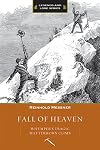
A rope breaks and heaven falls. How? Why? With what fallout? And is the history that’s been written a history that is true?
These questions haunt Reinhold Messner’s Fall of Heaven: Whymper’s Tragic Matterhorn Climb. Messner’s achievements and fame are such that one might say he has been to mountaineering what Michael Jordan was to basketball if MJ also had authored dozens of books. Who better to re-examine Edward Whymper’s historic first ascent of 1865 and the events that show more immediately followed? Well, maybe someone else. I’m surprised how dissatisfied I am with this account.
Fall of Heaven proves to be less about a climb than about a legacy. Its underlying spirit is revisionist and prosecutorial with Reinhold as D.A. but with no spokesman for the defense. He skews the discussion to achieve his ends, which are to skewer Whymper, defend guide Peter Taugwalder, and celebrate (almost canonize) Jean-Antoine Carrel, also a guide. The impetus is the deaths of four men and the varied fortunes of those who survived.
A peculiarity of the narrative is that for a long stretch it is told in a novelistic way. This allows Messner to inject his interpretations and judgments as if they are known truths without citing anything in support. There are no footnotes. Unless one reads the many, often book-length, sources from the bibliography (in English, French, German, or Italian) there too often is no way to tell how he has come by his statements. Given his accusations, this couldn’t be more annoying.
Some of Messner’s criticisms are just. For example, after Peter Taugwalder’s alertness had saved himself, his son, and Whymper from death, Whymper repaid the deed by writing, “No matter how good a guide he is, I would no longer entrust him with my life or recommend him to other people…I’m told…his intellect is gone and he is almost gone crazy.” I’m told? That’s it? It is dishonorable to defame Taugwalder in this way. I share Messner’s indignation here.
Guide Jean-Antoine Carrel is Messner’s Matterhorn hero, and Carrel is indeed heroic. Messner claims “Carrel never will forgive” Whymper for the insinuations regarding Peter Taugwalder’s reliability and for downplaying the responsibility that he, Whymper, bears for the tragedy. Okay . . . but with that claim Messner undermines our trust in him because Jean-Antoine’s “never” forgiving wasn’t nearly so “never” as Messner implies. Carrel and Whymper would later climb the Matterhorn together in 1874 and join yet again in 1880 to make notable ascents in the Andes.
The crux of my dissatisfaction is doubt Whymper is as responsible for what happened on the Matterhorn as Messner says. The key issues:
1) Climber competence
2) Leadership of the group
3) Equipment, i.e. the rope
NOTE: The men who died were a guide, Michel Croz, Mr. Hudson (said by Taugwalder to be as good as a guide), Lord Douglas, and Mr. Hadow.
Climber Competence
One of the climbers, Mr. Hadow, lacked the experience and skills possessed by the others. Except for his slip and fall, all likely would have returned safely. If we are to blame Whymper it must be he who judged Hadow’s abilities adequate to join the climb. He wasn’t. Mr. Hudson, who knew Hadow best, vouched for him. The two professional guides, Michel Croz of Chamonix and Peter Taugwalder of Zermatt, evidently accepted this state of affairs.
Leadership
Whymper, Messner asserts, assumed leadership of the party without accepting all the responsibilities that go with that role. He tries to convince us that Whymper failed as a leader, with terrible consequences.
Two points stand out.
First, is it clear Whymper was leader of the climb?
No, it is not.
Fall of Heaven records only that Whymper wanted a say when the group was on the mountain. Nowhere do the guides cede all responsibility. Croz already had climbed many peaks with Whymper; nothing we’re told indicates he would accept being relieved of his customary duties. Whymper did choose the ridge for their assault (an inspired choice). In Scrambles Amongst the Alps, he described his relationship with Croz as having to do with route selection, not with execution of the guide’s work. That could be a self-serving, after-the-fact statement. It also could be true. Messner’s assertion isn't convincing.
Second, the order in which the men were roped together for the descent.
Messner says Croz shouldn’t have been leading the descent and that Whymper chose to be tied into the rope at a safer position above most of his companions. Whymper, along with Mr. Hudson, did set the order. I guess it’s possible another order could have made a difference although I can’t see how it could guarantee Hadow mightn’t have slipped anyway with potentially catastrophic effect.
There is, however, an obvious problem here that even Messner can’t ignore, so he withdraws his own criticism and admits (without admitting he’s admitting), “Surely, Croz should not have gone in front of the descending party, but had he done otherwise, how would he have been able to get his clients down the mountain—particularly…Hadow?”
Yes, Reinhold. How?
For Hadow’s sake, one of the two professional guides had to lead him, step by step, at the most dangerous section. It’s immaterial who made the decision.
The Rope
Three points stand out.
First, Whymper supplied the ropes.
During the inquest after the climb, Taugwalder testified that he would not have used the rope that broke if he had doubted its safety. Messner argues that Whymper should have ensured that this rope (a thin one) not be used. I agree.
However, ropes are critical and the two professional guides should have interrogated Whymper about them beforehand (you can bet Carrel would have). Otherwise, Messner is implying that the guides were willing to concede their own safety to the judgment of someone less competent and experienced. Who does that at such risk? Would Reinhold?
Second, availability of rope other than the thin one.
Whymper states in Scrambles Amongst the Alps that “there were more than two hundred and fifty feet of the better qualities [of rope] still remaining out of use.” While I wouldn’t bet on that figure as exact, even before reading Scrambles it had seemed to me, in accounting for the rope available, that using the one that broke wasn’t necessary. It is dismaying, then, that Taugwalder used the thin rope.
Third, why no fixed line?
Messner writes, “The most important question is why none of the three ropes was fixed. Without such a fixed line, it is probable that even the best rope would have broken after Hadow’s fall [my emphasis].”
Peter Taugwalder testified that he had suggested a fixed rope to Croz but that Croz didn’t think it necessary, a misjudgment he’d never have an opportunity to correct or repeat. That cannot be blamed on Whymper.
At bottom, Messner’s protest is that Whymper gained (stole?) fame and reputation more deservedly due Jean-Antoine Carrel. I, too, would like for Carrel to be the man identified with the Matterhorn’s conquest. Instead, that became Whymper’s fate but not his fault. He possessed the nerve to venture onto a route others didn’t have the vision to try. Messner isn’t persuasive that responsibility should be apportioned as he has decided. And that is Fall of Heaven’s failure. show less
These questions haunt Reinhold Messner’s Fall of Heaven: Whymper’s Tragic Matterhorn Climb. Messner’s achievements and fame are such that one might say he has been to mountaineering what Michael Jordan was to basketball if MJ also had authored dozens of books. Who better to re-examine Edward Whymper’s historic first ascent of 1865 and the events that show more immediately followed? Well, maybe someone else. I’m surprised how dissatisfied I am with this account.
Fall of Heaven proves to be less about a climb than about a legacy. Its underlying spirit is revisionist and prosecutorial with Reinhold as D.A. but with no spokesman for the defense. He skews the discussion to achieve his ends, which are to skewer Whymper, defend guide Peter Taugwalder, and celebrate (almost canonize) Jean-Antoine Carrel, also a guide. The impetus is the deaths of four men and the varied fortunes of those who survived.
A peculiarity of the narrative is that for a long stretch it is told in a novelistic way. This allows Messner to inject his interpretations and judgments as if they are known truths without citing anything in support. There are no footnotes. Unless one reads the many, often book-length, sources from the bibliography (in English, French, German, or Italian) there too often is no way to tell how he has come by his statements. Given his accusations, this couldn’t be more annoying.
Some of Messner’s criticisms are just. For example, after Peter Taugwalder’s alertness had saved himself, his son, and Whymper from death, Whymper repaid the deed by writing, “No matter how good a guide he is, I would no longer entrust him with my life or recommend him to other people…I’m told…his intellect is gone and he is almost gone crazy.” I’m told? That’s it? It is dishonorable to defame Taugwalder in this way. I share Messner’s indignation here.
Guide Jean-Antoine Carrel is Messner’s Matterhorn hero, and Carrel is indeed heroic. Messner claims “Carrel never will forgive” Whymper for the insinuations regarding Peter Taugwalder’s reliability and for downplaying the responsibility that he, Whymper, bears for the tragedy. Okay . . . but with that claim Messner undermines our trust in him because Jean-Antoine’s “never” forgiving wasn’t nearly so “never” as Messner implies. Carrel and Whymper would later climb the Matterhorn together in 1874 and join yet again in 1880 to make notable ascents in the Andes.
The crux of my dissatisfaction is doubt Whymper is as responsible for what happened on the Matterhorn as Messner says. The key issues:
1) Climber competence
2) Leadership of the group
3) Equipment, i.e. the rope
NOTE: The men who died were a guide, Michel Croz, Mr. Hudson (said by Taugwalder to be as good as a guide), Lord Douglas, and Mr. Hadow.
Climber Competence
One of the climbers, Mr. Hadow, lacked the experience and skills possessed by the others. Except for his slip and fall, all likely would have returned safely. If we are to blame Whymper it must be he who judged Hadow’s abilities adequate to join the climb. He wasn’t. Mr. Hudson, who knew Hadow best, vouched for him. The two professional guides, Michel Croz of Chamonix and Peter Taugwalder of Zermatt, evidently accepted this state of affairs.
Leadership
Whymper, Messner asserts, assumed leadership of the party without accepting all the responsibilities that go with that role. He tries to convince us that Whymper failed as a leader, with terrible consequences.
Two points stand out.
First, is it clear Whymper was leader of the climb?
No, it is not.
Fall of Heaven records only that Whymper wanted a say when the group was on the mountain. Nowhere do the guides cede all responsibility. Croz already had climbed many peaks with Whymper; nothing we’re told indicates he would accept being relieved of his customary duties. Whymper did choose the ridge for their assault (an inspired choice). In Scrambles Amongst the Alps, he described his relationship with Croz as having to do with route selection, not with execution of the guide’s work. That could be a self-serving, after-the-fact statement. It also could be true. Messner’s assertion isn't convincing.
Second, the order in which the men were roped together for the descent.
Messner says Croz shouldn’t have been leading the descent and that Whymper chose to be tied into the rope at a safer position above most of his companions. Whymper, along with Mr. Hudson, did set the order. I guess it’s possible another order could have made a difference although I can’t see how it could guarantee Hadow mightn’t have slipped anyway with potentially catastrophic effect.
There is, however, an obvious problem here that even Messner can’t ignore, so he withdraws his own criticism and admits (without admitting he’s admitting), “Surely, Croz should not have gone in front of the descending party, but had he done otherwise, how would he have been able to get his clients down the mountain—particularly…Hadow?”
Yes, Reinhold. How?
For Hadow’s sake, one of the two professional guides had to lead him, step by step, at the most dangerous section. It’s immaterial who made the decision.
The Rope
Three points stand out.
First, Whymper supplied the ropes.
During the inquest after the climb, Taugwalder testified that he would not have used the rope that broke if he had doubted its safety. Messner argues that Whymper should have ensured that this rope (a thin one) not be used. I agree.
However, ropes are critical and the two professional guides should have interrogated Whymper about them beforehand (you can bet Carrel would have). Otherwise, Messner is implying that the guides were willing to concede their own safety to the judgment of someone less competent and experienced. Who does that at such risk? Would Reinhold?
Second, availability of rope other than the thin one.
Whymper states in Scrambles Amongst the Alps that “there were more than two hundred and fifty feet of the better qualities [of rope] still remaining out of use.” While I wouldn’t bet on that figure as exact, even before reading Scrambles it had seemed to me, in accounting for the rope available, that using the one that broke wasn’t necessary. It is dismaying, then, that Taugwalder used the thin rope.
Third, why no fixed line?
Messner writes, “The most important question is why none of the three ropes was fixed. Without such a fixed line, it is probable that even the best rope would have broken after Hadow’s fall [my emphasis].”
Peter Taugwalder testified that he had suggested a fixed rope to Croz but that Croz didn’t think it necessary, a misjudgment he’d never have an opportunity to correct or repeat. That cannot be blamed on Whymper.
At bottom, Messner’s protest is that Whymper gained (stole?) fame and reputation more deservedly due Jean-Antoine Carrel. I, too, would like for Carrel to be the man identified with the Matterhorn’s conquest. Instead, that became Whymper’s fate but not his fault. He possessed the nerve to venture onto a route others didn’t have the vision to try. Messner isn’t persuasive that responsibility should be apportioned as he has decided. And that is Fall of Heaven’s failure. show less

Typisch Messner - unstrukturiert - oder intuitiv - geschrieben und formuliert, mit pseudo-psycholigischen Passagen und populärphilosophischen Überlegungen. Nur, dass diesmal auch noch ein Anspruch besteht, die Leistungsmaximen in realwirtschaftliche Managementkreise zu übertragen. Ich bezweifle, dass das Erreichen seiner roft genannten "Realutopien" und das eines erfolgreichen Projektes in der Wirtschaft anhand derselben Mechanismen zu bewerkstelligen sind.
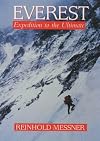
In an era where the idea that Everest could be climbed at all was only starting to be accepted, Messner’s plan to climb it without oxygen is rather audacious. I had it in my mind that he and his climbing partner, Peter Habeler, were climbing on their own, so I was surprised to learn that they were a separate unit within a larger expedition and Messner describes the possibility that they might not get their shot at the top due to conflicts with the other summit teams’ schedules. This show more gives an extra dimension to the narrative that I wasn’t expecting.
The long quotes during the first couple of pages were a bit distracting when I wanted to read about Messner, and I must confess that I mainly skimmed these. Interestingly, there is a section on how he recorded this thoughts using a tape recorder and journals. It sounds like such a simple detail, but I found that this small section adds authenticity to the rest of the book. The clipped radio conversations transcribed with the recorder give the book pace, and also allows for eloquent descriptions of the journey. Given his openness about using the recorder, I trust his account much more than I do Ronnie Muhl’s, for example (Everest: Surviving the death zone).
The maps provided at the start of sections were wonderful. They provided topographical details, which I hadn’t seen before in a book like this. Most books tend to only have colour photographs, which this one did too, but these monochrome maps locate the reader in the narrative and give a sense of place and scale to the endeavour.
The use of present tense gives pace, as do the short chapters, which sometimes only take up a page or two. This all makes the account more immediate. Messner sometimes shows a rush of feelings and I don’t doubt his sincerity. He does make some rash promises, like saying he’ll give up climbing if he gets out of a situation alive, but the reader understands the temporary nature of that sort of promise, and, besides: he’s Reinhold Messner; quitting isn’t something he does. I especially like his wisdom in accepting that he will have lost something if he makes the summit; that he is almost afraid of success for fear of losing his dream. His book captures the elation and hard work that it took to realise it, and he certainly went on to achieve great things, which should provide inspiration for the rest of us. show less
The long quotes during the first couple of pages were a bit distracting when I wanted to read about Messner, and I must confess that I mainly skimmed these. Interestingly, there is a section on how he recorded this thoughts using a tape recorder and journals. It sounds like such a simple detail, but I found that this small section adds authenticity to the rest of the book. The clipped radio conversations transcribed with the recorder give the book pace, and also allows for eloquent descriptions of the journey. Given his openness about using the recorder, I trust his account much more than I do Ronnie Muhl’s, for example (Everest: Surviving the death zone).
The maps provided at the start of sections were wonderful. They provided topographical details, which I hadn’t seen before in a book like this. Most books tend to only have colour photographs, which this one did too, but these monochrome maps locate the reader in the narrative and give a sense of place and scale to the endeavour.
The use of present tense gives pace, as do the short chapters, which sometimes only take up a page or two. This all makes the account more immediate. Messner sometimes shows a rush of feelings and I don’t doubt his sincerity. He does make some rash promises, like saying he’ll give up climbing if he gets out of a situation alive, but the reader understands the temporary nature of that sort of promise, and, besides: he’s Reinhold Messner; quitting isn’t something he does. I especially like his wisdom in accepting that he will have lost something if he makes the summit; that he is almost afraid of success for fear of losing his dream. His book captures the elation and hard work that it took to realise it, and he certainly went on to achieve great things, which should provide inspiration for the rest of us. show less

Walter Bonatti y Reinhold Messner ocupan un lugar privilegiado dentro de la historia del alpinismo. Dos grandes escaladores que, por desafortunadas circunstancias y a pesar del gran respeto que se profesaban, se mantuvieron alejados durante largos años. En 2004 tuvo lugar su primer encuentro, que marcó el inicio de una tardía pero fraternal amistad.
Walter Bonnati. Mi hermano en el alma establece un paralelismo entre las vidas de ambos alpinistas a través de distintos registros show more narrativos: la crónica de lo sucedido la larga noche del 30 al 31 de julio de 1954 en el K2, en la que Walter Bonatti estuvo a punto de morir y que, a posteriori, marcó toda su vida como alpinista y como hombre; la biografía de Bonatti, reconstruida en forma novelada por Sandro Filippini con ayuda de documentos de la época y testimonios directos; finalmente, el relato en primera persona de Messner, que comenta las vicisitudes de su amigo como alpinista y como persona y las confronta con las suyas propias.
Impresiona la lucidez y la extraordinaria honestidad de Reinhold Messner, que con este testimonio conmovedor se desnuda como quizás nunca antes lo había hecho. Bonatti muere en 2011 a los 81 años de edad, un año después de recibir el reconocimiento del Piolet de Oro a toda su carrera. Messner con este libro rinde homenaje al alpinista, pero sobre todo al hombre que convirtió las cumbres en escuela de honestidad.
Con prólogo de Sebastián Álvaro. show less
Walter Bonnati. Mi hermano en el alma establece un paralelismo entre las vidas de ambos alpinistas a través de distintos registros show more narrativos: la crónica de lo sucedido la larga noche del 30 al 31 de julio de 1954 en el K2, en la que Walter Bonatti estuvo a punto de morir y que, a posteriori, marcó toda su vida como alpinista y como hombre; la biografía de Bonatti, reconstruida en forma novelada por Sandro Filippini con ayuda de documentos de la época y testimonios directos; finalmente, el relato en primera persona de Messner, que comenta las vicisitudes de su amigo como alpinista y como persona y las confronta con las suyas propias.
Impresiona la lucidez y la extraordinaria honestidad de Reinhold Messner, que con este testimonio conmovedor se desnuda como quizás nunca antes lo había hecho. Bonatti muere en 2011 a los 81 años de edad, un año después de recibir el reconocimiento del Piolet de Oro a toda su carrera. Messner con este libro rinde homenaje al alpinista, pero sobre todo al hombre que convirtió las cumbres en escuela de honestidad.
Con prólogo de Sebastián Álvaro. show less
Awards


You May Also Like


Associated Authors
Statistics
- Works
- 177
- Also by
- 4
- Members
- 1,640
- Popularity
- #15,668
- Rating
- 3.6
- Reviews
- 32
- ISBNs
- 346
- Languages
- 16
- Favorited
- 3