
Nancy R. Reagin
Author of Harry Potter and History
About the Author
Nancy R. Reagin is a professor of history and women's and gender studies at Pace University, who has published several books in modern European history. She's also an active fan who has worked on fan archives and websites, and she has helped build fan organizations. She is appalled by Professor show more Binns's teaching methods and would enjoy using pensieves, Veritaserum, and Time-Turners in her own research. show less
Series
Works by Nancy R. Reagin
Tagged
Common Knowledge
- Birthdate
- 1960-01-06
- Gender
- female
- Nationality
- USA
- Associated Place (for map)
- USA
Members
Reviews
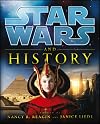
A mixed bag. Tony Keen's chapter comparing the rise of Augustus with Napoleon, Hitler and Palpatine is sane as modern leaders have often explicitly presented themselves as the heirs to Rome, and Star Wars clearly has Roman influences. Crucially, because this isn't nailing a wafer thin metaphor to a historical idea, he's able to contrast as well as compare Star Wars to history.
There are some other good chapters Kevin S. Decker is also able to usefully find ancient parallels and differences. show more Lori Maguire compares the Death Star to modern thoughts about nuclear weapons and the influence of the film on ideas about the USA's SDI "Star Wars" defence.
Some chapters are ok and some are poor. Often Star Wars is used as a starting point for whatever the authors really wanted to talk about.
One chapter, by Paul Horvath and Mark Higbee is surely a Sokal-style send-up of the idea. Their chapter includes the sentence: "In A New Hope, the Rebels destroy the enemy's most powerful weapon, the Death Star; in the Civil War, emancipation destroyed the Confederates' reason for war, as well as the foundation of their economic system." The idea that two people would sit down and sincerely say: "In many ways freeing the slaves of the Confederacy is just like blowing up a Death Star," is absolutely terrifying.
On the whole, the book seems to be pitched as a history book for people who don't really like history, but like Star Wars. If this sounds like you, I'd go for a Star Wars book instead show less
There are some other good chapters Kevin S. Decker is also able to usefully find ancient parallels and differences. show more Lori Maguire compares the Death Star to modern thoughts about nuclear weapons and the influence of the film on ideas about the USA's SDI "Star Wars" defence.
Some chapters are ok and some are poor. Often Star Wars is used as a starting point for whatever the authors really wanted to talk about.
One chapter, by Paul Horvath and Mark Higbee is surely a Sokal-style send-up of the idea. Their chapter includes the sentence: "In A New Hope, the Rebels destroy the enemy's most powerful weapon, the Death Star; in the Civil War, emancipation destroyed the Confederates' reason for war, as well as the foundation of their economic system." The idea that two people would sit down and sincerely say: "In many ways freeing the slaves of the Confederacy is just like blowing up a Death Star," is absolutely terrifying.
On the whole, the book seems to be pitched as a history book for people who don't really like history, but like Star Wars. If this sounds like you, I'd go for a Star Wars book instead show less
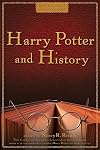
When I was at the bookstore looking for volumes of Harry Potter criticism, the clerk almost flipped out to discover that there was a "Pop Culture and History Series." Certainly it's an interesting idea: To study where our modern pop ideas came from.
The execution proved more complicated. This volume consists of a series of essays exploring how the Harry Potter books compare to actual historical situations -- how, e.g., the hidden world of magic users compares to the hidden world of the Jews show more in Europe. Or how the Death Eaters' use of torture compares to the Inquisition -- or to modern American methods of interrogating prisoners from the Afghanistan and Iraq conflicts.
Many of these analogies are spot-on. Rowling is a liberal, and clearly she is disgusted by torture, and by particularism based on ancestry or religion or the like.
But I can't help but feel that a lot was missing. Rowling is also a Christian, and there is a lot of Christian theology going on under the surface. Yes, some would suggest that that is part of another book -- but very many of the topics discussed are things that were condemned because of religion. Witches in the Middle Ages, e.g., weren't condemned because they could do "magical" things; they were burned because their alleged powers came from the Devil. This book makes that point -- but doesn't really get into the history of religion, or the theology, that caused the situation.
And there is a great deal to be learned by looking at the history within the Potter books, as well as the history outside them. And the folklore that accompanies it.
Almost all Potter criticism strikes me as shallow. This is deeper than some. But I really don't think it went as far as it could. The Potter books are a parallel -- almost an allegory -- of Christianity, with a Pelagian overlay. They approach a parody of much folklore. They play language games at a level not seen since J. R. R. Tolkien. A book that really dug into all those aspects would be a tremendous tool. This might be a piece of that puzzle. But it is too small a piece to see the whole picture. show less
The execution proved more complicated. This volume consists of a series of essays exploring how the Harry Potter books compare to actual historical situations -- how, e.g., the hidden world of magic users compares to the hidden world of the Jews show more in Europe. Or how the Death Eaters' use of torture compares to the Inquisition -- or to modern American methods of interrogating prisoners from the Afghanistan and Iraq conflicts.
Many of these analogies are spot-on. Rowling is a liberal, and clearly she is disgusted by torture, and by particularism based on ancestry or religion or the like.
But I can't help but feel that a lot was missing. Rowling is also a Christian, and there is a lot of Christian theology going on under the surface. Yes, some would suggest that that is part of another book -- but very many of the topics discussed are things that were condemned because of religion. Witches in the Middle Ages, e.g., weren't condemned because they could do "magical" things; they were burned because their alleged powers came from the Devil. This book makes that point -- but doesn't really get into the history of religion, or the theology, that caused the situation.
And there is a great deal to be learned by looking at the history within the Potter books, as well as the history outside them. And the folklore that accompanies it.
Almost all Potter criticism strikes me as shallow. This is deeper than some. But I really don't think it went as far as it could. The Potter books are a parallel -- almost an allegory -- of Christianity, with a Pelagian overlay. They approach a parody of much folklore. They play language games at a level not seen since J. R. R. Tolkien. A book that really dug into all those aspects would be a tremendous tool. This might be a piece of that puzzle. But it is too small a piece to see the whole picture. show less
This anthology of essays about history and Harry Potter is, as such things usually are, hit and miss. Many of the essays seek to explore something about history in tandem to the same topic in Harry Potter (the way government works, for instance, or the historical (Muggle) treatment of witches), and these pieces, for me, were the least interesting. They basically took an element of the world of Harry Potter and then explored a relevant history topic inspired by that element. These essays show more might be fascinating to someone interested in that particular history topic, but I wasn't, for the most part. A handful of the pieces, however, did a better job of making the historical discussion relevant to the reading and interpretation of Harry Potter itself. These I found interesting and compelling. My favorites were "Severus Snape and the Standard Book of Spells: Ancient Tongues in the Wizarding World," about Rowling's use of ancient languages in the books; "School Ties, House Points, and Quidditch: Hogwarts as a British Boarding School," which does what it says on the tin; and "Hermione Raised Her Hand Again: Wizards Writing History," which discusses the way Harry, Ron, and Hermione often have to become historians to solve the problems of their world, questioning the histories that have been told to them, seeking out primary sources, and reinterpreting what they know about the past. I, clearly, liked best the essays which inched back toward literary criticism along with the history, so your mileage may vary. show less
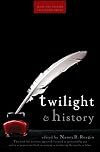
As a non-Twilight fan and a budding academic, to me it seemed that some authors were willing to overlook facts and cut corners in their articles. However, the majority of them aren't irritatingly obvious about it (though while reading "Like Other American Families, Only Not" I felt like calling "Objection!" every two minutes) and argue their statements fairly well. All in all, I personally enjoyed learning more about American culture and collected many interesting sources from the show more bibliographies. show less
You May Also Like


Associated Authors
Statistics
- Works
- 10
- Members
- 444
- Popularity
- #55,178
- Rating
- 3.6
- Reviews
- 16
- ISBNs
- 33
- Languages
- 3