
Kathy MacMillan
Author of Sword and Verse
Works by Kathy MacMillan
Untitled (Sword and Verse, #2) 3 copies
Tagged
Common Knowledge
- Legal name
- MacMillan, Kathleen Kelly
- Birthdate
- 1975-02-11
- Gender
- female
- Education
- University of Maryland at College Park (MLS/Library Science), Catholic University of America (BA/English), Community College of Baltimore County (Certificate/American Sign Language Interpreting)
- Occupations
- writer
American Sign Language interpreter
librarian
children's performer - Organizations
- Society for Children's Book Writers and Illustrators
- Agent
- Steven Malk (Writers House)
- Short biography
- Kathy MacMillan is a writer, American Sign Language interpreter, librarian, signing storyteller, and avowed Hufflepuff. She writes picture books, children’s nonfiction, young adult fantasy, and resource books for librarians, educators, and parents.
- Nationality
- USA
- Birthplace
- Baltimore, Maryland, USA
- Places of residence
- Baltimore, Maryland, USA
- Associated Place (for map)
- Baltimore, Maryland, USA
Members
Reviews
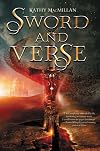
The world felt a little light (I often have this problem with YA fantasy, though, because the balance of pacing versus depth of world swings towards the former) but it drew on Egyptianate elements - systems of writing as gatekeepers of knowledge and power, the brutal mysteries of religion, the significant power imbalance between slaves and the rulers - and it did so in ways that were explored in their complexities by the characters. The central romance started out feeling flimsy, but was show more built up believably through the course of the book; I started out disdainful, but I found it thoroughly satisfying and believable by the end. In the end, this misses out on being great in my opinion only because the plot felt more things-happening than compelling and ineluctable, but that may not be a flaw for everyone. show less
Solid, interesting, new world. Plenty of drama and I admire any book that holds up the magical power of literacy, so I'm on board for that. I'm not totally into the characters, but I also appreciate the very real moral dilemmas that they face. I suspect that readers who like The Red Queen will enjoy this one, too.
Advanced Readers Copy provided by Edelweiss.
Advanced Readers Copy provided by Edelweiss.
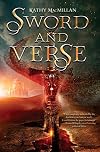
2.5 stars. I was quite disappointed with this...I was expecting a fantasy with political intrigue, fascinating word power, and romance that would sweep me away. But that absolutely did not happen. Sigh.
First, I was unbelievably bored. You'd think that with all this political tension going on, I'd want to know what happens next. And okay, yes, there was some part of me that did care to know (and that was the part that made me finish the book), but it was more out of my own trifling curiosity show more and a hope that the book would become more engaging, rather than the events' ability to excite me. I think it was the tone that made me feel this way. The tone was jarringly modern, which was an awkward fit into the fantastical and mythical world the author created. This infuriating modern-ness and simplicity was probably the cause for my boredom.
Another thing I disliked was the plot being so generic. Even though the made-up mythology was pretty creative, the overall plot seemed like the epitome of the typical fantasy story you'd immediately think of when you're trying to conjure one in your mind. Lowborn girl is inducted into a higher class, and she has a wonderful romance with the great prince of the land. Some problems arise, people don't like her, she's thrust into a couple betrayals, blah blah blah, but suddenlyshe discovers an ancient secret of her mysterious heritage and she finds out that she holds the key to the goddess's power! There's a big fight, people die, she reunites with the prince, and everyone lives happily ever after . The embellishment and extra twisty events that make a story not an average one was absent. This ordinary plotline was also another reason for me finding this book boring.
One good aspect of this book was the characters. Raisa was a strong heroine, and she put her best effort into everything she was willing to do. I think Mati was supposed to be shown as kind and strong, and even though his character fell a bit flat at times, I still appreciated his presence. Also, Laiyonea was an interesting person, as well as Jonis, Kiti, and Soraya. I'm glad that the characters weren't too bad.
However, I would still not recommend this novel. I personally think it wouldn't be worth your time, what with it lacking a unique plotline and all. Although, if you're someone who isn't bothered by modern tones and doesn't mind a very ordinary storyline, you may enjoy it more than I did. show less
First, I was unbelievably bored. You'd think that with all this political tension going on, I'd want to know what happens next. And okay, yes, there was some part of me that did care to know (and that was the part that made me finish the book), but it was more out of my own trifling curiosity show more and a hope that the book would become more engaging, rather than the events' ability to excite me. I think it was the tone that made me feel this way. The tone was jarringly modern, which was an awkward fit into the fantastical and mythical world the author created. This infuriating modern-ness and simplicity was probably the cause for my boredom.
Another thing I disliked was the plot being so generic. Even though the made-up mythology was pretty creative, the overall plot seemed like the epitome of the typical fantasy story you'd immediately think of when you're trying to conjure one in your mind. Lowborn girl is inducted into a higher class, and she has a wonderful romance with the great prince of the land. Some problems arise, people don't like her, she's thrust into a couple betrayals, blah blah blah, but suddenly
One good aspect of this book was the characters. Raisa was a strong heroine, and she put her best effort into everything she was willing to do. I think Mati was supposed to be shown as kind and strong, and even though his character fell a bit flat at times, I still appreciated his presence. Also, Laiyonea was an interesting person, as well as Jonis, Kiti, and Soraya. I'm glad that the characters weren't too bad.
However, I would still not recommend this novel. I personally think it wouldn't be worth your time, what with it lacking a unique plotline and all. Although, if you're someone who isn't bothered by modern tones and doesn't mind a very ordinary storyline, you may enjoy it more than I did. show less
I was fascinated by the topic of the novel, that writing and words have power. It has a foundation in history, where those who were viewed as lower status people were refused the right to learn to read and write, while those with wealth excelled in these areas. I think the power of words can often be discounted in unusual ways, mostly because now writing and reading has become more common place in various cultures. This book calls to mind the past and shows the potential impact of not being show more forced to never learn how to read and write. It can cause revolutions and that is what happens in this novel.
Raisa has a great deal of promise as a main character. She is a slave, but she remembers a life beyond being tied to the service of a King that doesn’t know her and doesn’t care about her existence. She cares for one of the other slave girls. She becomes a Tutor-in-training and she begins to learn the language that she has been forbidden to even look at since she began to work at the palace. I found it interesting that there was a slave that learned the language of the Kings, mainly because it was so sacred to those in power. I would have thought that they would have kept the language within the affluent individuals, but I liked that the author chose a slave to be the center of something so rare.
But she does make frustrating decisions. When she has the opportunity to become a hero in the beginning of the novel, she refuses the call. This falls into the idea of the hero’s journey; however, she doesn’t resurface from her idealized existence until much later in the novel, when she finally becomes a hero in some ways. In some ways, it feels like it is a moment too late and even the book seems to portray it that way.
Another issue is the love between Prince Mati and Raisa. A lot of people feel that it is an insta-love situation, which is typical with romance novels and very overused in novels lately. However, it is important to note that the reason why it may feel like insta-love is the fact that the crush stage of the novel is blurred and the period before the crush is not highlighted within the novel. The romance is a focal point and it can be slightly frustrating because it gets in the way of Raisa becoming a heroic figure.
Overall the story was interesting and I liked the idea of words having power a lot more than I anticipated. That interest drove me through the novel, but certain aspects can be off putting. show less
Raisa has a great deal of promise as a main character. She is a slave, but she remembers a life beyond being tied to the service of a King that doesn’t know her and doesn’t care about her existence. She cares for one of the other slave girls. She becomes a Tutor-in-training and she begins to learn the language that she has been forbidden to even look at since she began to work at the palace. I found it interesting that there was a slave that learned the language of the Kings, mainly because it was so sacred to those in power. I would have thought that they would have kept the language within the affluent individuals, but I liked that the author chose a slave to be the center of something so rare.
But she does make frustrating decisions. When she has the opportunity to become a hero in the beginning of the novel, she refuses the call. This falls into the idea of the hero’s journey; however, she doesn’t resurface from her idealized existence until much later in the novel, when she finally becomes a hero in some ways. In some ways, it feels like it is a moment too late and even the book seems to portray it that way.
Another issue is the love between Prince Mati and Raisa. A lot of people feel that it is an insta-love situation, which is typical with romance novels and very overused in novels lately. However, it is important to note that the reason why it may feel like insta-love is the fact that the crush stage of the novel is blurred and the period before the crush is not highlighted within the novel. The romance is a focal point and it can be slightly frustrating because it gets in the way of Raisa becoming a heroic figure.
Overall the story was interesting and I liked the idea of words having power a lot more than I anticipated. That interest drove me through the novel, but certain aspects can be off putting. show less
Awards


You May Also Like


Statistics
- Works
- 22
- Members
- 524
- Popularity
- #47,449
- Rating
- 3.5
- Reviews
- 19
- ISBNs
- 49
- Languages
- 1
