
Richard Pevear
Author of Mister Cat-and-a-Half
About the Author
Richard Pevear has produced acclaimed translations of Tolstoy, Dostoevsky, Gogol, & Bulgakov. The translation of "The Brothers Karamazov" won the 1991 PEN Book of the Month Club translation prize. (Bowker Author Biography) Richard Pevear's translations have won many prizes including the PEN show more Translation award for his work on "The Brothers Karamazov." He lives with his family in Paris. He also translated "The Eternal Husband," available this September in a Bantam Classic edition. (Bowker Author Biography) show less
Image credit: Brigitte Lacombe
Works by Richard Pevear
Introduction to "The Idiot" 1 copy
Introduction to "Dead Souls" 1 copy
Associated Works
Dead Souls (1842) — Translator, some editions; Introduction, some editions — 10,562 copies, 136 reviews
The Unwomanly Face of War: An Oral History of Women in World War II (1985) — Translator, some editions — 1,750 copies, 56 reviews
The Death of Ivan Ilyich and Other Stories (1859) — Translator, some editions — 328 copies, 5 reviews
The Enchanted Wanderer: and Other Stories (2013) — Translator, some editions — 293 copies, 5 reviews
Novels, Tales, Journeys: The Complete Prose of Alexander Pushkin (1975) — Translator, some editions — 258 copies
MHQ: The Quarterly Journal of Military History — Winter 1991 (1990) — Co-Translator "A Lousy Story" — 12 copies
Tagged
Common Knowledge
- Birthdate
- 1943-04-21
- Gender
- male
- Education
- Allegheny College
University of Virginia (MA) - Occupations
- translator
Distinguished professor emeritus - Organizations
- American University of Paris
- Relationships
- Volokhonsky, Larissa (wife)
- Nationality
- USA
- Birthplace
- Waltham, Massachusetts, USA
- Places of residence
- Waltham, Massachusetts, USA
Paris, France - Associated Place (for map)
- USA
Members
Discussions
Tolstoy's War and Peace: more on the Volokhonsky/Pevear translation in Fans of Russian authors (May 2008)
Tolstoy's War and Peace: comments on the Volokhonsky,/Pevear translation by Simon Schama, BBC R3 in Fans of Russian authors (November 2007)
Reviews

Forced to leave his comfortable life in the royal kitchens, Mister Cat-and-a-Half is lucky enough to meet up with Mistress Fox, and the two are soon married. When a wolf, a bear, a boar, and a hare come calling, all are misled by the clever fox (and by their own lack of knowledge), and come to believe that a cat must be a very fierce creature indeed! The "free dinner" enjoyed by the cat and fox as a result, concludes this delightfully comic folktale from the Ukraine...
Pevear, best known for show more his translations (together with his wife, Larissa Volokhonsky) of Russian literature, here turns his attention to storytelling. The engaging tale of Mister Cat-and-a-Half is paired with Richard Rayevsky's delightful illustrations, which really accentuate the humor of the story.
As an aside, those readers who have a difficult time believing that a cat might intimidate larger creatures, are encouraged to consider the story of Jack, a New Jersey tabby-cat who treed a young bear:
http://news.nationalgeographic.com/news/2006/06/060613-cat-bear.html show less
Pevear, best known for show more his translations (together with his wife, Larissa Volokhonsky) of Russian literature, here turns his attention to storytelling. The engaging tale of Mister Cat-and-a-Half is paired with Richard Rayevsky's delightful illustrations, which really accentuate the humor of the story.
As an aside, those readers who have a difficult time believing that a cat might intimidate larger creatures, are encouraged to consider the story of Jack, a New Jersey tabby-cat who treed a young bear:
http://news.nationalgeographic.com/news/2006/06/060613-cat-bear.html show less
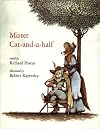
I liked this book for a few reasons. For one, I liked the language because a section of the story was written in a pattern. For example, different characters would approach the fox and ask her to marry them but she would explain that she was already married to Mister Cat-and-a-half. Each character would then ask how they could be friends with him. Each time she would explain that, “he likes fine food. Why don’t you invite us to dinner?” Also, I liked the characters because they show more represented a wide range of animals. In real life, different animals act differently, but in the story, they all acted cowardly towards Mister Cat-and-a-half who they had not met yet. The big message of Mister Cat-and-a-half is that you should not be too quick to judge someone. In the story, all of the characters were automatically afraid of Mister Cat-and-a-half but they never really got to know him to realize that he is not scary. show less
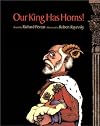
Summery: Many years ago, a king summoned a young barber to cut his hair. This had been done many times before, but once the barbers were summoned, they were never seen or heard from again. This is because they were thrown in jail because the King didn't want them to tell anyone about the horns on his head (usually hidden by his crown). This certain young barber made no mention of the horns while cutting the King's hair, and the King felt him trustworthy enough to release him. For many days show more the barber held in his secret, so much so that his belly swelled up. Finally the secret became too much to bare, so the barber whispered his secret into the ground. Not long after, a young man took the reed that grew from this area of dirt, and made it into a flute. Every times he blew into it, the flute would sing, "The King has horns!". He played it over and over all over town, and all the people heard about the king's secret. The king thought the barber had betrayed his trust, and ordered him to be killed. The barber denied telling anyone, and had the King summon the boy with the flute. He played it aloud once more, and the King became so angry that he threw off his crown. The barber goes on to tell the King that the truth is hard to hide, even under the best crown. The King cannot punish the barber for something he himself revealed, and decided to let him go.
Reflection: This is the first book that I have read for the class that I am not impressed with. Although it's a good lesson about honesty, I think it was a little long and could easily lose the attention of any child. I even had a hard time staying focused. The illustrations were well done, but I don't think this is a book I would read to a younger group of kids.
Extensions: I'd use this book as an oppertunity to talk about the importance of honesty. The children could make crowns, and decorate them as they see fit. show less
Reflection: This is the first book that I have read for the class that I am not impressed with. Although it's a good lesson about honesty, I think it was a little long and could easily lose the attention of any child. I even had a hard time staying focused. The illustrations were well done, but I don't think this is a book I would read to a younger group of kids.
Extensions: I'd use this book as an oppertunity to talk about the importance of honesty. The children could make crowns, and decorate them as they see fit. show less
Awards

You May Also Like
Associated Authors
Statistics
- Works
- 14
- Also by
- 37
- Members
- 66
- Popularity
- #259,058
- Rating
- 4.2
- Reviews
- 3
- ISBNs
- 9
- Favorited
- 3