
Antony Shugaar
Author of Latitude Zero: Tales of the Equator
About the Author
Image credit: via Enchanted Lion Books
Works by Antony Shugaar
Italy : from the Italy experts 3 copies
Ferocity 1 copy
Associated Works
Niccolo's Smile: A Biography of Machiavelli (1998) — Translator, some editions — 269 copies, 2 reviews
The Day of the Dead: The Autumn of Commissario Ricciardi (2018) — Translator, some editions — 184 copies, 12 reviews
The Judge and the Historian: Marginal Notes on a Late-Twentieth-Century Miscarriage of Justice (1991) — Translator, some editions — 121 copies, 1 review
Naples 1343: The Unexpected Origins of the Mafia (2015) — Translator, some editions — 30 copies, 2 reviews
Western medical thought from antiquity to the Middle Ages (1996) — Translator, some editions — 16 copies
Tagged
Common Knowledge
- Canonical name
- Shugaar, Antony
- Other names
- Shugaar, Tony
- Birthdate
- 1958
- Gender
- male
- Education
- University of California, Los Angeles (BA | 1980)
Columbia University (MS | Journalism`| 1981))
Università per Stranieri at Perugia (Diploma Superiore) - Occupations
- journalist
translator - Nationality
- USA
- Places of residence
- Italy
Members
Reviews

I love, love, love the Commissario Ricciardi mysteries, set in 1930s Fascist Naples and couldn't wait to read this as soon as it was available. This is the eighth book of the series but the first one I've read in print, having listened to all the others in audio. We join Ricciardi and his partner Brigadier Raffaele Maione in the cool of fall, where the police case load is lighter than usual.
The countess of Roccaspina pleads with Ricciardi to investigate a homicide that was officially closed show more months ago. Her husband has been imprisoned for the murder of Piro, a loan shark. He has confessed to the murder but his wife knows he was at home with her during the time of the murder. He refuses to recant, and the police regard the case as closed. Ricciardi is intrigued and decides to take a second look, despite threats from his superior.
Long time fans are treated to appearances by some of our favorite characters. Dr. Modo, the irreverent coroner who will say anything, especially after having a few drinks, is still accompanied by his adoring dog, the former pet of an orphan boy who died in a prior book. Maione, a warm hearted family man is commanded to contact the transvestite prostitute Bambinella, who often serves as an informant, but only for Maione. As always, the two of them together are uproarious.
Commissario Ricciardi, whose aristocratic family died when he was a child, sees the dead. Not every dead person, just the ones who have died a violent death. Whenever he arrives at a murder scene, he hears the last words of the dead. Their voices are a lonely burden for Ricciardi, compelling him to seek justice for them. Ricciardi is the focus of two women we've met in the previous books. Livia, the widow of the world's greatest tenor, who moved to Naples to pursue Ricciardi. He is still secretly longing for Enrica, a shy young woman who lives across the street from him, but contentment for Ricciardi proves elusive. This book is a feast of fascinating characters, the foreboding events of 1930s Italy, and the beautiful prose of Maurizio de Giovanni. His writing makes me wish I could read Italian, because it must be so beautiful in the original language. As much as I loved this book, I don't recommend it to new readers of the series. To understand and appreciate Ricciardi you must start at the beginning, I Will Have Vengeance. show less
The countess of Roccaspina pleads with Ricciardi to investigate a homicide that was officially closed show more months ago. Her husband has been imprisoned for the murder of Piro, a loan shark. He has confessed to the murder but his wife knows he was at home with her during the time of the murder. He refuses to recant, and the police regard the case as closed. Ricciardi is intrigued and decides to take a second look, despite threats from his superior.
Long time fans are treated to appearances by some of our favorite characters. Dr. Modo, the irreverent coroner who will say anything, especially after having a few drinks, is still accompanied by his adoring dog, the former pet of an orphan boy who died in a prior book. Maione, a warm hearted family man is commanded to contact the transvestite prostitute Bambinella, who often serves as an informant, but only for Maione. As always, the two of them together are uproarious.
Commissario Ricciardi, whose aristocratic family died when he was a child, sees the dead. Not every dead person, just the ones who have died a violent death. Whenever he arrives at a murder scene, he hears the last words of the dead. Their voices are a lonely burden for Ricciardi, compelling him to seek justice for them. Ricciardi is the focus of two women we've met in the previous books. Livia, the widow of the world's greatest tenor, who moved to Naples to pursue Ricciardi. He is still secretly longing for Enrica, a shy young woman who lives across the street from him, but contentment for Ricciardi proves elusive. This book is a feast of fascinating characters, the foreboding events of 1930s Italy, and the beautiful prose of Maurizio de Giovanni. His writing makes me wish I could read Italian, because it must be so beautiful in the original language. As much as I loved this book, I don't recommend it to new readers of the series. To understand and appreciate Ricciardi you must start at the beginning, I Will Have Vengeance. show less
Set in Naples, Italy just before World War II, as fascism is beginning to take hold, Commissario Ricciardi and his faithful subordinate Brigadier Maione, are instructed to investigate the murder of beautiful Adriana, Duchess di Camparino. The Duchess was the elderly duke’s nurse before his first wife died. When they married, the general assumption was that the duchess was a gold digger. There are plenty of suspects, especially Ettore, the bedridden and dying duke's son, who cannot hide his show more hatred of Adriana.
Meanwhile, the blinding summer heat puts both our investigators in a bad mood. Overweight Brigadier Maione, has put himself on a severe diet. His wife has been flirting with a local fruit vendor and Maione has the idea that the thinner man might be trying to take her away. Commissario Ricciardi, a compulsively private man, is haunted by his the ability to see and hear the dead repeating their final moments. The only joy he has has in his life has been looking out his bedroom window to the sitting room of Enrica Colombo, a young woman who spends each evening working on her embroidery. Even though they met only once, they both are attracted to one another. At the same time Enrica’s mother sets up a surprise dinner with a suitable young man, Enrica sees Ricciardi with the beautiful elegant Livia, the widow of opera singer Arnaldo Vezzi, who was murdered in an earlier book. They both become heartbroken and this misunderstanding is a major part of the story.
I absolutely love this series but admit it definitely is not for everyone. Ricciardi is an especially sensitive character, who could have become a caricature, but instead shows us a wistful humanity. This is a beautifully written crime story with a cast of memorable characters. This is the third book in the series and the author continues to bring together a a rich and compelling mix of class struggle, love and loneliness. I can't wait to read book four, The Day of the Dead: The Autumn of Commissario Ricciardi. show less
Meanwhile, the blinding summer heat puts both our investigators in a bad mood. Overweight Brigadier Maione, has put himself on a severe diet. His wife has been flirting with a local fruit vendor and Maione has the idea that the thinner man might be trying to take her away. Commissario Ricciardi, a compulsively private man, is haunted by his the ability to see and hear the dead repeating their final moments. The only joy he has has in his life has been looking out his bedroom window to the sitting room of Enrica Colombo, a young woman who spends each evening working on her embroidery. Even though they met only once, they both are attracted to one another. At the same time Enrica’s mother sets up a surprise dinner with a suitable young man, Enrica sees Ricciardi with the beautiful elegant Livia, the widow of opera singer Arnaldo Vezzi, who was murdered in an earlier book. They both become heartbroken and this misunderstanding is a major part of the story.
I absolutely love this series but admit it definitely is not for everyone. Ricciardi is an especially sensitive character, who could have become a caricature, but instead shows us a wistful humanity. This is a beautifully written crime story with a cast of memorable characters. This is the third book in the series and the author continues to bring together a a rich and compelling mix of class struggle, love and loneliness. I can't wait to read book four, The Day of the Dead: The Autumn of Commissario Ricciardi. show less
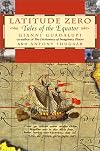
A collection of tales mostly about European conquest of equatorial locales in South America, Africa, Asia, and Oceania. I am not convinced of the veracity of most of these stories, especially given the dearth of references cited. However, if you take it just as a bunch of legends, it can be a fairly fun read. Just try to look at it for the adventure, and conveniently ignore the maltreatment of the locals (which is glossed over in the text anyway). You'll enjoy it much more that way.
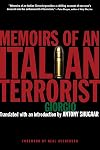
A rather bland account of one man's descent into the revolutionary terrorist world of the Red Brigades in Italy of the 1970's. Giorgio tells how he moved from stealing jeans to tailing targets and participating in attacks on the police, although never ties down what he actually did only mentioning that he took part in an action. The majority of the book had less to do with Giorgio's work as a terrorist and more to do with his tenuous relationships with his mother and girlfriend. I just don't show more really know what Giorgio was going for in writing this; as parts of it seem like a shout out for human contact as he isolates himself from others while other times he rails against eating establishments around where he lived. Overall I felt that I didn't really get any insight into the mind of a terrorist and would say skip it unless you are really interested in the political happenings in Italy during the 70's. show less
You May Also Like
Associated Authors
Statistics
- Works
- 13
- Also by
- 26
- Members
- 230
- Popularity
- #97,993
- Rating
- 3.7
- Reviews
- 4
- ISBNs
- 13
- Languages
- 2