
Paul Turner (1)
Author of Understanding the Revised Mass Texts
For other authors named Paul Turner, see the disambiguation page.
About the Author
Paul Turner is pastor of St. Anthony Parish in Kansas City, Missouri. A priest of the Diocese of Kansas City-St. Joseph, he holds a doctorate in sacred theology from Sant' Anselmo in Rome. He is a former president of the North American Academy of Liturgy and a member of Societas Liturgica and the show more Catholic Academy of Liturgy. He serves as a facilitator for the International Commission on English in the Liturgy. His publications include One Lave: A Pastoral Guide to the Order of Celebrating Matrimony, Glory in the Cross: Holy Week in the Third Edition of The Roman Missal, and Whose Mass Is It? Why People Care So Much about the Catholic Liturgy, all published by Liturgical Press. He is also a contributor to Give Us This Day. show less
Series
Works by Paul Turner
Ages of Initiation: The First Two Christian Millennia (with CD-ROM of Source Excerpts) (2000) 24 copies, 1 review
Inseparable Love: A Commentary on The Order of Celebrating Matrimony in the Catholic Church (2017) 11 copies
New Church, New Altar: A Commentary on the Order of Dedication of a Church and an Altar (2021) 6 copies
Preparing the Wedding Homily: A Guide for Preachers and Couples (Celebrating the Sacraments Series) (2003) 6 copies
A Pastoral and Theological Commentary on the Order of Christian Initiation of Adults (2024) 4 copies
Eucharistic Reservation: Holy Communion and Worship of the Eucharistic Mystery outside Mass (2024) 2 copies
Apollonius of Tyre. 1 copy
Lucian: Satirical Sketches 1 copy
Tagged
Common Knowledge
- Other names
- TURNER, Paul
- Gender
- male
- Education
- Sant' Anselmo (PhD)
- Occupations
- Catholic priest
- Places of residence
- Kansas City, Missouri, USA
- Associated Place (for map)
- Missouri, USA
Members
Reviews
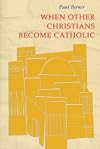
One of the pieces of “required reading” for the 2014 meeting of the Federation of Diocesan Liturgical Commissions (FDLC) is Fr. Paul Turner’s When Other Christians Become Catholic (Pueblo, 2007). This short tome covers a number of issues related to the reception into the Church of Christians from other ecclesial communities. This includes an overview of the history of how other Christians have been received, starting with the early years of the Church when adherents to heretical sects show more (such as the Arians) joined the true faith; a look at how other Christians receive members into their communities; and a look at issues that still remain with the process as it was renewed after Vatican Council II.
Fr. Turner’s overarching message, however, is to remind us that when other Christians choose to enter into full communion with the Catholic Church, they are not doing so in a vacuum or as if their previous faith commitments were invalid. This is both a theological and a pastoral point: theological in that we must take seriously the validity and reality of the person’s baptism, even if that baptism occurred in a community not connected with the Catholic Church. The question of whether to recognize other baptisms was decided in the affirmative by the ancient Church; this presupposes that God is really and truly acting in their lives even before their movement towards the Catholic Church.
The point is pastoral because, in practice, many Christians come away from the process of reception into the Church with the impression that their baptisms were somehow “lesser” because they did not occur in a Catholic context. Fr. Turner puts the blame for this squarely on the practice of including baptized candidates for full communion in the same preparation program as unbaptized catechumens who are preparing for full initiation (Baptism, Confirmation, and Eucharist), culminating in a combined rite at the Easter Vigil. As Fr. Turner states,
"By adopting Easter as the paradigmatic occasion for celebrating the rite of reception, the Catholic Church in the United States has reframed the meaning of the rite and its attendant preparation into something more resembling a conversion, a dying and a rising – rather than an evolution, a coming to full communion… Such a conversion is a symptom that something has gone wrong with the rite of reception. The council envisioned an ecumenically sensitive rite that would promote the concept of one baptism among Christians. But the rite of reception is being celebrated as a near equivalent with the initiation of the unbaptized."
The only downside to Fr. Turner’s book is a linguistic one; because the book was published in 2007, it does not take into account the 2010 translation of the Roman Missal. As a result, his discussion of such texts (including an otherwise excellent examination of the text of the Mass for Christian Unity) do not reflect the current liturgical language, although his overarching points are still relevant.
Nevertheless, the book is highly recommended for it’s overall theme and discussion of the historical and ecumenical nature of welcoming other Christians into full communion. When Other Christians Become Catholic is a valuable resource for pastors, evangelists, and RCIA leaders and team members. show less
Fr. Turner’s overarching message, however, is to remind us that when other Christians choose to enter into full communion with the Catholic Church, they are not doing so in a vacuum or as if their previous faith commitments were invalid. This is both a theological and a pastoral point: theological in that we must take seriously the validity and reality of the person’s baptism, even if that baptism occurred in a community not connected with the Catholic Church. The question of whether to recognize other baptisms was decided in the affirmative by the ancient Church; this presupposes that God is really and truly acting in their lives even before their movement towards the Catholic Church.
The point is pastoral because, in practice, many Christians come away from the process of reception into the Church with the impression that their baptisms were somehow “lesser” because they did not occur in a Catholic context. Fr. Turner puts the blame for this squarely on the practice of including baptized candidates for full communion in the same preparation program as unbaptized catechumens who are preparing for full initiation (Baptism, Confirmation, and Eucharist), culminating in a combined rite at the Easter Vigil. As Fr. Turner states,
"By adopting Easter as the paradigmatic occasion for celebrating the rite of reception, the Catholic Church in the United States has reframed the meaning of the rite and its attendant preparation into something more resembling a conversion, a dying and a rising – rather than an evolution, a coming to full communion… Such a conversion is a symptom that something has gone wrong with the rite of reception. The council envisioned an ecumenically sensitive rite that would promote the concept of one baptism among Christians. But the rite of reception is being celebrated as a near equivalent with the initiation of the unbaptized."
The only downside to Fr. Turner’s book is a linguistic one; because the book was published in 2007, it does not take into account the 2010 translation of the Roman Missal. As a result, his discussion of such texts (including an otherwise excellent examination of the text of the Mass for Christian Unity) do not reflect the current liturgical language, although his overarching points are still relevant.
Nevertheless, the book is highly recommended for it’s overall theme and discussion of the historical and ecumenical nature of welcoming other Christians into full communion. When Other Christians Become Catholic is a valuable resource for pastors, evangelists, and RCIA leaders and team members. show less
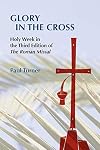
Very thorough overview of the liturgies of Holy Week. Especially useful this year as we figure out what's changed and what we're deciding not to change. What really give this book the extra boost is that, often, Turner traces the history of a liturgical element through the revisions of the 50s, the changes after V2, right up to the RM3. Helpful to understand what's an arbitrary change and what deserves more consideration. Extremely useful -- I'll be pulling this out every year.
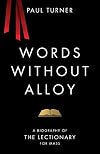
Never have I read a more tedious book. Yes, "Words without Alloy" details the process of the revision of the lectionary, but the presentation of that detailmakes the book difficult to read.
Ages of Initiation: The First Two Christian Millennia (with CD-ROM of Source Excerpts) by Paul Turner
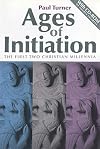
By collating primary sources throughout the history of the church, Turner has produced a wonderful research tool for anyone interested in the history of the Sacrament of Baptism. Especially helpful in the methods and understandings of the church - a must have for the serious scholar!
Awards

You May Also Like


Associated Authors
Statistics
- Works
- 57
- Members
- 749
- Popularity
- #33,950
- Rating
- 4.0
- Reviews
- 7
- ISBNs
- 158
- Languages
- 2
- Favorited
- 1