
David Murray (10) (1966–)
Author of Reset: Living a Grace-Paced Life in a Burnout Culture
For other authors named David Murray, see the disambiguation page.
David Murray (10) has been aliased into David P. Murray.
Series
Works by David Murray
Works have been aliased into David P. Murray.
Jesus on Every Page: 10 Simple Ways to Seek and Find Christ in the Old Testament (2013) — Contributor — 454 copies
The Happy Christian: Ten Ways to Be a Joyful Believer in a Gloomy World (2015) 124 copies, 4 reviews
Why Am I Feeling Like This?: A Teen's Guide to Freedom from Anxiety and Depression (2020) 114 copies, 2 reviews
Why Is My Teenager Feeling Like This?: A Guide for Helping Teens through Anxiety and Depression (2020) 101 copies, 1 review
Tagged
Common Knowledge
- Legal name
- Murray, David Philip
- Birthdate
- 1966-05-28
- Gender
- male
- Occupations
- Professor of Old Testament and Practical Theology
- Nationality
- UK
- Birthplace
- Glasgow, Scotland, UK
- Places of residence
- Grand Rapids, Michigan, USA
- Associated Place (for map)
- UK
Members
Reviews
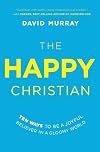
It's tough to be happy, even in a time and place where a lot of people have relatively more peace, more wealth, and more freedom than ever. We live in a world where, thanks to the 24 hour news cycle, we can be bombarded by bad news literally all the time. Time or distance no longer separate us from the pain of the world at large, which is great if we can pray and even physically lend a hand, but can also lead to sense of hopelessness as images of catastrophe and injustice come to us from all show more over the world. Even without that, there's our own brains that start to work against us, trained from a young age to critique and pick out the bad and set about the project of correcting it, it's not always easy for us to zoom in on the good in any situation. In our daily race against the clock to accomplish all the things on our to do list before another day is lost, it's all too easy to get down and depressed about all the things we're not doing and all the less than ideal situations we can't fix until pessimism is always the order of the day. Murray observes all this in The Happy Christian and then gets down to applying gospel truths and modern positive psychology in a series of "formulas" meant to help us escape from the downward spiral of hopelessness it's too easy to get trapped in.
Murray's decision to marry up psychology with biblical teaching is an interesting and effective one. Murray's chapters are filled with the scientific value of optimism, prescriptions for how much negativity can be mixed with positivity to still live a hopeful, happy life, and scientific evidence for the daily practice of more positive habits that can be exercised by Christians in conjunction with their faith. In the course of it all, Murray makes a good case for how modern positive psychology is is right in line with God's will and promise for our lives.
Though I appreciated the psychology aspect, I was much more in tune with the chapters that leaned more on biblical teaching. The chapter about our daily duel with our to-do lists that always ends in disappointment was cast in a different light when Murray reminds readers that Jesus's work, the hardest and most important, is already done. Additionally, the chapter about taking more joy in our work by doing everything with passion and honesty to the glory of God, and how that can give meaning and purpose to even the most insignificant of jobs, really hit home. Murray even closes with a very prescient topic for this day and age: diversity. In this chapter he makes a great case for God's desire to reach all nations and for how diversifying our communities and our churches is key in future joy as we each stand to reap the benefits of plugging in every race and culture's strengths into a united church.
On the whole, I was impressed and encouraged by Murray's book and came away with some great insights. Additionally, I was impressed that Murray, in addition to providing solid reasoning and theology, took the next step and provided readers of The Happy Christian with practical and often biblical ways to start introducing more hope and positivity into our lives, a practical aspect missing from too many Christian books. I'd encourage anybody who is wondering why happiness seems to be a little too hard to hold onto, to give Murray's book a read and hope that it changes your perspective the way it changed mine.
Whatever you will complete or not today, rest in the only work that will never need to be done again. Rest in the fact that Jesus has done the most impossible job in the world, done it perfectly, and made it available. Take it. Enjoy it. Build your life on it. Let it change your whole view of your life and work. Use His work to put your work in perspective. Believe His work is counted as yours. Despite all that you fear and dread about the next ten hours - a critical boss, a vicious competitor, a looming deadline, a complaining customer, an impossible sales target, unrelenting children, monotonous drudge - you have Christ's perfect work credited to your account. Yes, it is counted as yours, as if you did it. Are you humble enough to receive it? show less
Murray's decision to marry up psychology with biblical teaching is an interesting and effective one. Murray's chapters are filled with the scientific value of optimism, prescriptions for how much negativity can be mixed with positivity to still live a hopeful, happy life, and scientific evidence for the daily practice of more positive habits that can be exercised by Christians in conjunction with their faith. In the course of it all, Murray makes a good case for how modern positive psychology is is right in line with God's will and promise for our lives.
Though I appreciated the psychology aspect, I was much more in tune with the chapters that leaned more on biblical teaching. The chapter about our daily duel with our to-do lists that always ends in disappointment was cast in a different light when Murray reminds readers that Jesus's work, the hardest and most important, is already done. Additionally, the chapter about taking more joy in our work by doing everything with passion and honesty to the glory of God, and how that can give meaning and purpose to even the most insignificant of jobs, really hit home. Murray even closes with a very prescient topic for this day and age: diversity. In this chapter he makes a great case for God's desire to reach all nations and for how diversifying our communities and our churches is key in future joy as we each stand to reap the benefits of plugging in every race and culture's strengths into a united church.
On the whole, I was impressed and encouraged by Murray's book and came away with some great insights. Additionally, I was impressed that Murray, in addition to providing solid reasoning and theology, took the next step and provided readers of The Happy Christian with practical and often biblical ways to start introducing more hope and positivity into our lives, a practical aspect missing from too many Christian books. I'd encourage anybody who is wondering why happiness seems to be a little too hard to hold onto, to give Murray's book a read and hope that it changes your perspective the way it changed mine.
Whatever you will complete or not today, rest in the only work that will never need to be done again. Rest in the fact that Jesus has done the most impossible job in the world, done it perfectly, and made it available. Take it. Enjoy it. Build your life on it. Let it change your whole view of your life and work. Use His work to put your work in perspective. Believe His work is counted as yours. Despite all that you fear and dread about the next ten hours - a critical boss, a vicious competitor, a looming deadline, a complaining customer, an impossible sales target, unrelenting children, monotonous drudge - you have Christ's perfect work credited to your account. Yes, it is counted as yours, as if you did it. Are you humble enough to receive it? show less
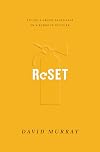
Reset: Living a Grace-Paced Life in a Burnout Culture is one of the most helpful Christian living books I’ve read in a long time. David Murray has experienced burnout in his pastoral life to the point of affecting his health. He brings a wealth of wisdom to the subject. This book isn’t just for pastors. It’s valuable for all Christians who feel worn down and exhausted by life.
Murray structures the book around the concept of taking your car to the garage. Each chapter is a “repair show more bay.” Murray quotes Brady Boyd from Addicted to Busy , “Ultimately, every problem I see in every person I know is a problem of moving too fast for too long in too many aspects of life.” Murray is not calling for Christians to drop out of service and kick their feet up. He is calling for them to take care of themselves, so that they can serve well.
Murray says that many people’s fundamental and foundational error is we forget a fundamental and foundational truth—God is our Creator. He writes:
Lots of people call God Creator, but live like evolutionists. It’s as if life is about the survival of the fittest rather than about living like a dependent creature—trusting or Creator rather than ourselves—and according to our Maker’s instructions.
Reset: Living a Grace-Paced Life in a Burnout Culture is well researched. Murray pulls valuable insight from a variety of sources, but frames it all with scripture and God’s instruction for how we are to take care of ourselves. I highly recommend this book and look forward to follow-up he is writing with his wife. show less
Murray structures the book around the concept of taking your car to the garage. Each chapter is a “repair show more bay.” Murray quotes Brady Boyd from Addicted to Busy , “Ultimately, every problem I see in every person I know is a problem of moving too fast for too long in too many aspects of life.” Murray is not calling for Christians to drop out of service and kick their feet up. He is calling for them to take care of themselves, so that they can serve well.
Murray says that many people’s fundamental and foundational error is we forget a fundamental and foundational truth—God is our Creator. He writes:
Lots of people call God Creator, but live like evolutionists. It’s as if life is about the survival of the fittest rather than about living like a dependent creature—trusting or Creator rather than ourselves—and according to our Maker’s instructions.
Reset: Living a Grace-Paced Life in a Burnout Culture is well researched. Murray pulls valuable insight from a variety of sources, but frames it all with scripture and God’s instruction for how we are to take care of ourselves. I highly recommend this book and look forward to follow-up he is writing with his wife. show less
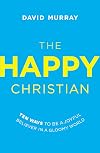
The Happy Christian is a book that encourage Christians to have a positive faith and life. After an introductory chapter where Dr. Murray shares his hopes for his book and identifies some of the reasons for negativity and unhappiness in our culture, he helps his readers to understand ten “biblical and practical” ways to increase happiness.
First, he encourages us to watch our media diet by applying Philippians 4:8. In one of my favorite chapters of the book, Dr. Murray comforts his show more readers who are constantly bombarded with demands with the good news that regarding our relationship to God, “It is finished!” In chapter 4, he teaches us to think and talk more about Jesus than other Christians. He encourages believers to have a healthy view of the past and cultivate optimism for the future. Chapter 6 is another of my favorites in it Dr. Murray discusses how looking for God common grace in the world encourages Christian happiness. The chapter 'Happy Praise' was probably the one that was the most personally convicting part of the book because I am very good at criticizing but poor at praising. Dr. Murray shows that giving to charity, giving of thanks, giving in marriage, giving of forgiveness, and giving in leadership encourages happiness. In chapter 9, he looks at work through the lens of Romans 11:36 “to turn work into a big positive.” Finally, the last chapter discusses that diversity is greater than uniformity.
The Happy Christian is a practical, encouraging, and Christ-centered book. Since I am generally a morose person (At least one person from a previous church nicknamed me Eeyore.), this book was a great help for me. I plan to read it again and with God's help to start implementing the biblical ideas in this book.
There are two issues that may be problematic to some. First, some may object to Dr. Murray's citing of secular psychologists and other happiness experts. However, he makes clear his reason for citing them, “God is using them not only to confirm the Bible's teaching...but also to work out practical details of how to increase gratitude in our lives for everyone's benefit.” Secondly, I have a difficult time seeing how the final chapter about diversity fits in with the topic of the rest of the book. show less
First, he encourages us to watch our media diet by applying Philippians 4:8. In one of my favorite chapters of the book, Dr. Murray comforts his show more readers who are constantly bombarded with demands with the good news that regarding our relationship to God, “It is finished!” In chapter 4, he teaches us to think and talk more about Jesus than other Christians. He encourages believers to have a healthy view of the past and cultivate optimism for the future. Chapter 6 is another of my favorites in it Dr. Murray discusses how looking for God common grace in the world encourages Christian happiness. The chapter 'Happy Praise' was probably the one that was the most personally convicting part of the book because I am very good at criticizing but poor at praising. Dr. Murray shows that giving to charity, giving of thanks, giving in marriage, giving of forgiveness, and giving in leadership encourages happiness. In chapter 9, he looks at work through the lens of Romans 11:36 “to turn work into a big positive.” Finally, the last chapter discusses that diversity is greater than uniformity.
The Happy Christian is a practical, encouraging, and Christ-centered book. Since I am generally a morose person (At least one person from a previous church nicknamed me Eeyore.), this book was a great help for me. I plan to read it again and with God's help to start implementing the biblical ideas in this book.
There are two issues that may be problematic to some. First, some may object to Dr. Murray's citing of secular psychologists and other happiness experts. However, he makes clear his reason for citing them, “God is using them not only to confirm the Bible's teaching...but also to work out practical details of how to increase gratitude in our lives for everyone's benefit.” Secondly, I have a difficult time seeing how the final chapter about diversity fits in with the topic of the rest of the book. show less
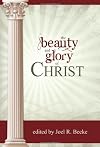
This big tome from William Vandoodewaard, a church history professor at Puritan Seminary, is a very thorough text book borne of much study that meticulously charts the history of the exegesis of the opening chapters of Genesis from the early church to the present day, seeking in particular to plot the existence of a continuous acceptance of the traditional view.
It demonstrates well Vos's contention that heresy only comes in when people deliberately raise the so-called results of science to a show more place above Scripture. Meanwhile a multiplicity of interpretations have grown up, especially in the last 150 years that have clearly been suspect if not actually heretical in Vosian terms. Vandoodeward cites and demonstrates encouraging evidence that there is a return to a more traditional approach but there is no shortage of candidates (Alexander and Sailhamer for example) keen to find a new way through.
It is interesting that where an institution such as Southern Baptist Seminary has faced a fight with liberalism it has tended to move into a more conservative position on creation as well as everything else. This can be seen on a smaller scale at Westminster Seminary following the Enns saga. Certainly the idea that creationism is the preserve of fundamentalists is quietly debunked in this book. Whitcomb and Morris get perhaps surprisingly little coverage and are even criticised to some extent. Oh yes, and great title! (Someone very kindly passed this volume on to me so I'm not sure if it is expensive). show less
It demonstrates well Vos's contention that heresy only comes in when people deliberately raise the so-called results of science to a show more place above Scripture. Meanwhile a multiplicity of interpretations have grown up, especially in the last 150 years that have clearly been suspect if not actually heretical in Vosian terms. Vandoodeward cites and demonstrates encouraging evidence that there is a return to a more traditional approach but there is no shortage of candidates (Alexander and Sailhamer for example) keen to find a new way through.
It is interesting that where an institution such as Southern Baptist Seminary has faced a fight with liberalism it has tended to move into a more conservative position on creation as well as everything else. This can be seen on a smaller scale at Westminster Seminary following the Enns saga. Certainly the idea that creationism is the preserve of fundamentalists is quietly debunked in this book. Whitcomb and Morris get perhaps surprisingly little coverage and are even criticised to some extent. Oh yes, and great title! (Someone very kindly passed this volume on to me so I'm not sure if it is expensive). show less
Lists
You May Also Like
Associated Authors
Statistics
- Works
- 28
- Members
- 2,339
- Popularity
- #10,968
- Rating
- 4.1
- Reviews
- 12
- ISBNs
- 127
- Languages
- 11