
Philemon Sturges (1929–2005)
Author of The Little Red Hen (Makes a Pizza)
About the Author
Works by Philemon Sturges
Tagged
Common Knowledge
- Legal name
- Sturges III, Philemon Fowler
- Birthdate
- 1929-06-10
- Date of death
- 2005
- Gender
- male
- Occupations
- architect
author - Cause of death
- lung infection
- Nationality
- USA
- Birthplace
- La Grande, Oregon, USA
- Places of residence
- Princeton, Massachusetts, USA
- Associated Place (for map)
- USA
Members
Reviews

Two young siblings collect ten flashing fireflies in a jar one summer night in this rhyming counting book from author Philemon Sturges and illustrator Anna Vojtech. One by one they capture the little creatures, entranced by their light. But when those lights grow dim in captivity, the children release the fireflies, who flit away into the dark night...
One of a number of picture books I requested from the library recently, after being entranced by the sight of fireflies lightning up in my show more back yard one evening, Ten Flashing Fireflies pairs an engaging text in rhyme with lovely, dark-toned illustrations that capture the beauty of the night, and the wonder of these twinkling creatures. I really appreciated the fact that the children are moved to free the fireflies, when they realize they are slowly killing them, and think that this would make a lovely bedtime book during the summer. show less
One of a number of picture books I requested from the library recently, after being entranced by the sight of fireflies lightning up in my show more back yard one evening, Ten Flashing Fireflies pairs an engaging text in rhyme with lovely, dark-toned illustrations that capture the beauty of the night, and the wonder of these twinkling creatures. I really appreciated the fact that the children are moved to free the fireflies, when they realize they are slowly killing them, and think that this would make a lovely bedtime book during the summer. show less

A young reader's survey of the bridges of the world, from the famous Golden Gate Bridge (pictured on the cover) to the Segovia Aqueduct, built in the first century CE, Philemon Sturges' Bridges Are to Cross presents an amazing variety of structures. Here is the rope suspension bridge - both new and old - built across the Apurímac River of Peru; and here is the famous Brooklyn Bridge, built along the same principles, though made of wire and stone. The graceful simplicity of the wooden show more Engetsu Bridge, in Japan's Ritsurin Koen (Park), contrasts nicely with the ornate splendor of France's Château de Chenonheau, which is both palace and bridge.
There isn't a lot of text here - every two-page spread includes a few sentences about the bridge under discussion - making this an ideal choice for early readers, and younger children with a limited attention span. The cut-paper illustrations by Giles Laroche are engaging, and reminded me of some of David Wisniewski's work. All in all, a good choice for young readers with an interest in technology and construction. I'm not sure they'll get too much insight into how these bridges were made, but they'll certainly find a great place to start, in terms of bridges to investigate. show less
There isn't a lot of text here - every two-page spread includes a few sentences about the bridge under discussion - making this an ideal choice for early readers, and younger children with a limited attention span. The cut-paper illustrations by Giles Laroche are engaging, and reminded me of some of David Wisniewski's work. All in all, a good choice for young readers with an interest in technology and construction. I'm not sure they'll get too much insight into how these bridges were made, but they'll certainly find a great place to start, in terms of bridges to investigate. show less
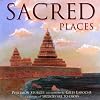
Sacred places from five major religions - Buddhism, Hinduism, Christianity, Islam, and Judaism - are depicted, written briefly about, and tied in to a broader narrative that explains the worth, connections, and differences between sacred places across religions. Inspiring text and breath-taking illustrations make this book marvelous to read and experience. I wish there had been more representation of sacred places on the South American, African, and Australian continents, however, or at show more least been some explanation as to why they were largely unrepresented. There were just two sacred places in Africa included, and NO sacred places from South America or Australia were included. Of course, the author and illustrator had to limit the scope of the places they covered. For this I do not blame them! But I would have loved to see them acknowledge that there are hundreds of thousands of sacred places that fall on other continents and are part of other religions that they couldn't include realistically. Just an acknowledgement would suffice! show less
Read/Browse/Spend time with this book for the illustrations alone – awesome!!! Pardon my overly enthusiastic praise for Giles Laroche’s wonderfully-crafted artwork: by no means does that take away from the content. This is an excellent, sober, and seemingly accurate introduction to a number of the world’s religions (see pages 2-3). Once the concisely articulated groundwork has been laid, the fun begins. For this reader, Laroche’s artwork is tour-de-force material in its attention to show more detail, communicating humor and reverence and evoking other emotions. The accompanying text on the ensuing pages does it job and does not intrude. Also, the book’s end is a treasure in its own right: first, a subtle acknowledgement of a larger sense of spirituality in a two-page depiction of the night sky; a very cool map of the sacred sites and their locations, and a legend detailing the sources for the icons used throughout the book.
Bravo! show less
Bravo! show less
Lists
Awards


You May Also Like


Associated Authors
Statistics
- Works
- 32
- Members
- 8,237
- Popularity
- #2,934
- Rating
- 3.8
- Reviews
- 140
- ISBNs
- 124
- Languages
- 1
- Favorited
- 2