
John Augustus Williams (1824–1903)
Author of Life of Elder John Smith
Works by John Augustus Williams
Rosa Emerson 1 copy
Tagged
Common Knowledge
- Legal name
- Williams, John Augustus
- Birthdate
- 1824-09-25
- Date of death
- 1903-11-07
- Gender
- male
- Burial location
- Spring Hill Cemetery, Harrodsburg, Kentucky, USA
- Associated Place (for map)
- Kentucky, USA
Members
Reviews
The Life of Elder "Raccoon" John Smith: With Some Account of the Rise and Progress of the Current Reformation by John Augustus Williams
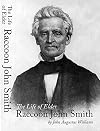
If you don’t know from where you have come, it’s hard to know who you are or where you might go. Such is the central conceit of the study of history; such is also the reason we do well to understand our forebears in the faith.
To this end, The Life of Elder “Raccoon” John Smith: With Some Account of the Rise and Progress of the Current Reformation by John Augustus Williams proves illuminating and helpful for understanding many aspects of the Restoration Movement.
The book is certainly show more as advertised: the author delved into incredible detail regarding the life and work of John Smith.
Smith was born in what was the “wild west” of the late eighteenth century in western Virginia and would spend most of his life in eastern Kentucky. The author fully elaborated on the circumstances of his birth and the development of his faith among the (Calvinistic) Baptists. He yearned for formal education but received little, and yet proved a good student of the Bible and an incomparable speaker. He well developed as a preacher in advancing the Calvinistic ideology of the Baptists.
Yet not everything about the Calvinism of the Baptists sat right with John Smith, and his personal studies and qualms would converge with the advancement of “the reformation” (as the Restoration Movement was originally known) in Baptist circles in the 1820s.
At first Smith did not think much of Alexander Campbell but grew to appreciate him and his efforts. Yet whereas Campbell had been raised in a Presbyterian environment, as had his father as well as Barton W. Stone, and had significantly shifted in terms of church affiliation and association, John Smith had been a Baptist and still considered himself as among Baptists, continued to work with and preach for many of the same Baptist churches where he had previously advocated for a more Calvinistic understanding of things, and thus represented quite a compelling and controversial figure.
The author described in depth many of the heartbreaks, disasters, challenges, and forms of resistance which John Smith experienced throughout his ministry in the early nineteenth century. Yet it is striking how he managed it all with equanimity. The story of John Smith embodies the fullness of the restoration spirit: seeking to return to the Bible as guide to faith and practice, seeking to be Christians only, but never presuming to be the only Christians, approaching the faith with a gentle and kind spirit of association and not sectarianism. The author described how Smith would go to great lengths to never cause division; the underhanded tactics of his opponents were fully displayed, yet even though he strongly disagreed with their Calvinistic ideology, John Smith still loved those Calvinistic Baptists and did not himself demand their disassociation.
The full description of the beliefs and points of contention in the early 19th century prove instructive for us today. It can help explain why there has been so much emphasis on the resistance to Calvinism, and also how and why it proved easy to see Calvinism everywhere and in everything. Yet, ironically, the passage of time has also demonstrated how many Baptists and Evangelicals today would have been denounced for “Campbellism” by their 19th century forebears, especially in terms of the the demand for testimony as attesting to conversion versus accepting a believer’s confession of faith.
Throughout his life, John Smith remained a man of strong personal conviction with a sharp ability to proclaim the Gospel, yet retained a compassionate and kindly disposition toward others. Yes, many of the tendencies of the Restoration Movement can seem contradictory, but they can be held together in tension. John Smith reflected it well. show less
To this end, The Life of Elder “Raccoon” John Smith: With Some Account of the Rise and Progress of the Current Reformation by John Augustus Williams proves illuminating and helpful for understanding many aspects of the Restoration Movement.
The book is certainly show more as advertised: the author delved into incredible detail regarding the life and work of John Smith.
Smith was born in what was the “wild west” of the late eighteenth century in western Virginia and would spend most of his life in eastern Kentucky. The author fully elaborated on the circumstances of his birth and the development of his faith among the (Calvinistic) Baptists. He yearned for formal education but received little, and yet proved a good student of the Bible and an incomparable speaker. He well developed as a preacher in advancing the Calvinistic ideology of the Baptists.
Yet not everything about the Calvinism of the Baptists sat right with John Smith, and his personal studies and qualms would converge with the advancement of “the reformation” (as the Restoration Movement was originally known) in Baptist circles in the 1820s.
At first Smith did not think much of Alexander Campbell but grew to appreciate him and his efforts. Yet whereas Campbell had been raised in a Presbyterian environment, as had his father as well as Barton W. Stone, and had significantly shifted in terms of church affiliation and association, John Smith had been a Baptist and still considered himself as among Baptists, continued to work with and preach for many of the same Baptist churches where he had previously advocated for a more Calvinistic understanding of things, and thus represented quite a compelling and controversial figure.
The author described in depth many of the heartbreaks, disasters, challenges, and forms of resistance which John Smith experienced throughout his ministry in the early nineteenth century. Yet it is striking how he managed it all with equanimity. The story of John Smith embodies the fullness of the restoration spirit: seeking to return to the Bible as guide to faith and practice, seeking to be Christians only, but never presuming to be the only Christians, approaching the faith with a gentle and kind spirit of association and not sectarianism. The author described how Smith would go to great lengths to never cause division; the underhanded tactics of his opponents were fully displayed, yet even though he strongly disagreed with their Calvinistic ideology, John Smith still loved those Calvinistic Baptists and did not himself demand their disassociation.
The full description of the beliefs and points of contention in the early 19th century prove instructive for us today. It can help explain why there has been so much emphasis on the resistance to Calvinism, and also how and why it proved easy to see Calvinism everywhere and in everything. Yet, ironically, the passage of time has also demonstrated how many Baptists and Evangelicals today would have been denounced for “Campbellism” by their 19th century forebears, especially in terms of the the demand for testimony as attesting to conversion versus accepting a believer’s confession of faith.
Throughout his life, John Smith remained a man of strong personal conviction with a sharp ability to proclaim the Gospel, yet retained a compassionate and kindly disposition toward others. Yes, many of the tendencies of the Restoration Movement can seem contradictory, but they can be held together in tension. John Smith reflected it well. show less
Statistics
- Works
- 3
- Members
- 51
- Popularity
- #311,766
- Rating
- 4.0
- Reviews
- 1
- ISBNs
- 5