
Elinor Mordaunt (1872–1942)
Author of The Villa and The Vortex: Supernatural Stories, 1916-1924 (the Weirds)
About the Author
Works by Elinor Mordaunt
The Family. 3 copies
Blitz kids 2 copies
To sea! To sea! 2 copies
Rich tapestry, 2 copies
Here too is valour 2 copies
Reputation 2 copies
The rose of youth 2 copies
The park wall 2 copies
Laura Creichton 2 copies
Traveler's pack 1 copy
This was our life 1 copy
While there's life 1 copy
Hobby horse 1 copy
Tropic heat 1 copy
The garden of contentment 1 copy
The little soul 1 copy
Judge not 1 copy
Father and daughter 1 copy
The pendulum 1 copy
Short shipment 1 copy
People, houses & ships 1 copy
The real Sally : a novel 1 copy
The dark fire 1 copy
These generations 1 copy
Cross winds 1 copy
Purely for pleasure 1 copy
Mrs. Van Kleek 1 copy
Prelude to death 1 copy
Royals free 1 copy
Sinabada 1 copy
Roses in December 1 copy
Pity of the world 1 copy
Associated Works
Women's Weird: Strange Stories by Women, 1890-1940 (Handheld Classics) (2019) — Contributor — 87 copies, 2 reviews
Tagged
Common Knowledge
- Legal name
- Mordaunt, Evelyn May
- Other names
- Riposte, A.
Clowes, E. M. - Birthdate
- 1872-05-07
- Date of death
- 1942-06-25
- Gender
- female
- Occupations
- author
writer
traveller - Nationality
- UK
- Birthplace
- Cotgrave, Nottinghamshire, England, UK
- Places of residence
- Melbourne, Victoria, Australia
Mauritius - Place of death
- Oxford, Oxfordshire, England, UK
- Associated Place (for map)
- England, UK
Members
Reviews
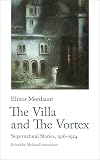
Melissa Edmundson is doing much to revive neglected and forgotten works of speculative fiction by female writers. She edited Avenging Angels: Ghost Stories by Victorian Women Writers (2018) for Victorian Secrets, which was followed by two anthologies published by Handheld Press: Women’s Weird: Strange Stories by Women, 1890-1940 (2019) and Women’s Weird 2: More Strange Stories by Women, 1891-1937 (2020). Handheld Press has now published The Villa and the Vortex, a single-author show more collection curated by Edmundson dedicated to writer Elinor Mordaunt (1872 – 1942). The volume brings together several of Mordaunt’s stories published between 1914 and 1924. As Edmundson explains in her introduction, Mordaunt was a colourful character who lived an eventful life:
… a life that would have fitted well into the plot of one of her many novels. She was an independent, free-spirited woman, travelling the world, and visiting North and South America, Africa, Asia, and Australia. She lost a fiancé early in life, escaped from one abusive husband [who once offered her as a stake during a card game], separated from another, and raised a son entirely on her own. She survived malaria, the zeppelin attacks on London during the First World War, and the 1918-19 Spanish flu. Amidst this life of adventure, Mordaunt was constantly gathering material for her writing.
Reading this collection of supernatural tales, I was surprised that Mordaunt, admired by Virginia Woolf amongst others, is not a better known writer. Certainly, her stories reflect themes and repeat tropes which were common in the supernatural fiction of the period, but none of them feels derivative, and most have an original slant which distinguishes them from similar tales by other authors. The writing style is atmospheric and rich, perhaps slightly overwrought at times, but even then, quite in keeping with the aura of decadence expressed in the stories.
During her lifetime, Mordaunt’s works were favourably compared to those of Algernon Blackwood and H.G. Wells. The references to these two authors give a good indication of Mordaunt’s brand of supernatural fiction which, rather than ghost stories in the traditional vein, venture more into the realm of horror and the weird. Creations like the village witch in The Country-side, and the eponymous prehistoric revenant in Hodge, have a strong basis in folklore and folk horror. A sense of mysticism a-là Machen pervades The Fountain, whose female protagonist is at once “physical” and “elemental” – a woman ethereal as mist… not altogether a woman, nor altogether water. Of all the stories in this collection, I felt that Mordaunt came closest to Wells in the urban Gothic Luz, set in a foggy London which disorientates the vulnerable female narrator.
Most of the stories are, in essence, psychological studies. That is certainly true of the two title pieces, despite their being very different in nature. Playwright Lawrence Kestervon, the protagonist of The Vortex, becomes obsessed with the success of his latest play but things go awry when the actors are possessed by the characters their play. The Villa – inspired by a house which Mordaunt actually visited on a trip to Ragusa (in present-day Croatia) – has elements of the haunted house sub-genre but, tellingly, what prompts the curse which lies on the house is a young couple wishing ill of its original owner. Their guilt following the owner’s death seems to project itself onto the house which, in return, avenges itself on subsequent inhabitants.
In her well-researched and erudite introduction, Melissa Edmundson examines each story in detail and makes a compelling case for including Mordaunt in the canon of great supernatural writers of the 20th Century. This collection is certainly a promising step in that direction.
https://endsoftheword.blogspot.com/2021/12/The-Villa-The-Vortex-Elinor-Mordaunt-... show less
… a life that would have fitted well into the plot of one of her many novels. She was an independent, free-spirited woman, travelling the world, and visiting North and South America, Africa, Asia, and Australia. She lost a fiancé early in life, escaped from one abusive husband [who once offered her as a stake during a card game], separated from another, and raised a son entirely on her own. She survived malaria, the zeppelin attacks on London during the First World War, and the 1918-19 Spanish flu. Amidst this life of adventure, Mordaunt was constantly gathering material for her writing.
Reading this collection of supernatural tales, I was surprised that Mordaunt, admired by Virginia Woolf amongst others, is not a better known writer. Certainly, her stories reflect themes and repeat tropes which were common in the supernatural fiction of the period, but none of them feels derivative, and most have an original slant which distinguishes them from similar tales by other authors. The writing style is atmospheric and rich, perhaps slightly overwrought at times, but even then, quite in keeping with the aura of decadence expressed in the stories.
During her lifetime, Mordaunt’s works were favourably compared to those of Algernon Blackwood and H.G. Wells. The references to these two authors give a good indication of Mordaunt’s brand of supernatural fiction which, rather than ghost stories in the traditional vein, venture more into the realm of horror and the weird. Creations like the village witch in The Country-side, and the eponymous prehistoric revenant in Hodge, have a strong basis in folklore and folk horror. A sense of mysticism a-là Machen pervades The Fountain, whose female protagonist is at once “physical” and “elemental” – a woman ethereal as mist… not altogether a woman, nor altogether water. Of all the stories in this collection, I felt that Mordaunt came closest to Wells in the urban Gothic Luz, set in a foggy London which disorientates the vulnerable female narrator.
Most of the stories are, in essence, psychological studies. That is certainly true of the two title pieces, despite their being very different in nature. Playwright Lawrence Kestervon, the protagonist of The Vortex, becomes obsessed with the success of his latest play but things go awry when the actors are possessed by the characters their play. The Villa – inspired by a house which Mordaunt actually visited on a trip to Ragusa (in present-day Croatia) – has elements of the haunted house sub-genre but, tellingly, what prompts the curse which lies on the house is a young couple wishing ill of its original owner. Their guilt following the owner’s death seems to project itself onto the house which, in return, avenges itself on subsequent inhabitants.
In her well-researched and erudite introduction, Melissa Edmundson examines each story in detail and makes a compelling case for including Mordaunt in the canon of great supernatural writers of the 20th Century. This collection is certainly a promising step in that direction.
https://endsoftheword.blogspot.com/2021/12/The-Villa-The-Vortex-Elinor-Mordaunt-... show less
Melissa Edmundson is doing much to revive neglected and forgotten works of speculative fiction by female writers. She edited Avenging Angels: Ghost Stories by Victorian Women Writers (2018) for Victorian Secrets, which was followed by two anthologies published by Handheld Press: Women’s Weird: Strange Stories by Women, 1890-1940 (2019) and Women’s Weird 2: More Strange Stories by Women, 1891-1937 (2020). Handheld Press has now published The Villa and the Vortex, a single-author show more collection curated by Edmundson dedicated to writer Elinor Mordaunt (1872 – 1942). The volume brings together several of Mordaunt’s stories published between 1914 and 1924. As Edmundson explains in her introduction, Mordaunt was a colourful character who lived an eventful life:
… a life that would have fitted well into the plot of one of her many novels. She was an independent, free-spirited woman, travelling the world, and visiting North and South America, Africa, Asia, and Australia. She lost a fiancé early in life, escaped from one abusive husband [who once offered her as a stake during a card game], separated from another, and raised a son entirely on her own. She survived malaria, the zeppelin attacks on London during the First World War, and the 1918-19 Spanish flu. Amidst this life of adventure, Mordaunt was constantly gathering material for her writing.
Reading this collection of supernatural tales, I was surprised that Mordaunt, admired by Virginia Woolf amongst others, is not a better known writer. Certainly, her stories reflect themes and repeat tropes which were common in the supernatural fiction of the period, but none of them feels derivative, and most have an original slant which distinguishes them from similar tales by other authors. The writing style is atmospheric and rich, perhaps slightly overwrought at times, but even then, quite in keeping with the aura of decadence expressed in the stories.
During her lifetime, Mordaunt’s works were favourably compared to those of Algernon Blackwood and H.G. Wells. The references to these two authors give a good indication of Mordaunt’s brand of supernatural fiction which, rather than ghost stories in the traditional vein, venture more into the realm of horror and the weird. Creations like the village witch in The Country-side, and the eponymous prehistoric revenant in Hodge, have a strong basis in folklore and folk horror. A sense of mysticism a-là Machen pervades The Fountain, whose female protagonist is at once “physical” and “elemental” – a woman ethereal as mist… not altogether a woman, nor altogether water. Of all the stories in this collection, I felt that Mordaunt came closest to Wells in the urban Gothic Luz, set in a foggy London which disorientates the vulnerable female narrator.
Most of the stories are, in essence, psychological studies. That is certainly true of the two title pieces, despite their being very different in nature. Playwright Lawrence Kestervon, the protagonist of The Vortex, becomes obsessed with the success of his latest play but things go awry when the actors are possessed by the characters their play. The Villa – inspired by a house which Mordaunt actually visited on a trip to Ragusa (in present-day Croatia) – has elements of the haunted house sub-genre but, tellingly, what prompts the curse which lies on the house is a young couple wishing ill of its original owner. Their guilt following the owner’s death seems to project itself onto the house which, in return, avenges itself on subsequent inhabitants.
In her well-researched and erudite introduction, Melissa Edmundson examines each story in detail and makes a compelling case for including Mordaunt in the canon of great supernatural writers of the 20th Century. This collection is certainly a promising step in that direction.
https://endsoftheword.blogspot.com/2021/12/The-Villa-The-Vortex-Elinor-Mordaunt-... show less
… a life that would have fitted well into the plot of one of her many novels. She was an independent, free-spirited woman, travelling the world, and visiting North and South America, Africa, Asia, and Australia. She lost a fiancé early in life, escaped from one abusive husband [who once offered her as a stake during a card game], separated from another, and raised a son entirely on her own. She survived malaria, the zeppelin attacks on London during the First World War, and the 1918-19 Spanish flu. Amidst this life of adventure, Mordaunt was constantly gathering material for her writing.
Reading this collection of supernatural tales, I was surprised that Mordaunt, admired by Virginia Woolf amongst others, is not a better known writer. Certainly, her stories reflect themes and repeat tropes which were common in the supernatural fiction of the period, but none of them feels derivative, and most have an original slant which distinguishes them from similar tales by other authors. The writing style is atmospheric and rich, perhaps slightly overwrought at times, but even then, quite in keeping with the aura of decadence expressed in the stories.
During her lifetime, Mordaunt’s works were favourably compared to those of Algernon Blackwood and H.G. Wells. The references to these two authors give a good indication of Mordaunt’s brand of supernatural fiction which, rather than ghost stories in the traditional vein, venture more into the realm of horror and the weird. Creations like the village witch in The Country-side, and the eponymous prehistoric revenant in Hodge, have a strong basis in folklore and folk horror. A sense of mysticism a-là Machen pervades The Fountain, whose female protagonist is at once “physical” and “elemental” – a woman ethereal as mist… not altogether a woman, nor altogether water. Of all the stories in this collection, I felt that Mordaunt came closest to Wells in the urban Gothic Luz, set in a foggy London which disorientates the vulnerable female narrator.
Most of the stories are, in essence, psychological studies. That is certainly true of the two title pieces, despite their being very different in nature. Playwright Lawrence Kestervon, the protagonist of The Vortex, becomes obsessed with the success of his latest play but things go awry when the actors are possessed by the characters their play. The Villa – inspired by a house which Mordaunt actually visited on a trip to Ragusa (in present-day Croatia) – has elements of the haunted house sub-genre but, tellingly, what prompts the curse which lies on the house is a young couple wishing ill of its original owner. Their guilt following the owner’s death seems to project itself onto the house which, in return, avenges itself on subsequent inhabitants.
In her well-researched and erudite introduction, Melissa Edmundson examines each story in detail and makes a compelling case for including Mordaunt in the canon of great supernatural writers of the 20th Century. This collection is certainly a promising step in that direction.
https://endsoftheword.blogspot.com/2021/12/The-Villa-The-Vortex-Elinor-Mordaunt-... show less
Lists
You May Also Like
Associated Authors
Statistics
- Works
- 48
- Also by
- 9
- Members
- 104
- Popularity
- #184,480
- Rating
- 3.7
- Reviews
- 2
- ISBNs
- 4