
Cheon Myeong-kwan
Author of Whale
About the Author
Disambiguation Notice:
The author's family name is Cheon. Cheon Myeong-kwan is his preferred romanization of his name.
Works by Cheon Myeong-kwan
Tagged
Common Knowledge
- Canonical name
- Cheon Myeong-kwan
- Legal name
- 천명관
- Other names
- Cheon, Myeong-kwan
- Birthdate
- 1964-01-01
- Gender
- male
- Nationality
- South Korea
- Birthplace
- Yongin, South Korea
- Disambiguation notice
- The author's family name is Cheon. Cheon Myeong-kwan is his preferred romanization of his name.
- Associated Place (for map)
- Yongin, South Korea
Members
Reviews
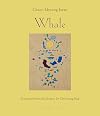
Rating: 4.5* of five
The Publisher Says: SHORTLISTED FOR THE 2023 INTERNATIONAL BOOKER PRIZE
A sweeping, multi-generational tale blending fable, farce, and fantasy—a masterpiece of modern fiction perfect for fans of One Hundred Years of Solitude
Whale is the English-language debut of a beloved and bestselling South Korean author, a born storyteller with a cinematic, darkly humorous, and thoroughly original perspective.
A woman sells her daughter to a passing beekeeper for two jars of honey. A show more baby weighing fifteen pounds is born in the depths of winter but named “Girl of Spring.” A storm brings down the roof of a ramshackle restaurant to reveal a hidden fortune. These are just a few of the events that set Myeong-kwan Cheon’s beautifully crafted, wild world in motion.
Whale, set in a remote village in South Korea, follows the lives of three linked characters: Geumbok, an extremely ambitious woman who has been chasing an indescribable thrill ever since she first saw a whale crest in the ocean; her mute daughter, Chunhui, who communicates with elephants; and a one-eyed woman who controls honeybees with a whistle. Brimming with surprises and wicked humor, Whale is an adventure-satire of epic proportions by one of the most original voices in South Korea.
I RECEIVED A DRC FROM THE PUBLISHER VIA EDELWEISS+. THANK YOU.
My Review: First, read this:
It really amazed me how very violent this read was. Women, queer people, and children are assaulted in every way you can conceive of on practically every page. This is not to say the women are never the abusers...one woman grooms and sexually assaults a young boy.
Korea, once a backwater place only marginally present in the world's mind, was never expected to be more than the setting of a future war between the US and China. The huge existential dread of living in a place known only as the scene of a war that hasn't happened yet and only a few years away from being the colony of a brutal imperial power that was determined to extirpate its history and culture made all the modern cultural and economic flowering of Korea inconceivable. That has given the worst, most predatory actors free rein to design the socioeconomic climate to empower the lowest, most venal people to excel. (Does this sound familiar, Westerners?) The present-day creators working in Korea are shouting their "NO MORE"s and "NEVER AGAIN"s into excellent, internationally important artworks. This short novel is definitely one of those.
There is a dark, bitter gallows humor in the recounting of the many and various forms of violence in the story. The fact is, there are many very uncomfortable line-crossings of every sort in this family's trip through modernizing Korea. What I understood from this is that the author, who presents, eg, sexual assault as a fact of life, was not sensationalizing the existence of it, or trying to invalidate the experience of it; but was instead making the awful aftermath, the survival of its brutalizing horror, the point of her story...not the acts themselves but the aftermath of quotidian sameness that every victim of violence must, in fact, return to. Dinner still needs to be made, the garden still needs to be weeded, there are bricks to be made and laid, your tedious humdrum existence chugs right along...and that, my spoiled fellow Westerners, is how life is.
Not sensationalized. Not minimized. Lived over, through, shoved into a dark closet and sealed as tightly as is possible. No, it's never going away; yes, it bursts out in strange places in one's post-traumatic life that often cause more trauma; most of the world calls that "getting on with it." We're conditioned to condemn this pragmatism as being less than ideal. It is, in fact, the best and only way poor people all over the planet cope. It is a very privileged response to decry this kind of humor masking awful untold, untellable agony as perpetuating a system that is entrenched.
Not everyone is equipped to rebel, to spark change, and those people deserve out respectful attention, too.
That doesn't make this an easy read but I think it makes this an important read.
The Publisher Says: SHORTLISTED FOR THE 2023 INTERNATIONAL BOOKER PRIZE
A sweeping, multi-generational tale blending fable, farce, and fantasy—a masterpiece of modern fiction perfect for fans of One Hundred Years of Solitude
Whale is the English-language debut of a beloved and bestselling South Korean author, a born storyteller with a cinematic, darkly humorous, and thoroughly original perspective.
A woman sells her daughter to a passing beekeeper for two jars of honey. A show more baby weighing fifteen pounds is born in the depths of winter but named “Girl of Spring.” A storm brings down the roof of a ramshackle restaurant to reveal a hidden fortune. These are just a few of the events that set Myeong-kwan Cheon’s beautifully crafted, wild world in motion.
Whale, set in a remote village in South Korea, follows the lives of three linked characters: Geumbok, an extremely ambitious woman who has been chasing an indescribable thrill ever since she first saw a whale crest in the ocean; her mute daughter, Chunhui, who communicates with elephants; and a one-eyed woman who controls honeybees with a whistle. Brimming with surprises and wicked humor, Whale is an adventure-satire of epic proportions by one of the most original voices in South Korea.
I RECEIVED A DRC FROM THE PUBLISHER VIA EDELWEISS+. THANK YOU.
My Review: First, read this:
While the man with the scar—the renowned con artist, notorious smuggler, superb butcher, rake, pimp of all the prostitutes on the wharf, and hot-tempered broker—was a taciturn man, he was gregarious with Geumbok, telling her everything about himself. The stories he told her were frightening and cruel, about murder and kidnapping, conspiracy and betrayal—how he was born to an old prostitute who worked along the wharf and was raised by other prostitutes when she died during childbirth, how he grew up without knowing his father, how a smuggler who claimed to be his father appeared in his life, how he stowed away to Japan with this man, how a typhoon came upon them during the journey, how the ship capsized, how the smuggler didn’t know how to swim and flailed in the waves before sinking into the water, how he, who thankfully knew how to swim, drifted onto a beach and lost consciousness, where he was discovered by the yakuza, how he lived with them and learned to use a knife, how he killed for the first time, how he met the geisha who was his first love, how he parted ways with her, how he returned home and consolidated power in this city—but she remained enthralled, as though she were watching a movie.
It really amazed me how very violent this read was. Women, queer people, and children are assaulted in every way you can conceive of on practically every page. This is not to say the women are never the abusers...one woman grooms and sexually assaults a young boy.
Korea, once a backwater place only marginally present in the world's mind, was never expected to be more than the setting of a future war between the US and China. The huge existential dread of living in a place known only as the scene of a war that hasn't happened yet and only a few years away from being the colony of a brutal imperial power that was determined to extirpate its history and culture made all the modern cultural and economic flowering of Korea inconceivable. That has given the worst, most predatory actors free rein to design the socioeconomic climate to empower the lowest, most venal people to excel. (Does this sound familiar, Westerners?) The present-day creators working in Korea are shouting their "NO MORE"s and "NEVER AGAIN"s into excellent, internationally important artworks. This short novel is definitely one of those.
There is a dark, bitter gallows humor in the recounting of the many and various forms of violence in the story. The fact is, there are many very uncomfortable line-crossings of every sort in this family's trip through modernizing Korea. What I understood from this is that the author, who presents, eg, sexual assault as a fact of life, was not sensationalizing the existence of it, or trying to invalidate the experience of it; but was instead making the awful aftermath, the survival of its brutalizing horror, the point of her story...not the acts themselves but the aftermath of quotidian sameness that every victim of violence must, in fact, return to. Dinner still needs to be made, the garden still needs to be weeded, there are bricks to be made and laid, your tedious humdrum existence chugs right along...and that, my spoiled fellow Westerners, is how life is.
Not sensationalized. Not minimized. Lived over, through, shoved into a dark closet and sealed as tightly as is possible. No, it's never going away; yes, it bursts out in strange places in one's post-traumatic life that often cause more trauma; most of the world calls that "getting on with it." We're conditioned to condemn this pragmatism as being less than ideal. It is, in fact, the best and only way poor people all over the planet cope. It is a very privileged response to decry this kind of humor masking awful untold, untellable agony as perpetuating a system that is entrenched.
Not everyone is equipped to rebel, to spark change, and those people deserve out respectful attention, too.
That doesn't make this an easy read but I think it makes this an important read.
By its very nature, a story contains adjustments and embellishments depending on the perspective of the person telling it, depending on the listener’s convenience, depending on the storyteller’s skills. Reader, you will believe what you want to believe.show less
I picked up [b:Whale|29382499|Whale|Cheon Myeong-Gwan|https://i.gr-assets.com/images/S/compressed.photo.goodreads.com/books/1458498126l/29382499._SY75_.jpg|25746016] from the library's new acquisitions shelf and was intrigued by the description of it as a modern classic of Korean literature. I found it to be an epic and tragic fable, following a series of unusual and unfortunate women, plus a trans man, through the 20th century. There's a great deal of stunning imagery and many visceral show more horrible details. I'm sure that a lot of allegorical elements went over my head due to limited grasp of Korean history, but there are clear themes around the human cost of economic growth and society's cruel treatment of misfits. I particularly liked the repeated motif, 'This was the law of...' which is used very effectively. Sometimes it is amusing:
And at other times much more serious:
While there is too much brutality and horror for it to be a pleasurable read, [b:Whale|29382499|Whale|Cheon Myeong-Gwan|https://i.gr-assets.com/images/S/compressed.photo.goodreads.com/books/1458498126l/29382499._SY75_.jpg|25746016] is a vivid and strange novel of social and economic change. I can see why it became a classic. show less
Ironically enough, Geumbok's affairs began by sleeping with a pastor spreading God's gospel, and the following year he was able to build a nice church in the centre of Pyeongdae. This was the law of tithing.
And at other times much more serious:
Two years after Geumbok began to roam the country, war erupted over the summer. The war divided the South from the North and continued for three years. During that time, there was no difference between the living and the dead. Death became so commonplace that it was no longer an anomaly. Swept up in hatred, southerners and northerners both massacred hundreds of thousands of people. People were herded together and stabbed to death with bamboo spears or buried alive or locked in buildings and set on fire. Countless women and children were killed this way. While concealing their true thoughts, people grabbed others to ask what their opinions were. Because there was only one correct answer out of two possibilities, the chance of survival was always fifty-fifty. This was the law of ideology.
While there is too much brutality and horror for it to be a pleasurable read, [b:Whale|29382499|Whale|Cheon Myeong-Gwan|https://i.gr-assets.com/images/S/compressed.photo.goodreads.com/books/1458498126l/29382499._SY75_.jpg|25746016] is a vivid and strange novel of social and economic change. I can see why it became a classic. show less
6. Whale by Cheon Myeong-Kwan
translation: from Korian by Chi-Young Kim (2023) reader: Cindy Kay
OPD: 2004 (in Korean)
format: 11:35 audible audiobook (420 Pages in paperback)
acquired: January 11 listened: Jan 17, Jan 23 – Feb 1
rating: 4
genre/style: Novel theme: random audio
locations: South Korean 1930’s to ~1970’s
about the author: He is a South Korean novelist, screenwriter and film director, born in Yong-in South Korea in 1964
I'm still thinking about this weird walk through the lives on show more of two improbable/impossible South Korean women covering roughly 40 years, from the 1930's through many years of the South Korean dictatorship under Major General Park Chung Hee (1961-1979).
Satirical humor, loose kimonos, and impossible events, perhaps magical realism, but with a satirical flavor, may turn readers off, or on. I listened one day, and then decided to take a break with another short audiobook, then come back to it a little more mentally prepared. It's entertaining, and sneakily informative.
Geumbok, who lost her mother young, runs away from her father and little village for a town along the coast with a fish monger, who, of course, she sleeps with. She makes him rich, converting his business, then loses it all over a huge simple man of superhuman strength. And so go her fortunes, begging, whoring, associating with criminals, then wealthy, in business and condemning communists, making her dreams unhappily, then back down again. Along the way she has an improbable daughter, Chunhee (or is it Chunhui?), a mute of unusually large size and strength who she neglects, and who converses only with an African elephant. There are mad curses, one-eyed bee whisperers, twin-circus veterans, a dog who lives for years in an abandoned town tied to a post, sex-hungry Christian priests and savvy tricksters, one of who cuts off his own fingers regularly. Along the way the narrator provides us with many unenlightening laws. When a character does something stupid, the narrator concludes with, "This was the law of stupidity." And so on.* A strange way to look at the Korean War and the botched Republic of 1961 to 1979.
But entertaining, nonetheless. Recommended to the tolerant.
*One Goodreads review lists every law! https://www.goodreads.com/review/show/5088938456
2024
https://www.librarything.com/topic/356616#8399492 show less
translation: from Korian by Chi-Young Kim (2023) reader: Cindy Kay
OPD: 2004 (in Korean)
format: 11:35 audible audiobook (420 Pages in paperback)
acquired: January 11 listened: Jan 17, Jan 23 – Feb 1
rating: 4
genre/style: Novel theme: random audio
locations: South Korean 1930’s to ~1970’s
about the author: He is a South Korean novelist, screenwriter and film director, born in Yong-in South Korea in 1964
I'm still thinking about this weird walk through the lives on show more of two improbable/impossible South Korean women covering roughly 40 years, from the 1930's through many years of the South Korean dictatorship under Major General Park Chung Hee (1961-1979).
Satirical humor, loose kimonos, and impossible events, perhaps magical realism, but with a satirical flavor, may turn readers off, or on. I listened one day, and then decided to take a break with another short audiobook, then come back to it a little more mentally prepared. It's entertaining, and sneakily informative.
Geumbok, who lost her mother young, runs away from her father and little village for a town along the coast with a fish monger, who, of course, she sleeps with. She makes him rich, converting his business, then loses it all over a huge simple man of superhuman strength. And so go her fortunes, begging, whoring, associating with criminals, then wealthy, in business and condemning communists, making her dreams unhappily, then back down again. Along the way she has an improbable daughter, Chunhee (or is it Chunhui?), a mute of unusually large size and strength who she neglects, and who converses only with an African elephant. There are mad curses, one-eyed bee whisperers, twin-circus veterans, a dog who lives for years in an abandoned town tied to a post, sex-hungry Christian priests and savvy tricksters, one of who cuts off his own fingers regularly. Along the way the narrator provides us with many unenlightening laws. When a character does something stupid, the narrator concludes with, "This was the law of stupidity." And so on.* A strange way to look at the Korean War and the botched Republic of 1961 to 1979.
But entertaining, nonetheless. Recommended to the tolerant.
*One Goodreads review lists every law! https://www.goodreads.com/review/show/5088938456
2024
https://www.librarything.com/topic/356616#8399492 show less
Highly entertaining novel working in the modes of folk tales and tall tales to say something about the development of modern day South Korea. I know nothing of the Korean tradition of folk and tall tales, and I imagine familiarity with those adds a meaningful and deeper context, though I found it similar enough to Western cultural creations to understand it on these levels.
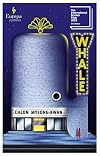
Cheon is a screenwriter as well as a novelist and perhaps knowing that helped bring up a couple of memorable films in show more my mind as other points of reference. First was “The Cook, The Thief, His Wife & Her Lover”. Certainly not an exact parallel but the novel’s stylized construction, usage of folk/tall tale form in a modern setting, use of violence, and indirect political satirization brought the film to mind. Next was Tarsem Singh’s “The Fall”, for some of its more whimsical tall tale stylings. I think the stunning blue cover of the Europa Editions may have primed that association, considering the film’s beautiful, colorful visualizations of the fantastical tall tale its protagonist spins out to his young listener in service of his dark and self-despairing goal.
I happen to dislike “The Cook, The Thief, His Wife & Her Lover” while “The Fall” is one of my favorite films; “Whale” sits with the latter. It works brilliantly for me and is by far my favorite of the four of six International Booker shortlisted works I’ve read so far for this year. The forms, the tone, the characters, the plot, the images, all are appealing standouts. As someone without a lot of familiarity with Korean culture and society however I’m sure I can’t ultimately interpret it nearly as sharply as a reader who does have that; instead I’ll happily take Cheon’s offering regarding truth and interpretation on one of the final pages here:
Cheon is a screenwriter as well as a novelist and perhaps knowing that helped bring up a couple of memorable films in show more my mind as other points of reference. First was “The Cook, The Thief, His Wife & Her Lover”. Certainly not an exact parallel but the novel’s stylized construction, usage of folk/tall tale form in a modern setting, use of violence, and indirect political satirization brought the film to mind. Next was Tarsem Singh’s “The Fall”, for some of its more whimsical tall tale stylings. I think the stunning blue cover of the Europa Editions may have primed that association, considering the film’s beautiful, colorful visualizations of the fantastical tall tale its protagonist spins out to his young listener in service of his dark and self-despairing goal.
I happen to dislike “The Cook, The Thief, His Wife & Her Lover” while “The Fall” is one of my favorite films; “Whale” sits with the latter. It works brilliantly for me and is by far my favorite of the four of six International Booker shortlisted works I’ve read so far for this year. The forms, the tone, the characters, the plot, the images, all are appealing standouts. As someone without a lot of familiarity with Korean culture and society however I’m sure I can’t ultimately interpret it nearly as sharply as a reader who does have that; instead I’ll happily take Cheon’s offering regarding truth and interpretation on one of the final pages here:
It is easy for truth to vanish, like ice melting in your hand. Perhaps we’d be closer to the truth if we refrained from all explanation and interpretation. Certainly that would free her from being trapped in simplistic, static statements. Certainly that would free her, let her blow away in the breeze that swept through the valleys of Nambaran, and help us to approach the truth. Dear reader, the story continues.show less
Awards


You May Also Like
Associated Authors
Statistics
- Works
- 3
- Members
- 269
- Popularity
- #85,898
- Rating
- 3.8
- Reviews
- 8
- ISBNs
- 20
- Languages
- 7