
Béatrix Beck (1914–2008)
Author of The Passionate Heart
About the Author
Image credit: AFP
Works by Béatrix Beck
Associated Works
Tagged
Common Knowledge
- Canonical name
- Beck, Béatrix
- Legal name
- Beck, Béatrix
- Birthdate
- 1914-07-30
- Date of death
- 2008-11-30
- Gender
- female
- Occupations
- professor
Secrétaire
journalist
novelist
short story writer
poet - Organizations
- Prix Fémina (membre du jury)
- Awards and honors
- Prix Goncourt (1952)
Prix Prince Rainier de Monaco
Académie française
Grand Prix de Littérature de l'Académie française (1997) - Relationships
- Beck, Christian (père)
Gide, André (employeur)
Szapiro, Béatrice (granddaughter)
Szapiro, Bernadette (daughter) - Short biography
- Béatrix Beck was born in Villars-sur-Ollon, Switzerland, to Christian Beck, a Belgian writer of Latvian-Italian background, and his Irish wife Kathleen Spiers. Her father died when she was two years old. She grew up in France and after a long dispute with authorities, finally became a French citizen. She became a Communist activist as a law student in Paris. In 1936, she married Naum Szapiro, a Jew and fellow Communist. During World War II, he was arrested by the Vichy government and died in a concentration camp, leaving her with a small daughter, Bernadette. She took a series of odd jobs to earn a living, including posing as a model in an art school, and wrote in her spare time. In 1948, she published her first novel, the semi-autobiographical Barny. André Gide, a friend of her father's, hired her as his secretary and encouraged her to write about her own life experiences, such as her mother's suicide. She went on to create other autobiographical works such as Une mort irrégulière (An Irregular Death, 1950). She won the Prix Goncourt in 1952 for Léon Morin, prêtre (Léon Morin, Priest), which made her famous. It was later adapted into a film. She was able to buy an apartment in the same building as Jean-Paul Sartre, 42 rue Bonaparte, which was blown up by the militant group OAS in 1962. In 1966, she traveled to the USA, where she became a professor at the University of California at Berkeley, and the University of Virginia; and to Canada, where she taught at Laval University in Quebec, the University of Sherbrooke, and Laurentian University in Sudbury, Ontario. She returned to France in 1977, and gained new fame with La Décharge (The Discharge), which won the Prix du Livre Inter. In 2006, a play adapted from her work L'Épouvante, l'émerveillement (Terror, Wonder, 1977) was staged. During her career, she produced some 30 works, including 13 novels, plus short stories, poems, and radio plays. She served as a member of the jury for the Prix Fémina. Her daughter Bernadette Szapiro and her granddaughter Béatrice Szapiro also became writers.
- Nationality
- France
Belgique (naissance) - Birthplace
- Villars-sur-Ollon, Switzerland
- Places of residence
- Paris, France
- Place of death
- Saint-Clair-sur-Epte, France
- Associated Place (for map)
- France
Members
Reviews
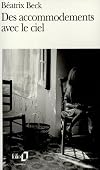
Le récit se passe dans la Belgique de l'immédiat après-guerre, les années 50. La narratrice qui a perdu son mari durant la guerre se réfugie avec sa fille chez leur famille. Tous les personnages sont dans une situation économique extrêmement précaire, il faut donc chercher du travail et affronter les conséquences sociales de la misère.
Il n'y a pas a proprement parler d'histoire mais une succession de portraits et de situations. On fera la connaissance de la demie-soeur de la show more narratrice au comportement imprévisible et aux opinions paradoxales, de l'oncle Armand qui est en prison depuis 40 ans pour homicide et des voisins bourgeois et paysans, etc.
Au centre du roman, Francine, tante de la narratrice issue d'une famille aisée et qui tente de survivre avec bien des difficultés en élevant des poulets. A travers ce personnage Béatrix Beck cherche à dénoncer l'attitude petite bourgeoise faite de compromissions et d'accomodements, totalement soumise aux conventions sociales et au qu'en-dira-t'on. tout en professant par ailleurs des convictions religieuses élevées. show less
Il n'y a pas a proprement parler d'histoire mais une succession de portraits et de situations. On fera la connaissance de la demie-soeur de la show more narratrice au comportement imprévisible et aux opinions paradoxales, de l'oncle Armand qui est en prison depuis 40 ans pour homicide et des voisins bourgeois et paysans, etc.
Au centre du roman, Francine, tante de la narratrice issue d'une famille aisée et qui tente de survivre avec bien des difficultés en élevant des poulets. A travers ce personnage Béatrix Beck cherche à dénoncer l'attitude petite bourgeoise faite de compromissions et d'accomodements, totalement soumise aux conventions sociales et au qu'en-dira-t'on. tout en professant par ailleurs des convictions religieuses élevées. show less
Jun 19, 2009French
Lists
Awards


You May Also Like
Associated Authors
Statistics
- Works
- 31
- Also by
- 3
- Members
- 147
- Popularity
- #140,981
- Rating
- 3.7
- Reviews
- 1
- ISBNs
- 45
- Favorited
- 1